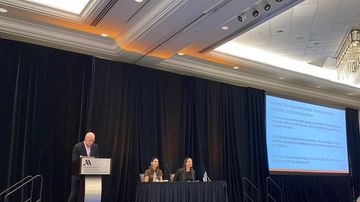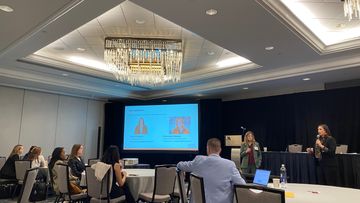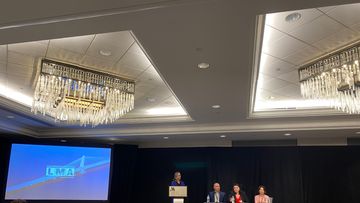


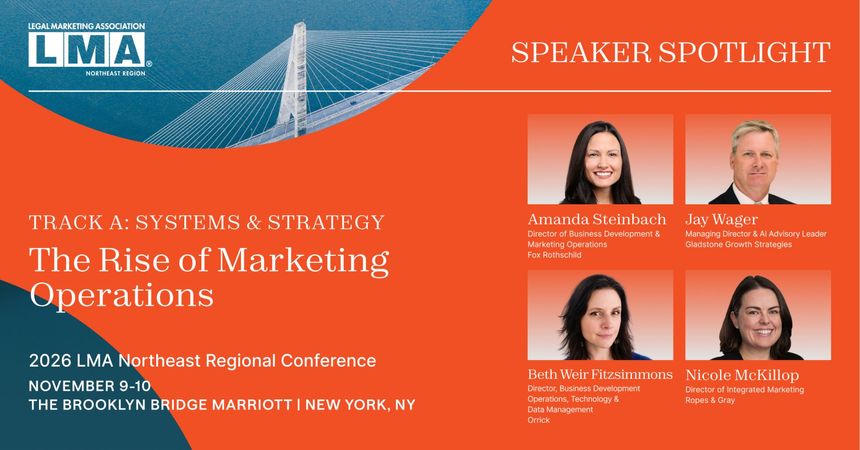


Last week, my colleague Alex and I had the pleasure of attending this year’s LMA Northeast Regional conference in Brooklyn. One of the panels I attended was The Rise of Marketing Operations, which featured marketing operations leaders from three Am Law 100 firms:
Nicole McKillop - Director of integrated marketing, Ropes & Gray
Beth Weir Fitzsimmons - Director of BD, Operations, Tech & Data Management, Orrick
Amanda Steinbach - Director of BD and marketing operations, Fox Rothschild
Moderated by Jay Wagner of Gladstone Growth Strategies, the main focus of the talk was (as the title implies) the increase in roles dedicated to marketing operations across the industry, particularly in the Am Law 100. While the approach at each firm prioritized different aspects of the role, I found that there were three key themes which each firm emerged throughout the presentation
1. Cost Center to Revenue Generator
A theme that sat over the top of all the discussions was that marketing and business development functions are not cost centers; rather, teams which operate well directly impact the revenue of the firm. From events to lateral partner integration and any number of other projects that they take on, having the ability to operate as a strategic partner will ultimately make the firm more successful.
A challenge mentioned here was the difficulty in showing the ROI of operational activities, which makes it harder to advocate for putting time into improving the process. The example of events was brought up by one of the panelists, who said that they were working on a system to track the touchpoints that their team had because of the events and following up to see if any business was won from those events.
2. How to set yourself up for automation
Another key theme was that marketing operations is a process-driven role. People who succeed in doing it are able to sit across multiple departments and identify bottlenecks in the current systems and engineer ways to fix them to improve the overall efficiency of any given action. One framework that I found really useful to blueprint an operations improvement was:
- Standardize - How can we make a repeatable and scalable process?
- Simplify - What is the minimum viable approach to achieve the desired result?
- Automate - Are there repetitive processes which do not need to be done manually?
With AI becoming evermore present and powerful, the automated part is becoming easier, but it does take systems knowledge to set yourself up for success. Standardizing the process means it can be automated, and simplifying makes the end result much better, which really exemplifies why having a dedicated operations role for the marketing team is so valuable.
3. You are only as good as your foundation
The third major point was that the back end is a commonly overlooked part of a successful operations project. A big focus recently is the technology that a firm utilizes to help streamline the process. As one panelist put it, a Ferrari means as much as a Honda Civic if you cannot drive either. That is to say, without the underlying structure, you can put as much tech as you want into the equation, but it will not necessarily achieve results if you are working with bad data. One panelist said that their firm had been undertaking a massive project to clean their CRM data and make sure everything is in order there before they look to build on top of their current tech stack.
It is clear from the talk that marketing operations is no longer a nice-to-have. With the breadth of some of the projects being taken on, there needs to be a dedicated person with the systems-thinking skills to keep up with the growing demands of firms.