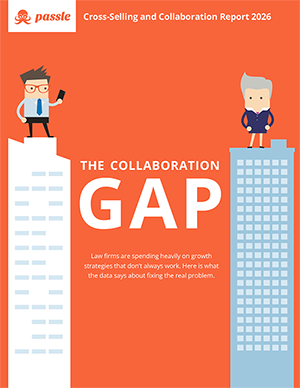





Professional services firms are all in the business of selling expertise, yet the commercial models that sit behind that expertise can look very different. For Big Law, success has long been defined by the quality of its lawyers and the depth of their legal expertise. What it has rarely done is import the commercial discipline and client intelligence that consulting firms have spent decades building from the ground up. This panel at CMO Series Live asked what happens when marketing leaders shaped by that consulting world take the helm at major law firms, and what they found when they arrived.
Moderated by Eugene McCormick, the panel brought together three CMOs who each made that crossing:
- Nicole Petrie, Chief Marketing and Business Development Officer, Proskauer Rose (formerly Global Head of Client Experience and Market Development at KPMG)
- Julie Chodos, Chief Marketing and Business Development Officer, Axinn, Veltrop & Harkrider (formerly National Marketing and Business Development Leader at BDO)
- Matt Lieberman, Chief Marketing and Business Development Officer, Cooley (formerly Chief Marketing Officer for PwC US and Mexico)
Having collectively spent decades in consulting before crossing into legal, Nicole, Julie, and Matt were uniquely placed to see the industry from the outside in. They each gave their nuanced view on where the distance between the two worlds was greatest, and where legal marketing has the most to learn from the consulting playbook.
A lack of structured client knowledge disciplines meant relationships plateaued before they had a chance to grow. An absence of commercial training infrastructure left even the most talented partners without the frameworks they needed to build business. Finally, marketing teams so consumed by reactive, bespoke work had no capacity left for the kind of strategic thinking that drives real growth. Together, those gaps told a consistent story about where legal marketing has room to grow.
The Client Knowledge Gap
One of the main themes the panelists kept coming back to was something the Big 4 treat as foundational: deeply knowing their clients. Without that intelligence, relationships plateau and accounts stop growing. Content becomes reputation-building rather than a driver of commercial opportunity. At consulting firms, client understanding is a structured discipline. Account teams are built around it.
When Matt came into Cooley, he found that partners had very ingrained views on the firm's strengths and where the brand sat. For example, Cooley had long positioned itself as a firm associated with innovation, and partners believed that strongly. However, when the firm launched a formal client listening program, it was clear they had not relayed that story effectively. In fact, the areas where clients scored the firm were often the total opposite of what partners had expected. That exercise opened conversations the firm had never had before: where perceived strengths were actually weaknesses, where the story needed to change, and where there was no structured client development focus at all.
The Training Gap
Another major advantage of consultancies that the panelists highlighted was that they built commercial capability from day one. Graduate hires entered a full academy of sales training from the start, and by time someone was a few years from partner level, they had spent years talking to clients, closing work, and thinking through the full relationship lifecycle. The commercial instincts were already formed before they needed to be. When Nicole arrived in legal, she was shocked to realize that apart from a handful of rainmakers, many of the newly minted partners needed coaching closer to what she would give someone far more junior, yet the expectation was that they would go out and build books of business worth millions.
The panelists also honed in on a structural issue that compounds this problem; law firms tend to rotate client relationships rather than going deep on fewer of them. The consulting model largely relies on identifying where organic growth is actually happening, finding the patterns, and building repeatable frameworks around them rather than relying on individual partner relationships.
The Productivity and Data Gap
Matt and Julie described this gap as when marketing and BD teams are genuinely stretched, but not for the right reasons. Everything was being done custom and bespoke, every time, with no leverage from AI, automation, or reusable frameworks. The shift Matt set out to make was moving the planning conversation away from tactics and toward goals, and building the data infrastructure to back it up. Julie framed it as a sophistication problem as much as a capacity one. Business development is harder than marketing because it requires partners to engage differently, and the data that makes the case for where to focus is often what tips that conversation. Building more sophisticated analytics around the client data helps partners see where to focus rather than spreading effort thinly across everything.
The Title Gap
The session closed on a question about what the legal CMO looks like in the years ahead. The panel was aligned that the role is evolving toward something closer to Chief Growth Officer. Brand and communications remain essential but become table stakes. The differentiator will be whether the CMO can drive strategy, operate close enough to the client to influence where the firm points its resources, and hold real accountability for revenue. Julie pushed toward direct revenue accountability. When she was in consulting, she was compensated on profitability and had a direct say in where resources were pointed. She argued that legal marketing leaders are already in a position to guide those decisions but, the question is whether firms will let them.
The panels closing advice to the room was “Do fewer things, go deeper, and stop letting busyness substitute for focus. ‘Slow down to go fast.'”
/Passle/53d0c8edb00e7e0540c9b34b/MediaLibrary/Images/2026-10-14-09-22-13-024-6acf49c5944aac193a981bb9.jpg)
/Passle/53d0c8edb00e7e0540c9b34b/MediaLibrary/Images/2026-10-13-16-00-13-704-6ace558d477453bcaa2eba35.jpg)
/Passle/53d0c8edb00e7e0540c9b34b/MediaLibrary/Images/2026-09-28-10-59-02-989-6aba4876c6484376446500cc.png)
/Passle/53d0c8edb00e7e0540c9b34b/MediaLibrary/Images/2026-10-08-10-14-29-755-6ac76d050b30ba925ae8bc36.jpeg)
/Passle/53d0c8edb00e7e0540c9b34b/MediaLibrary/Images/2026-10-08-07-04-41-374-6ac740898f60cb75fde15df0.jpg)