

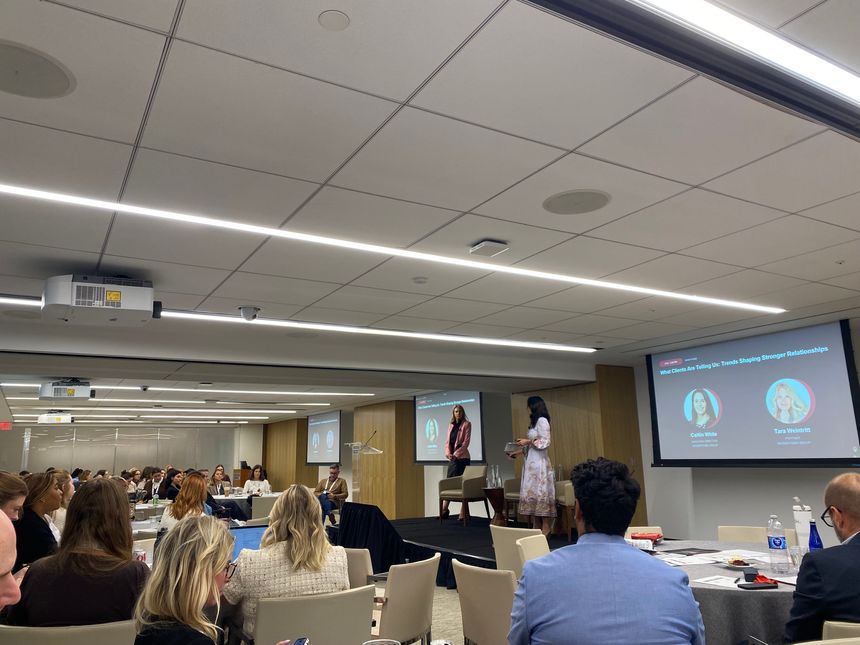


The LMA Mid-Atlantic conference closed with a data-driven presentation by Tara Weintritt and Caitlin White of Wicker Park Group, looking at over 4,000 client feedback interviews they have conducted for law firms. Their presentation examined the biggest drivers of client satisfaction, client appetite for being cross-sold on different services, what truly counts as a differentiator, and where marketing and BD teams come into play. Here are their findings:
Client Satisfaction
Results: Unsurprisingly, the top driver of client satisfaction (and for good reason) is winning. Clients are not going to go back to a firm that does not win. While communicating wins for RFP's and gaining repeat business sits with the BD teams, the winning of the case itself sits with the lawyers.
Client Service: Very significant to creating that stickiness with a firm and this is where the BD team can really make a difference. An important note about this was that responsiveness is a bare minimum and will not put you ahead of other firms, but a lack of responsiveness will put you behind.
Staffing: Still a very vital part of the process, but as with results, it sits outside the purview of the BD team. Inconsistency across teams can drive satisfaction down quickly. Also worth noting that expertise, like responsiveness, is seen as a bare minimum across the industry.
Cross-Selling & Growth Opportunities
Throughout their client interviews, they found that in the past five years, there has been a noticeable increase in clients being open to expanding their relationship with the firm outside the groups that they have already engaged with for work.
Client Interest in Proactive Introductions
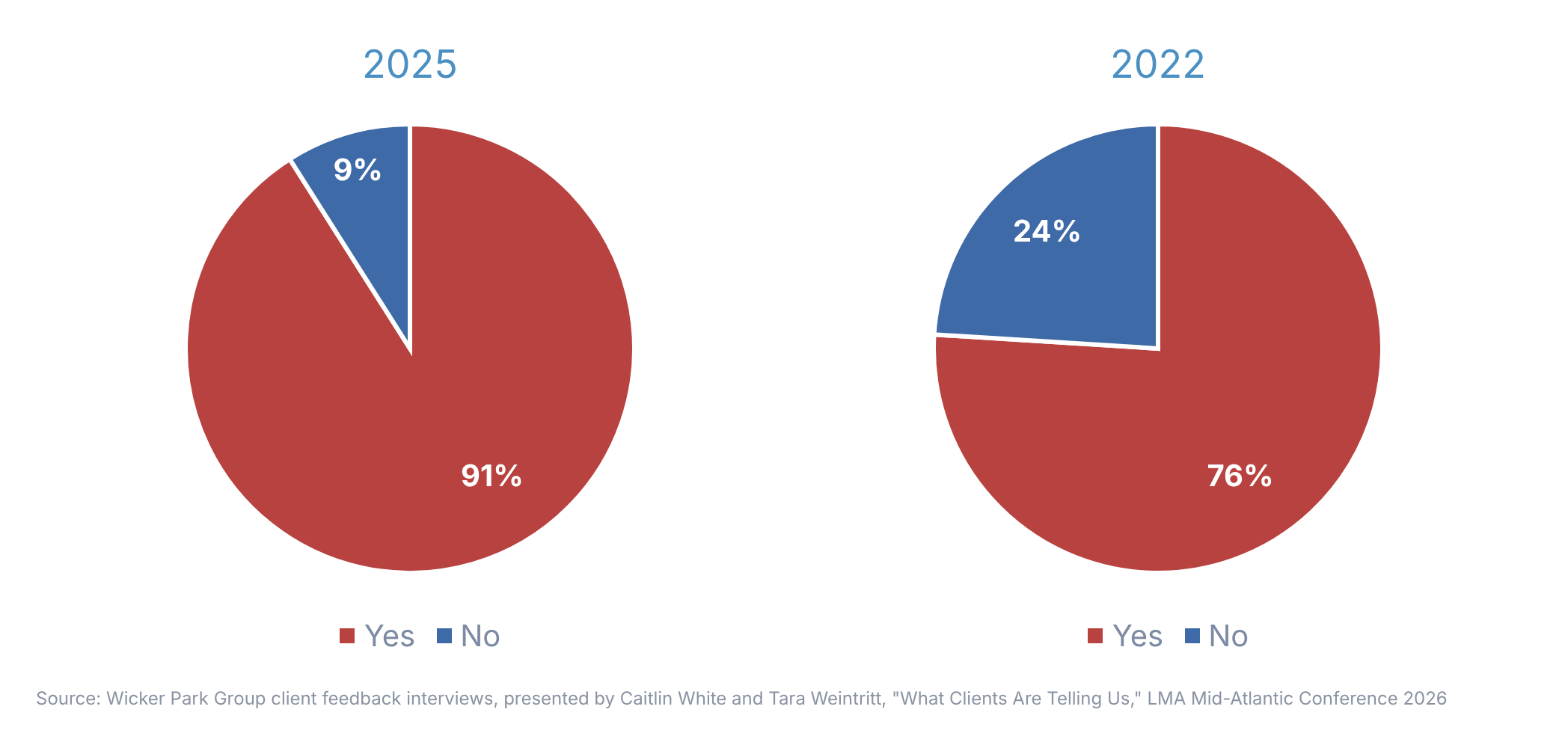
Internal introductions are welcomed, but must extend beyond a boilerplate rundown of the services; they should be thoughtful and relevant to the client. With this also comes the trust built from knowing your limits. Recommending a client to a different group when they are not properly equipped to deal with the needs can destroy the relationship with the client and stop them from using your firm again. Conversely, communicating your firm's limits is the best way to build trust, and attracts clients since the advice is coming from a genuine place.
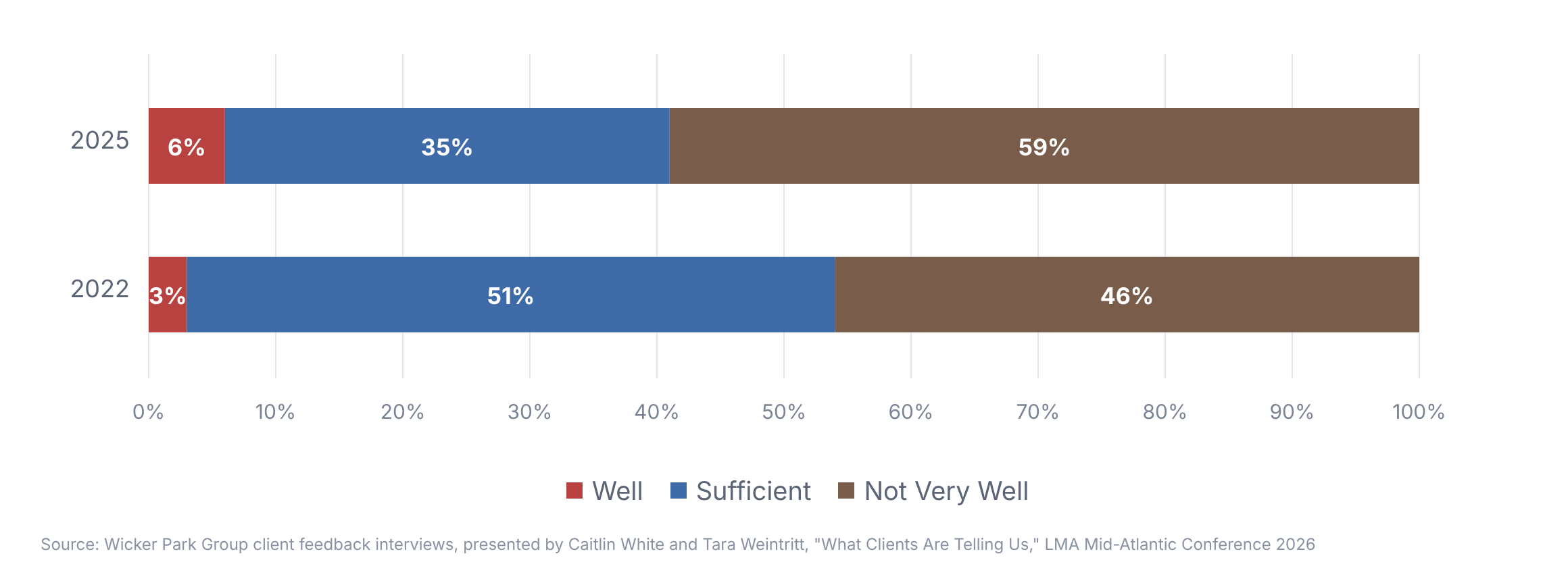
Despite this increase, WPG's findings surfaced a substantial knowledge gap: the majority of clients do not know the full capabilities of their law firm. This gap is a clear sign that firms need to get better at communicating what they offer, and is a big opportunity to expand the relationships they already have.
Client Knowledge of their Law Firms' Capabilities
How to set yourself apart:
Know your clients' business and industry. Clients are interested in industry expertise, not practice groups. When you learn about your client's industry at a greater depth than just what is surrounding their legal matter, it sets your firm apart and helps to create cross-functional ‘stickiness.’ Understanding industry trends and your client's goals puts you in a better position to use the firm's full expertise, whether that's offering practical, business-minded advice or making a relevant introduction to a colleague before the client even asks. It is no surprise that across thousands of Wicker Park interviews, the most common answer to "what one thing would make the relationship better?" was "get to know our business and industry better."
Keep in touch outside ongoing matters. Having something to say that connects directly to the client's business, and shows you are thinking of them, keeps you top of mind. That could mean sending relevant thought leadership with a quick note on why it matters to them, flagging a regulatory change before it lands on their desk, or simply making time for a check-in when there's nothing to bill. Clients told WPG that their favorite lawyers reach out proactively, but personalization is what makes it work. The average client receives around 17 newsletters on the same topic, but the ones they actually read come from a lawyer they know and trust, explaining why it matters and what to do about it.
Hold strategic, forward-thinking meetings. Being engaged on a matter does not mean every conversation has to be about that matter. Instead of only giving case updates, use the time to look ahead. Showing the client you are mindful about where they sit in their industry and what is next for them positions you as a partner for their business. It also puts your firm in the conversation earlier than anyone else. WPG found that clients respond positively to client teams that meet regularly to discuss them; it makes them feel valued and special.
WPG's data makes one thing clear: clients are ready for deeper relationships with their firms, but most do not know what those firms can offer. Closing that gap comes down to the basics done well: knowing the client's business, staying in touch with something worth saying, and using every meeting to look ahead. Marketing and BD teams are well-placed to make that happen, connecting the right lawyers with the right clients at the right time.
/Passle/53d0c8edb00e7e0540c9b34b/MediaLibrary/Images/2026-10-14-09-22-13-024-6acf49c5944aac193a981bb9.jpg)
/Passle/53d0c8edb00e7e0540c9b34b/MediaLibrary/Images/2026-10-22-11-14-29-774-6ad9f015ed262a90b1bf36f6.jpg)
/Passle/53d0c8edb00e7e0540c9b34b/MediaLibrary/Images/2026-10-19-13-24-47-415-6ad61a1fdc6374f637024697.jpg)
/Passle/53d0c8edb00e7e0540c9b34b/MediaLibrary/Images/2026-10-13-16-00-13-704-6ace558d477453bcaa2eba35.jpg)
/Passle/53d0c8edb00e7e0540c9b34b/MediaLibrary/Images/2026-09-28-10-59-02-989-6aba4876c6484376446500cc.png)