




Firms expect marketing and business development to shape strategy at a high level, and they increasingly expect that strategic input to demonstrate clear revenue impact.
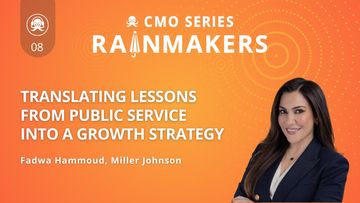
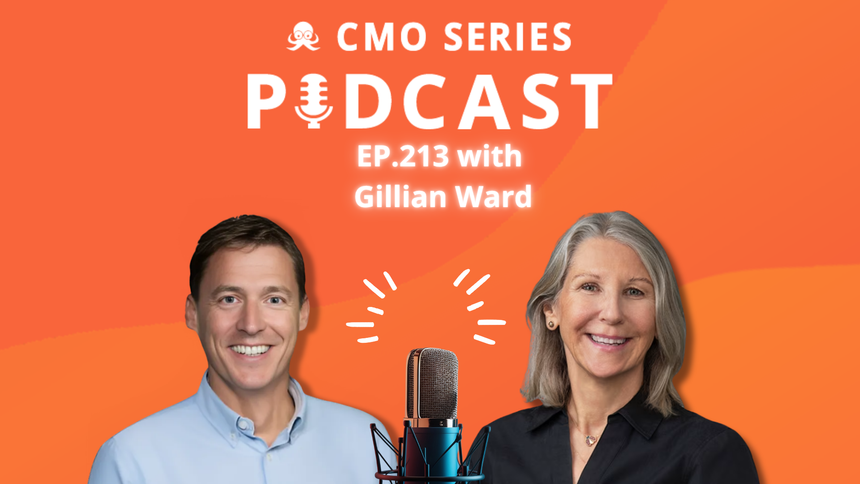
In the latest episode of the CMO Series Podcast, James Barclay, our CEO, is joined by Gillian Ward, Chief Marketing and Business Development Officer at Reed Smith. Gillian is one of legal marketing's most accomplished and experienced CMBDOs, and she joins us to talk about what marketing and business development leaders must bring to the table right now. Gillian also shares her insights from conversations with partners about revenue generation and managing a global team.
Gillian and James also jump into:
- What a CMBDO needs to bring to the role today.
- Her top three focus points 18 months into the role, and what that means for her team’s delivery.
- How a manager running a high-investment event should demonstrate impact and ROI for the firm.
- How Reed Smith's global footprint shapes what she expects from her team
- What she looks for from a regional senior BD manager leading a global sector like energy, and how that’s evolved.
- Her advice for senior marketing and BD professionals on what to focus on in their first 90 days at a new firm.
Transcriptions
James: Firms now expect strategic input from marketing and BD. They expect it to be tied to revenue. Today on the Passle CMO Series podcast, we're excited to be joined once again by Gillian Ward, now CMBDO at Reed Smith. Gillian is one of legal marketing's most accomplished and experienced chief marketing and business development officers. She joins us to talk about what marketing and business development leaders must bring to the table right now, covering everything from conversations with partners about revenue generation to managing a global team, all whilst proving return on the investment made in her and her team.
Charlie: This episode is brought to you by CrossPitch AI, the new cross-selling tool from Passle. Cross-selling should be the easiest way for law firms to grow, but most firms struggle. Why? Lack of awareness, lack of trust, and frankly, fear of selling. The result? Missed revenue. CrossPitch AI fixes that. It breaks down silos, helps professionals connect, and delivers timely, relevant insights to the right people, inside the firm and out. There's no heavy rollouts, just switch it on and try it today. Head to crosspitch.ai to book your demo and make cross-selling happen. Now back to the podcast.
James: Welcome, Gillian.
Gillian: Morning, James. Nice to be back again. Nice to see you, hear you, talk to you .
James: So Gillian, what does a CMBDO need to bring to the role today?
Gillian: So there's this ongoing debate these days about whether we've got the right titles or not. Are we CMOs? Are we CMBDOs? Are we Chief Strategy Officers? You know, what are we? I think it all comes down to the same point though, James. Like, we're here to help the firm build revenue, to gain greater depth from the current clients that we have, help them find new opportunities, help them find the white space in the client dashboards. It's quite different from when I joined my first law firm all those years ago back in Vancouver, actually, where I started with Fasken when it was very much about a traditional CMO role. Make sure, you know, we've got a good website, help us with PR, make sure the CRM runs properly. It's evolved so much from there.
I don't think we need to get hung up about the titles. I think what we need to accept is, you know, we wanted a seat at the table. We wanted a say in, in strategy and revenue build, um, projects, and here we are. And that's the role today. That's the role of this, of me, myself, and it's the role of my team as well.
James: And you've been now at Reed Smith for just over 18 months. A couple of questions here. Yeah. What are your three most important things to do every day, every week, every month? Um- Mm-hmm ... and in turn, what must therefore your people, those people who report to you, need to be prioritizing and delivering?
Gillian: So after three months of being here, I was asked by the management team and the board to sort of give my preliminary views on what I saw and what I experienced and some preliminary thoughts about where it needed to go. And then at six months, I presented to them the grand plan, if you like, of where I needed it to go, and then we started executing on that.So it's really been the last year that the pieces have started to move on the chessboard, hiring some new people, building out new functions that were missing, and moving the organization towards the vision that I gave to the board after six months of being here. So we're still in, we're still in build mode, and we are very much now into having the right people on the right seats on the bus doing the right things, and is the organization moving forward towards that revenue build team that I articulated in your first question.
So three most important things I do every day. I'm a bit anal about color-coding my calendar, to be honest, James. It's one of the things in Microsoft Outlook I find very useful. I color code each meeting with is it, is it an external meeting, like this one with you? Is it a meeting with somebody on my team? Is it a meeting with Nick, with the COO? Is it a meeting with somebody on the board, a partner meeting? So I'm quite rigid about that because I find it gives me a visual as to where I've been spending my time, and I think I will always be in the mode of spending at least 50% of my time, one of the three most important things, is connecting with my team.
Not just those people who report directly to me, but people who are working on projects that are strategically important to the function. So I look at that at the end of every day and think, "Was that a good use of my time? And tomorrow, what does my day look like?" So spending time with my team, absolutely three most important things. And from that, looking at the day and thinking, "Was that where I should have spent my time? Wait a minute, you know, I'm not, I'm not covering off enough of this. I need to factor that into my calendar later in the week. I do need to connect with this practice group leader or this industry group leader." Managing your time is really important in these roles 'cause we can disappear down fairly detailed rabbit holes quite easily and quite quickly, and really that's not an effective use of our time. We've got good people doing the right kind of work. I think my role is to get the barriers out of the way so that they can succeed.
So that's the point mostly of the meetings I have with my team, is me identifying what do they need from me to continue to be successful. Connecting with the team, managing my calendar, and taking that time thinking about what does next week look like, what will next month look like, and a little bit of that time in the day as well.
James: That's really useful. And, as far as your people, what do they need to be prioritizing and delivering to make that work with you?
Gillian: Because we're still in, maybe we'll always be in transition mode, maybe that's just where we are. These functions will keep changing and will keep growing. I need them focused on that and on the journey that we're on, and are we making progress? For the people who report directly to me, are you leading your teams through this transition? What do they need from you? What do your teams need from you? What do you need from me? And are you focused on that constant beat of how is this going to help the firm build revenue, grow revenue from existing clients, and bring new revenue into the firm.
That's quite different. You know, most of these teams were hired back from those old functions of purely marketing functions. So moving them along this curve to focusing on the business development and ultimately the sales piece of what we do, that's where they need to be focused, and if they're unsure of what that means for them in their roles, ample opportunity here to discuss that with me or with the, their direct reports, um, so that everybody understands where their place is in, in the team.
James: Yeah. And what's useful on these podcasts is to have, have a bit of specificity. So having a think about that and with an example to make it a bit concrete, let's take an event. We know that law firms like yours spend an awful lot of money on events, and that you have a manager in charge of an event that requires a significant investment.
Gillian: Yep.
James: You, what, what do you need to do? Or sorry, what do they need to do so they're bringing the right impact and the return for the firm so that you can turn round and get that investment for next year?
Gillian: Yeah. So this is, this has been a shift here at Reed Smith into helping the team understand my perspective, 'cause you're right, James, this is such a large amount in the budget spent on events every year, and they're an important part of the marketing mix. It's how, you know, we get the right people into the room. It's how we get our messages across. It's how we leave with leads. But I don't think events were necessarily thought of that way here at Reed Smith. So I've helped the events team sort of understand the rationale for holding the event in the first place. What are the objectives? Who do we need in the room? What does the content have to look like if there are presentations involved? Really sits with the business development manager who's working with that practice group or that industry group. They need to define that. And then the event coordinator in the location where it's being held needs to understand what that is.
So you need a strong BD manager at the front who's defining why we're doing this, what's the objective, what does success look like, who do we want in the room, what are the leads that we're trying to affect, the contacts we're trying to affect in the room, and communicating that with the events coordinator so that the events coordinator understands the how the room is best going to be set up, where should it be held, what should it look like, what should the people in that room, what should their impression of Reed Smith be? How do they manage registration? How do they manage the follow-up with the BD manager, making sure the BD manager gets the information about who was in the room so they can follow up with content and, calls from the partners? That piece in the middle is a critical piece of that whole project.
Executing that event is more than just making sure, you know, we've got the right visuals and, you know, the right wine and the right canapes. It's what was the business objective at the beginning, and how did I help execute that properly so that at the end we've got some great leads, we've got some good contacts that came out of it, and the people who were in the room left understanding the brand and the messaging of Reed Smith? They're really important roles because the bulk of the budget around events sits within that execution piece. So them being connected to the thinking at the end and the output at the thinking at the beginning, sorry, and the output at the end is really important, and that's a bit of a shift.
James: And being specific again with the global nature of Reed Smith, I imagine there's an expectation to think internationally kind of as a matter of course.
Gillian: Yeah.
James: How's that reflected in what you require from the people in your team?
Gillian: Yeah, that's a really interesting question too. This is a very large firm and this is a very large team, and it is an international firm. I need them thinking all the time about the work that they're doing, how it is helping us increase our reach across multiple markets, whether it's multiple markets in the US. The US is a series of distinct market opportunities. How are we reaching across and making sure that all our clients in the San Francisco Bay Area, for example, who are coming to event to go back to the events, that we have them all invited to the event, not just the clients of the San Francisco office or the partners who are in the San Francisco office. So thinking much broader. Talk to the team all the time about this, about just, just take a step back for a minute, think outside the lane that you're working in and challenge yourself,, am I going to be able to bring the best of the firm to this project on a consistent basis, whether it's across a geography in the US or whether we're actually crossing the Atlantic or over into, into Asia and our client base over there.
So yes, I would like to think that we've broadened our thinking on the team now so that the practice groups, the industry groups, and the support teams, both the PR team, the events team, everybody who helps with this business development effort is thinking, "Am I bringing the best of Reed Smith across the entire platform?"
James: And another example. Regional senior BD manager in charge-
Gillian: Yeah
James: Of a sector, say, energy, working across global practice. What are you looking to get from them delivered to, to you and your team? And importantly, how's this changed over the last few years?
Gillian: When you ask me about that, I think of a manager located in a region, but has a global responsibility to think about the energy space in this example beyond what's happening in their local market. So first and foremost, they have to do the best they can to understand, not necessarily every aspect of the global industry that they're working in, but what our priorities are. So within our energy group, what are their geographic priorities for growth and why? Once we've understood that BD manager has to be thinking about programming, brand development, client relations in those geographic locations that we've established as being, you know, critically important for the growth of that sector, which often goes well beyond where they actually sit.
So, you know, would I expect them to know every little aspect of the energy industry globally? That would be nice, but what I'm really asking of them is to understand the strategy of the group from a geographic basis, and looking for those opportunities, again, to connect up the firm and bring the best of our energy expertise into that geographic market where it's particularly relevant and has been targeted for growth. It's a much more strategic role, I think, James, than we've seen in the past. I'm sure this isn't unique at Reed Smith either. We're asking our business development managers to be something way more than marketing managers. They need the ability to think about the business strategically, develop programs, projects, and initiatives that drive the strategy and help us build that revenue.
James: Yeah. And finally, and this will help anybody listening who'd love to work with you, Gillian, When a senior marketing or BD professional joins a new firm, could be Reed Smith what should they focus on in their first 90 days? What are you looking for them to deliver in 90 days?
Gillian: Understanding in 90 days, as quickly as they can, the scope of their role and the people that they're going to be interacting with, the partners within their group. And also this team, so who they can rely on. Back to the event coordinators. Who am I going to be working with? The event coordinators, the PR team, the web team, the digital team. Who is my... Who's my team that's going to help me be more effective in my role? What do they do and how do I access them? Pair that with the key partners in the group, the strategy of the group, and starting to think about looking critically at what's been happening. You know, you're coming in to help us make a difference and continue on this journey of revenue build. So take those 90 days to understand what's been happening, but more importantly, what value you're gonna bring to the table pretty quickly in that 90 days with some new ideas, some new thoughts of how to best utilize the, the resources of the team that we have to help them drive the strategy in geographic markets that they've been in.
Lots of great people on this team who are, they're here to help. Many of them are new. There's been a lot of new additions to the team in the last 12 months, who are finding, I hope, this focus on revenue build puts them in a different position than you might have seen in the past here and at other firms. The partners have now bought what I'm selling, that this team exists to help them build revenue, and what a great opportunity that is to actually impact the business when you're coming in as a new BD manager.
James: Brilliant. Thank you. That was excellent. So let's now go to the quick-fire round.
Gillian: Yep.
James: What are you currently watching on TV?
Gillian: Oh, that's a good one. Well, I'll take a bit of a diversion and tell you what I'm most looking forward to. The new series of Ted Lasso starts this weekend.
James: Yes.
Gillian: I'm a huge Ted Lasso fan, not just because it's about football in the UK, which is one of my passions, because it's actually about way more than that.
I love it. It's a great, inspirational series about leadership and friendship and overcoming loneliness and being in positions that are scary with your work and relationships. It's just a really feel-good series, and I love it, and it's back this weekend, so that's what I will be doing.
James: Yeah, me too. It's full of optimism.
Gillian: Yeah.
James: And what's, what's a book or a resource that you could recommend to anyone in your field?
Gillian: There's tons of resources that I think everybody finds through various networks and things that we participate in now. I like to pick up a book every now and again that someone's recommended to me, and this one was recommended to me, SuperTeams by Ron Friedman. This was recommended to me last month, and I finally got around to buying it and moving it. It's The Science and Secrets of High-Performing Teams, and when you read these books there's a bit of, well, yeah, I get that, but then I, you know, I try to stop and say, "But do I, do I really?" Are there some takeaways from this in today's world, um, and running a team of this size that I can, I can take from? Anyway, I'm really enjoying this one. SuperTeams it's called, The Science and Secrets of High-Performance Teams.
James: Fantastic. What's the best piece of advice you've ever received?
Gillian: Life is full of choices. You make choices every day about what you're gonna have for breakfast, which route you're gonna take to work, how you feel about your, your work, whether you should take a new job. When you've made a choice, it's important that you give that choice a chance to percolate and bring to you what you hoped it would, but you can change it. There's no point in complaining about the choice that you've made. If it's the wrong choice, you have to figure out what you're gonna do about it and make a different choice next time around.
If you think of life that way, it really changes your perspective. I suppose it also reinforces that nothing is forever. Your life and your choices are in your hands, but you do have to make choices. Give them a chance, but if it's the wrong choice, take action on it.
James: What's your favorite way to unwind after a busy day?
Gillian: Love. I live in Houston, as you know. I love my swimming pool, and I live in a lovely walkable neighborhood, so once the temperature drops in summer, around about 8:00, the nicest thing to do is take a walk through the neighborhood, see life kind of unfolding. There's people, you know, pushing their kids in their strollers, walking their dogs. You might meet the neighbor or relaxing in the pool, which is by that time cooled down to a reasonable, reasonable temperature.
James: That might answer my last question, which is where is your favorite place to visit and why?
Gillian: Yeah, I love my pool. My favorite place on the planet to go is to Vancouver. It's where I think of as home. It's where I spent 25-plus years of my life. My two daughters live there, and every time I fly into that airport, people have said this about Vancouver many times. I feel a huge sense of relief and a sense of coming home. It's my favorite place.
James: Fantastic. Thank you so much for being on the podcast today. Absolutely wonderful to speak with you.
Gillian: Lovely. Thank you.
Charlie: You can follow the Passle CMO Series podcast on your preferred podcast platform. Thanks for listening, and we'll see you next time.