




Building a team from scratch at a top law firm: what we heard at CMO Series Live
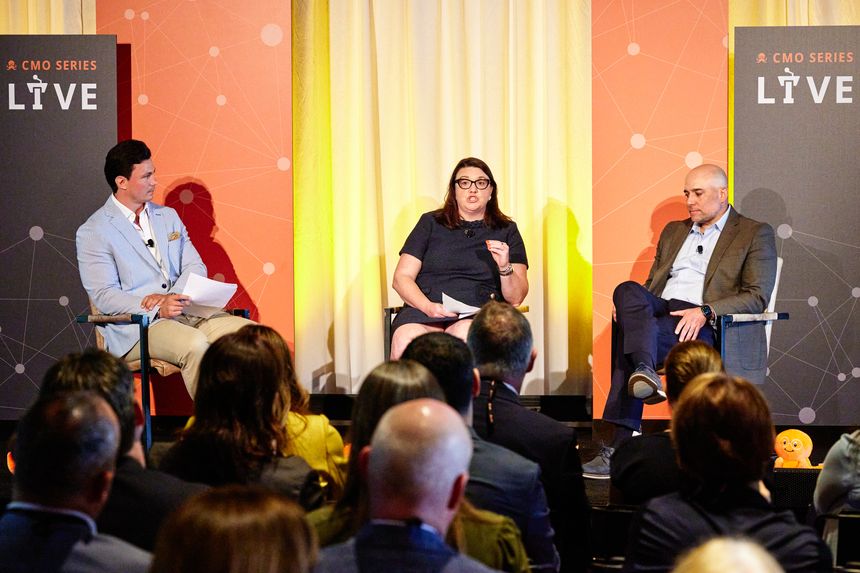
Last week at CMO Series Live, we hosted a conversation with two of the most senior marketing and BD leaders in BigLaw: Kelly MacKinnon, CMBDO at Gibson Dunn, and Luke Ferrandino, CMBDO at Skadden. It was one of the standout sessions of the day
Both walked in to their roles at firms with huge brand equity but real structural gaps in their BD and marketing functions. Kelly went from six people on her team to thirty-three in just over a year. Luke grew his department from ninety-four to a hundred and ninety-one people in the space of a few months. Neither of them were doing it gently.
Speed as a strategic decision
Both Kelly and Luke were clear that moving fast wasn't just necessity, it was a choice. If partners aren't seeing change quickly, the investment stops. Luke put it plainly: you need momentum with the people that matter, or you risk losing the support to fully realise your vision for the department. Kelly framed it similarly. She interviews every person she brings in, tells them it's going to be messy, and looks for the ones whose eyes light up at that.
AI is changing who you hire, not just how you work
One of the more honest exchanges of the session was about what AI is actually doing to hiring decisions. Kelly's example involved a story, in which she used to think she needed three specialist writers for award submissions. Now she doesn't need writers at all, she needs people who can walk into a partner's office, extract the nuggets of insight, and store them for years until the right category opens up. The job has changed fundamentally.
Luke has started piloting multiple AI platforms simultaneously, looking for tools that solve distinct problems across the department. He talked about building psychological safety around experimentation, giving people the space to play with these tools without fear of getting it wrong. In law firm culture, that has typically been harder than it sounds.
What they'd do differently
Kelly said she never replaced herself when she got promoted, and she'd fight harder for that headcount now. She also said she'd have asked for more resources upfront, because you can always give back, and no one ever gets everything they ask for first time around.
Luke's reflection was about onboarding. The early focus was entirely operational: here are the systems, here are the processes. The softer side of building a team culture got underweighted, and when you bring in half your headcount in six months, that creates real friction.
The thing both kept coming back to
Whether it was how they built their teams, how they're approaching AI, or how they're winning partner buy-in: it came down to communication. Show your wins, by translating them into the language of whoever you're reporting to. Both send a weekly email and treat it as a key mechanism for staying visible and keeping leadership on side.
The firms that are growing are the ones where marketing and BD leaders are earning a seat at the table. These two have done exactly that.
/Passle/53d0c8edb00e7e0540c9b34b/MediaLibrary/Images/2026-05-01-10-22-49-895-69f47ef9cb2c8884e0253d08.jpg)
/Passle/53d0c8edb00e7e0540c9b34b/MediaLibrary/Images/2026-06-10-11-04-43-906-6a2944cb9e32b2e06b43d25a.jpg)
/Passle/53d0c8edb00e7e0540c9b34b/MediaLibrary/Images/2026-06-09-22-46-23-806-6a2897bf1c2341c66d2ebef2.jpg)
/Passle/53d0c8edb00e7e0540c9b34b/MediaLibrary/Images/2026-06-10-07-43-54-885-6a2915bae96ad9e6cd194c78.png)
/Passle/53d0c8edb00e7e0540c9b34b/MediaLibrary/Images/2026-06-09-15-57-47-443-6a2837fbe22b6af8adc9e514.jpg)