





Business development is something every law firm talks about, but far fewer truly embed it into the day-to-day habits of their lawyers.
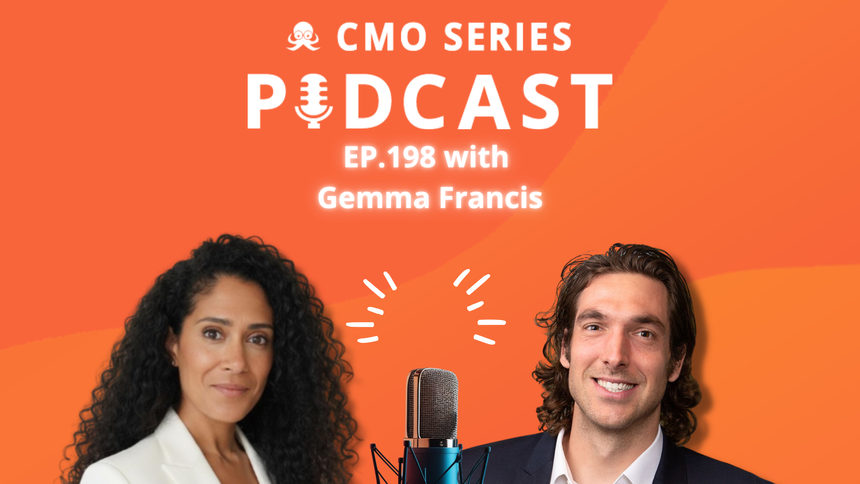
On the latest episode on the CMO Series Podcast, we sit down with Gemma Francis, a legal BD consultant who spent years working in-house before stepping out on her own. Gemma now works closely with law firms and lawyers to rethink business development approaches, focusing on mindset, practical habits, and bringing associates into the process much earlier.
In today’s episode, Gemma offers a fresh perspective on the common misconceptions lawyers have about BD, the barriers that firms face, and the simple steps that BD and marketing teams can take to create real momentum.
Gemma also explores:
- The moment she realised there was room for improvement in BD
- What she wishes she’d known during her former in-house career
- The benefits of involving early associates in BD processes
- How to overcome the internal blockers stopping BD momentum
- Key priorities for driving BD traction
Transcription:
Charles: Hello and welcome to the CMO Series Podcast where we talk all things marketing, business development in professional services. Business development is something that every law firm talks about. They have dedicated individuals and teams, but it's actually really hard to truly embed this day-to-day in the habits of the lawyers. That's where today's guest brings a fresh and practical perspective. Joining me on the CMO Series Podcast today is Gemma Francis, a Legal BD Consultant who has spent several years working in-house before stepping out on her own. Gemma now works closely with law firms and lawyers to rethink how business development is approached from mindset and practical habits, to getting associates involved much earlier in building a practice. In this episode, we explore what Gemma wishes she'd known during her time in-house, the common misconceptions lawyers have about BD, the internal blockers that firms face, the simple and practical steps that BD and marketing teams can take to create real momentum.
Charlie: This episode is brought to you by Cross Pitch AI, the new cross-selling tool from Passle. Cross-selling should be the easiest way for law firms to grow, but most firms struggle. Why? Lack of awareness, lack of trust, and frankly, fear of selling. The result? Missed revenue. Cross Pitch AI fixes that. It breaks down silos, helps professionals connect, and delivers timely, relevant insights to the right people inside the firm and out. There's no heavy rollouts, just switch it on and try it today. Head to crosspitch.ai to book your demo and make cross-selling happen. Now, back to the podcast.
Charles: Welcome to the podcast, Gemma.
Gemma: Thank you, Charles. I'm very happy to be here.
Charles: And we've got a brilliant topic. As I mentioned there, every law firm you speak to will have someone or dedicated individuals working on their BD, but often it seems to be an area where there can be room for improvement, and that's what we're gonna jump into today. And if we look back at your career, Gemma, you spent several years working in-house in legal BD before starting out as a consultant. Can you talk us through that journey and the moment you realized the way law firms were approaching business development, there was room for improvement?
Gemma: Yeah, sure. So I mean, I would say I've been connected with law in some shape or form for about 20 years, starting from when I did my law degree. And now I think at the time of my law degree, I sort of realized that I wanted to work with lawyers, not necessarily in law. And that sort of then led me on to work with the Legal 500, I went onto a small patent attorney firm in London called Reddie & Grose, which has now grown. And at that point, that was my first sort of foray into marketing and BD and I was absolutely hooked. I think I just really enjoyed the sort of mix of commerciality, the strategy, the delivery, and seeing what the results could really bring. So from there, I was definitely all in and I went on to Taylor Wessing, where I was covering a sort of full spectrum of BD really. So, everything that you would expect if you were in a BD role, pitching, directory, strategy, coaching, you name it, I've probably done it and loved it. So, Taylor Wessing, I moved up to management, absolutely adored it. From then, around seven years ago, I fell in love with a French man and decided that I would move my life out here, which is where I'm speaking to you from.
And at that point, it seemed like a really good opportunity to create a consultancy and continue essentially doing what I have been doing, but doing it in one way, just differently around my own methodology. So doing fewer things better, being clearer, doing a lot more coaching, working with individuals, and it's been really fulfilling. So we're now a team of four. It's going really, really well. I think if I look back at, sort of, that shift where you say, you know, at what point did I realize that firms were potentially doing things not necessarily wrong, but there's room for improvement. I think it was probably about two years into GFC, the consultancy, it was when I went back in doing a fractional role for a firm and I could really see, having stepped away for a few years, the way things were being run was just not as slick, as organized. There was a lot of activity, but not necessarily any activity around the proper strategy, it was a lot of busy work, I would say. And I could start to see at that point that there was definitely room for improvement and things that I could potentially help with. And I think looking back at my time when I was in house, I hadn't really realized some of that and you almost don't realize until you step away. So that's kind of given me a lot of opportunity to develop the business, I would say.
Charles: I think that leads me onto a nice follow up. I was gonna ask you, are there things that you see working with clients today that you wish you could go back in time and tell Gemma Francis back when you were in-house? And if so, what would those things be? What would you advise your former self?
Gemma: Yeah, I mean, there's a lot of stuff. I mean, I'm not gonna spend hours talking through it, but I think the biggest thing for me, the biggest realization shift, has come from running my own business. So, when I was in-house, I was advising on BD, which is completely normal but actually nowadays, I'm actually living it. So you know, as a business owner, I have to win business. I now understand what it feels like to have a difficult pricing discussion while looking somebody in the whites of their eyes. It's really uncomfortable. I understand how pipelines can drift because it feels uncomfortable to do the follow up, you're not sure if it's too much or if it's getting awkward, you let things drop. There's lots of things like that nowadays that I'm in the same position as almost a lawyer is trying to win the work, that I didn't have that knowledge at the time. So, I'm really sort of proud to be able to bring that as a different lens when I go back into firms. I think the biggest thing though, that I would say is the misconception that I had, and I see this still a lot nowadays when I'm working with firms, is the confusion between marketing and BD still. So, there was a lot of broadcast activity, I would say. Lots of events, conferences, blogs, articles which are being confused with commercial conversations.
That's the bit that's lacking. So the actual discussions with clients that are leading to revenue. So I think that there's a tendency to shift towards marketing because it feels easier, it feels a bit more comfortable, you can do it from behind a screen potentially, just send a quick email, you know, send it out to 500 people and think that the job is done. But actually it's not leading to revenue and that's the kind of friction that I'm seeing quite a lot in firms nowadays. So I think old me would've benefited from being much more laser focused on actually, is this BD? Is this gonna move the dial? Is this gonna bring in revenue? And I think linked to that is this idea of pipeline, again something looking back at Old Gemma, I wasn't really thinking about pipeline so much. I was just kind of thinking more broadly about the ecosystem and winning work generally. Whereas now with the experience that I had running my own business, I would be much more rigorous about moving people through a pipeline, where is the work coming from? What do we need to do next to convert it?
Charles: Yeah. No, I totally get how living it, breathing it, probably adds another view and perspective that maybe you didn't have before, so I completely see how you can pull that in. One of the other things we talked about when we were preparing for this call is that you said often firms have processes and things in place to support partners and senior lawyers, but one of the things where you saw opportunity was by getting the sort of more juniors, the associates more involved in that business development. Why do you think that firms are missing a trick by not pulling them in earlier and having a bit more of a focus there?
Gemma: Yeah. I mean, this is a topic that is really close to my heart because I genuinely think that firms are missing a huge opportunity here. So if we think about the usual structure of a law firm, it's the pyramid model. So, you know, you've got the base, which is your associates, your juniors. You've got the senior individuals towards the middle, towards the top. And then right at the top you've got a select few rainmakers that are usually bringing in all the work or 80% of the work, I would say, and then feeding it down. Now, this is something that is absolutely in all firms I've ever worked with and you know, is historically difficult to challenge. But what I would love people to think about, what I would love firms to sort of consider, is the fact that we are putting a lot of pressure on a select few rainmakers and actually that is not building a resilient model. So what would happen if those few rainmakers decided to leave tomorrow or next month? Actually that is your source of work completely vanished and you haven't really got anybody that can step up. So there's a big sort of level of risk there that I think needs to be addressed and could be addressed by this huge base of associates that we've got that firms are not usually tapping into really. So I think associates are often told, you know, up until pretty much partnership, focus on the work, deliver, deliver. You know, it's all about your chargeable hours, just get your head down until you get to partnership.
At which point we're then talking about, okay, BD is now number one priority for you, which is a really big shift, you know, it's almost a standing start for some of these junior partners, and this is what I'm coaching on sometimes. Whereas you get to this point of making partner and then suddenly you've got to win lots of work, but you don't really know how because you've only ever been fed the work from a rainmaker at the top. So my thinking, my concern, or you know, my suggestion would be, why are we not involving the associates much sooner? Widening out the model, getting them more comfortable with BD so that actually when they are taking the step up, they have got the access to a pipeline, to a network that then could build revenue and you know, bring in clients. So, I think it's almost an oversight in one way to focus all of the budget, all of the efforts just on the partners and the select few rainmakers. You know, and I think the only other thing that I would just say on that is associates are also closest to the work and the sort of trends. They're the ones that are knee deep in the matters, they're seeing stuff across different clients, and they're able to put these trends together and come up with something that will be valuable. Again, we're not necessarily tapping into that. We wanna be getting out these fresh perspectives and putting it out to different clients.
Charles: And I'm guessing with that, sort of, training and support that could and should be offered to associates and more junior folks, is the messaging, is the focus different to what it would be if you were sort of training up partners at that level? How does that change?
Gemma: Yeah. So partners are much closer, they've got much more authority with clients in order to convert the work. So, in an ideal world, they would've been doing this for many, many years, they've got an established authority reputation, so they're much, it's much easier for them in one way to convert. So when I'm looking at associates and how you develop them, we are thinking about how we prepare them, how we get them establishing their networks, how we tackle some of the mindset blockers. So thinking about, this isn't my job or I'm not a natural rainmaker. So the shift is quite different and I think, you know, it's really important to take the pressure off the associates initially. This isn't necessarily about landing a big client right now, it's about sending you up for future success, building that muscle memory. Whereas at the partner level, which makes sense that they've got a lot more budget because actually they should be out there converting.
Charles: Yeah, that makes sense. Just getting them battle ready so when they do make that step up, they're not doing things for the first time. Yeah, I think that completely makes sense. You mentioned it briefly there where you talked about mindset blockers, but my follow up question is more around general blockers that you see internally in law firms. What do you think are some of those internal blockers that sort of stop that BD momentum, and what helps BD and marketing teams drive buying over time? So what are those blockers and how do you work through them?
Gemma: Yeah. One of the things that I see almost in all firms that I work with is something that I like to call shiny object syndrome, or this tendency to spray and pray. And this is the idea of doing lots of different things that are not necessarily aligned or speaking to each other, so we're thinking about going wider rather than deeper. And it's a huge issue in firms because what often happens is a partner will come with an idea to the BD team and then before you know it actually we're launching, before we have defined what success looks like, who really needs to be involved, what the timeline looks like. You know, all of these really critical things, KPIs for example, but we've just launched because actually it's front of mind for the partner. And then you've got that sort of extrapolated across multiple partners, which is a very difficult place for a BD person to be, trying to manage all of this. So, I mean, that's the biggest blocker, it’s this idea that we've gotta be doing lots and lots of activity, otherwise, you know, we're not winning the work. And linked to that is this idea that everything has to be a campaign.
So, thinking about the kind of the difference between marketing and BD, again, this tendency to turn it into a campaign, do lots of activity around it, when actually the question may be at the beginning should have been, should this just be a commercial conversation with a select number of prospects and clients. And again, that step is skipped because we're looking at an event and we're looking at guest lists, et cetera. So we're sort of thinking about the activity rather than the end goal I find. And then again, sort of following on from that, you know, there's usually weak reporting. Law firms are not historically great at the reporting and the data side of things, so that is killing buy-in. Lawyers, partners love to see what the effect is before they commit to something, and actually, if you haven't got that data to show for it, it's quite difficult to get that buy-in. So ideally what we are looking for is once a project has completed and we've done it properly, hopefully, we can show sort of cause effect, and then revenue or instructions or whatever that might look like to say, okay, partner, we'd like to do the next campaign. This is how we did it last time, and this is what the results were, should we do something similar?
Charles: Yeah, that completely makes sense. You know, if you can take some of the successes and feed it across the firm, then you're gonna get anyone who was sort of hesitant on board, anyone that was skeptical, maybe you'll change their view, and anyone that was a supporter, it gives them confirmation that things are going well. So, yeah, I can really see how that works.
Gemma: Completely. And one thing that I would just add on that is, you know, lawyers have a tendency to be risk averse. And that's their nature. That's completely normal. But again, when you're thinking about these projects and you're struggling to get the buy-in, we need to remember that actually, if they are risk averse, what is the carrot? What are we trying to sort of lead them towards? What's gonna help them buy into this?
Charles: Yeah, that makes complete sense. So we're gonna jump into the part of the podcast now, which is the quick fire round, where we are going to ask some quick questions about you, and then we'll come back to our final question where we wrap up with your key takeaways. But for the quick fire round, this is a chance for listeners to find out a bit more about Gemma Francis and what you are into. So my first question is, what are you currently listening to? This could be music, podcast, audio book.
Gemma: So I'm listening to an audio book, ‘The Correspondent’ by Virginia Evans. It's beautifully written, absolutely gorgeous, I would highly recommend it.
Charles: Yeah, and what's that about?
Gemma: It's written in the form of letters. Written from a, sort of, elderly lady, which doesn't sound that interesting, but actually it's so heartwarming and to sort of hear her inner monologue in a way, it's really refreshing. It's super honest. It's gorgeous.
Charles: Oh, wow. Brilliant. What's the best piece of advice you've ever received?
Gemma: Now, I don't know whether this is technically a piece of advice, I feel like it's perhaps more of a lesson, but something that I like to, kind of, live by is everybody's doing the best that they can with what they have. And it sort of helps me bring a bit more empathy to what I'm doing, you know, if it feels as if somebody's being overly negative, it just helps me reframe and think about where they're coming from and actually it's done well for me over the years.
Charles: I like that. Yeah, I think that's brilliant. What book or resource would you recommend that anyone in the legal field to read or look at?
Gemma: Okay, so it's an oldie but a goodie. I love anything written by David Meister. Now he's absolutely 1980s, but I think the fundamentals still stand. So, a trusted advisor, managing the professional services firm, some really good stuff in there that has sort of lasted for years now.
Charles: Brill. What's your favorite way to unwind after a busy day?
Gemma: Hands down a hot bath, preferably with candles.
Charles: Fantastic. What's your favorite place to visit and why?
Gemma: This was a tough one, but I'm going for Bali. My husband proposed there. We're going back on our honeymoon. They've got lots of lovely memories, super calming, gorgeous, wonderfully supportive people. It's just got everything I kind of hoped for in a destination really.
Charles: Fantastic. Okay, so we'll bring things back to the podcast, we finish all of our episodes in the same way, and that's asking our guests for essentially their key takeaways. So for you, this is, I guess, for in-house BD and marketing professionals, what are maybe three things you tell them to focus on right now if they want to get real traction and move the needle with their business development inside their firm?
gemma: So, number one for me is a question that I like to use as a bit of a filter, and it's, is this going to impact the bottom line? So this is particularly relevant for BD professionals and again, links back to the kind of pausing before launching the next thing. Is what we're doing actually going to generate revenue? If not, should we be doing it and does it need to be reformatted in some way? Number two would be, know your audience. So, understanding the individuals and their specific motivators, drivers, fears. Then linking that to the team strategy or the firm strategy has a massive effect on how you get traction with those people. So if you can work with them and how they like to operate and, you know, feed their personal, almost, desires in a professional sense, you'll find that you'll bring people along with you much easier. Number three, know your data. So you know, what did we do? Did it work? What's next? How do we make this better? Specific KPIs, really getting that data, so understanding that cause and effect that we talked about earlier.
Charles: I guess part of that is making sure you prepare before the project on what data you're gonna collect.
Gemma: Yeah, absolutely. I mean, this should be a continuous loop.
Charles: Yeah. Brill. Well, I think that's a brilliant way to wrap things up. Your three key takeaways, asking the hard questions, is this gonna benefit the bottom line? Assessing the individuals that are involved and then obviously that point on data, I think that's a great model to approach things. Gemma, thanks for coming on today and sharing your insights from your experience in-house and working as a consultant, I think it's really useful to hear what you're sort of seeing across the field. Hopefully folks listening can take away a few of these points. I'm sure they can reach out and follow up with you if they've got any questions on anything you've said. So, thanks again for coming onto the podcast and I wish you smiles and success for 2026.
Gemma: Thank you so much for having me, Charles. It's been wonderful.
Charlie: You can follow the Passle CMO Series Podcast on your preferred podcast platform. Thanks for listening, and we'll see you next time.
/Passle/53d0c8edb00e7e0540c9b34b/MediaLibrary/Images/2026-01-12-10-16-56-904-6964ca18ab784af100f11853.jpg)
/Passle/53d0c8edb00e7e0540c9b34b/MediaLibrary/Images/2026-10-08-10-14-29-755-6ac76d050b30ba925ae8bc36.jpeg)
/Passle/53d0c8edb00e7e0540c9b34b/MediaLibrary/Images/2026-10-08-07-04-41-374-6ac740898f60cb75fde15df0.jpg)
/Passle/53d0c8edb00e7e0540c9b34b/MediaLibrary/Images/2026-10-08-07-04-41-241-6ac74089ce624e48d6cc6df6.jpg)
/Passle/53d0c8edb00e7e0540c9b34b/MediaLibrary/Images/2026-10-08-07-04-41-183-6ac74089d24614eebffa86bf.jpg)