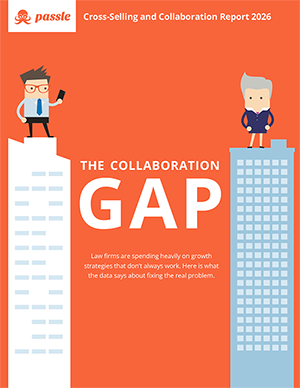




Moving beyond practice group silos and towards a one firm, one solution approach starting with what the client genuinely needs has never been more relevant for global firms.
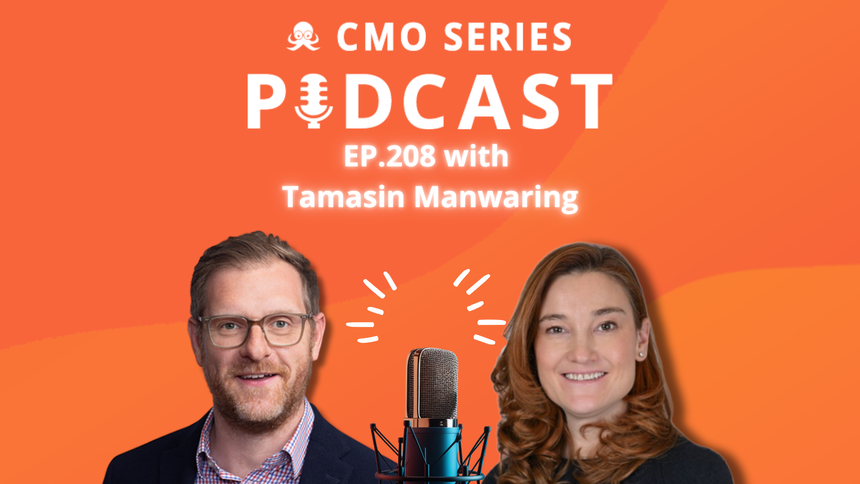
On today's episode of the CMO Series Podcast, Will Eke is joined by Tamasin Manwaring, Global Director of Product Business Development at Linklaters, about what it takes to build a client first product strategy at global scale. Drawing on a career that spans EY, Freshfields and more than a decade leading global disputes BD at Hogan Lovells, she shares how Linklaters is putting product BD into practice.
Tamasin talks about her journey into product BD, what makes it distinctly different from traditional practice group BD, and how she's bringing partners along on a more collaborative, client first approach.
Tamasin and Will dive into:
- Her career journey and when product BD became a central focus
- What makes product BD different, and why firms are shifting towards it now
- How to map a product against real client needs
- Bringing partners aboard a collaborative, client first approach
- Building a one firm, one solution culture across 30 offices
- The key barriers to cross-selling and holding a team accountable
- Her one piece of advice for BD leaders going product led
Transcription
Will: Hello, and welcome to the CMO Series Podcast, where we discuss all things marketing and business development in professional services. Today, we're gonna be talking about putting clients at the center of legal product business development. Product business development is not really a title that you hear much in legal. I've never really heard of it that much. And we're actually gonna be talking to a particular firm today, a particular lady, and I'll introduce her in a minute. But it's actually Linklaters, and they're moving beyond traditional practice group silos and towards a one firm, one solution approach that actually starts with the client and what the client genuinely needs.
In terms of today, we're gonna be having a closer look at what product business development actually looks like in practice, and I'm really delighted to introduce Tammy Manwaring, who is the global director of product business development at Linklaters.
Charlie: This episode is brought to you by CrossPitch AI, the new cross-selling tool from Passle. Cross-selling should be the easiest way for law firms to grow, but most firms struggle. Why? Lack of awareness, lack of trust, and frankly, fear of selling. The result? Missed revenue. CrossPitch.ai fixes that. It breaks down silos, helps professionals connect, and delivers timely, relevant insights to the right people inside the firm and out. There's no heavy roll-outs. Just switch it on and try it today. Head to crosspitch.ai to book your demo and make cross-selling happen. Now, back to the podcast.
Will: Hi, Tammy.
Tamasin: Hi, Will. Nice to be here. Thanks for having me.
Will: No problem. I'll do a quick intro to everyone just so they know a bit more about you, but then of course, I'll hand it over so that you can do that as well in a more authentic way than I will. But Tammy, brings a brilliant career that actually includes time at EY, Freshfields, and over a decade, believe it or not, you probably can't believe it, Tammy, leading global disputes business development at Hogan Lovells or Hogan Lovells Cadwalader, as they're now known, in a very evolving market that we're in.
Tamasin: Indeed.
Will: So Tammy actually is gonna, uh, join us to explore why product business development is emerging as a critical role in law firms, and what it actually means and really means to build product strategy around client needs, and how Linklaters is actually approaching that challenge at a global scale. Now, Tammy,I alluded to it, talked about a bit of your career and how you got here from EY to Freshfields, Hogan Lovells. It's been quite a diverse career across both law firms and consulting. Could you maybe tell us a bit more about your career journey and weaving that path of product business development into it as well? How that sort of become a central focus in what you do?
Tamasin: Thanks, Will. Yeah, no, I've been really fortunate, and I think the thing that stands out in my career is I've worked for some incredible companies. But actually, it's the people that I've worked with, you know, they've taken time to invest in me. You know, to challenge my thinking, to push me outside of my comfort zone, but also sort of believe in me at pivotal moments. And I think that really those relationships, you know, which I carry on to this day. I recently met up with some former colleagues and friends from Hogan Lovells, now Hogan Lovells Cadwalader, while they were over in the UK. And I think it's those relationships that have really actually sort of been the foundation of my career.
And the theme that sort of links all my roles together, which you alluded to earlier, is putting the client first. My, you know, sort of early career was much more focused on marketing campaigns and brand sort of transformation. And I think the thread that links to that all together, and including my role now, is putting the client first in all of those activities and roles.
Will: We'll come onto that a bit more. I imagine your ex-colleagues were pretty stressed, weren't they? Or did- Yeah ... did it all go well? We won't get into that.
Tamasin: No. It's fine. They were very, they were very well. And I think it's gone really well for them.
Will: Yeah.
Tamasin: Good.
Will: Well, it's an interesting time to be in this space at the moment. So you talked about the client first and we'll come onto it. The product business development side is interesting because obviously we talk to a lot of people and its marketing or its business development on its own. But the product business development part, it's distinctly different from the traditional approach. In your opinion, you know, why do you think firms are beginning to make that shift more to the product side as well and have that running through their structure of their firm?
Tamasin: I think you made a really good point there, Will. I think first I'm gonna sort of take a moment to define what I mean when I talk about product BD. Like so many things in professional services, it means different things to different people. You know, product BD is about putting the client first, coming up with holistic solutions to address either the opportunity or the challenge they're facing. You know, I like to say no client issue is a one practice problem or answer. So it's really about building fluency, you know, amongst, the business on a client's business in terms of sector and those specific challenges or opportunities they're facing, but also being, building fluency around the whole issue that sits maybe outside of their area of expertise, and being really clear about why you are bringing them this solution and why it will work for them and the benefit to the client.
Will: And is that how you'd actually sort of break it down and, and map it, map the product side against those client needs? Is that how you, how you're doing it, Tammy?
Tamasin: Absolutely. I think it's what we've actually been really good at doing. You know, for example, you know, a client will come to us and say, "Look, we really want to build out our digital infrastructure," and we are able to take them through the entire life cycle of that project or deal or financing or whatever it may be. And I think that's where it really differentiates firms.
Will: Law firms have normally operated, and we hear this quite a lot, on that rainmaker model. And you know, it works for some, it has worked for many firms for decades. How do you, in your role, Tammy, sort of bring on partners and try and make them more collaborative, get them to think about that client-first approach, and then actually weave in the product business development side as well?
Tamasin: Do you know what, Will? I've never liked the term rainmaker. I think I prefer, and where I've seen it done really well, is architects, those that build ecosystems in their organizations across their client base and their network. Those are the ones that go on and grow organically, creating sort of stronger client relationships, and actually leave a real legacy that benefits not only the firm, but obviously their clients as well, and ultimately the bottom line. It's about building those connections And really putting your clients' objectives and the way they are being measured at the heart of what you do. And I think the way to get partners to do that is to do a similar approach to them. So at a former firm, I came up with a program, called Six Points of Collaboration, and that was...what I leveraged there was a number of things. Our internal communication channels, we themed everything, you know, about collaboration. So all the matters that we promoted in our internal comms were collaborative matters that were either cross-practice, cross-jurisdictional, you know, or, or working with different sectors.
We also used the compensation process as well. So a lot of firms have partners write about themselves at the end of the year and talk about all the great things they've done. I flipped that on its head and said, "I want to ask people to write about others that have demonstrated the collaborative behaviors that we're trying to drive." So those that have brought them in on a matter, those that have introduced them to their clients, those who have connected them with their network, those that have done marketing activities, you know, with them, or asked them to lead a client training. And we linked it to the discretionary part of the bonus. And sort of after about a sort of 18-month, two-year program, about three-quarters of the fee earner population were sort of partaking in this, and it impacted sort of the discretionary part of their bonus. But not only that, we linked it to sort of profile-raising opportunities. So those that were demonstrating the right behaviors, collaborating, and ultimately, you know, giving the clients a better experience, but also driving more profitable growth for the firm, got more opportunities to attend events they wanted to do to sponsor, you know, client activities, to do speaking opportunities. And it really made a step change in the behaviors that we saw across the business.
Will: That's really fascinating. And I'm guessing you got some of them to read the Heidi Gardner book as well, if you could. So we should start thinking- looking out for architects at Linklaters instead of, you know, the term partner rainmakers. But I think it is really important, we hear it a lot about that you know, the human side, the empathy side. But also just, being more collaborative does lead to clients, you know, essentially giving more work to law firms as opposed to, you know, just asking for a bill. It doesn't really work.
It's not, it's not sustainable. So, I kind of fully understand how that would work. It's really interesting, Tammy. Talking about Linklaters, we mentioned it at the start, the one firm, one solution approach. Now, how do you build that culture of collaboration? I know you just talked through a brilliant program that you ran at a previous firm, but how do you build that across a firm of Linklaters sort of size on a global level, 30 odd offices? I mean, is that something that you're gonna try and replicate again?
Tamasin: Well, I think we're really fortunate at Linklaters. It is a really collaborative culture. But I think- You have to, again, I referred to what I did previously and sort of the different levers I pulled there. I think, again, here at Linklaters, you know, it's about looking at the data, talking to our clients, understanding their needs, and actually as you say, yes it does tend to generate work for law firms, but actually it also produces a much better client experience when it's done well.
So I think actually when you present your data, you listen to your clients, and you work alongside your fee earners, it's not as hard a sell as it used to be 'cause I think our data points on it in terms of, you know, client listening, what they're telling us in terms of, you know, revenue and spreading that work across the global network speak for themselves.
Will: Yeah. To back it up with data's so powerful, isn't it, really? That makes absolute sense. Um, not a play on words, but this all links back to building that collaboration culture that we've mentioned. In terms of the key barriers, you know, to things like collaborating better and cross-serving clients better, how do you hold yourself individually, but also you've got a big team at Links, Tammy. How do you hold the team accountable to that business development success at Linklaters?
Tamasin: Again, it's the data. It's the numbers. You know, I think we've been very successful about driving that collaboration, but it's also about, you know, prioritizing and, and sticking to your strategy. And I think that, that is a shift, having a really clearly defined strategy, knowing where we are focusing as a business, and collectively working towards that, has been a real, step change and is working very well.
Will: Well, we've nearly come to the end amazingly. So congratulations on everything that you've done. Thanks for sharing some brilliant insights there for our listeners. Tammy, now, what are you currently listening to? And you, you can't say the World Cup, obviously. Uh, it could be music, podcast, or, you know, anything.
Tamasin: I really love a podcast, so I am a big fan of The Rest is Politics and The Rest is Politics US. But for something educational and for a laugh, The Infinite Monkey Cage as well is always a good one.
Will: ImagineThe Politics could be a bit of a laugh at times as well, I think. Now, this is always a tricky one . I think to answer, if you can whittle it down, but what is the best piece of advice that you think you've ever received?
Tamasin: I think it is that you are in charge of your career and you really need to, to drive that. I think that was given to me very early on in my career by Katrina Turner, and I have stood by that.
Will: There we go. Good advice from, from Katrina. In terms of, this is more work-related maybe, what's a book or resource that you would recommend to your peers, anyone that's in professional services?
Tamasin: I still think Heidi Gardner's Smart Collaboration is definitely worth a read in terms of law firms and how you drive the collaboration across the business. And also I think Invisible Women by Caroline Criado-Perez, just to give people healthy skepticism around, data sets and to ensure they're always thinking about your data, the hygiene and how representative it is.
Will: Yeah. That, having two daughters, Invisible Women was, yeah, a bit of an eye-opener to me actually as well. For those who haven't read it, it's well, well worth a look. What's your favorite way to unwind after a busy old day at Linklaters?
Tamasin: I think this is gonna sound counterintuitive, but hanging out with my two nine-and-a-half-year-old twin daughters. They always make me laugh and definitely bring perspective when you've had a busy day.
Will: Yeah. It's a, it's a, it's a different way to unwind, isn't it? With kids. But I don't know if I'd call it unwinding, but yeah. Different, different perspective. Brilliant stuff. Okay, so this is a tough question to end on, but for your peers, for people listening to this for those firms that want to move towards a more product-led and client-first approach, hard to nail it down, but what would the one piece of advice be that you would give to them?
Tamasin: I think be really clear about your proposition. I think be really clear on your target audience, and stay laser-focused on it. I think when you are, you know, a large, successful law firm, saying no to work is often a challenge, especially, you know, if it comes to you. And actually staying focused on where you want to grow the business, where you see the major opportunities doing the right work for the right clients is what will ultimately help you deliver.
Will: There we go. Great stuff. Tammy, thanks so much for your time, and thanks for, as I say, all those very candid answers and really useful advice that you've given to our listeners. So thank you for coming on. And have a brilliant week.
Tamasin: Thanks so much, Will. Thanks for having me. I really appreciate it.
Charlie: You can follow the Passle CMO Series Podcast on your preferred podcast platform. Thanks for listening, and we'll see you next time.
/Passle/53d0c8edb00e7e0540c9b34b/MediaLibrary/Images/2026-10-14-09-22-13-024-6acf49c5944aac193a981bb9.jpg)
/Passle/53d0c8edb00e7e0540c9b34b/MediaLibrary/Images/2026-10-13-16-00-13-704-6ace558d477453bcaa2eba35.jpg)
/Passle/53d0c8edb00e7e0540c9b34b/MediaLibrary/Images/2026-09-28-10-59-02-989-6aba4876c6484376446500cc.png)
/Passle/53d0c8edb00e7e0540c9b34b/MediaLibrary/Images/2026-10-08-10-14-29-755-6ac76d050b30ba925ae8bc36.jpeg)
/Passle/53d0c8edb00e7e0540c9b34b/MediaLibrary/Images/2026-10-08-07-04-41-374-6ac740898f60cb75fde15df0.jpg)