




Every firm’s marketing and business development are built on a foundation of digital infrastructure, but how does a modern, technologically aware firm organise their marketing and BD objectives effectively?
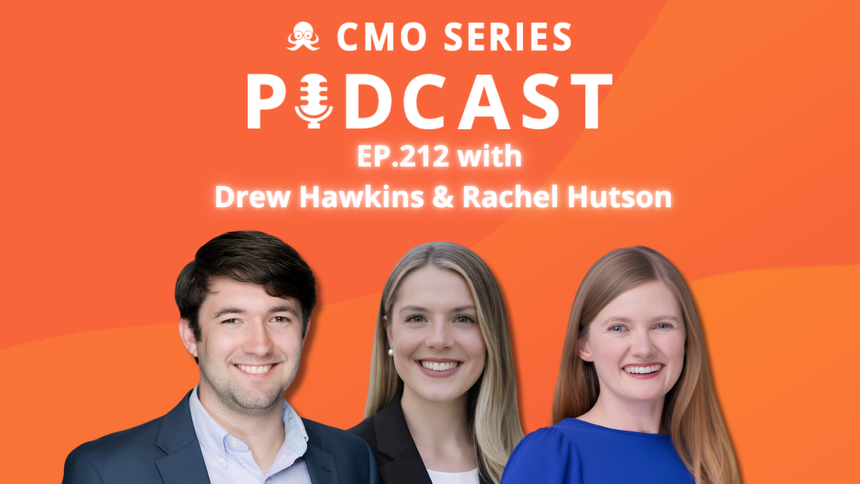
On today’s episode of the CMO series podcast, Avary Flynn sits down with Drew Hawkins, Senior Director of Marketing & Operations, and Rachel Hutson, Senior Manager of Digital Marketing, from Womble Bond Dickinson. Drew and Rachel explain how utilising new software systems can revolutionise productivity, efficiency and ease of use for a firm. With the help of Passle’s CrossPitch AI, the Womble Bond Dickinson team can develop through more seamless processes.
Avary, Rachel, and Drew dive into:
- How the Womble Bond Dickinson team managed content creation and distribution.
- How CrossPitch AI encourages networking and inter-firm collaboration.
- The link between improved communication and increasing referrals.
- Technology and AI’s impact on administrative effectiveness.
- Time-saving methods in busy, dynamic environments.
- Their key piece of advice for other marketers thinking about their infrastructure and platforms
Transcription
Avary: Welcome to the CMO series. I'm Avary Flynn from Passle, and today we're following a story about how one firm built a seamless digital platform for their marketing and BD efforts. Every firm's marketing and business development are built on a foundation of digital infrastructure, platforms, and processes that either work together or against each other in an effort to grow. Today, we're lucky enough to be joined by Drew Hawkins, Senior Director of Marketing and Operations, and Rachel Hudson, Digital Marketing Senior Manager from Womble Bond Dickinson, to discuss their work to build a cohesive, effective platform for the firm with the help of Passle.
Charlie: This episode is brought to you by Crosspitch AI, the new cross-selling tool from Passle. Cross-selling should be the easiest way for law firms to grow, but most firms struggle. Why? Lack of awareness, lack of trust, and frankly, fear of selling. The result, missed revenue. Crosspitch AI fixes that. It breaks down silos, helps professionals connect, and delivers timely, relevant insights to the right people inside the firm and out. There's no heavy roll-outs. Just switch it on and try it today. Head to crosspitch.ai to book your demo and make cross-selling happen. Now, back to the podcast.
Avary: Thank you so much for joining us both. Now, before we get into the details, it would be helpful to set the scene for everyone listening. So Drew, let's start with you. Do you mind just giving us a brief overview of what was the scope of this project, and what were you trying to achieve?
Drew: Yeah. So the scope of this project was really consolidating how we worked on content creation and distribution. When we first learned about Passle and we're talking to the Passle team. A couple of years ago, I think the emphasis was making the ease of content creation better. We didn't have a problem with content creation volume on our end. In fact, I think we almost do almost too much sometimes. But, we had disparate systems creating different parts of the process. We have our website CMS, creating the actual articles, then that had to get reformatted into our marketing automation platform.
And then from an advocacy perspective, that was going through another platform. So we had a whole bunch of different platforms all doing the same thing, but it is a disjointed process, right? It worked, but it was a lot more manual. So really what we were trying to do is take all of that, all the different hands, and put it all into one place, so that way the content creation, the client distribution, the internal advocacy was more targeted, more seamless, and took a lot less time to free up other people, especially on our digital team, to be able to take on other projects and priorities within the firm they hadn't had time to. So I would say that was, effort consolidation.
Avary: Great. Yes, I think, the key point there was just consolidation to make, you know, efficiency and ease better for everybody across the firm. And that's a really helpful segue, because one thing that really stood out to me, especially because content production wasn't really a problem for you guys, is you had this great foundation already. So coming to you, Rachel, could you just quickly walk us through, you know, what changed for you all and build a better picture of what the firm now has in their toolbox?
Rachel: Yeah. So just to reiterate, again, our processes were solid before, and we have a great team that works really well together, a really well-oiled machine. So what this was for us was a very intentional improvement to our workflows that we had already established. It feels like a fun time to be a marketer, because one of the best things you can be doing is to look at your processes and see what all you can strategically automate, and implementing Passle was a big step for us in that.
Because now what that means for us is with our content creation and distribution, we have less steps with less platforms. It's just so much more consolidated within Passle.
Avary: Thank you. That's very helpful context. So now we kind of have the bigger picture. And staying with you, Rachel, I'd love to get a little bit more tangible for people. So can we get more granular about what this all looks like in practice? So on a day-to-day, how is the firm using the new platform, the new process, and how does it compare to what you were doing previously?
Rachel: Yeah. I think emails and employee advocacy are two great examples that I wanna focus on. For example, when we sent a client alert in the past, what we were doing was building out the article on our website, and then building out an email draft in another platform, sending both of those to the attorneys and saying, you know, "Hey, can you please review this?". Now, we've gone to just building a webpage preview within Passle, sending that to the attorneys, and asking for reviews. So that has just cut down on the time that our team, you know, puts into this process significantly Cross Pitch AI has also been really helpful for us to be able to share with attorneys, "Hey, here's a relevant article that we think you might want to share with your network," and it just makes it a lot easier for them to do that.
We've seen a 20% increase in social network referrals this past quarter compared to the quarter before, and this was largely driven by Passle and our transition there, and it's just really cool to see the results like that. I do want to be clear that we very specifically didn't overhaul every single thing in our process to start with. On day one, the goal was just to make the change as seamless as possible, because if you change every single thing all at once, there's a big risk that frustration's going to build pretty quickly, and we just didn't want to start that way. Passle has a great self-serve functionality that we're excited to be rolling out over the next year, and I've actually had some great conversations with attorneys who are excited to dive into that and to be able to add things themselves.
But for right now, our team is really focused on, fine-tuning our internal processes and, and looking at the effect. For us, that's time saved. You're hitting publish on Passle and just letting everything else roll naturally from that. You know, saying we're not overhauling every single thing on day one sounds kind of counterintuitive at first, but it worked for us, and it's continuing to build excitement for where we'll be going with Passle.
Avary: That's fantastic, and I think it really speaks to the intentionality that you all had. You know, not doing everything at once, taking it step by step, so maybe everybody didn't feel as harsh of a change. But I'd also like to take a step back and kind of walk through perhaps the story of a post. So say an attorney, you know, has an idea on Monday morning, they draft the post and send it off.
Avary: You know, what comes next? What processes is that, the new post now going through?
Drew: So at this point, from the attorney's perspective, nothing has changed. So they have an idea for a post. They will still probably send us a Word doc version of it, right? That's what they were doing in the past. And to Rachel's point earlier, We didn't change that part of the process for them. We wanted to change just the back-end infrastructure on day one. So they're still sending that to us. It goes to our communications team. They will proof it. And then also we have a 30,000-foot view of what people are working on across the firm that other attorneys sitting in their lane may not be aware of, right?
And then, then why would they? So we also do a quality control check to make sure that there's, you know, nobody else is writing on the same topic, so we're not overlapping, and it provides an opportunity for a more collaborative posting. I think as we continue to roll out Passle, we will really start taking advantage of the cross-page functionality to get people to help co-create content together, and have attorneys use Passle to do all the content creation. That's eventually where we want to go. Our eventual process will be attorneys will draft everything in Passle. We'll use it kind of like a Google Doc in a way. But nothing can go live until, marketing has approved it, just to make sure everything's kosher from a full firm perspective. And our communications team is great at copy editing and everything like that too.
So, it still could be very much a team effort, but right now we just haven't changed too much on day one.
Avary: Yeah, of course. And I think you've done a fantastic job of, you know, making sure your team is really leveraging that self-service publication, and then perhaps rolling it out more over time. Now, staying with you for a moment, Drew, but then coming back to Rachel, I just wanted to get your thoughts on, you know, what have you seen so far as the greatest benefit of the new process throughout your enterprise integration?
Drew: Really comes down to two things for me. I think the time saving, especially of certain members of our team not having to reformat an email, create a preview link and then the real link and get multiple assets approved at once, is a huge time saver. So that's the day one benefit for our marketing team. The other benefit that I've been able to personally use is from the analytics perspective. So a lot of times over the years, we might get a team saying, "Hey, look at all the alerts that our particular practice group has put together. How are they doing? What's working? What's not?" And that kind of goes back to the marketing tech stack we had.
Every individual product worked really, really well, but they all lived in different places. So from an analytics point of view, we would need to go into Google Analytics and then go into our Pardot metrics and then go into JD Supra individually, and then Lexology, and we just really didn't have a great consolidated view of what was happening. Passle is providing that, and so as an example, we had one group that was one of our pilot groups for Passle. They've been on there for over a calendar year at this point. They were one of our test runs, and they came up to us in a meeting a couple of weeks ago and said, "Hey, can you look at the past year's content? What's going well? What's not? Can you give us a look at just how is this team doing from a content creation perspective?".
I was able to take all the data just from that individual group's effort, export that, threw it into Claude and said, "Hey, can you give me an overview of how we're doing so far? What topics are resonating, what aren't?" And, and then also had it scrape meeting transcripts and all of that when that task force meets together, talking about content ideas. And so it put together a really nice comprehensive report, and then I was able to, on the back of that, say, "Can you look at all the authors, all the contributors, and create an individualized report for them?"
And within 10 minutes, I had an individual two to three page, snapshot report for 80-something attorneys right out of the gate, and that would've been impossible three months ago. So just being able to scale reporting and really tailor to individual practice groups and attorneys how they're doing, what's resonating, and then being able to what companies are looking at them in JD Supra, which ones are looking at them in Lexology, what's resonating the most. We're able to do that quicker instead of spending hours and hours consolidating metrics from a whole bunch of different places.
Avary: Yeah, that's amazing. And I wonder, how are attorneys responding to that feedback that you're able to know regularly, create for them, and is it something that you do across many practice groups now? Is that kind of a wider practice that you have now?
Drew: It's not yet. I'm sure it will be, and I'm sure if a few of our attorneys are listening to this, their ears are gonna perk up, right? So we haven't broadly broadcast that at this point. I think what we really wanna do is drive our firm to be self-serve in the analytic side, and I think Passle really lends itself well to that, to be able to, as an attorney, log in and see everything relevant to you, and then have a safe report on just your content, who's looking at it and, and whatnot. But within certain groups that have been a little bit more active on Passle, there's two in particular that we've worked with, they've really loved it. They've loved the feedback, and then it's really, with one particular group as we plan out campaigns, we've been able to use those snapshots to proactively plan what topic areas do we need to lean into for this next campaign initiative.
So the feedback's been great. I haven't teed it up as a Passle induced change. They just really like the updated metrics, but Passle's been a big part of being able to facilitate that.
Avary: Well, I think that also speaks to, again, the efforts that you've gone through to make sure that they don't feel as much of the change throughout this process, which is fantastic. And Rachel, I'll just now come to you and maybe get your thoughts on some of the benefits you've seen.
Rachel: I totally agree with everything Drew said, and just wanna go back to the time savings for our team, because I think that's the number one for me. When you have, you know, different competing priorities and, and shifting priorities and, you know, pivots that we have to do every day in marketing, the thing I love about Passle is that the less time that we have to give to every step, it creates a more efficient workflow to, present to the attorneys, and we can go, you know, even more quickly in a lot of cases to market with their content. At the same time, before, you know, our processes were taking us a little bit more time and, you know, more platforms were involved, so whenever we had to pivot, you know, It didn't... We were able to do it, but it may not happen as quickly now. I can see how we're able to just pivot a little bit more quickly.
Rachel: And as we've updated our own processes, we can take a step back, you know, with everything that comes to us and say, "Okay, what's the best strategy that we can put forward for this specific thing?" And look at all of our priority areas and, and what we're doing and just say, "Hey, you know, how can we best serve the attorneys and our clients with this new process?" So I'm really excited about that and to continue seeing where that takes us.
Avary: Yeah, I'm really glad that it's saving time and making process more efficient for, you know, both the attorneys and the internal team so that everybody's really feeling the benefits. And now, Drew, I wanted to talk a little bit about the lift from your team. So you've overhauled the way the firm publishes content and how it reaches the market and the internal audience. So how did you find the rollout, you know, from a timing perspective on your side, kind of what it looked like start to finish?
Drew: The enterprise rollout, where we stand today with Client Connect integrated and all of our thought leadership thrown through Passle at this moment, that took about two months, give or take. But I would say the process was about a year before that. We worked with two different groups within our firm that are more on the early adopter side, smaller groups of people to use Passle and kind of get their heads around it. With those groups, you know, working with a group of 10, 15, 20 attorneys, it's really a lot easier to find what's working, what's not, from a process perspective.
You're getting feedback in smaller sets instead of a wide variety of feedback with a wide variety of perspectives, views, comfort with technology, and that kind of thing. So we knew what that process was gonna look like before we got to the enterprise-wide implementation. So I would say that the past year with two different groups, our digital solutions group, and then, we had another group that was almost tailor-made on accident for a Passle trial.
Drew: They were a group put together helping navigate change in the federal government. We were putting a task force together around that at the turn of the election. And just the way they were going about content creation, it was like it was made in a lab to try Passle out. So we were just very fortunate with the timing there. vBut that laid that foundation for when we did the firm-wide implementation here recently, we were good to go. So the change management on that end was pretty easy for us at that point.
Avary: Yeah. It sounds like you had a very strategic plan in place for the types of groups that you would roll this out to, and I think that really helped set you all up for success. So, you know, following up on this, sounds like the enterprise rollout itself came together rather quickly. Now, coming to Rachel here, what was your experience like with this, and what would maybe you attribute it to?
Rachel: You know, it really did come together so quickly and so smoothly. Internally, I think having that pilot program with the two teams that Drew just mentioned really helped us, and our own team to be able to start adjusting and updating our own processes internally so that, you know, we could have that pilot time for ourselves to start getting used to what is this going to look like when it rolls out across the board.
That was a huge part of it. And another huge part of it for me, I think looking back, was the communication and just the great partnership that we had with the Passle team and with the web development agency that we work with, which is Bliss Digital. Their communication was something that really impressed us, and the attention to detail that went into just so many steps along the way in the past couple of months that we've been integrating.
You know, looking back, there have been very few other cases we've experienced in the last few years in, you know, onboarding, things like this, where it's, it's gone this smoothly and the communication has been this great. So just great partners, with Passle and with Bliss, and just, a great buy-in from our own team as we've been updating processes.
Avary: Well, we appreciate that, and I think that it's very mutual in that everything was very able to come together very quickly with how effective both the Womble Bond team and all of the development partners were. And you had some fantastic teams in place to, again, roll this out to. We know a great rollout only matters if attorneys' behavior actually change and use the platform. So I know you all had a really smart approach to making sure they felt very little disruption. So I'd love for you both to comment here. How have you been able to do that, and how are they engaging with the platform now? So maybe Drew, we can start with you.
Drew: Yeah. One thing I try to do, with any platform, not just Passle, is not call out the platform itself, but what we're trying to do, right? So instead of saying, "We need to put a Passle article out there," we just need to put thought leadership out there. You know, what does that need to look like? Because sometimes, some individuals can get too wrapped up in the technology side and not what we're actually trying to accomplish. So try to, like, take it up a notch out of the platform and just objectively, what are we trying to do?
So from the attorney's perspective, we're just trying to get thought leadership out there. On the marketing team's end, we've handled how that, how that actually operates. So the attorneys, again, haven't probably noticed that much. What has changed in their world, I think, is how they share content themselves. So that's where the cross-pitch emails, I think, have been a really great value add. In the past for advocacy and encouraging attorneys to email things forward or share on LinkedIn, they might ask for a forward friendly formatted email, so we have to create two versions of that email, give that to them as an attachment for them to re-forward something, and that's a little bit cumbersome.
And then the other part for sharing on LinkedIn and being more active there, we were using social advocacy tools for those work great. They do what they need to do very well, but what that requires from the attorney is to log into yet another platform, make sure they're following the channels they need to follow, go click on that, click share. So there's a lot of steps happening there versus how we have it set up now, especially with Cross Pitch All that content's landing in their lap. They're getting an email, about an article that's relevant to their practice group. This is something that their clients and colleagues are going to expect to see from them.
So an email lands in their lap saying, "Hey, your colleague wrote about this. You might want to share it." Here's two simple calls to action. Here's an email link or a LinkedIn link. They're presented with a pre-written copy right out of the gate. I mean, they can obviously alter it, but the whole process for them is much simpler. And, to Rachel's point earlier, we saw a 20%, rise, quarter over quarter with, social referral traffic, and I would say just that ease of use and ease of sharing is, I would guess, is a major contributor to that.
Avary: Yeah, and I really liked the point you made about just taking a step back and having attorneys think about the bigger picture and what they're really trying to do here, and I'm glad the CrossPitch, notifications have made it, you know, really easy to pre-populate a lot of those communications to either, you know, send out to clients or put onto their social networks. And coming to you now, Rachel, I'd love to get your thoughts as well on, you know, how the attorneys are engaging.
Rachel: I'm really excited to continue to see how they continue to engage as we're able to show them more and more of what they can do with Passle, especially, you know, with the self-serve functionality that we're planning on rolling out in the next year. Right now, I couldn't agree more with what Drew said about, you know, how we handle thought leadership and how we are using this to empower attorneys to be able to share it out with their clients and even more, and their network. And that's been huge because I remember conversations that we've had with attorneys where it's essentially like, "Okay, I can be on LinkedIn all day, and I want to be able to share, you know, what we're doing," and just kind of melding that together in such a seamless way, and I think Passle really does that.
Like, with the emails that go out with CrossPitch AI, you can just click a button, it'll pull up an email for you, and you can send this to someone and just say, "Hey, this seems, you know, pertinent to a conversation we just had," or you can share it on LinkedIn, and it takes a lot of the friction out of, you know, like Drew mentioned, having to log into platform A, B, and C to share, you know, this one article that you're excited to get into the hands of other people. So that's been the, the biggest part for me, just it's been a great tool to help attorneys not only consume the content that we're sharing, but to be able to more seamlessly share it out with their networks themselves so that they continue to build their own reputations as, as thought leaders and, and be able to share, you know, what others in the firm are driving too.
Avary: Yeah, I think just again hitting on them being able to build their own brands and just make themselves more known across the firm, that's all fantastic. So thank you both for all of that context. And finally, I'd love to end on something practical here just in case there's some marketers listening who's exactly where you were before starting this project. So what advice would you both give to other marketers thinking about their infrastructure and building a platform to give both their firm and their clients a better experience overall? So maybe Rachel, we can start with you.
Rachel: Sure. There are two things that come to mind for this, and the first is quantify whatever you can now, because data's going to be your friend when you're examining what's working and what maybe you need to tweak. I know it's been great to look behind the scenes and say objectively, "Here's where we're saving time. Here's where we're seeing an increase in our, you know, own processes on the team," and just continuing to, to build those benchmarks so that even next year we can look and say, "Hey, here's what's happened, here's where we're going and, and, you know, what we're continuing to grow in."
So that's the first thing. At the same time, I would say be curious and ask lots of questions in the process, because there are a lot of different angles involved in something like this, whether that's, you know, our own internal team, the attorneys and the clients, and all of their experiences all fold into this. It's really helped to step back and say, "Why do we do it this way? What are we actually trying to achieve?" And now for us, we have a moment to step back as we're fine-tuning our processes, you know, at this very moment, and continue to ask that as we keep building with Passle.
Avary: Thank you so much, Rachel. I think I love that ‘be curious and ask questions’ part. Again, just getting to know your attorneys sim- more on that more personal level as well I think is great. And Drew, just coming over to you now.
Drew: Yeah, I would say for any change management piece, the one biggest piece of advice I would say is to start small, right? Especially for Passle, Rachel and I could see the big picture. How can this affect the entire firm? How could we get everybody on board? And I've learned from experience it's easy to get very excited about that and wanna scale that quickly and prove your value quickly. But part of our slower implementation out of the gate, you also invite multiple points of failure.
So starting small, that helps you identify potential points of failure ahead of time and on a much smaller scale. In addition to that, when you start small, you build internal champions. So with, you know, whether it's Passle, you're looking at a marketing automation platform, fill in the blank with whatever new process or technology you have, you need internal champions. It's just as much cultural change as it is technology change, if not more so cultural change. So if you have a few influencers within the firm that people tend to listen to or carry weight, get them on board. Let them be part of that beta test if they're willing. Because if you have internal champions, when it comes time to scale, you're gonna have more runway built for that experience.
So I would say that is a really important thing is just getting those internal advocates built around the platform, and almost have an evergreen adoption where people are coming to you saying, "Hey, I heard this person's using this tool. Can I get in on that?" You know, so it's almost like an underground thing versus making it an immediate implementation firm-wide, and then now it feels like a mandate. It doesn't feel like something new. So I've seen that across multiple implementations, whether it's CRM, Passle, fill in the blank with whatever that is. Get your internal champions, start small, and then when it comes time to go enterprise-wide, you're gonna be much more set up for success.
Avary: Yeah, I think that's all great advice. I'm just thrilled to see everything that you guys have been able to do with the platform over the last couple months. So Rachel, Drew, thank you both so much. This has been a wonderful conversation, and I think a lot of people are going to be able to take some great things away from it.
Drew: Cool. Yeah. Thanks so much for having us.
Avary: Yeah. Thanks so much.
Charlie: You can follow The Passle CMO Series podcast on your preferred podcast platform. Thanks for listening, and we'll see you next time.
/Passle/53d0c8edb00e7e0540c9b34b/MediaLibrary/Images/2026-01-12-10-16-56-904-6964ca18ab784af100f11853.jpg)
/Passle/53d0c8edb00e7e0540c9b34b/MediaLibrary/Images/2026-10-08-10-14-29-755-6ac76d050b30ba925ae8bc36.jpeg)
/Passle/53d0c8edb00e7e0540c9b34b/MediaLibrary/Images/2026-10-08-07-04-41-374-6ac740898f60cb75fde15df0.jpg)
/Passle/53d0c8edb00e7e0540c9b34b/MediaLibrary/Images/2026-10-08-07-04-41-241-6ac74089ce624e48d6cc6df6.jpg)
/Passle/53d0c8edb00e7e0540c9b34b/MediaLibrary/Images/2026-10-08-07-04-41-183-6ac74089d24614eebffa86bf.jpg)