



The art of storytelling is becoming an increasingly vital tool for law firms to form strong client relationships through personal connections, ultimately encouraging natural collaboration to rise above competitors.
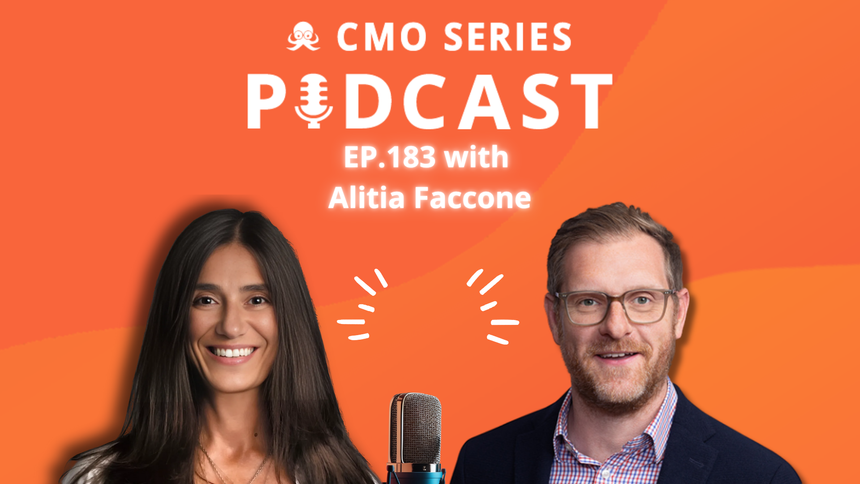
Today, Alitia Faccone joins Will Eke on the CMO Series Podcast to share exactly how to incorporate successful storytelling into legal marketing. From acting school to law school to leading business development at Jackson Lewis, Alitia Faccone has built a career leveraging the power of storytelling.
In this episode, we’re going to dive into how data, creativity, and a ‘professionally personal’ approach to content are helping the firm connect with clients in more meaningful ways, and what’s next as storytelling, data, and technology converge in legal marketing.
Alitia and Will discuss:
- Her unique career path into legal marketing and business development
- Alitia’s expert advice and experience on the foundational role of storytelling within legal marketing
- Applying data insights to inform client-focused strategies
- The practice of creating ‘professionally personal’ attorney bios
- Future strategic plans involving the integration of storytelling, data and technology
Transcription
Will: Welcome to the Passle CMO Series Podcast, where we talk about everything that is marketing and business development related. Today, I'm gonna introduce our special guest in a moment, but at the heart of every strong client relationship is a personal connection. So blending storytelling and insight that really helps lawyers and attorneys to develop that connection and rise above the competition and stand out.
Today's guest on our podcast knows exactly how to make that happen. From acting school through to law school, to leading business development at Jackson Lewis. Alitia Faccone has built a career leveraging the power of storytelling.
Charlie: This episode is brought to you by CrossPitch AI, the new cross-selling tool from Passle. Cross-selling should be the easiest way for law firms to grow, but most firms struggle. Why? Lack of awareness, lack of trust, and frankly, fear of selling. The result missed revenue. CrossPitch AI fixes that. It breaks down silos, helps professionals connect and delivers timely, relevant insights to the right people inside the firm and out.There's no heavy rollouts. Just switch it on and try it today. Head to crosspitch.ai to book your demo and make cross-selling happen. Now, back to the podcast.
Will: Welcome, Alitia.
Alitia: Thank you Will. It's a pleasure to be here this afternoon.
Will: I was gonna do the Italian accent Faccone. I've done it, but we'll stick to Faccone in this episode. We are gonna dive into how data, creativity, and a professionally personal approach to content can really help the firm connect with clients in more meaningful ways, and also we're gonna talk about what's next. The storytelling data and technology sort of converged together in legal marketing. We're gonna delve now into the actual topic and I'm really excited to ask this question 'cause it's really interesting.
We had this catch up session a few weeks back and it was so interesting just to hear this story, so I can't wait for other people - to share it with them as well. What we're gonna get into is obviously storytelling which you are great at we come across very, very quickly. You have had a brilliant and fascinating journey.
We talked about it already, acting school through to law school to becoming a partner. And now you're on the business development side at Jackson Lewis. Can you talk a bit about the path and how that unfolded, and what ultimately sort of drew you to the marketing and business development side of the profession.
Alitia: I absolutely can, and you might be sorry that you asked this question Will, because it's a long and winding story, but even in the long and winding story, I think it's deliberate and intentional to a certain extent. SoI went to college thinking I was going to be a lawyer, but came out totally convinced I was going to be an actress. I spent a year at the Neighborhood Playhouse in New York City where I studied the Meisner Technique, and even I can say I'm old enough to say I had the privilege to have a couple of master classes with Sandy Meisner himself. And for those of you listening to this, who don't know, and of course, why would you, the Meisner technique is based on being really focused on being in a relationship. In that moment based on truth and active listening with, in that case was my scene partner.
But that philosophy or approach, you know, I've carried with me all these years Will. The training has served me personally and it's pretty much influenced all that I've done and accomplished in my career, including law firm, business development and marketing. By the way, the PS to my aspirational acting career is that I went out to Los Angeles in the early nineties and wound up back in law school. I did a brief stint at the LA Times where I worked in a supporting capacity in what was then called ‘Get This’ the new business development department. And I was part of a team that experienced the very first partnership between a news outlet and the digital world when the Times started making news accessible on aol.com and yahoo.com.
So I am dating myself, but I remember talking to a colleague in the editorial department who said, “Hey, Alitia. There's this new thing called the internet and it's gonna be big”. So honestly, that seems like a long time ago, but really not relatively speaking, if you think about just technological advances over time, right? In any case, from the times I learned that there is an emphasis on innovation even in longstanding institutions like the news and the law. This is an early lesson for me, so I left the Times to go to law school, as you said. I studied at Southwestern, which then and I'm not sure if it still remains today, had the only two year law school program. Which was pretty crazy, but that experience taught me that thinking practically was always going to be beneficial. I spent the first couple of years after that at Foley and Lardner in Los Angeles, and I came back to the East Coast and I spent time at Willkie Farr & Gallagher. So I've had the privilege to work at some pretty incredible firms.
I think probably among the lessons I learned at Willkie was that commuting two and a half hours each way while having two kids under the age of three wasn't necessarily the best combination. So I found an amazing home at McCarter & English, where I started as an associate, ultimately became a partner, and I think I really did so by embracing what was an opportunity then. Then again, dating myself to become one of the firm's first e-discovery lawyers. It was really in its nascent stage, and I was fortunate enough to become involved in a big capital BIG case at the time, and so I learned an awful lot about the exchange of digital information. Now at that point in the context of civil litigation and really focused my career there.
And you know, you asked me this question, so it gave me the opportunity to reflect, but I think my entire career was shaped by being kind of at once grounded in the pursuit of skill and strategy, but also being opportunistic. So I really leaned into the practice of eDiscovery. I became a member of the Sedona Conference ,Working GroupOne, where I met like just amazing colleagues who were and still are committed to the cause of not just learning how to advance the law, but doing so in a manner that's both collegial and puts the client's needs first through collaboration. In fact, one of their major first tenants is called the ‘Collaboration Proclamation’. So I'm learning all these amazing life lessons, and when I became partner, like many lawyers, you know, they turned to me, they said, you know, “Marketing and business development is a thing, and you kind of have to learn how to do it and go out there and do it”.
I got involved in the women's initiative at my firm, which also was gaining resurgence at the time, recognizing that the law firm world was changing fast from origination partners and service partners to basically BD survival of the fittest. So I look for ways to make my mark. I mean, that's kind of what you have to go out there and do, right? Both in leadership and in developing relationships. So working as a team with a friend and fellow junior partner, we tried not just to bring life to the women's initiative, but really turn it into a business development enterprise. So I threw myself into organizations like the National Association of Women Lawyers and the Women in Law Empowerment Form with the great Betiayn Tursi, and really looked for opportunities to advance the cause of women in the law and reinforce that relationship development that was at the heart of being a successful legal business person. So somewhat, I guess serendipitously the firm started to begin their search for what became its first chief marketing officer.
And based on the success of the Women's initiative, I was asked to step into the director of marketing role and kind of hold the fort down until that new position was filled. So I served in a dual capacity, both as an eDiscovery partner and the director of marketing for I don't know, a year or probably more so, and I loved it. I loved it. I really enjoyed having the opportunity not only to use those strategic skills that you learn as a litigator, but to get back to my creative roots as a theater person and ultimately leverage both of those skill sets in the world of legal marketing. So to make the long story short, if that's, If that's even possible anymore, when they hired their first CMO, who's one of the nicest guys in the business, and to this day, I consider him one of my greatest mentors. I asked if I could keep doing the marketing job as opposed to going back to being a lawyer full-time and that's it. A career in legal marketing was born.
So the transformation really took place by me focusing on the opportunities that were presented to me and thinking ahead, you know, to the way the world and the business of law was headed. So I guess I'll finish up by saying my son was a music composition major at Purchase College, which is the Arts Focus college in the SUNY system in New York. And their motto, which I think works to spur creativity is “Think wide open”. So I think that's a good metaphor for how I've approached my career. I've always tried to think wide open.
Will: See, there we go. Storytelling. You are the one, the first question and what a great story. I mean the words you use, being opportunistic, you know, the whole Meisner approach, the collaboration piece, business development and marketing was sort of made for you, it sounds like. So, which leads me on to the second question, and it probably was quite early, but what, you know, when in your career did you realize or first realize that the storytelling part was gonna be a massive part?
It wasn't just a nice to have other people try and bolt the storytelling piece on, and sometimes they need to actually have life experiences to be able to tell stories. Which actually can sometimes be a problem for people that don't do anything. So it's not like you're, you're always having these experiences. You love traveling, you do all this stuff. You sort of need that, right to be able to tell stories. But then you also need it as part of that business development part. It's huge.
Alitia: Absolutely. I mean, I think pretty much everything I've done kind of points to it, and I'm not sure I recognized it initially at the time when I started out, but even when I was a practicing lawyer, it was apparent that people you work closely with Will, that you really can develop a connection with. And that you trust enough to kind of open up to them allows you to more easily recognize some of the similarities and experience. I mean, let's face it, in apprehension, in dedication to the work, that just allows a relationship to develop naturally.
When that happens, working side by side and collaborating becomes so much easier and more fluid, and I think the work is better for it. So when you're a lawyer and all of a sudden when you're a junior partner and you're told you have to go out there and bring in business and network, and I'm using air quotes - and especially several years ago, that was the word that was bandied about more than any other. I think actually those conversations probably are happening even earlier now. In fact, I know they are because I've trained a lot of lawyers on business development. But when I was a junior partner trying to develop business, which is a daunting prospect and one that just strikes fear in the hearts of many, you've got that vision of yourself, you know, you're standing in a room, maybe it's like a bad dream and you're standing in a room of strangers. Something out of a bad movie too. Feeling that pressure of having to make a connection even when you're in a group of what are really supposed to be, and you believe to be like-minded people, whether it's an industry association or a particular committee of a bar association, or, gosh, maybe even worse, the new mom at the PTA right can be incredibly scary and confident shattering.
But there comes a moment, and it could be in a professional situation or a personal situation when you strike up a conversation with somebody and you find out, Will, that they're on their way to Greece and you just came back from Greece, right? And so you naturally open up about the experiences you have because it's so exciting to have just seen the sunset in Santorini, and you wanna share that and you ask where they're going and suggest what might be great to see and oh, and don't forget to try this restaurant. And all of a sudden the apprehension falls away because you've discovered a common connection. You start to share stories in a meaningful and authentic way, and that's the basis of our relationships. Finding those common connections, finding those things that put yourself at ease with another person.
It doesn't have to be travel. That just happens to be what I naturally gravitate towards. If you or my daughter, it could be that Taylor Swift and all time Low are releasing new albums on practically the same day. By the way, just in case you didn't know that it could be being a dog mom or dog dad, but whatever it is, and right here's the magic words, telling shared stories, even in miniature, allows people to develop relationships more organically. So when my kids were really small and I was doing my best to teach them meaningful and profound life lessons. I used to tell them that every interaction, every moment is an opportunity to develop a relationship or simply really kind of honestly, relationships can be fleeting, so we need to take care about them.
It's also perhaps, when we just talked about my theater background, I've always been drawn to the lyrics from Stephen Sondheim's ‘Moments In The Woods’ from ‘Into The Woods’. That's another podcast, Will. You can look those up. But some relationships are intended to last a lifetime. It's like that needle point quote, right? Or maybe they're defined by a period of time, like you're in high school or, or middle school or a job that you had, but some relationships are like the Prince and the Baker's wife and ‘Into The Woods’, again, theater reference, and they only last for a moment. You're standing at the post-flight baggage carousel and you have an interaction with a woman who notices your David Byrne, American Utopia on Broadway merch T-shirt, and you spend like 30, maybe 60 seconds discussing the transformative power of theater and music. You're never gonna see that person again. Right, but in that moment, you had a relationship and you created your own personal shared story, and that's so powerful.
Will: Yeah. It's fascinating that you make so many brilliant points there. I'm trying to unpick them. I can't, but we were at an event yesterday actually, and we were running the event. It's all about cross-selling and so many of the things that came back on the panel were. You need to be collaborative. You need to build relationships. You need to make the lawyers more human or you know, all that sort of stuff. And then they'll internally build those relationships so that they will then do that externally as well with their key clients and prospects coming from -
Alitia: I don't mean to interrupt, but I get excited and before I go too crazy, like to bring it back to law firms, business development and marketing and like networking. Right? And by the way, in 2025, you and I both know networking in the traditional sense is really not the be all, end all as it was presented to me when I was a junior partner and there are plenty of ways to get creative. But what you just said reminds me, like I've never been crazy about that phrase, elevator speech or elevator pitch Will. For me, it kind of evokes a two dimensional, flat experience. Right, “Hi, my name's Alicia and I'm the senior Director of business development at Jackson Lewis. I play a significant role in content strategy. Oh. And I have two children”, and like I can recite that probably with a little more detail, but we don't have all day. But in like 30 to 60 seconds, what does that really say about who I am or what I do or what I'm passionate about? I mean, there's nothing in that description that allows somebody else to pick up that thread and make a connection to me.
You know, other than maybe they have two children too, but I'm guessing, and I'd venture to say that a lot of people do. So I prefer to always use the phrase when I'm training or when I'm talking to anyone about a value proposition, and I know that sounds a little highfalutin. I don't even know if anybody uses that word anymore, but in any case, for me that phrase means what It sounds like, you are bringing something of value into the experience, into your interaction with the other person. You're sharing, or even exposing something about yourself to allow for the seeds of trust to get started growing. You're starting to tell your story in a way that creates that opportunity for you and your conversation partner to make that connection. So again, circling it back to big themes here, when I train people on business development, storytelling is really at the heart of it. I mean, does it mean that skills and qualities like, you know, legal skills and qualities aren't as important? You know, of course they're not 'cause you're hiring somebody or somebody's hiring you to perform legal services.
Your background and experience, your knowledge of working with clients in a particular industry. That's also another entire podcast, but, you know, sharing your story, making that connection just makes us human. And being human is really the foundation from which anything really should flourish, which I think now more than any other time in history, it's super important.
Will: So we've talked a lot about storytelling and I suppose that brings me onto the next question, and I'll be really interested to know how you bring this in. Doing things like attorney bios, you know, we speak to a lot of marketing and BD folk and this, it can often be the bug bear of one of the roles that you have to, you know, one of the projects you have to do is the attorney bios. How do you make them? I think you described this off camera, how do you make them professionally personal, and what does that mean in practice? Well, how do you bring these to life?
Alitia: And Will, at the risk of repeating myself, which I seem to do a lot, but particularly on this topic, it's really about the human connection. We know, and I'll tell you, I've been, I've been researching this pretty much every year I've been in law firm, business development, and marketing, because I have trained a lot on attorney bios. The statistics have not changed in all the years I've been tracking it, and that's the vast majority of web traffic, probably over 90%. I know because I checked this last month, and goes first and directly to attorney bios.
I mean, the ‘why?’ for that is pretty straightforward when somebody mentions a lawyer, somebody refers to a lawyer or somebody hires a lawyer, the natural inclination is to go to that lawyer's bio and look them up to see if they do what they say they do.
Or maybe these days it's LinkedIn first. It's 50/50 probably, either way with web traffic, it's all about the attorney bio first and foremost. I have a saying. I made this up Will, so go with me, but there's two universal truths of attorney bios. A good bio can help you bring in business, but a bad bio can lose you business immediately. So we also know that even though I do, I encourage attorneys to update their bios frequently. Most don't because it takes time. I mean, even when I write a draft, it takes time and attorneys have plenty of other important things to do with clients, as it were. So the result, the bio can become easily and quickly an outdated, static two dimensional document.
And maybe sometimes an attorney is submitting an RFP and all of a sudden they realize. Oh no, I need to update my bio because I'm submitting an RFP for a wage and hour class action to a hotel client, and my bio does not reflect the latest experience I have doing that work or that I used to work in house at an international hotel chain. And that I've been litigating a lot of cases for hospitality clients, and my bio doesn't even mention that experience. Oh, and Alitia told me that a good bio can help you bring in business, but a bad bio can lose you business immediately, especially if I don't have the experience that I say I have in my bio. So I can lose this business if this potential client looks at my bio and the experience isn't there. But maybe even more problematic and troublesome than that fact that the bios are not updated frequently to reflect experience, enhanced experience and skills and industry knowledge is that they don't differentiate at all. There are a lot of lawyers across the United States and the UK and even in the labor and employment space, there are an awful lot of lawyers.
My firm's main competitors among them have thousands of lawyers that practice some form of workplace law. So how do you differentiate? I ask lawyers to show, not tell their experience, and I kind of have a hit list like George Carlin's ‘Seven Dirty Words’, and the members of my team know if they send me a document with some of these words in it, it's gonna go right back with a digital red line. Words like extensive experience, deep, broad, myriad, unique, and the dreaded this lawyer litigates in state and federal courts before arbitrators and administrative agencies. Will, I ask you where else is there to litigate except state and federal courts and various other tribunals and in front of administrative agencies.
Now this is all true and relevant, but not necessarily differentiating. I know it's really difficult even within the very specific niches in the world of labor and employment law, and there are many, I will tell you there are, and the variety and types of legal services that can be provided in that context. And again, whether you focus on wage and hour issues, or you provide advice on leaves and accommodations across federal and state jurisdictions, or even some really specific area like ERISA or California PAGA class actions, there's really only so much you can say about what - W-H-A-T, you practice. So in addition to my two universal truths, when I talk about bios or other aspects of business development, I always recommend people watch what I think is now a classic TED Talk, which is Simon Sinek ‘Start with Why;. Have you ever seen this one? It's a really good one. Will promise.
Will: I've written it down now.
Alitia: Okay. Okay. That's a key takeaway. I'm telling you. Go watch it. The full one is 19 minutes long.
Will: Okay.
Alitia: But the key takeaway for me is people don't buy what you do. They buy why and how you do it. And I've applied that philosophy to attorney bios because it's super important.
And again, theme of the day, it connects back to that initial philosophy about storytelling and developing relationships. And I believe you can do that when you're writing an attorney bio and make a two dimensional piece an opportunity for connection. So at Jackson Lewis, me and the marketing outreach coordinator on my team, her name is Camille. You've met her. She's awesome. We're essentially a team of two that's responsible for like all 1000 plus bios at Jackson Lewis. Now, I cannot say that I've touched all of them yet. It's a goal Will. Will, It's a goal and it's Monday. So I'm feeling pretty good about goals, but when an attorney comes to us, we ask specific questions to elicit the why and the how.
We call them food for thought questions, and they're intended to really get into the why, why they were drawn to the practice of labor and employment law? What's their unique background? How has the work they've done before in various contexts connects them to their practice today? We ask really importantly about their approach to client service, which is the ‘how’ they do what they do. And we meet with lawyers and we ask them these questions. We have an intake form of course. And because we're a labor and employment firm, and the work we do every day involves employers and employees, which are people, we think it's fair to share what we call professionally personal information. It's about sharing something about yourself that's important to you. That's not directly about the work you do. Maybe you're active in community service where you live. Or maybe you volunteer many hours of legal pro bono time or you know, it could just be what you really enjoy doing when you're not practicing labor and employment law. And what are we doing when we do that? We are telling a story.
We're differentiating the attorney from all their colleagues and competitors, and it brings us back to having people who are reading what you write and recognizing something in you that they also recognize in themselves. We talked about this when we were talking about networking, and you can get that sense of connection and hopefully, and perhaps some willingness to engage in an opportunity for authentic relationship development. And listen, not everybody is comfortable with the same sort of expression of professionally personal, and again, the key is professionally personal, which is why we describe it that way. It's about working with someone's comfort level and your own comfort level in telling your story. But Will, you know, at the end of the day, we managed to be pretty successful in really creating bios that differentiate even within the singular experience of practicing workplace law or practicing any law for that matter.
Will: Yeah, it's a fascinating answer and we've heard that a lot of times about the 90% of traffic, you know, the lawyer's buyer. It's the first impression the attorney gives to key clients and prospects. It's the real estate that they own. So it's so, so important. We've also heard it, I've had a number of conversations recently just to throw these into the mix, which you've probably considered as well. It can be difficult to get anyone, any attorney to give these how and whys. 'cause they just wanna talk about sometimes where they went to university or the deals they've won.
So it is making them very personable. I had a CMO, on the other day that said their whole team gamify, so they literally turned it into a game. You win points, you win prizes if you fill out your bio. That's one of the, that's one of the things that they were doing. Another one told me, to your point about how you tell stories. Sometimes for attorneys, it's hard to do it in the written format. So they were doing, she called them video bios, so they're actually trying to bring their attorneys to life with short videos that they then could send out to internally, but also externally to key clients and prospects, which I thought was quite cool as well. Good idea.
Alitia: Yep. Yep.
Will: No, so it is fascinating and I think it brings on to the next question. So you've got the storytelling piece. You know, you've got data around where clients engage. You already mentioned it's definitely at the lawyer bio, end of the website, and there's lots of other pieces as well. But what have you sort of learned from that analysis and how does that influence your marketing and business development strategies?
Alitia: Well, now you've given me an opening, not that you haven't already, but, it's all about the data, right? And several years ago when I was working with some former colleagues at Jackson Lewis, we knew how important just content and thought leadership was to clients and the overall brand and marketing efforts of a law firm. So we went on what at the time we called a very aspirational journey to create what we called ‘Content Nirvana’. How do we get to the place where we provide information that people want to read in the way they want to read or consume it? And by doing so, really demonstrate the power of our own thought leadership and the scale and knowledge and experience of our lawyers.
And honestly, I'm not sure we were ready for that and maybe because we used the word nirvana. It was probably over aspirational. But last year, and I mean the beginning of 2024, we embarked on a new journey. I guess it's an odyssey, if you will. 'cause it's gonna take a long time to develop a firm wide content strategy, and because it was 2024 and now it's 2025, that journey could not exist without collecting and analyzing data and metrics to really better inform theories, recommendations, and ultimately new ways of doing things that improve our process. So we collected enormous amounts of data from our website, from our aggregators, and we looked at it. We categorized it. We looked at engagement scores and the number of words versus a time spent on a page, and content formats, and content distribution methods, and we were really tried to paint a picture. Not so much where we should go yet, but in that moment, what we were doing and what was effective versus what wasn't effective.
And around this time last year, we put it all together and we did develop some initial kind of walk before you run best practices that we spent the remainder of the year testing and there are only four of them. Like the use of key takeaways to ensure we optimized application and practicality of our content. Now Will, I'm gonna be truthful. This idea was not genius on our part. I have a few news feeds that I read first thing in the morning, like I'm sure you do too. And when I link to any of the articles in those feeds, almost all of them have key takeaways at the top. And I use those to really gauge my interest in how far I wanna read past the first paragraph. Also something super important now because the time span and the attention span of people is really, really short these days. But we looked at our blogs and our podcast and we've done a lot of work, really, really digging in and analyzing the data and metrics for our podcast, by the way, which is almost apples and oranges compared to the types of information that you can glean and use when it's a piece of written content.
And we use all of that information. Again, this is also not rocket science to drive more engagement. So by the way, we're also really leaning into video now as a result of that engagement that we're getting, we realized that we could do a much better job at cross-promoting related content. “Hey, you don't wanna read the article? Listen to a 10 minute podcast instead”. So we made all these initial recommendations and we just started testing them, and we marked how our best practices led to improvement over time. And now we're at the really fun part, we're just digging into reporting back on what our results are to authors and leaders, and what our results our content are producing month over month.
And then probably the most exciting part, and this is kind of where we're going, and I have to suspect all marketing and business development departments really wanna go is real and true audience targeting with our content strategy. Who is reading our content in particular? Who are the people that want to read particular types of content and in what formats? What topics are they really interested in? And how can we drive that information to them? And by the way, how can we align our content to the needs of the market? And what do our clients need and expect? Now, I'm talking to the guy that works at Passle, so I know you know all about this, but ultimately, here at our humble little marketing and business development department at Jackson Lewis, we're still aspiring to create ‘Content Nirvana’. But you know, we just, you have to do all the work upfront. And you know, really committed to doing the work to get there, and in 2025, that really means using a combination of data analysis trends, and let's not forget the human interaction to get you where you need to go.
Will: Yeah. Well, again, there's so many good points there. Every time I hear the word Nirvana, I always think of the band, obviously, but to get -
Alitia: Right. Maybe a different goal and purpose here. Yeah.
Will: Yeah. I mean, it didn't end up too well, so hopefully the ‘Content Nirvana’ is, sounds like it's going better. Right. Successful when it was going. I mean, and next on the agenda, I mean, as you've talked about a lot, especially for our listeners. They obviously, hopefully know now, know who Jackson Lewis are if they didn't before, but specialists in that labor and employment area, but there's so many nuances in there. It's a really fast moving area and it changes a lot, right? So in that context, what's next for the firm?
You know, how are you gonna keep with your marketing and BD efforts, combining the storytelling, the data piece, technology even, because I know you've got a brilliant team with Paige on the technology side as well. How's that all gonna come together to strengthen and keep your marketing and BD efforts going?
Alitia: Yeah, I mean, we're really leaning into video. We have a couple of terrific guys on our team that not only record, but produce a lot of what we're doing. Finally, starting to pilot short 30 second videos on our practice and industry group pages using voiceovers and B roll. And what are these videos intended to do to tell a story about the value of our services in a particular area. You know, they're not meant to be read the narrative or the written portion on the practice and industry page. It's really about how we connect our client service ethos and our, what we provide to the work that we do in a particular area.
And by the way, you mentioned this, we are also just starting to entice and guide our lawyers to create attorney video bios. So we've used them in connection right now with many marketing campaigns, working with lawyers to create and connect various pieces of thought leadership and marketing strategy around a particular area of law. And or in a particular industry where clients are in need of certain services. So for example, we've been working with one lawyer to create this marketing plan for him around an issue affecting one particular industry sector in one area of law. Obviously to create more interactive engagement rather than simply a single one dimensional flyer or like one pagers we like to call them around here. We've recorded a short 30 second video bio where he can share his insights and approach to this particular issue in a way that supports the work to introduce him to clients and prospects. And oh my gosh, I really am being redundant this morning, but create a connection to him with anybody who's watching that video.
So again, it's about finding ways to be less two-dimensional, more engaging for people to say, “Hey, you know, that guy seems really authentic. He seems like he knows what he's doing. He's thinking the way I'm thinking. I'm thinking I should probably reach out to him because I think he'll be on my side”. And you know, that's the power of video. It's the power of storytelling. And you know, our engagement scores don't hurt either Will
Will: You hit the nail on the head. I mean, we often speak to marketing folk about attorney training and what should I write about or what should we talk about? And it's exactly that. It needs to be written for the clients and, and personable but, but niche as well as opposed to there's lots of content out there, right? There's lots of generic stuff out there, and often that doesn't resonate.
So if you are, if you are being personable and it's hitting the spot and it's really niche as well, and it's written for the clients, it's gonna work. So, sounds like you're onto a good thing with that, amazingly we’re nearly at the end. So what we're gonna do, quick fire questions, nice and easy. So my first question to you. That's quite a nice one. With the weekend coming up, what is your sort of go-to way to unwind after a very busy day?
Alitia: Well, you know, I was just about to tell you that, except when you mentioned weekend, it brought to mind Maggie Smith and Downton Abbey, which is the quintessential what is a weekend? Because that's how we all feel these days, I think. But I live about five minutes from the beach, so as long as the weather is decent and I hate the winter, Will. I'll take one of my dogs who loves the car. Walk him either close to or on the beach, depending on the season, because right now you can't walk dogs on the beach.
And it's usually how I start my day too after grabbing a cup of coffee because just to sort of reset your brain and recenter yourself, there's really no place like the ocean. I've also recently taken up knitting again. It's been years, but the great thing about knitting is that you have to concentrate on the stitch and the pattern and it really takes you out of your own head.
You kinda have to leave the worries of the day aside to concentrate. So it's much more relaxing than concentrating on work. And I] don't know about you, but for the same reasons I also read a lot. I think we're sensing a pattern here and I need things to sort of get me out of my head and really kind of, you know wind down after the day. I'm super excited for the kickoff of the new season of the Great British Bake Off t.
Will: It's already kicked off here.
Alitia: Don't tell me who -
Will: yeah,
Alitia: Don't tell me about episode one.
Will: I'm not, I'm not gonna suggest I am into knitting and baking and stuff, but I have been watching the British break off. I'm jealous of the beach just being five minutes away. Second question on this. What book, podcast, resource, anything that you are consuming at the moment would you recommend for people working in our space in professional services?
Alitia: Not so much what I'm consuming at the moment, but what I kind of consume constantly. And again, this is kind of UK related, it's the 250th birthday of Jane Austen, and I think I would be remiss if I didn't mention the timeless relationship lessons, because that's what we're talking about today. You can find inside books like ‘Pride and Prejudice’, ‘Sense and Sensibility’ and ‘Persuasion’.
Will: Wow. Some real classics there. Now I might have an idea on this 'cause we've been, we've been talking a lot and I know that you love the sun and I've just come back from somewhere as well. What is your favorite place to visit and what makes it special to you?
Alitia: Well, you're right on point because I love, love, love to travel. In fact, I love to travel so much. I probably should have found a way to do that in connection with my career. And to your point, I can never decide whether the last place I visited is my favorite, or the next place I visited is my favorite. But we have that in common because I'm going to Greece next week, so I will have to let you know. But I'm super excited to hear how it was for you since you just got back.
Will: We won't cover that off on this because we've, but you'll have a brilliant time. The food's amazing and the sun's amazing. You can't go wrong, as you know that's why you've chosen it. Now we're gonna get onto your advice to other people, but what's the best piece of advice that you've ever received?
Alitia: So, when my son was young, actually, when both of my children were young, we used to go to a local barber, close to where we lived, and the gentleman's name was Frank. And he was from Italy, but he'd been in the country obviously several years. He had a very successful business and he knew me when my kids were small and I was still a practicing lawyer and I was super busy and I always came in kind of rushed and et cetera, right?
Because life is super busy and he would say to me, “Alitia, go slowly. Go healthily. Go far”. And while that's hard for me Will, 'cause I do tend to move super fast. I've never forgotten that. In fact, there's a little piece of paper that he wrote it down on for me that I've never let go of. But I think it's really good advice for all of us, not only in, you know, legal, business development, marketing, but pretty much anything you do these days, take it slow, make sure you stay healthy and you'll go far.
Will: I can definitely see the second and third, but number one, you might have to work at.
Alitia: I know, it's true. It's true.
Will: So last one, and, you know, I don't know if you've, you've, you are using it or you are looking to use it 'cause it's different for everyone. Have you been using AI and what's your favorite way that you have been using it recently? Even if it's just a basic thing. 'cause I'm not a hundred percent, you know, utilizing it or leveraging it.
Alitia: I think, you know, sometimes the simplest things can perhaps be the most effective or the most efficient. And for me, just summarizing meeting notes or summarizing lots of information has proved to be such an effective and efficient opportunity.
Right, I might be a little bit old school where I think sometimes, although this is probably not true, I'm faster at typing things out of my head than I'm actually asking a computer to type out the answer for me. But I think that summarization opportunity and really organizing things in a quick and easy way. It's just been game changing.
Will: Yeah, it's a great use case. Alicia, thanks for your answers on all of those quick questions. It's flown by, and some brilliant advice. Alitia, for all of the, all the listeners out there, thank you very much for taking the time. What we always do at the end, and this is gonna be tough definitely for you.
Alitia: I know where this is going, Will.
Will: I'm gonna try and whittle it down, but what would be the one piece of advice that you would give? You know, other folk in law firms and professional services that are doing marketing and BD roles similar to yours, that wanna embed the data-driven insights, and they want to start bringing storytelling to life in their strategy as well.
Alitia: So I will, I will be brief, but the first part of this answer is easy to say, but it's not necessarily easy to do because it sounds simple, but just gather your data. Right. Look at it from all angles, figure out where it exists and what you can get your hands on. I mean, back when I was in eDiscovery loader, I used to kind of ask clients to proactively create a data map. And again, I don't think people were ready for that. It sounded like an idealistic way to go about things, but I think in 2025, you can't get away from the data. And there's a lot of potential if you only tap into it with intention. But I think the most important piece of advice, and it really goes back to what I learned in acting school.
So we're coming full circle, which is to be human and be open to making. That connection. Be open to the opportunity of what connection can lead to and be authentic. And I know it all sounds cliche and we talk about it a lot, but I think it's even more important today as we struggle as a country, as a world to kind of come together in a like-minded way. We need to look for opportunities where we can share our stories and really reach out and connect to people authentically. And we haven't really talked about this much either, but I think AI is at the forefront in everyone's mind, and most people are using it and they should be using it to make processes more efficient.
You know, we talked about using AI to even just summarize notes for efficiency and it drives better outcomes where it's appropriate. But Will, I think there will always be a place, and there should always be a place for human connection. And I think in marketing and business development and relationship development in particular, I mean, relationship is kind of in the name, right? And we're just, I don't think we’re going to get anywhere without it. And I think at the end, you know, it will continue to try to bring us together.
Will: Thank you again for telling your story and for bringing such great advice with all the storytelling pieces. 'cause I think that is really powerful about the AI piece. Sometimes it's pushed up the agenda too much and people forget that human element, it can, it can't. It can't replace that.
Alitia: Thank you Will, and thank you for giving me the opportunity to share my story today. I really appreciate it.
Charlie: You can follow the Passle CMO series podcast on your preferred podcast platform. Thanks for listening, and we'll see you next time.
/Passle/53d0c8edb00e7e0540c9b34b/MediaLibrary/Images/2026-10-14-09-22-13-024-6acf49c5944aac193a981bb9.jpg)
/Passle/53d0c8edb00e7e0540c9b34b/MediaLibrary/Images/2026-10-13-16-00-13-704-6ace558d477453bcaa2eba35.jpg)
/Passle/53d0c8edb00e7e0540c9b34b/MediaLibrary/Images/2026-09-28-10-59-02-989-6aba4876c6484376446500cc.png)
/Passle/53d0c8edb00e7e0540c9b34b/MediaLibrary/Images/2026-10-08-10-14-29-755-6ac76d050b30ba925ae8bc36.jpeg)
/Passle/53d0c8edb00e7e0540c9b34b/MediaLibrary/Images/2026-10-08-07-04-41-374-6ac740898f60cb75fde15df0.jpg)