



In an industry where tradition often outweighs transformation, building trust and influence is the foundation for earning long-term credibility and needs to start from within.
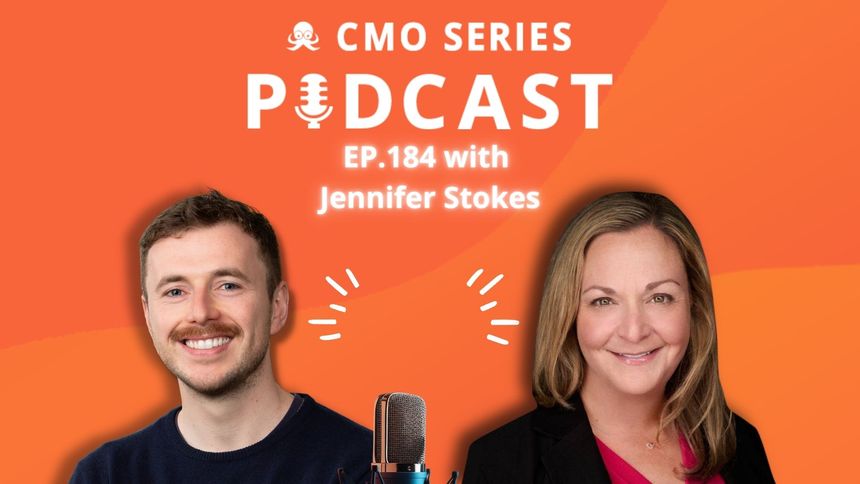
In today’s must-listen episode of the CMO Series podcast, Eugene speaks with Jennifer Stokes, Senior Director of Marketing and Business Development at Shipman & Goodwin, to explore her long-awaited insights into the importance of earning trust and credibility internally.
With nearly two decades at the firm, Jen brings a unique perspective on what it takes to earn trust in a legacy-driven law firm. From navigating leadership dynamics to championing the role of marketing at the strategic table, Jen has played a key role in reshaping how BD and marketing are perceived and prioritized.
Eugene and Jennifer cover:
- How the role of Marketing has evolved during her 17 years at Shipman & Goodwin
- Jen’s approach to building internal trust and influence in a relationship-driven industry
- The value of having strategic thought partnerships
- Jen’s partnership achievements including cultural and mindset shifts
- How to build long-term credibility
Transcript
Transcript:
Eugene: Hello folks, and welcome to another edition of the CMO Series podcast. Now, in an industry where tradition often outweighs transformation, building influence as a marketing leader requires a hell of a lot more than just strategy; it demands trust, persistence, and a deep understanding of the firm from inside out. So, in this episode, we're joined by the wonderful Jennifer Stokes, Senior Director of Marketing and Business Development at Shipman & Goodwin for a long-awaited discussion on building that credibility and influence from within. With nearly two decades of experience at the firm, Jen brings a unique perspective of what it takes to earn trust in a legacy driven law firm. From navigating leadership dynamics to championing the role of marketing at the strategic table, Jen has played a key role in reshaping how BD and marketing are perceived and prioritized.
Charlie: This episode is brought to you by Cross Pitch AI, the new cross-selling tool from Passle. Cross-selling should be the easiest way for law firms to grow, but most firms struggle. Why? Lack of awareness, lack of trust, and frankly fear of selling. The result? Missed revenue. Cross pitch AI fixes that. It breaks down silos, helps professionals connect and delivers timely, relevant insights to the right people, inside the firm and out. There's no heavy rollouts. Just switch it on and try it today. Head to cross pitch.ai to book your demo and make cross-selling happen. Now, back to the podcast.
Eugene: Jen, welcome to the CMO Series podcast.
Jennifer: Thank you so much, Eugene. Happy to be here finally.
Eugene: Glad to have you. So, Jen, you've been at Shipman for 17 years, a rare tenure in this space. Can you tell us how has your role and indeed the firm's view of marketing in BD evolved over that time?
Jennifer: Yeah, absolutely. I mean, so much has changed over the last 17 years in the world and in legal marketing and BD. The team here has changed, we've had people come and go along the way. I'm incredibly grateful though to have the team that I have now, I feel that we've really, together moved the needle on so many great initiatives. We've become much more proactive versus reactive, I would say, as well. There are times, of course, where you need to react quickly, but a more proactive approach allows us to be planful and generally leads to better outcomes. Of course, technology has allowed us to do so much, I think back to the days where we had to do so many things manually and it's just incredible how far we've come. So, you know, in terms of social media, AI or website, email marketing, we at Shipman use nearly 20 technology tools in our own stack and it's really just allowed us to professionalize things and made us more efficient. I think at the firm too, I've definitely seen a shift in the mindset of our lawyers as it relates to marketing and BD, they're much more, um, really open to new ideas, they're on board and they really understand the value and support we can provide. We've really tried hard to educate them as to what we can do and do for them to ultimately, you know, make their jobs easier and help their clients.
Eugene: A hundred percent. Now you mentioned easier for them and easier to, you know, build those relationships with your clients. Can you tell us a little bit about, because obviously your industry is so relationship driven, can you tell us about your approach to building that internal trust and influence within the firm, the leadership, and indeed with the lawyers?
Jennifer: Absolutely. Yeah, I mean, cultivating internal relationships and building the trust with lawyers and also the other key stakeholders in the firm, it's absolutely necessary to being successful. It takes time and I've worked hard to really try to form and foster relationships throughout the firm, you know, in different practice areas, in different departments, both on the lawyer side and the administrative side I would say. I always try to really actively listen and get to know the people that I'm working with, you know, both I have to know them on a professional level, I wanna know what they do and their expertise, but I also wanna know them as people. I feel like this creates a foundation of respect and collaboration and that ultimate, you know, foundational trust, streamlines communication, it helps us work better together more effectively, more efficiently, and it really helps lead to, I think, better outcomes for our clients and the firm. So, it's really critical to spend that time creating, nurturing, and really just fostering those relationships across the board.
Eugene: One hundred percent. And one of the things that was actually gonna come along to is this idea of being sort of that strategic partner and having a strategic partner internally. Jen, you've spoken about the value. Can you tell us a little bit about the differences between just hiring a vendor and building a strategic partner with sort of that outside external help?
Jennifer: Sure. A vendor relationship, I would say, is more transactional, you know, they sell a product or a service, they deliberate and it's done. Whereas I would say a strategic partner is more of an extension of your firm and your culture. It's someone or some people that you collaborate with and they understand and help you achieve your business goals. I think choosing between the two depends on what your need is and how simple your problem might be, or if you need a long-term ally to help you navigate long-term your business challenges and drive growth. I've been super lucky in my career to have several strategic partners to lean on and help us with our many initiatives. I think it's important to note that as the leader of a team, you don't need to be an expert at all things, you know, you can and should at times enlist the help of other resources in those partners who can help you. Um, they, if they're the expert in a particular area, it would be well worth it, and it makes you look good as well in the process.
Eugene: A hundred percent. I think one of the examples I have of that, of sort of the, you know, people who know a bit more about you is bringing your strategic partners together. One of our fantastic clients in Atlanta, she would bring together her eight most sort of strategic partners each year and say, this is the plan, this is where we got to last year, and this is where we want to get to next year. And they would co-create the plan together rather than trying to do it one at a time and trying to build it after, you know, wedge it together at a later stage. You mentioned earlier that you use 20 different technology providers and your tech stack and all of these strategic partners, and you're very progressive in not just areas like innovation and AI, but also wellness. With all of these partnerships and these initiatives, can you talk a little bit about the things that you're most proud of that you've achieved with those partners? And indeed, how did you approach that internally with the culture, the mindset shifts to make that happen?
Jennifer: I've been really lucky in the past few years to work on several larger initiatives at the firm. I've been also lucky to have the support of our leadership team and our managing partner, our management committee, and other colleagues who have really helped champion the efforts. We, as you mentioned, have done initiatives around AI and innovation and wellbeing. In 2022, we gathered for our first in-person partner retreat, and we chose wellbeing as our central theme. The timing was right, it was, you know, coming right out of the pandemic and speaking of strategic partners, we leaned on Kendra Brodin, who we engaged for the session that year. She put on a great program and has become a trusted partner to this day, someone who I still talk to and work with. The program itself resonated so deeply with our partners and we took from that, that we recognized so many people were struggling in life with a variety of things, big and small. So, we decided to extend the program to all of our lawyers and business professionals, which was a significant undertaking for us and to my knowledge, not something we had ever done, you know, put on a program for all of our populations. So, the initiative itself sent a powerful message of support to our firm, um, at a time where so many, as I said, have been struggling and in order to do this, it took a lot of hands. You know, it takes a village sometimes, as they say, and it was a great example of collaboration and teamwork internally, working with our wellbeing committee, our management committee, other key stakeholders in the administrative departments. So I was really proud to be involved with that and it also gave me a chance to work with a lot of other folks internally who I don't usually work with, and um, it was great and we were able to bring that vision to life.
Eugene: Wow, that's absolutely amazing and it's very cool that you were able to drive that change and be, as you say, a part of that cultural change. And also, what I was not expecting you to say, is just how it opened up the wider firm to you as well.
Jennifer: Yep. Absolutely. Yeah, it was a really good project across the board and so meaningful, and I'm really grateful and happy that we were able to do it.
Eugene: Amazing. Can I ask just one quick follow up on that, which would be, was there, were there any hurdles to driving sort of firm-wide change like that? Or was it, was everyone on board straight away? It's not easy to do something at that scale in a firm of your size.
Jennifer: Yeah, no, I mean, it is not easy and I think most people were on board. I would say the most challenging part was logistics and offering the program, we have several offices and we wanted to make sure we were offering this to all of our population. So it took a long time to coordinate the details and make sure we were bringing it to all those that wanted to participate. So when we dug in and having Kendra at the lead, who really just is terrific and an expert in her field. Yeah, I mean I think it was well received in the end, I didn't really hear of any skeptics. Um, again, I think logistically that was the hard part, but ultimately, I think everyone would agree by all accounts, it was well received and well worth it.
Eugene: Yeah, and I think the next question then lends itself quite nicely, it's all about people like yourself building credibility in traditional firms. That's a wonderful way that you and your external partners, strategic partners, have built credibility and moved the firm forward. What is your best piece of advice for earning a seat at the table, for building that credibility and indeed for keeping it for such a long time as you have?
Jennifer: I think, um, my advice would be that we need to be proactive and be forward thinkers, much like our lawyers, you know, who are anticipating their client's needs. Our goal is to foresee the needs of our internal clients, the lawyers themselves, before they even realize they have them. I think, you know, in a lot of corporate settings, marketing is an engine for growth. In legal, sometimes we can be seen as a cost center and not necessarily a source of revenue but we've, at Shipman, have worked hard to change this perception and position ourselves as strategic business partners, and we do this consistently. Um, we're always trying to demonstrate our value, we like to share data and analytics and ROI to prove that our work is helping and contributing to the firm's success in the bottom line. We also like to share anecdotal evidence, we hear a lot of stories from our lawyers about how our initiatives help them secure a client or elevate their practice or get, you know, increased visibility. So, I think the combination of data and personal anecdotes like this make our progress and success tangible, and it helps give us credibility and keep that seat at the table, which is so important.
Eugene: A hundred percent. I couldn't agree more. Jen, this has been absolutely brilliant, and if I can keep you for another couple of minutes, I think we'd love to dive in a little bit deeper to you as an individual and ask you a couple of, uh, maybe more personal questions in the quick fire round, if that's okay with you?
Jennifer: Sure.
Eugene: Okay, smashing. So, what are you currently listening to? That could be music, podcast, audiobook, anything else.
Jennifer: Yeah, it's not work related, but I really like the podcast ‘Smartless’, it has Jason Bateman, Will Arnett and Sean Hayes, and for those that haven't heard of it, they're, they're all good friends and their banter's funny, but they always have a famous guest on whether it's an actor, a business person, an artist, what have you. And it's really interesting when they start to dig into it with their guests and I enjoy learning and listening to people's stories. I've listened to so many of them and they're always entertaining, but also just really insightful.
Eugene: Yeah, I know that one well. And they're also quite honest about their own flaws and everything else. It, it's a good one that. Um, the best piece of advice you've ever received?
Jennifer: Yeah, I'm gonna keep this super simple, but it would be, keep things in perspective. You know, life can be hard and stressful at times, so I think it's important to keep that perspective, it's necessary for navigating your day to day with big or small issues. I think it's not about minimizing your feelings or pretending something doesn't exist. We all have problems and things we have to deal with throughout our days, but I think having a good perspective is being able to slow down, think about a situation, you know, put it in context and not freak out and try to make more rational decisions while you're at it.
Eugene: Sound advice on any level. Uh, what's a book or resource you'd recommend to anyone else in your field?
Jennifer: So I'm gonna go a little different here, I'm not gonna point to a book. I'm actually gonna recommend a show, a TV show. I don't know if you or any of the listeners have seen ‘The Bear’ on Hulu, but it's really well done. I don't wanna give away the whole thing if folks haven't seen it but it's based in a restaurant setting. The cast is constantly confronted with different issues and challenges. At times it's very chaotic and crazy, but ultimately they all trust in one another and they lean on each other. All what I think are really great lessons for people who are in a team, part of a team, or leading a team. There are several reviews out of the show and they all essentially share that, ‘The Bear’ teaches us that adaptability and resilience are key to leadership and teamwork. So I thought that was something a little different, not a book, but, um, if you're into, you know, watching shows, it's a good one.
Eugene: Hmm, I wasn't expecting that, I like that. Your favorite way to unwind after a busy day?
Jennifer: I'm a baker. I enjoy baking and I always have, I make a chocolate chip banana bread that's a fan favorite with my family. When my nephew was little, he requested Auntie Cake, as he called it, and I used to make it every single week. We still call it Auntie Cake, and I still make it often, not every week, but um, my own sons who are 15 and 20 and eat a lot of food, devour it whenever I make it.
Eugene: I’ll know what to request next time I see you.
Jennifer: Yeah.
Eugene: Finally, your favorite place to visit and why?
Jennifer: Yeah, so it's hard to pick one, you know, I think it's super important to have downtime and I try really hard to take time at points in the year to decompress. Um, I like going and traveling and seeing new places, both near and far. We went to London and Paris last month actually and that was an incredible trip. I also love the water, both the ocean and lakes, and we have so many beautiful spots right here in Connecticut and in New England, so I like to go to those spots when I can as well.
Eugene: Amazing. Jen, thanks so many for your time and for being a guest on the Passle CMO Series podcast.
Jennifer: Thank you. It was my pleasure.
Eugene: Amazing.
Charlie: You can follow the Passle CMO Series podcast on your preferred podcast platform. Thanks for listening, and we'll see you next time.
/Passle/53d0c8edb00e7e0540c9b34b/MediaLibrary/Images/2026-10-14-09-22-13-024-6acf49c5944aac193a981bb9.jpg)
/Passle/53d0c8edb00e7e0540c9b34b/MediaLibrary/Images/2026-10-19-13-24-47-415-6ad61a1fdc6374f637024697.jpg)
/Passle/53d0c8edb00e7e0540c9b34b/MediaLibrary/Images/2026-10-13-16-00-13-704-6ace558d477453bcaa2eba35.jpg)
/Passle/53d0c8edb00e7e0540c9b34b/MediaLibrary/Images/2026-09-28-10-59-02-989-6aba4876c6484376446500cc.png)
/Passle/53d0c8edb00e7e0540c9b34b/MediaLibrary/Images/2026-10-08-10-14-29-755-6ac76d050b30ba925ae8bc36.jpeg)