




True innovation in law firms goes beyond AI. It's rooted in humanity, with the people and process creating true client value.
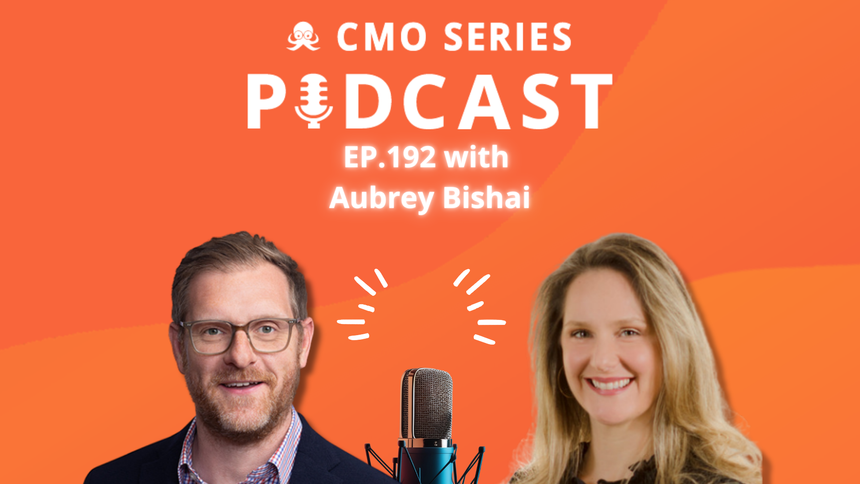
On today’s episode of the CMO Series Podcast, Will Eke is joined by Aubrey Bishai, Chief Innovation Officer at Vinson & Elkins, to explore the true meaning of innovation and the evolving client expectations around AI.
Aubrey shares insights into how she decides what’s worth investing in beyond the AI hype, and why she believes innovation is a “deeply human endeavour.” They discuss the role of marketing and BD in driving meaningful change, and what’s next for innovation at Vinson & Elkins in 2026.
Tune in to hear:
- Aubrey’s career journey into the innovation space
- Her definition of innovation and the power of small changes
- The importance of human experience at every step
- How following client needs drives quick changes
- Practical advice on adopting a system-wide approach to innovation
Transcription:
Will: Welcome to the Passle CMO Series Podcast, where we talk about all things business development and marketing in professional services. My name is Will Eke, I'm on the Commercial team here, and today we're gonna be talking about why innovation goes beyond an AI strategy, obviously hot off the press in terms of AI. The rise of AI has led to a significant increase in Chief Innovation Officer roles in law firms. I have the pleasure of working in the UK and the US and I can certainly vouch for this taking place. True innovation, however, does extend far beyond technology. It's about people, it's about process and how firms connect the dots to deliver great value for their clients. Today, really excited on our Podcast, I'm joined by Aubrey Bishai, who's Chief Innovation Officer at Vinson and Elkins.
A year ago, for those avid listeners, I did speak with Allan Schoenberg on the Podcast. He's the Chief Comms Officer at the firm. Aubrey joins us today to build on that conversation, but also unpack how the firm's unique leadership structure really works in practice. We are going to explore Aubrey's career journey through innovation, how she decides what's worth investing in beyond the AI hype, and why she believes innovation is a deeply human endeavor. We'll also discuss the role of marketing and business development in driving meaningful change, and how client expectations around AI and technology are evolving. We are also gonna just finish on what's next for innovation at Vinson and Elkins in 2026.
Charlie: This episode is brought to you by CrossPitch AI, the new cross-selling tool from Passle. Cross-selling should be the easiest way for law firms to grow, but most firms struggle. Why? Lack of awareness, lack of trust, and frankly, fear of selling. The result? Missed revenue. CrossPitch AI fixes that. It breaks down silos, helps professionals connect, and delivers timely, relevant insights to the right people inside the firm and out. There's no heavy rollouts, just switch it on and try it today. Head to crosspitch.ai to book your demo and make cross-selling happen. Now, back to the podcast.
Will: So, without further ado, really excited to say hi and introduce Aubrey.
Aubrey: Hi, Will. Thank you for having me.
Will: Great. It is brilliant to get you on and fresh off the back of a speaking slot at Thomson Reuters over in Florida as well, you're getting all the press.
Aubrey: That's right. These days, you know, with innovation and AI and its impact on really every function of the law firm, these topics are timely for sure.
Will: Yeah, we're gonna be delving into that. It's great to have you on, as I say. I suppose if we start from the top, because this will explain to our listeners the, sort of, journey that you've been on, but I wondered if you could share your career journey, and how you came into the Chief Innovation Officer role at Vinson and Elkins?
Aubrey: Yeah, happy to. I mean, certainly these journeys are long and winding and very different from person to person, firm to firm. I started my career in the Big Four in Business Development teams and focused on proposal writing, and was hired in Vinson and Elkin 16 years ago to shape a pursuit function in RFPs pitches. Then quickly was asked to head up biz dev. At the time, we had several Asia offices, so I was in Hong Kong for a stint. That's where I really cut my teeth on the broader business development environment beyond pitches and proposals. Then when I came back, it morphed again into client teams and the technology that supports business development and marketing, and so I kind of wore a project manager hat around those types of activities and then led our marketing services function for a long while, I think about six years. I did some of the first social media, digital marketing, multiple websites and microsites, but really learned all things, kind of, CRM and email marketing and digital platforms. And as we looked at what was next, and while we brought in Allan, who you spoke with as our Chief Comms Officer and Randy, who serves as our Business Development Officer, we thought, what if we shift my role into something that looks really across the firm? People process technology and focuses on how we really support our attorneys to work more efficiently to bring value to the client. And at the time we were going to migrate 10 million documents from one document management system to another.
And so my first job, my first project, if you will, coming into the Innovation Officer role, was to project manage that and really make sure we were serving our attorneys well, and it was quite a successful project. I will say that when I became Chief Innovation Officer, this was early 2022 for V and E, it was pre-ChatGPT. So, we were very focused on, kind of, the projects and efficiencies and workflows, processes at hand. When ChatGPT hit the scene that November, I was the one with Innovation in my title, and so then it quickly became part of my remit to understand and help educate and think about AI in legal and for our firm. And so I do like to point out that my role was prior to AI, kind of, steering that ship.
Will: It's absolutely fascinating, Aubrey, because as you say, these innovation roles seem to be cropping up now and they are pinned with things like AI. Your role in 2022 started without that, so how did you, sort of, define innovation? And you mentioned that early project, maybe we could dig into that a bit more about how you went about that and sort of set the tone for how the innovation role could work for V & E?
Aubrey: Sure thing. I mean, when you think about innovation, it's easy to think about technology for sure, and certainly in this day and age, it's easy to think about AI because these are transformative aspects of this industry that we're in. But in the early days, when I first came into this role in 2022, it was about what are the small incremental changes that we need to make to empower our attorneys to focus on the work that they need to focus on, to serve their clients really well, to understand kind of process end to end. I mentioned a project around our document management system in that timeframe, and you know, we live in documents day in and day out serving clients, whether it's through the mergers and acquisitions and related agreements and contracts. Of course, all of the litigation materials, discovery, and so when you think about the taxonomies and the locations of all these documents, it's so much more than just where do we put them and how do we name them? It is about how do our attorneys interact with the systems that make it frictionless for them to work efficiently and effectively. And so that was really my job in the document management system project, was just getting to know those practices really well, understanding the workflows, and helping them define what that workflow is and how those documents need to be categorized and saved and all of that good stuff.
It also has everything to do with change management because any critical system like that is going to change the way our people work day in and day out. And boy, I am so glad of that project, because all of that work really lays the foundation, even now, for how we take advantage of that knowledge in a world of AI. And so that's kind of a project that is an example of technology and process and people coming together. Another project in those early days was digging into how we report time and how we support our attorneys to report time effectively. And again, without even having to change systems or overhaul, you know, anything dramatic. Small, small changes made a big difference, both in the time that our attorneys were able to report on their matters, but also in freeing them up to focus on the client work and value that they can truly bring. So, I think both are examples of innovation that, again, in this day and age doesn't necessarily smell like innovation the way we think about it. But any small change, any reimagining of how the work can be done, is really what I stepped in this role to help do.
Will: I'm gonna start calling you ‘the godmother of innovation’ I think, because we talked about this previously, but I think it must be quite interesting seeing the changing landscape where you've probably got more peers over time, right? At firms, they've suddenly, Chief Innovation Officers have cropped up at different law firms, and it is because they often get, as we said, pinned to AI projects. You also described it as a deeply human endeavor. What do you mean by that and how, you know, does that shape how you think about technology investment?
Aubrey: Well, there's so much here to unpack. One of the things for me is that because of my early career experience in business development and marketing, I come at everything I do from the end client perspective and I think that that's critical to how I think about innovation, and how we should all think about innovation. At the end of the day, we can harness data, we can use it to have better insights, we can make fancy dashboards and, you know, leverage AI to help do the work more efficiently, or inform what we know about clients and precedent. But at the end of the day, our attorneys are solving complex problems for clients, and that is so human. And so I look at everything I do through the lens of, how do I best support them to do that piece that only they will ever be able to do because of the humanity that underpins it. And that's why I love this moment so much, where I feel like the marketing and business development and innovation and firm operations are just at this incredible inflection point, and converging in a way that is really, really powerful. For every attorney that I can make more efficient with AI, I hope I can give them the building blocks, the habits, the behaviors, to bring value to their clients, to speak to them in ways that are insightful and enabled. And that's what it's about. Only I'm one of these that's like only people can do that, that's humanity as its core and I don't think that's going away.
Will: Yeah, agreed. And I mean with that in mind, it is tricky, isn't it? Because you are talking about it being client led, which is sometimes different to what we hear. We hear these stats where if we go to AI, for instance, I think one of the stats last year that was big and pushed out maybe by Forbes and a few others, was that 95% of these AI projects don't convert into longer term usage. So I mean, it must be difficult to weigh up because there are these new shiny tools out there, but you've got these clients with complex problems and you've gotta sort of weigh that up. So how do you sort of do that? How do you balance that?
Aubrey: It's a lot of basic blocking and tackling, I would say. I mean, any investment that we make in technology is to solve a pain point or meet a set of very specific requirements and use cases that should, at the end of the day, empower the attorneys to work more effectively or bring a new level of service to our clients. And so in my mind, I think what's evolved in these recent years, and certainly with the hype that we saw in the early days around AI, is that it compressed the timelines that we had to really do all of that diligence around, okay, well wait, what am I going to use this tool for? There were a lot of demo and pilots and, and kind of, which fancy AI tool are we gonna bring on? We're beyond that now, I think most of the industry is, and so it's much more focused these days on the end result and enhancing workflow in order to bring value to clients, but then also in setting up an ecosystem that works from end to end, from the moment a new matter comes in to how it's worked on to how it's closed out, to how we go and pitch and prospect for work again. These workflows go across the firm, regardless of practice, and building around that, I think also highlights that there is humans, and the human experience at the core every step of the way.
Will: You also mentioned at the start there that, you know, you've been at the firm a number of years and you've come through, I suppose, been seconded to different areas of the business. Not, not seconded is probably the wrong word, but you've started out of marketing BD lens, that must also help you and influence the way that you think about technology data, connecting the dots for attorneys and clients, and bringing that all together strategically to meet the wider goals of the firm.
Aubrey: That's right. I mean, I think that this is a moment for marketers everywhere to really have a key strategic stake in everything we do. And that's because our marketing and business development teams are the ones that understand client needs, know how to translate them into, you know, what services align at the firm, how we message around that. I've certainly seen, with AI in particular, our clients wanna talk about that. They wanna understand either via RFP process or separate surveys or even in-person conversations. This is something that we need to empower the entire firm to be able to speak to, and what a role for marketing and business development to help build that translation, that messaging, and frame it as the client value that it is. I think that at the end of the day, we are, I've said it before, we're at this inflection point where there's something so powerful about understanding the client experience, marrying that to the legal services, and being able to articulate that in a differentiated and focused fashion.
Will: You mentioned as well earlier about the change management piece, which is massive. From an innovation perspective across the firm, I guess a lot of it does come down to, you know, behavioral change and change management, especially with the owners. What have you found to be, and we get asked this question quite a lot as well, what's been the hardest thing about getting the lawyers to actually adopt new tools, new ways of working, and what have you found that actually helps to shift their behavior so that they do start using these new products and tools? Is it being client led again, or are there other ways that you do it?
Aubrey: A lot is client-led, as it should be, and I actually get really excited when I look at the ways in which our clients are leveraging AI, and talking to us about some of the things that they want to do within their legal departments with AI. That's fantastic, right? Because it levels the playing field between us, and it brings a lot of transparency around what we are doing, what they're doing, and how we might collaborate in new ways in AI enabled spaces. Very excited about that. But I would say change management is, it's so broad. Someone told me at one point, ‘change management is not sending an email’, and I think a lot of projects can go south because you send an email and say, hey, here's this new thing we're doing.
But so much more is needed to really understand how the individual participant is experiencing the tool, the process, the technological setup. And that requires one-on-one training, lots of communication, communication in many, many different modes, and the work around the ‘what's in it for me’, the ‘why does it matter’. The, kind of, ultimate experience of any new thing is behavior change, and it's thinking anew about work that any one person might have done the same way for many years, even decades. And that requires people and patience and a continued drumbeat of here's how we see this becoming infused in your day to day, and here's why it matters. Again, let me put on my marketing and business development hat, when you frame that through the lens of the client experience and what our clients need, and when they come to us and share those insights, that is where I see the needle move the fastest on any change that we need to make at the firm.
Will: Yeah, and I think, well, again, listening to that, Thomson Reuters, there was a particular panel there. I don’t know if you caught that one. Do you know Jennifer Reeves, who's at Quinn Emanuel?
Aubrey: I've heard of her. Yeah.
Will: She’s Lead Innovation Council there, she actually said exactly the same thing as you. It is heavy lifting to get this change to work. And I think they've done it, she talked about, they've done it really well at Quinn Emanuel, but she said it's one-on-one training with all the lawyers, and they've managed to get up to this, sort of, 82% usage of a particular AI tool at the firm. But going back to your point, It's been hard yards to do that. So again, if you wanna drive the quick change, it has to be pinned to client needs. So yeah, great advice.
Aubrey: I will just say I loved hearing from her at the conference because, you know, she did talk about that one-on-one training, but it wasn't training per se. It wasn't like, here is how to use X, Y, Z tool, and that is the shift that we need to make as we think about really transforming legal work, right? And she described this so well I thought, which was around making sure that in that moment, meeting them where they are, here's how to use the tool to do this thing that you are already trying to do. What is it that you're trying to do right now in your moment, and let me help you. Let's see if AI has a role to play in this, and if not, in that moment, let me take it away and go and explore and come back. Again, when you think about humanity, like that happens with people talking, exploring, engaging, experimenting. I don't know if you can tell but that's the piece that really excites me about this moment, and it feels like an exciting time to be in our spaces.
Will: Yeah. Back to humanity, as you say, yeah it's fascinating. In terms of being really specific around what you guys are doing at Vinson and Elkins, your plan in 2026 without giving, you know, giving all the details away, what's next in terms of innovation at your firm? And also for others that are either trying to build this rollout, or they're looking for advice stepping into an innovation role for the first time, what would your one piece of advice be for them? So two questions really in one.
Aubrey: Got it. I think, listen, I know a lot of your audience is the business development and marketing folks, so I'm gonna tailor my advice for that crew, which is that they really are and can be the innovators in this space right now. We are often in our firms needing to focus on a handful of rainmakers, and really helping them succeed in their business development efforts. Imagine being able to scale that support with the support of AI. To me, that seems so powerful, and I think there's a lot there when you think about BD and marketing activities where AI can really play a role, whether it's around briefing books, and client insights, and kind of one sheets to prep leaders as they go and meet with clients. So, to me that seems like low hanging fruit that all biz dev and marketing teams should really be paying attention to right now. And it doesn't replace any one person, I view it as extending the offering, the service offering of any one biz dev person.
You asked about what we're focused on in 2026, we at Vinson and Elkins, are really interested in moving on from the pilots and this experimentation and the training and change management. All of that needs to continue on some level, but 2026 is about transforming the work itself. It is about really putting into play across teams what it means to work more efficiently. I think that needs to be on every firm's agenda for 2026. We need to move beyond individuals that are taking really good advantage of individual tools, and more to the system wide approach, the ecosystem, if you will, that cross workflow from beginning to end. That to me is where the focus needs to be and what I am focused on for 2026.
Will: Brilliant stuff, Aubrey. A few questions, totally off topic. So to start with, what are you currently listening to from a music perspective podcast or even an audio book?
Aubrey: So, the podcast that I love and highly recommend is called Cautionary Tales, Tim Hartford, and it's similar to revisionist history in that it goes back and kind of susses out lessons from real life events. And I find some nuggets in those every time I listen to an episode.
Will: Good recommendation. I haven't listened to that, so it sounds like one I'll be taking up. What's the best piece of advice that you think you've ever received?
Aubrey: My husband is a filmmaker, and something he told me early on when I was complaining or whining or just stressing about the job, is that if you step back and objectively look at what is going on, as if it was a sitcom, It paints an entirely new picture, and so I love that advice. I give it to everybody. Think about this situation as if you were watching it on your favorite comedy, and it really does help.
Will: I think I'm gonna be giving that to my 13-year-old.
Aubrey: There's so many things. Think about it. You think your day is just going south and you would be laughing if you were watching this.
Will: Like the ‘Truman Show’. Yeah, exactly, great advice. And from the other half as well, so good shout out there. What's a book or resource that you would recommend to anyone in your field in professional services?
Aubrey: There's so many good ones. Well, here's one resource. I love Legal Technology Hub and Nikki Shavers, any of the content that she puts on LinkedIn, that's a great follow. It really helps me stay up to date with kind of how the profession is changing right now in legal technology. So that's one on that side. I just finished the Activator Advantage, which was a fantastic read around business development habits for professional services. And let's see, oh, there's so many good ones. I am making my way right now through Co Intelligence by Ethan Mullet.
Will: Some good ones there. Yeah, we've actually had Matt Dixon on from the Activator from DCM Insights before. Yeah, it's a very good, very good read that. Thank you for that. Aubrey. What's your favorite way to unwind after a busy day in the Vinson and Elkins office?
Aubrey: Anything with my daughters, going home to family, whether it's watching a show together, we've gotten into knitting recently, doing arts and crafts, but just being with them and typically putting on a hat that is very different than what I do all day long is what relieves stress and helps reset the tone to be oriented around family.
Will: Children escapism. Yeah.
Aubrey: That's right.
Will: Good advice. Where's your favorite place to visit, would you say, and why?
Aubrey: Oh man. I love travel, so it's hard for me to rank. But I love Europe. I love Paris. We, a few years ago, spent a long week on a Tuscan farm stay in Italy, highly recommend. So yeah, take me back to either Florence or Paris and I'd be a happy girl.
Will: Two brilliant destinations. Thanks for that Aubrey. Amazingly we've come to the end of the podcast, so I wanna say thanks so much for giving us your advice and your time as the, you know, ‘the godmother of innovation’ as you're now called. But yes, it is a great episode and some really wise advice for our listeners. So, thank you so much for jumping on.
Aubrey: Thank you so much for having me.
Will: Brill.
Charlie: You can follow the Passle CMO Series Podcast on your preferred podcast platform. Thanks for listening, and we'll see you next time.
/Passle/53d0c8edb00e7e0540c9b34b/MediaLibrary/Images/2026-01-12-10-16-56-904-6964ca18ab784af100f11853.jpg)
/Passle/53d0c8edb00e7e0540c9b34b/MediaLibrary/Images/2026-10-08-10-14-29-755-6ac76d050b30ba925ae8bc36.jpeg)
/Passle/53d0c8edb00e7e0540c9b34b/MediaLibrary/Images/2026-10-08-07-04-41-374-6ac740898f60cb75fde15df0.jpg)
/Passle/53d0c8edb00e7e0540c9b34b/MediaLibrary/Images/2026-10-08-07-04-41-241-6ac74089ce624e48d6cc6df6.jpg)
/Passle/53d0c8edb00e7e0540c9b34b/MediaLibrary/Images/2026-10-08-07-04-41-183-6ac74089d24614eebffa86bf.jpg)