



Building a growth function from scratch has never been more important for law firms, yet it remains one of the hardest things to get right. It means bringing in new people, shaping roles that have never existed before, and responding to a shifting market, all while respecting a firm's culture and heritage. Getting that all right is no mean feat.
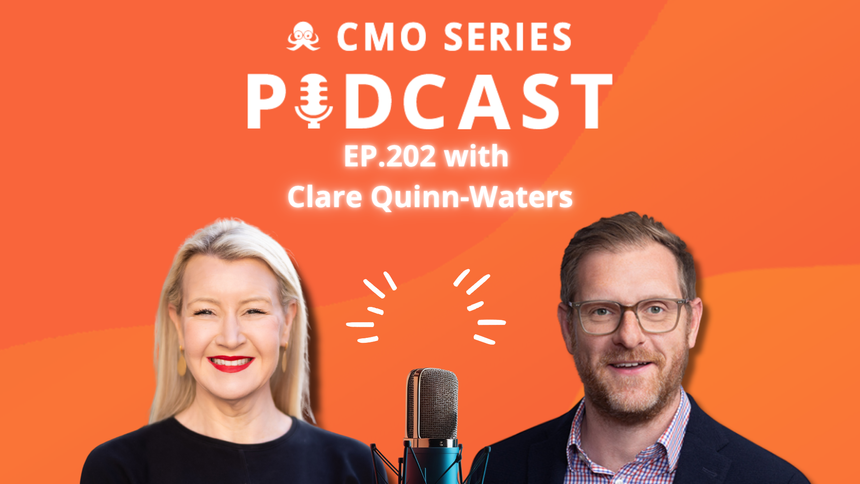
On today's episode of the CMO Series Podcast, Will Eke is joined by Clare Quinn-Waters, Chief Growth Officer at Edwin Coe, a role she stepped into in September 2024, and one that still doesn't exist at most law firms. With a 25-year career spanning strategic leadership across legal, professional services, and recruitment, Clare brings a distinctive perspective on what it actually takes to build a growth engine inside a firm with strong heritage and even stronger ambitions.
Clare dives into:
- How her career across professional services and recruitment has shaped her approach to growth
- The state of the team when she joined and what was expected of a brand new Chief Growth Officer
- Her early priorities, what she changed immediately and what she deliberately left untouched
- How a CGO role differs from a traditional CMO or BD Director, and why that distinction mattered for Edwin Coe
- What the growth function looks like today and how her decade in recruitment has helped her hire the right people, with practical tips for other leaders building out their teams
- What's on the horizon for Edwin Coe's growth strategy over the next 6 to 12 months
- Her number one piece of advice for anyone building a growth function from the ground up
Transcription
Will: Hello there. Welcome to another edition of the CMO Series Podcast. My name is Will Eke, and we're gonna talk about all things business development and marketing. Actually, today, we're gonna be talking more about building a growth function from scratch. Now, building a growth function from the ground up has never been more important for law firms, yet it remains one of the hardest things to get right.
You gotta bring in new people, shape roles from scratch, and constantly be responding to a shift in the market all the time whilst honoring a firm's heritage and culture. It's no mean feat, really. Today, I'm really excited because we're gonna be talking to Claire Quinn-Waters, who is the chief growth officer at Edwin Coe. It's a role that Claire stepped into September last year, and one that probably doesn't exist, looking at some research into the law space, in many, many firms, actually.
Charlie: This episode is brought to you by CrossPitch AI, the new cross-selling tool from Passle. Cross-selling should be the easiest way for law firms to grow, but most firms struggle. Why? Lack of awareness, lack of trust, and frankly, fear of selling. The result? Missed revenue. CrossPitch.ai fixes that. It breaks down silos, helps professionals connect, and delivers timely, relevant insights to the right people inside the firm and out. There's no heavy roll-outs. Just switch it on and try it today. Head to crosspitch.ai to book your demo and make cross-selling happen. Now, back to the podcast.
Will: So Clare, welcome today. Amazing to have you on.
Clare: Thank you. I'm very excited.
Will: And we're gonna be talking about some of the early priorities that Clare had, some of the lessons, again, that she's learned across, sorry to say this number, 25-year career-
Clare: All right. Thank you-
Will: Spanning, spanning professional services and recruitment as well. And really we're gonna delve into what it really does take to get that growth engine humming inside a firm, especially with a heritage like Edwin Coe. And, and I suppose new, even stronger ambitions in today's world. So really excited to have Clare on. Before we get into that, it would be really good for our listeners just for you to talk through maybe, you've worked at some big old firms. You know, Clifford Chance, Baker McKenzie.
Clare: Mm-hmm.
Will: You've been at AlixPartners, Vinson and Elkins, Proskauer. Recently FRP Advisory, who are not a small firm. And then-
Clare: Yeah
Will: You're now at Edwin Coe. So you've learned-
Clare: Yeah.
Will: A lot over your time around strategic leadership across both legal firms and professional services in general.
Clare: Mm-hmm.
Will: Maybe it would be helpful if you could maybe talk us through that journey and how it sort of shaped your approach now with what you've been doing at Edwin Coe.
Clare: Yeah. It's a really interesting time to reflect on that, 'cause I'm still relatively new at Edwin Coe. And so drawing on all of those experiences from different places that I've worked in the past. And I started out in recruitment actually, placing marketing and BD people into professional services firms. And I found that I really enjoyed speaking to candidates and clients about what they were working on and what was happening in their markets. And this was in the noughties. So during the financial crisis, when there wasn't much recruitment to do, I set up a breakfast networking club for BD directors, which meant that I was able to stay front of mind when there was not a lot of recruitment going on.
That was an easy win, 'cause people wanted to network, and they wanted to share their war stories, and it was a really tricky time for marketeers. And then friendly law firms would host them for me, so all I had to do was bring people together. Now, that's gonna become important later when I tell you a little bit more about how my career kind of developed. But recruitment means that you're really commercial, self-sufficient, motivated, and you need to understand people, and those are skills that translate extremely well into legal BD. I was working on a really tricky to fill mat cover role, and so offered to place myself into it. And this was at Olswang many years ago, and then the rest is history.
So that role was a BD manager position, and with that recruitment mindset that I had, the imposter syndrome kicked in really quickly because I went in straight at manager level. I was conscious there were other people in the market that had more experience than me, and I hadn't felt that I'd earned my stripes. So with that in mind, I felt I had to get as much experience as quickly as possible, so I brought that breakfast club back and focused on the topics that I needed to know quickly to impress in my new role. So I was shamelessly picking their brains and networking way above my pay grade. So it's huge thanks to the roster of noughties law firm leaders who taught me everything I know.
So that was really instrumental in helping me build out that knowledge and my network. Again, with that recruitment mindset about having a sort of patchy CV, as I felt at the time, I started contracting and wanted to get a wide range of experience in a wide range of firms. So like you said before, I went into roles in national firms, I went into Magic Circle firms, US firms, working in a range of client-facing roles, BD, marketing roles, and rising up the ranks with each move. Often being invited to sign on a permanent contract, such as Bakers for example, where I was there for sort of four really, really happy years. But consulting like that means that you have a really vast playbook to dip into. So before I joined Edwin Coe, I spent 18 months at AlixPartners, which was my first time in a management consultancy and a PE-backed firm.
I loved it. And then went into FRP for four years, which was my first time in a PLC. So it was really interesting getting those different perspectives. And like you say, a significant proportion of my career has been spent in global firms with an international remit and lots of travel, which has been fantastic, you know, and I really did see the world. But COVID changed all of that, so since then I've worked in UK firms. Joined Edwin Coe in September last year. My feet haven't touched the ground. It's been a time of real growth for the firm, but what stood out for me is the balance between preserving the culture that's made us successful, and like you say, we're in Lincoln's Inn, we're in the heart of legal London, but with a progressive open mindset.
And then working in so many different organizations over the years, I've been able to sort of spot what those successful firms have in common, as well as the firms that are in a precarious position, and that's all about leadership. So without a leader with a clear vision and the maturity and confidence, I guess, to understand how to bring people on that journey, even the most well laid out growth strategy is gonna fail and talent will fall away. And Alison Broadberry at Edwin Coe absolutely nails that brief. So yeah, I think that's kind of how this growth journey has kind of taken me, I guess.
Will: Yeah. So it's fascinating that you touched on the recruitment side, and I'm sure we'll bring it up in more detail again, 'cause it's, as you say, been that sort of basis throughout your career.You know, you mentioned networking.
Clare: Yeah. Recruitment.
Will:Recruitment's all about that, right? You, you've gotta-
Clare: Absolutely. Yeah.
Will: You've gotta be good with people to start with. So I find that really interesting. You talked about when you came into Edwin Coe, so chief growth officer, that was a new role. Were there-
Clare: Yes
Will: Were there expectations obviously coming into that, and how was it set up? You know, what was the existing structure that you inherited?
Clare: Yeah, yeah. So it was a newly created position, and the team, they, had a marketing BD function there. They had six, five, six people in there, and they'd done a great job in supporting the firm over the years, but the firm had evolved, and we're in a VUCA world, as they say, so an ever-changing landscape for our clients and, and for our markets.
And so there was a need for a more proactive and strategic function. So yeah, I joined in September and then kind of went straight into discovery mode, so talking to the partners about where they saw their departments going, what was working well, what could be even better, understanding the different personalities and the history of the firm and the, the kind of the way things work there, as well as talking to the team about their skills and aspirations and what they wanted to see in terms of how the department was gonna grow. So on the back of that, I started to develop an integrated marketing BD strategy, but a real focus on engagement and activation. Again, like I mentioned before, it's one thing having a, a kind of watertight strategy, but the activation piece is absolutely paramount, and it lives or dies on getting people with you.
So really thinking about what the team needed to look like in order to deliver that, and really sort of trying to, to build those relationships with the partners to get them on board as well. So it was clear we had a lot of talent already in the team, and that really strong institutional knowledge that I didn't have. And so I saw that by supplementing that with specialists, we could build something really special. I mean, you'd have to ask them what their expectation of this role was. But I suspect, like most periods of change, there was a mix of apprehension and curiosity. I'm immensely grateful that the OGs were prepared to be open-minded and give me the benefit of the doubt whilst I've built that trust, and I, and I hope that I've paid that back by investing in their development.
They've also been incredibly welcoming to the new people as they onboarded, and we've had six new joiners in six months, so the pregnant man across the road is doing very well out of our career welcome lunches. So yeah. Yeah. There's been lots of change, but it, you know, it's all been down to the existing team in having that open mind and welcoming us in as we, as we kind of onboarded
Will: You touched a bit on it there in terms of you coming in in the first few weeks and months.
Clare: Mm.
Will: What were your sort of early priorities and what, what did you think, "Okay, don't need to change that. That's really good. That's a good foundation"-
Clare: Yeah.
Will: "But I am gonna, I am gonna change that"? I suppose also a lot of it is actually political. You have to get to know the partners. You have to get to know-
Clare: Absolutely
Will: You know, the people around the business, right?
Clare: Mm. Yeah, absolutely. I mean, we talked about that discovery phase where it was building those relationships and understanding, you know, why are things done in a certain way? Is there a reason for that? You know, who are the different personalities? [00:09:00] Who are the influencers there, and, you know, what do people want? What do people want from this? So that was the discovery phase, and then moved into the design phase where I drafted the outline strategy and team structure and started to sense check that with the business. Again, trying to really bring people with me on that journey and make sure that it was a very collaborative process.
And funnily enough, our kind of culture at the firm is three Cs, is collaborative, committed, and connected. So if we change that order around a little bit, my journey was connected, collaborative, and committed. I was connecting to my colleagues in the business, collaborating with them on developing this new strategy, and then committing to deliver it.
So the earliest priority was to stabilize the team because there was a lot of disruption as we restructured that function, and so it was a real focus to really make sure people feel safe, people felt that they had a future there and that their career was stable, and that I believed in them. Also important to get some quick wins in order to establish my credibility and signal that more strategic approach, so brought a PR agency in, and they got us coverage in the FT and the Sunday Times in the first week, so that really helped.
Will: Wow.
Clare: Yeah. They did a great job. It's ... yeah, brilliant. Brilliant. We launched a new brand a month into my role. There was lots of work that had already been done on that and lots of work to do to get that across the line, so I can't take any credit for that first phase as it was all very well in motion ahead of my arrival.
So I left that well alone. The last thing they needed was somebody else kind of coming in and starting to fiddle around with it. There was a plan in place. But a rebrand is a process and not an event, so it was very clear that we needed to support that launch with a strong phase two, and that's what we'll be soft releasing soon. So I left that rebrand alone. But now that we're kind of moving into phase two, very much hands-on with that and very much driving that with our new senior comms manager.
Will: Yeah. I hear that quite a lot. It's really important if projects are already in motion, I mean,. you can influence them in certain ways, but they're already-
Clare: Yeah
Will: The wheels are in motion, aren't they? So, yeah. That's, that's interesting you say that. And the website looks great. And obviously you did pass your probation, Clare, so you must be doing something right there. Well, let's go, let's go into the actual role because we touched upon it at the start, this chief growth officer. It is, you know, we work with a lot of US, UK firms, and it is quite an uncommon or unfamiliar role, actually. So it was obviously intentional at Edwin Coe. How do you think that chief growth officer role differs from traditional CMO or BD director or CMBDO, as you now hear? And, why do you think it's critical, especially for Edwin Coe?
Clare: Yeah, you're right. It absolutely was an intentional choice. When I first started speaking to the firm last summer, the role was quite fluid, and as the interview process progressed, we sort of evolved it together and a title came from that. And the role's a natural progression from, like you say, a typical CMO or BD director role, in that it draws all of the levers of growth together. So the way I see it is with a typical CMO or CBDO title, growth is implied. But by explicitly naming it in a job title, it becomes somebody's responsibility, in this instance, mine. So you're really articulating that this is important and this is the purpose of this function. I work really closely with our CPO, who's phenomenal, and that's to ensure that our people are engaged and capable.
I work with our finance team to see what story the figures are telling us. We've got a really good senior data and intelligence manager joining next month, and although her role is very closely aligned to BD and marketing, we've made it clear to the business that her function works across the whole of the firm. So I guess to simplify it, if we see marketing as a profile and BD as a pipeline, growth is about turning that into revenue by joining that up with people, capability, and strategy. And it's also a really powerful signal to the partnership that this is about commercial leadership, to the BDMC team that we're strategic growth partners to the business, and then to the market and those lateral hires that Edwin Coe takes growth really seriously. So yeah, I think it's a really positive message internally and externally
Will: Yeah, it's basically like Rob still, right? Does exactly what it
Clare: Yeah.
Will: Says on the tin. That's basically it. Yeah.
Clare: Yeah, yeah.
Will: So in terms of, you know, going back to, again, 'cause I really want to lean on this, so I think it's really interesting in terms of that 10 years in recruitment, what do you think the growth function looks like today at the firm? And you, you talked about how you have to build that team. You are leaning on recruitment. You must have some brilliant tips. 'Cause I speak to so many, again, not chief growth officers, I speak to lots of CMOs and CMBDOs, and they say so much of their time is taken up by looking to build the team, or the team is fluctuating, changing. So it's recruitment, they have to do it. I know when we spoke offline, it was really interesting just hearing what you've got to say. 'Cause you, you know pretty much when you go in sometimes if it's a good candidate or not. Yeah. Maybe you can elaborate on, on some of that.
Clare: Yeah. Although it is, yeah, I often find in these interviews when I like somebody, but I get a feeling that they're not right, I'm trying to convince myself that they could be right, but you've gotta trust your instincts in this. You know, your gut's telling you something for a reason. We're a team of 10 now, and yeah, there were six of us to start.
I was the sixth person in, and we're starting to really hit our stride. So you very kindly spoke at our offsite last week, and that day gave us the space to sharpen our focus and agree what our purpose is as a function, and I'm really proud to be part of the team and excited for what's around the corner.
I genuinely believe we're building something best in class, and I can't wait for the firm to see it and the market to see it. It's really exciting. As a result of that offsite, we rebranded the team internally. We were BD and marketing, and now we're BDMC, business development, marketing, communications, to reflect those interconnected specialisms.
So yeah, it's a really fabulous time to be part of this. But yeah, I mean, to your point about knowing instinctively whether somebody's gonna make it to the next round or not, I think a decade of talking to candidates about their skills, their drivers, and staying connected to my network has given me a good radar for spotting that potential. And sometimes you meet somebody who you really like, but you, you know they're just not gonna be the right fit, and you're trying to spend the rest of that interview trying to figure out a way to make it work and, and it won't. So you just gotta trust your instincts. I guess that would be my number one tip. The second tip would be to involve the team in the process. Because I was new, I needed the team to feel that they were part of this change, rather than it being something that was imposed on them or happening to them. They were all involved in the interview process, irrespective of level.
So, you know, we would have team members interviewing people who would potentially be managing them, which meant that we were all on the same page about what we were looking for, and for the candidates, they could see who they'd be working with. So for certain roles, we worked on the job specs together, and that created space for those open conversations about their own career pathways. So that was something else that worked really well. And yeah, number two, or number three I guess, would be to be flexible. When you meet somebody good, change the script. I had quite a clear idea in mind of what skills we needed in the team, and I'd done my org chart and shared that with the partnership.
But, and I mapped that out, but then I met a phenomenal commerce person, and then a really strong client and markets person who both had incredible potential. So I changed the script, changed the org chart to work around them, 'cause I, it frees up space for them to grow, and I know they will. They're gonna do so, so well, and I wanna give them space to do that, which I wouldn't have been able to do had I stuck to the org chart that I'd developed. So I think when you meet somebody good, find a way to make that work. And you know, if you like somebody, try and get a coffee with them offsite so you can have that conversation in a more informal setting, get to know what makes them tick, and then do your sales pitch if, if you need to
Will: Three brilliant bits of advice. So just to reiterate, use your network again and dip into it. I imagine you'd probably say dip into that because you sort of know who you want to-
Clare: Absolutely
Will: You know the type of candidate you want. So you don't need to go to recruitment companies in the first instance. You try to dip into your own.
Will: Then include the team, make it inclusive.
Clare:Yes.
Will: And then be really flexible. If you get good people, but don't basically shoehorn them into, or pigeonhole them into a particular role, let them grow, and it's actually the good people that will make the team. Absolutely. Yeah.
Clare: Yeah.
Will: Absolutely. Great advice. What do you think, coming out, as you say, we were at the off-site. Thanks so much for having us, and it seemed like you're really sort of gelling the team and building upon all of the great stuff you've already done in the first six months. What do you think the next six months to 12 months looks like? What's that growth strategy at Edwin Coe? Without giving all the game away to your competitors.
Clare: The big focus for us is getting closer to our clients. So really understanding how they think, what they need, how they make decisions, and then using those insights to drive a much more sort of targeted account-based approach. So at the off-site, in the afternoon after you'd left us, we had a client panel, and we were hearing from them in terms of how they like to be marketed to, where they consume their content, how they like to digest that, but what they see firms doing that they like and what they don't like.
So that was really helpful. And then after that we had a session doing some persona development and really sort of putting ourselves in the shoes of our clients and our referrers. So that's a big focus for us. We've had a client to markets manager join who's gonna set up our client listening function, which I'm really excited about as well. Another thing as well, that you'll have seen a lot at the moment, there's lots of talk in the market about partners as rainmakers, and I think you referenced that study as well, the DCM study in, in our conversation last week. And I think it's fantastic, but I'm interested in flipping that a bit and thinking about BD as the activators of growth.
So not just supporting it, but actually helping create momentum and opportunities. You know, our partners are really, really good lawyers, and some of them are also really good business developers. But what we have as a team is that ability to look at the whole firm and to also bring that client insight in. So we should see ourselves as rainmakers and activators. It's not just about the partners. And then AI, there's no getting away from it. So how do we use that to strip out some of the low value, time-heavy work so the team can spend more time on the stuff where they add the value, which is judgment, relationships, and, and those things actually move the dial.
So yeah, there's no running away from AI. That's here to stay, and it's just how do we use that to our advantage?
Will: Watch this space, everyone. It sounds like you're gonna get there. We're gonna start, Clare, if that's all right, just with a few quick-fire questions.
Clare: Sure.
Will: So first one for you, what are you currently listening to? That can be anything.
Clare: Well, referencing my 25 years working, which is weird since I started when I was 10, right? Yeah. I'm loving the '90s revival. Yeah, I'm listening to loads of Massive Attack. So I'm really enjoying the fact that the '90s are back with a vengeance because, yeah, it's kind of my era. So yeah, music-wise, Massive Attack. And 3D lives down the road from me, which is bizarre given that someone so cool lives in my postcode. So I'm very excited about that. Podcast-wise, I am obsessed with The Daily Beast. I love it. So yeah, listen to that most weeks as well
Will: There we go, a bit of Bristol, Bristol massive attack. Yeah. Cool. And then, well, the first one's always nice and easy. This one I find is quite a tricky one to answer sometimes. What is the best piece of advice that you've ever received?
Clare: That's a really difficult one to think about because I think you don't necessarily recognize it in the moment as being good advice. You might think it's quite a practical thing to help you in the moment, and it's only when you kind of take a step back and think about it. And I'm, I'm trying to reflect on things that kind of numerous people have said to me, and generally it's around building your network and getting to know people and, yeah, just really kind of building your relationships with your peers in this industry. And professional services marketing and BD is very welcoming and supportive of that, so there's always people that you can lean on to pick their brains or sense-check an idea. So I would definitely say building your network is the piece of advice that's really sort of stayed with me.
Will: Yeah. It's a great piece of advice. It can be all the way through your career, can't it? You've gotta keep going. I've spoken to a lot of, you know, chiefs recently and they say, "I must get back into that networking thing. I always used to be so good at it." And then you, you just gotta keep on, keep on doing it.
Clare: Absolutely. Yeah.
Will: Great advice. What's a sort of book or resource that you would recommend to your peers currently?
Clare: I think LinkedIn, but use it as a knowledge tool rather than a broadcasting tool. We're all very bored of people being delighted to announce and it's very tiresome, but there's lots of really good people on there producing content all the time. So use it as a research and a knowledge tool. The content there is phenomenal and it's a great way to share ideas as a team. I'm always kind of pinging things over to Arlene, Bianca about things that I've seen. So absolutely LinkedIn. Like, you know, why would you not when it's there on your phone? Yeah, phenomenal tool.
Will: Brilliant. What's your favorite way to unwind after a busy day?
Clare: I like going to the cinema. I like a midweek cinema trip 'cause it feels a little bit sort of cheeky doing that. It's very basic. But yeah, it's a nice way to close off the day and you completely switch off and start thinking about something else and disappearing into a different world. So yeah, that's probably my favorite way to unwind.
Will: Have you explored the luxury of the Everyman Cinema?
Clare: Well, I'm a Picturehouse girl, so-
Will: Are you?
Clare: Members of the Picturehouse, yeah. Yeah.
Will: Okay. Yeah. As you say, it's nice ... It's always a great way to unwind. I think Everyman, I'm only going there 'cause it's local to me down the road, but my girls have suddenly realized you can order a burger and sit in an armchair, which is always quite worrying.
Clare: They're normally home, yeah. As long as she can take a glass of wine in, I'm happy.
Will: Yeah, exactly. Great, and then where is your favorite place to visit and why? That can be in this country or anywhere in the world.
Clare: Hmm. It's got to be Scotland. Obviously, it's not the most sort of hot place. It's not necessarily a two-week flop and drop summer holiday destination, but it's got it all for me. It's got really vibrant cities, incredible history, stunning mountains, beautiful beaches, incredible seafood, whiskey. It's got it all. Love it. Scotland every day.
Will: There we go. Escapism and good cities as well. Mm.
Clare: Yeah.
Will: Yeah, brilliant place. Thank you for your answers on that. Really, really interesting. Amazingly, we're onto the last question. It's flown by. Lots of amazing advice in this, Claire, so thank you so much for giving your time on that. This is a tough one. If we can whittle it down to one piece, what would your one piece of advice be to your peers in a similar role, or looking to maybe go into a chief growth officer?
You might start a new trend here, Claire, and build that function from the ground up. What would your one piece be to everyone listening?
Clare: Yeah, it's, it's a good question, and I think you're right. Because it's a relatively new term or a new way of approaching things, people are kind of looking to see what's all this about. So I would definitely say bring people with you. I mean, it's the same advice that, you know, applies across most things in life. Put yourself in their shoes. Bring people with you. Explain what you're there to do and how you're there to help them and, and the role that you want them to play in that journey, too. So it's definitely about bringing them with you and listening and understanding what's making them tick. So yeah, that would be my big piece of advice.
Will: Amazing. Absolutely fascinating speaking to you, and yeah, really interested to see what that next six months and 12 months brings. Thank you so much for your time today, Claire.
Clare: My pleasure. Thank you.
Charlie: You can follow the Passle CMO Series Podcast on your preferred podcast platform. Thanks for listening, and we'll see you next time.
/Passle/53d0c8edb00e7e0540c9b34b/MediaLibrary/Images/2026-10-14-09-22-13-024-6acf49c5944aac193a981bb9.jpg)
/Passle/53d0c8edb00e7e0540c9b34b/MediaLibrary/Images/2026-10-22-11-14-29-774-6ad9f015ed262a90b1bf36f6.jpg)
/Passle/53d0c8edb00e7e0540c9b34b/MediaLibrary/Images/2026-10-19-13-24-47-415-6ad61a1fdc6374f637024697.jpg)
/Passle/53d0c8edb00e7e0540c9b34b/MediaLibrary/Images/2026-10-13-16-00-13-704-6ace558d477453bcaa2eba35.jpg)
/Passle/53d0c8edb00e7e0540c9b34b/MediaLibrary/Images/2026-09-28-10-59-02-989-6aba4876c6484376446500cc.png)