



A merger doesn't end when the ink dries.
For Wilkin Chapman Rollits, the real work started afterwards with harmonising systems, bringing two firms together, and taking time to build new firm values that actually reflected the combined business.
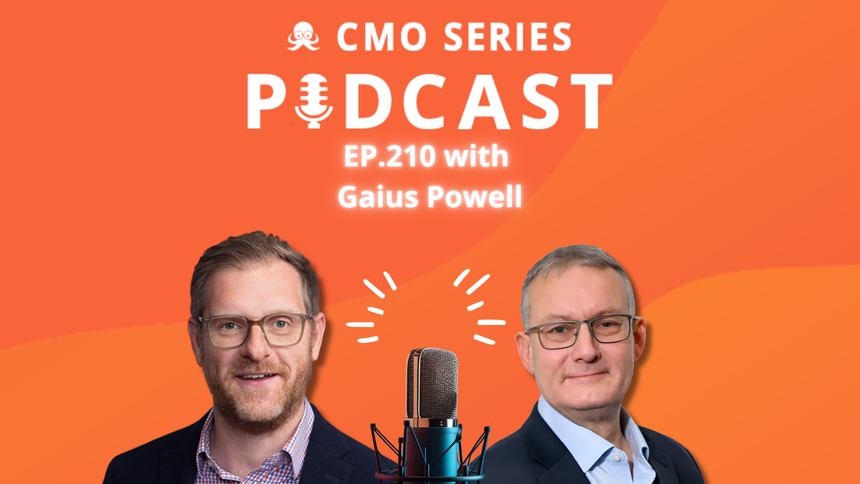
On this episode of the CMO Series Podcast, Will Eke sits down with Gaius Powell, Director of Marketing and Business Development at Wilkin Chapman Rollits. Gaius talks through his career journey, the client‑driven thinking behind the merger, and why the firm chose to wait before relaunching its values. He also shares how they designed client feedback interviews around those values to understand how they show up in practice.
Will and Gaius dive into:
- Gaius's career journey and what led him to Director of Marketing and BD at Wilkin Chapman Rollits
- How Rollits partners joining Wilkin Chapman ahead of the merger helped set the stage for what followed
- The main considerations behind the merger, and the thinking around building a strong presence across both regions
- What day-to-day life looked like post-merger, integrating laterals and building a shared culture
- Why the firm waited to relaunch its values, and what that process involved
- How updated interview-based client feedback shows the values showing up in real client relationships
Transcription
Will: Welcome to another episode of The CMO Series podcast here at Passle, where we talk about all things marketing and business development related. You've heard my dulcet tones before. Haven't always seen my face, though, which is unfortunate for everyone. Today, I'm really excited. We're gonna be talking about a topic that many folk are talking about at the moment and have been over the last few years, and that is around mergers and acquisitions.
So really, a merger doesn't end when the ink dries.Some would say it starts there. So for who we've got on today, Gaius Powell, introduce Gaius in a moment. The firm that Gus is at is Wilkin Chapman Rollits, and they actually merged back in 2025. The real work started afterwards, and the team, Gus is gonna talk through even further what they, what they actually did.
But they focused on bringing people together, integrating lateral hires, taking time, I suppose, before setting that new firm up and its values, so actually they truly reflected where the combined organization was heading in the future. I'd love to welcome Gaius Powell today.
Charlie: This episode is brought to you by CrossPitch AI, the new cross-selling tool from Passle. Cross-selling should be the easiest way for law firms to grow, but most firms struggle. Why? Lack of awareness, lack of trust, and frankly, fear of selling. The result? Missed revenue. CrossPitch.ai fixes that. It breaks down silos, helps professionals connect, and delivers timely, relevant insights to the right people inside the firm and out. There's no heavy roll-outs. Just switch it on and try it today. Head to crosspitch.ai to book your demo and make cross-selling happen. Now, back to the podcast.
Will: Hi, Gaius. How are you doing?
Gaius: Very good, Will. Lovely to see you, yep, again. Thank you.
Will: And I know you're fresh off holiday, but we'll probably come on to that. I am as well. Straight into the world of work again. We're gonna be talking to Gaius around a whole bunch of things, including career journeys at the start, because I think that's an interesting thing that you've been to looking at many of the larger firms, and now at your current firm slightly different. But of course, you have grown recently, which will be interesting to talk about.
Gaius: Sure.
Will: We also wanted to talk about integration, which many firms are talking about, and that's obviously before a merger and then, of course, directly afterwards and then what that future looks like. What's gonna be really interesting is actually talking about how your, the values of that firm have changed and how you built those, and aligning with what the clients actually want at Wilkin Chapman Ro- Rollets as well.
So 2025, been through this, been through this merger, so we'll come on to that more, but I wanted to just sort of touch upon your career, leading up to your current role. Maybe you could walk through the journey for our listeners in terms of where you've been and how you became director of marketing and BD at Wilkin Chapman Rollits. Because I think it was a new role, right?
Gaius: Yeah, no, they didn't, they didn't have them. And they didn't have director-level positions. And then they decided before my time as it happens. But I was the first, we're the first director, uh, of, of marketing and BD. I guess as the firm continued to grow and, and, and, and so on, uh, felt that they needed director-level type support across the functions, whether it be IT, HR, and so on. But I sort of fell into the law back in, back in the mid-'90s, without taking too long a story on it. But so I've been in the law for 30-odd years, but before that I was with an advertising agency in a mutual insurance company. I got married and then decided, right, okay, well, if I was gonna... This is the time to change, change jobs, in a way, and find a permanent place to live and all that kind of stuff.
So I sent out my CV to a number of agencies back in the day by post, you know? And one of which was Michael Page who were advert, I didn't know, were looking at a post in Sheffield for what was then Nabarro's, now it's part of CMS, for a marketing manager based in what was gonna be their new Sheffield office and that landed with them two or three weeks beforehand. They needed somebody with PR experience, which I had through the advertising agency. And it was just one of those fate, serendipity, whatever you wanna call it. You know, it just landed and I got it. You know, really, really quite pleased. And I was there for three and a bit years. Absolutely loved working in-house in the legal market.
You know, the advertising experience had been everything from carpet tile manufacturers to portable building providers, you know, as well as a law firm, as it happened, which probably helped me get the job. And then I went from the Bar Rose to DLA, which followed a recruitment consultant contacting me. So I went from Sheffield to Leeds just as DLA were very much on the international growth journey. I spent seven or eight years there, which I absolutely loved, including the merger with the States, although technically it wasn't a merger, but a big merger they did with the States.
Then I got a director level position at Pinsent's, which is the reason only reason I left DLA. And then I did consultancy for a couple of years 'cause I thought, I'm getting on, if I don't do it now, I'll never get around to doing it. And then I was persuaded to go back in-house. Again, recruitment consultant. Going to Shoosmiths. And then there was Shoosmiths, which must've been six, seven years. Again, similar growth trajectory, you know, in the sense of joining a firm on that path. And therefore, being able to make and hopefully make some positive change and, dare I say it, have an interesting time. I certainly don't think that at this stage of my career and life that I need to work for an incredibly mature multinational law firm again, you know?
If anything, without being unkind on those firms at all, I'd probably be a bit bored, you know, 'cause it is so substantive and so high level. And then, I got another approach from a recruitment consultant who's served me well over the years. Different one this time. Just on a Friday night. Though it was one of those, oh, yeah, vacancy, we've got something you might be interested in, you know. We've all had those over the years. But actually within then sort of the banter going backwards and forwards, thought, "Hold on then, this could be quite good." So anyway, I didn't know it was Wilkin Chapman Rollits, but I left Shoosmiths at the end of November and then as it happens, then joined Wilkin Chapman as was in January.
So I had about a five week gap over the Christmas period, which was lovely. And then started with, with Wilkin Chapman. Now, what happened there really was the fact that I didn't know at the time, 'cause it was them, but they are incredibly local to me. I mean, like ridiculously local. The nearest office is 12 miles from where I live. You know, having come from an environment where I was literally, and I won't say all over the shop 'cause that sounds bad, but you know, all over the shop in terms of all over the country and internationally. To be able to sort of get my teeth stuck into an organization which I didn't know at the time was gonna have a, shortly going through a merger process, really, really appealed, you know, at the stage of career that I'm at to be hands-on.
And as it happens, the Chief Executive at Wilkin Chapman, now Wilkin Chapman Rollits, who's still the chief executive, a chap called Robin Simmons. Robin and I actually years, and years, and years ago had similar paths at DLA. We both worked at DLA. So the fact that he was at DLA and then was at the CEO at Wilkin Chapman, I found it incredibly reassuring, you know, in the sense that, A, I've got a bit of an inside track here. In the initial interview I had with Robin we were very professional about it but obviously we knew each other from a, from a long time ago. And then I met the senior partner and one of the divisional heads, and that was it. I thought, "This is for me." I'm, I mean, if they'll have me, you know?
And lo and behold. They may well have known at the time they were speaking to me that this merger considerations were going on. Who knows? I've never asked that direct question. Yeah, so I joined in January 2024, so I've been here for two and a half years now.
Will: It's interesting to hear, but it's also, I that was gonna be one of my other questions off-piste, which was did you know about the merger? And then the other thing, so you've already answered that, you didn't.
Gaius: No.
Will: What, what about this, though? If you turned out... If you did know about the merger, would you still have gone for it because of that relationship with Robin?
Gaius: Oh, too, too, right. I mean, yeah, it's one of those things people often live through them, and I've been fortunate to live through a number over the years, from the DLA Piper one I mentioned with the States to Pinsent Masons and McGrigors, and so on. And, whilst they're, you know, time pressured invariably, and so on, you don't get a chance to do them very often. You really don't. Not truly really if you're heavily involved, you know? And yes, sometimes they can be tricky with HR implications and all sorts of, all sorts of things. But in terms of interest and excitement, it was, you know-extremely exciting for it. I didn't feel at all as if I'd been used the old language, been sold a pup, you know. That suddenly, "Oh, you thought you were doing this, guys, but now you're doing this, guys," you know?
Will: Yeah.
Gaius: But I'm sure they had one eye on my historical experience without me knowing that when, when we started conversations. Yeah.
Will: Super interesting. I think the other, the other interesting thing, well, there's many interesting things that come out of this 'cause it's so timely with all of the transatlantic mergers that seem to be going on on a weekly basis at the moment. But that you guys had already taken on a few partners from if you think of it as a lateral-
Gaius: Yes. Yes, indeed. We had moved. Oh, I say, "We," as in Wilkins Chapman. Yeah, but we'd taken-
Will: Wilkins Chapman had taken on people from, from Rollits ...
Gaius: Rollits. Yeah, there were two, there were two. One, one was already there. One joined very shortly after I did. Two, in fact, joined shortly after I did. One of whom wasn't actually at Rollits but was, had been a partner at Rollits. And I think that had the sort of ease of fit, if you like. I mean, cultural fit is an overused phrase, but ease of fit, the style of personality, ways of working, you know, attitude to clients and colleagues.
U I think it was really... It wasn't intentional, I don't think, on the firm's part, but it was certainly thought, "Well, hang on a minute." You know? We're doing, we're doing... We're not doing well just doing well out of these individuals. There could be something here in terms of this cultural fit piece, as well as if I jump around slightly, as well as the sort of geographical fit and other aspects which I'm, you, you may want to probe me on. But it was incredibly helpful, you know. And the fact that obviously the incumbents- I very strongly suspect our incumbent lateral hires from Rollits had encouraged their former colleagues at Rollits that this was a good place, you know? Spoke volumes of how happy they were, you know, so with the move. So it was almost a bit of unintentional cultural due diligence, which sounds very poncy, but do you know what I mean? That we thought it was. It was, you know?
Will: It sounds, it sounds very sensible. I imagine there's lots of these big, much bigger firms that wish they'd done something like that, 'cause we often hear, as you do in the news, it's like these big firms coming together without actually.They can do some due diligence on the cultural fit, but they often don't have that knowledge where you've had individual partners coming over and going, "This..." They're sort of like ins- insiders, aren't they?
Gaius: They're almost like double agents in a way.
Will: Yeah, yeah, exactly.
Gaius: But yeah, going back to the carrot piece. But you know they ... And it just really, really helped, you know? No, no doubt about it. 'm, you know ... Was it a deciding factor? Probably not. Was it a contributing factor? Definitely.
Will: And thinking about, you know, so you, you sort of know that the firms are gonna do this thing. What were the main considerations from your side, from the firm side leading up to the merger and, and how did-but you, you touched up on the geo locations there.
Gaius: Yeah, yeah. Yeah.
Will: There's a beautiful fit there. But what was the idea around establishing that presence in both regions, you know, with that thinking?
Gaius: Yeah, no, quite. So just, just for those that are maybe not particularly familiar with the firms. So Wilkins Chapman historically had a very strong Lincolnshire base with a bit of what we would usually refer to it locally as North Bank of the Humber, East Yorkshire presence in Beverly. Whereas Rollits were very strong in Hull and York, you know? And there is, there are very, very few other firms now still that, that straddle those two sides of the Humber estuary. It's almost like an historical traditional divide, you know? So that was one particularly attractive aspect secondly was the fact that, you know, as far as I'm aware, there were not substantive conflicts to be concerned about.
It wasn't as if we acted for one part of a sector and Rollits acted for the other part of the sector and we would bang into each other on that side. There was a strong sector overlap without, again, being conflicting, whether that be in agriculture or in sectors that food, for example another one. As well as Rollits brought to us. We did work within the charity sector. But Rollits had an established charities sector team. So, you know, when you, when you looked at it in all sorts of ways, whether that be geo record for fear, commercial considerations around conflicts sectors as routes to markets, you know, there was a lot on both firms', I think, respective dance cards that were, were attractive to each other from that perspective.
You know, we weren't gonna be over-confusing matters by going down that route. And we felt we had a strong story to tell both internally and externally. Just on the internal piece, one of the things that undoubtedly helped, and again, you're, you're probably gonna probe me on this anyway, was the fact that we were able very, very early on to say to both firms that this was not a cost-saving exercise in a way. In the sense that we weren't doing as some other mergers have been. Right, okay, we can strip out, you know, 25% of each, so each firm's support functions as a consequence of doing this to reduce overheads. This was a client market driven merger in its entirety. So we were able to say very, very early that there will be no redundancies as a result of this merger, which was obviously incredibly helpful for morale and buy-in internally, rather than thinking about, "What's gonna happen to me?
What's gonna happen to me? It sounds great. Okay, the strategy, but what about me? What about me?" You're gonna be fine. You, you're gonna be all right.
Will: Yeah.
Gaius: Which would make my life easier as a director and the senior-the real leading senior management of both firms much more comfortable.
Will: Yeah, that's a really, that's a really interesting point that I hadn't thought of before because you do ... Well, but you've probably spoken to your peers that have been through, and you've done it before. And actually, you do get that element of so much uncertainty that already you're on the back foot with how, how on earth can you build a culture of, if you've got that uncertainty, especially around business support teams. 'Cause they're all like, "There's, there's two of us. Who's gonna get the job?" And it's all, it's h- it's a horrible-
Gaius: Absolutely
Will: Experience to go through.
Gaius: Absolutely. It can be. I remember, and it wouldn't be right to say which firm it was at, but I had to conduct a meeting, a virtual meeting with all the merged firms', marketing and BD function and go through who was at risk as a consequence of the merger. You know, which is an awful thing for... I mean, I felt awful doing it, but I wasn't receiving the news, you know? Yeah, I mean, again, lessons learned about how some of these things can be done. But yeah, we didn't have that concern. Yes, yes, there were obviously equivalents To the directors at Wilkin Chapman Rollits, but that all worked out fine.
You know, and I had a number of off-site meetings with my equivalent, if you like from Rollits, Pat. Who was very much part of the emerging team. We had lots of, lots and lots of conversations, both me and Pat. There was, you know, equity partner, equity partner meetings, then partner meetings-
Will: Yeah.
Gaius: Department meetings. You know, very, very early on in any practical considerations about what on earth was the email signature gonna look like, you know? All this sensible, getting to know you stuff. Which for the size of the respective firms, we're now, you know, about £45 billion turnover, compared to the, you know, global behemoths, was practically doable, which made such a difference, you know?
Will: Yeah.
Gaius: You weren't meeting some of your partners for the first time at some conference in Orlando 12 months later, you know? You were meeting them in some hotel in East Yorkshire, you know?All of you... all of you together. You know it- ... there's about 70 partners. You know, it, it, it w- we did… I, well, I say we, it was definitely much we. I thought the approach to that, that people piece was really, really strong. Really strong- Yeah ... in terms of how it went about. Yeah.
Will: Then you've got a better chance of success as well, of course, when you're doing things like that.
Gaius: Oh, indeed. And-
Will: I
Gaius: Mean, we… Yeah, yeah.
Will: Can you talk the audience a bit more about, so the merge took place April '25, if I remember correctly?
Gaius: Yeah. That's right.
Will: So that's when it officially took place. What did it look like on a day-to-day basis once that, once that had happened? 'Cause obviously you hear, again, these stories where "Oh, God, it's so hard to get into the building," you know, "How do we log into our laptops?"
All that sort of stuff. But you guys have put so much work into making that happen, as you've just sort of talked about. What did that look like on day one when you all came together?
Gaius: Excuse me. Yeah. I mean, we, I mean, certainly it'd be fair to say that, that Wilkin Chapman folk had the advantage that a lot of the systems were going to be legacy Wilkin Chapman going forward. So the Rollits colleagues did have to learn an awful lot of new systems, whether that be time recording to billing, to all sorts of really practical stuff. As well as, obviously, harmonizing things like conflict procedures. You know, they're real heavy, I want to say backend stuff, but the things that, you know, a regulated business just has to make sure it gets right.
So yeah. The Rollits as were the Rollits new colleagues, they're the ones that had to, you know, learn an awful lot in a very, very, short term of the merger. But, you know, those systems are now harmonized and we are as we always are. There's always going to be that element of, of teething, teething trouble. I guess, but what we were determined to do was to be as integrated, it sounds like a tautology or a misnomer or whatever the phrase, as integrated as we could be, as soon as we could be, from that practical basis.
We didn't, did not want two parallel systems working together. Or not together, separately, you know. We needed to be as integrated as practically possible. So that obviously was a big focus for colleagues in IT and, and ops to get that all sorted. As well as the more glamorous end and my side, you know, from branding and signage and everything else, you know. But yeah, there were some obviously practical stuff. As I say, there were discussions about even whether we should be calling it @wilkinschapmanrollins.co.uk on the email, you know, which is a bit of a mouthful. So we went for WCR Law in the end, 'cause it was just so much more sensitive. But you had to discuss these things.
Will: So in terms of value proposition and what the firm had now become we spoke about this off-camera. I think it's super interesting to hear for the audience. You choose to, if you like, relaunch or launch those new values after the merger.
Gaius: Yeah, absolutely ...
Will: Live on the website. Can you talk a bit about why that timing was important and what the process was of actually developing, you know, some of those values as well?
Gaius: Sure. Yeah. So I mean, both firms had as is how you would hope these days, something explicitly articulated around values. We felt that frankly there was so much that we needed to get done for launch on day one from a client and process and system basis, that we wanted to... Literally the headspace to look at the values post-merger when we knew each other a bit better, frankly. And then a very, very non-hierarchical working group was set up, drawn from different locations, different levels of seniority-
Will: Yeah
Gaius: Different legacy firms from whether they were what we call as values ambassadors or other roles. And we had a workshop with an external consultant, just taking stock as to what we thought might resonate, be appropriate for, for the new firm. Without suggesting that we were either intentionally dumping either of the legacy firms' original values, but where we thought there was a particular fit on it. And that went on for several months in terms of that original workshop and the sort of breaking it down and developing it a bit further and, and refreshing the values. The behaviors as part of the values. And what we were really keen to do was to make sure that the values were both fit for purpose on a standalone basis, but more importantly, sort of complemented and supplemented the firm's positioning and vision.
And we felt that, frankly, with the values needed be- needed to be supportive of the vision rather than create the values and then create the vision. Well, I mean, that sounds a bit wrong, you know? Without being too strategically hierarchical about it, we thought, "Look, we've got to get the vision." The positioning statement has to be done, then followed by the vision. Where does the firm want to be, the new firm wants to be? And then the values really therefore how we conduct ourselves internally and externally to, to deliver against that, that vision. So that's why I think, quite rightly, we did it in a sort of sequential space rather than think, "Right, you know what? New firm, we've got to have the new values for the 1st of April." No, we didn't have to do it. We didn't pre-fill. No. Let's not rush it. Let's do it together with, with people that feel em- empowered to, to do that, as opposed to it's something that's got to get done by the 1st of April.
Will: And then of course the... So you've got the, you've got the values, and everyone's part of that. It's gone, it's gone live. I suppose the next step, which we'll come onto, is clients then. And actually not, not so... Well, you do, you do sort of have to test those values, right? But you have to-
Gaius: Yeah, yeah
Will: You have, you have to sort of change your client feedback, and how you articulate those. So how, how did you guys, how did you do that in real client relationships with your new values?
Gaius: Yeah, no, thank you. It's a good question. So we felt the values I mean, without going on and on about it, the values obviously need to be externally relevant as they are internally. It's not just about how you work with your colleagues, you know? They are also how we deal with clients and the wider communities. You know, it's not just about clients either, it's about other stakeholders and how we work with them. So we started before the merger to we outsourced, this is the commercial side, our commercial client feedback to, actually happens to be a well-known player in the professional services market, to do qualitative and quantitative interviews with, you know, selected clients. And as part of that, once we got our questionnaire agreed, we then thought, "Hold on a minute, this is, this is too good an opportunity," or in fact, would be flawed if we didn't seek to ask our clients whether they were seeing our values in action. Now, the big assumption there is that they've got either...
A, that they actually know what the values are, which they probably don't, and why would they, without us sort of, "Watch this video, and then tell us whether you think we deliver against it." So what we rather, I think rather neatly did was to go through that questionnaire and then group the questions where we could align them to the behaviors and the values. So, so effectively we were asking them, "Were we delivering against this particular value or behavior?" That could be responsiveness, for example. But how does the responsiveness question align with values and behaviors? And then we changed our sort of scoring metrics such that we've now got a series of dials at the top of the questionnaire when it comes back, the classic red, amber and green, as to whether the client, without knowing this, is then being asked, "Well, okay, how do you think we're we have purpose and pride, Mr. or Mrs. Client?" You know, we don't ask them that question. But we've grouped them together, the questions together, such that we can effectively score ourselves against whether they do think we have purpose and pride in about how we conduct ourselves. And I say we've got these dials.
From a, thankfully I'm pleased to say never a red, uh, to amber, to full green. You know, much like a speedometer I guess, in a way, as to how, to what extent we are actually delivering against those values. And that's been really, really helpful internally To further demonstrate the value and power of having values in the first place. You know, it's not just a nice thing to have to recognize our colleagues' good behavior. Yeah. This is about how we want to be seen in the marketplace. As well as, I think, really, really important as ever these days, by prospective recruits, you know, in terms of how we conduct ourselves as much as around the quality of the work and who we act for, you know, all those obviously very, very important things as well.
But what we're like as a business, as an organization. The values come through, through hopefully strongly in that, in that sense. That's why we, as you referenced, put the, uh... did a value video for external consumption. Obviously, there's internal comms as well, but yeah. That's a helpful context for you.
Will: Yeah, no, that is. And I, I imagine there, the other, the other part to that, I wondered if there was an evolution of some of those values that further down the line. Obviously, the, the... You're only a year and a bit into the full merger. Is it something that you sort of revisit and go, you know, "Do we, we, we revisit these every five years," or have things moved again?
Gaius: Well, I think that's a good question. I mean, where we're at, where we're at at the moment is the embedding phase, you know. And one of the things we're going to be doing is some, you know, pulse surveys over the next year, two, four different surveys, 25% of the, of the population of the firm, asking them whether we, they do think we are living the values and behaving this way. And they do feel that in hopefully the extremely rare circumstances where the values are not being lived, that they feel comfortable, that they are being addressed if those values aren't being lived, you know. So, and that may well throw up whether they, the values that we came up with-
Will: Yeah
Gaius: Whether they're truly fit for purpose in reality, going forward. But yeah, so far so good in terms of this process. I feel very comfortable. I mean, it's not, I mean, it's, it's unusual perhaps for a director of marketing, BD, to be so involved with the values side, which I found very refreshing to be able to be so directly involved. I certainly didn't usurp my HR colleagues, who would typically, of course, be associated with values. We worked obviously very closely on it. But I suppose I'd had the, the, the benefit perhaps of doing some value rollouts in the past and wanted to get this alignment with the brand and the positioning and the, the client feedback much more explicit than perhaps, other firms have done in the past. That was my opportunity this time around.
Will: Yeah. And it's good to be involved, as you say. It's the variation, you know-
Gaius: Oh, it's been, it's been lovely. Absolutely lovely. I mean, I can't... It sounds so twee to say lovely, but it has, you know. It's been lovely. Yes.
Will: Gaius, you've given us loads of brilliant soundbites there and lots of great advice. The last question I wanted to ask really is: There's lots of your peers that are, have, and will be going through-
Gaius: Yeah
Will: Mergers, as you know. You know, Knight seems to be angling and going at, and looking at lots of the provincial firms in the UK. You've got these big transatlantic mergers that aren't gonna slow down, that everyone seems to be having a piece of that.
Gaius: I know.
Will: If you could give one piece of advice, what would that be to any of your peers going through something like that?
Gaius: I suppose it's two. Thank you. It's two. I think it's two-pronged, really. One, really the ultimate reason, and this is very easy to say, the ultimate reason for any merger must be client-driven, and sometimes that gets lost. You know, it must be client-driven, really. Not just 'cause of this dash for mass or whatever that some firms seem to think, "Well, if we're not big, we're not gonna survive." Well, that may be right, but it needs to be client-driven. And then the other piece is about the people, really. The internal aspect.
I've certainly found that you just cannot communicate enough. You know? I think we started out, we were about to set up for Wilkins Chapman about 30 frequently asked questions, you know, that we thought would be frequently asked questions. And then, you know, everything from the redundancies point to harmonization of benefits, different titles, hours of work. You know, all this kind of sensible stuff that people might be thinking or wonder about what's gonna happen. As well as, to say, the big picture stuff or what's the firm gonna be called and why we're doing it. And then I think by the end, we ended up with over 100, you know, which may sound ridiculous, but as it happens, different things concern different people at different stages of the process.
And you just, we just constantly, I say constantly, continually updated it or refreshed it such that people didn't feel they had to ask a daft question, to the line manager. It was already there. So it helped us because it also helped the line managers know what the firm's stance was, you know, rather than, "Oh, I don't know. I'll go and check on that." Well, no, it's, we've already explained the fact is this is what's gonna happen to, again, it sounds trivial, the car park. Or whatever, whatever it might be. You know, the real things that really matter to people on day one of a merger. Well, where, where, where do I, where do I park?
Where do I sit? Why have you decided we're gonna structure it this way, you know?That really, really human stuff. But so if you can get that client-driven, but remember the people piece, amongst everything else about signage and website signatures and the stationery, and God knows what else you have to go through. That's the most valuable thing. You just cannot communicate enough internally. You know, you've gotta be conscious of course that internal comms could always go externally, but parking that caveat, the principle should be to be as open as you can be as for, as quickly as you can be, for as long as you can be.
Will: So just to reiterate, make sure the merger's client-driven and communicate, communicate, communicate openly as much as you can. There you go.
Gaius: Absolutely. As much, as much as you can.
Will: We're gonna move on to now a quick fire round really. So we'll just ask a few questions. Quite relevant, some of these actually, based on your, based on your holiday. What are you currently listening to? I suppose you might have been listening to something on the plane on the way there and way back. It can be a podcast, audio, anything.
Gaius: Yeah. No, sure. I mean, I'm a relatively new podcast finder if you like, courtesy of a particular streaming platform, shall we say. And that, we have all sorts of things crop up on that from my perspective. Mainly factual or sporting, but I suppose my favorite one at the moment, is one for golfers out there called The Chipping Forecast, which comes out every Tuesday. Features Eddie Pepperell and his struggles and successes on the DP World Tour.
BBC journalists and Andrew Cotter as well. So I enjoy, I really, really enjoy listening to that. The fact that it lands on a Tuesday is quite nice on the drive to work. Podcasts are my thing. Historically I'm an '80s, '80s child music-wise, so that stays, still comes out on the turntable from time to time.But, yeah, those are the things I'm listening to at the moment.
Will: Lots of '80s influences coming back now in, in the music we hear.
Gaius: Indeed. Indeed. Right.
Will: There we go. Tricky one. What's the best piece of advice you've ever received?
Gaius: Yeah, I mean it, I think it's a really tricky one that one, 'cause it's different stage in your career, different things will-
Will: Yeah
Gaius: Will land. But recently, in quite recently actually, when I say recent, the last few years, there's always been that phrase which always has a religious connotation, so be careful about, you know, treating people as you would wish to be treated yourself. But the present thinking seems to be don't do that, treat people as they would wish to be treated rather than what you think is the appropriate, appropriate standard, you know? And I think that's a really valuable, valuable insight to be honest. You know, if one presumes one has a decent set of morals, right? Without getting too heady about it. Then you should be in a good place to start with. But you've really got to think about how the other person's approaching these things.
And again, dare I say it, and I haven't come up with this 'cause of the merger discussions, but thinking along those lines is really, really helpful. So rather than approaching, "Well, how would I approach this?" Well, no, no, how would, how would they might want to approach this? It is a really, really I think helpful thing, which is relevant to whether you're dealing with direct reports, superiors, merger colleagues, whatever it might be. So that really has resonated with me.
Will: That's a good bit of advice. We talked about the podcast. What about literature-wise? Any books that you have been reading that you might wanna recommend to your peers, from a business perspective?
Gaius: Yeah. Yeah. Well, I mean, again, I'm more of a factual person, I guess than a novel person really.
But apart from the sort of classic John Le Carré stuff, I did think about this ahead of today as to which of the management books- That resonated with me, to use that word yet again. And I thought, well, I'll put it, I'll put it off the shelf. So I've got a physical prop, presuming any type that it will allow me to show you. I don't know whether people have heard of the Blue Ocean Strategy. It came out about... I was really shocked when I looked at the, when it came out, which is quite frightening, which was 2001. But anyway, it's a different way of thinking about how to approach markets. And again, it particularly struck a chord with me.
There's some really interesting examples in there about, uh, unusual businesses such as, Cirque du Soleil and Yellow Tail, the wine, and about how they've managed to differentiate themselves and stand out in, in perhaps somewhat traditional markets. I mean, Cirque, Cirque du Soleil compared to your typical historical circus is nothing like a traditional circus. And that's one of the lessons of the book about how, how you can try to compete with a similar but very, very different product, which enables you to, dare I say it, get more value out of the market. So that, that would be, that would be the one. Blue Ocean Strategy, it's one of those, one of those books written by a pair of academics, but it's not academic.
You know, there are models and stuff in it, but it's a very, very good, relatively light business book that's not, not as, dare I say it, as tittle-tattle as some of the management books you can pick up in airports. You know, it's actually got some substance to it. So that would be the one.
Will: And still relevant as well.
Gaius: And still, absolutely still relevant. Very good. Which is very rare sometimes with these management books and fads and stuff, yeah.
Will: And what's your favorite way to unwind?
Gaius: Golf. Yeah, golf always helps. But actually in the last couple of years, I've driven home in silence, which may sound a bit monk-like. But I don't, I don't put the radio on, I don't put a podcast on. I just drive home in silence, you know? And actually I found noise irritating on the drive home. And I don't mind it on the way in, but on... Hence the podcast on the way in. But on the way out, very rarely will I put something on, unless there's a particular piece of breaking news, for example, and I'll put the news stations on. But yeah, no, silence actually on the way home from work is, uh, we found it really quiet, refreshing in a way.
Will: I don't know what that says about going through a merger, but maybe we'll come onto that. Silence is the best.
Gaius: Yeah, no, quite. I think the silence started before the merger, to be fair. Okay. All right. But just to clarify
Will:. You've just been away, but where, where is your favorite place that you like to visit?
Gaius: Well, it's, it's France. I would say that's for a couple of reasons. One, frankly, is space. I mean, there are a lot of... I mean, it's a big country, just to state, state the obvious. But there's a lot of space, and you can get, can genuinely get away with, get away from the noise and so on. But if you want to, as we did recently, if you wanna pop into a city, you know, the infrastructure network's fant- fantastic, and getting around is relatively easy. And there's lots of varied places to visit.
So we were lucky enough to, uh, only very recently go to Giverny to see Monet's gardens, and Orleans, you know, made Orleans stuff and all that kind of all that kind of thing. So yeah, no, lots of variety in France. So France is, and it's relatively easy to get to.
Will: And it sounds very close, isn't it? It's great.
Gaius: And it feels very different.
Will: There we go. Good stuff. Gaius, thank you so much for your time. So much great advice there that's come out of that. I'm sure the listeners will be finding that super valuable. So thank you for giving up your time.
Gaius: No, no, it's been a pleasure. It's been a pleasure, Will.
Charlie: You can follow the Passle CMO Series podcast on your preferred podcast platform. Thanks for listening, and we'll see you next time.
/Passle/53d0c8edb00e7e0540c9b34b/MediaLibrary/Images/2026-10-14-09-22-13-024-6acf49c5944aac193a981bb9.jpg)
/Passle/53d0c8edb00e7e0540c9b34b/MediaLibrary/Images/2026-10-19-13-24-47-415-6ad61a1fdc6374f637024697.jpg)
/Passle/53d0c8edb00e7e0540c9b34b/MediaLibrary/Images/2026-10-13-16-00-13-704-6ace558d477453bcaa2eba35.jpg)
/Passle/53d0c8edb00e7e0540c9b34b/MediaLibrary/Images/2026-09-28-10-59-02-989-6aba4876c6484376446500cc.png)
/Passle/53d0c8edb00e7e0540c9b34b/MediaLibrary/Images/2026-10-08-10-14-29-755-6ac76d050b30ba925ae8bc36.jpeg)