



Law firms continue to struggle with getting their lawyers to cross-sell effectively, leaving significant revenue untapped. The good news is that with the right strategic shift, firms can close the gap between their professionals and cross-selling success.
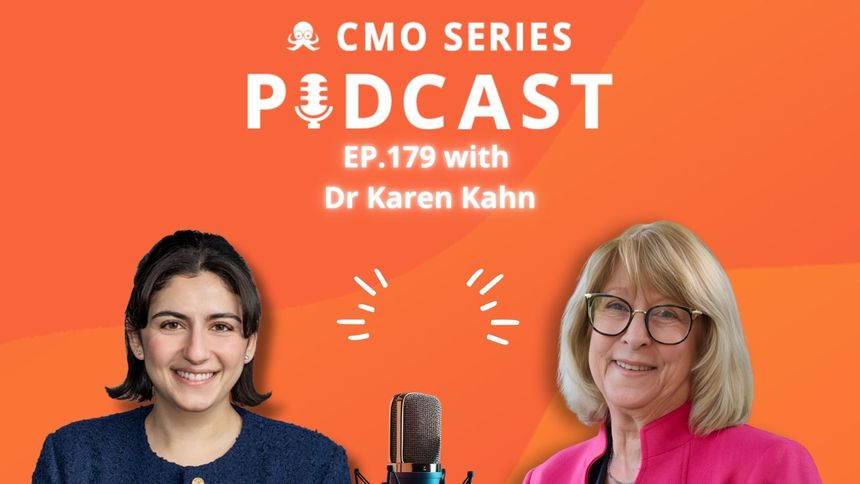
In this episode of the CMO Series, Yasmin Zand is joined by Threshold Advisors Managing Partner, Dr. Karen Kahn, to talk about how firms can do this effectively. Karen is a psychologist, certified coach, and the author of Daunting to Doable.
In this episode, Karen breaks down how law firms can turn relationships into revenue by making cross-selling simple, authentic, and lawyer-focused. She shares the mindset shifts, behaviors, and tech tools that help CMOs and leaders move from broad strategies to personalized, practical business development that actually sticks.
Karen and Yasmin dive into:
- Karen’s career journey in psychology and the pivotal moment she decided to work with law firms
- The core reasons why cross-selling is central to firms’ growth and the barriers stopping lawyers from cross-selling
- The shift in Business Development from macro to micro and ways firms can better support their professionals
- The key mindset lawyers need to adopt in order to grow in confidence and successfully cross-sell
- The role of technology and AI in transforming lawyers’ habits into effective cross-selling behaviors
- Advice for CMOs and marketing leaders wanting to close the cross-selling gap and get their lawyers cross-selling effectively
Transcription
Yasmin: On today's episode of the CMO series, we're joined by someone who spent her career helping people move beyond the fear of business development toward lasting success. Dr. Karen Kahn is a psychologist, senior coach and author of Daunting To Doable. You can make it Rain and a hundred Steps to Doable. As the founder and managing partner of Threshold Advisors, Karen has coached lawyers across the globe on how to turn relationships into revenue without sacrificing authenticity.
In this conversation, Karen shares why cross-selling is the business development strategy of the future and what it really takes to activate lawyers at the individual level, as well as how firms can bridge the gap between strategy, people and technology.
Charlie: This episode is brought to you by CrossPitch AI, the new cross-selling tool from Passle. Cross-selling should be the easiest way for law firms to grow, but most firms struggle. Why? Lack of awareness, lack of trust, and frankly, fear of selling. The result missed revenue. CrossPitch AI fixes that. It breaks down silos, helps professionals connect and delivers timely, relevant insights to the right people inside the firm and out.There's no heavy rollouts. Just switch it on and try it today. Head to crosspitch.ai to book your demo and make cross-selling happen. Now, back to the podcast.
Yasmin: So Karen, thank you and for joining us. Welcome to the podcast.
Karen: Oh, wonderful to be here. Thank you for inviting me.
Yasmin: Of course. Well Karen, we're very happy to have you today and we've got a bunch of questions that we want to ask you.
So we're just gonna jump right in. Kick us off by telling us a little bit about your career journey, your background in psychology, and then how you came to working with law firms.
Karen: I've had a wonderful long career. It started, actually I went to the University of Virginia and got my doctorate in psychology. And for the first 25 years of my practice, I was in some ways a traditional psychologist. I did a lot of consulting. I've always done a lot of consulting. I helped bring Title IX into division one schools, and I had a specialty from the beginning into related areas. One is gender differences, and that's men and women. That's not a code for just women. And also diversity, cultural diversity, racial diversity, and those just have been implanted in me as important to me throughout my life and my career. And I had a plan, and my plan was when my youngest went to college, I would give myself the opportunity to change what I was doing and move.
So I took my psychology background and decided I'm going to use that knowledge and those skills and put it to use in a very new career direction for the world, professional direction. And that was being a coach. And so when my baby went to college, uh, I moved home, which was to Connecticut and started coaching. I realized that I needed to have a focus in what I was doing. There were lots, because coaching was new, there were lots and lots of opportunities and most people were doing leadership coaching in corporate areas. So I did some research and whatever search engine I used, I happened to plug in ‘what industry needs a gender?’ And this was in the early two thousands and no surprise, the legal profession came up. No surprise, no shame on lawyers at all.
But they were just beginning to open up to the notion that there were different kinds of people in the workplace. And so I started contacting law firms. I knew nothing about law, nothing. I didn't even know the word law firm. I thought they were law organizations. But I started reaching out and I said, this is my expertise and I would be really honored to talk with your lawyer - your women lawyers, and help them explore ways to succeed, particularly in the business area. And I was greeted and adopted by the industry. And I work now really equally with men and women and people of all backgrounds, to help them really personalize the way they approach a very confusing marketplace.
Yasmin: Yeah, that's awesome. And I feel like with the marketplace, as confusing as this one, of course, and we talk about this a lot, but cross-selling is such a core piece of that. And you've actually said before cross-selling is the business development strategy of the future. Do you mind explaining why it's so central to firms growth and what barriers you see lawyers facing on like a day-to-day basis?
Karen: Sure. My background has always been in group techniques and bringing groups and communities together. So I've always been a collaborator and working with groups to help them collaborate - just makes sense to me. That's the world we live in. We live in communities. And I don't know why this has been such a difficult concept, but cross-selling, when people come together with different areas of expertise and can offer all of those different areas of expertise to a business which has a variety of needs, then exponentially more business is gonna come.
I mean, it's sort of a no-brainer. Cross-selling for me is a rainmaking multiplier. I offer business. I can do labor and employment. You can do tax. Now, it's Karen times Yaz equals more business, and then we bring in more people. So while it's a buzz now, it should have been a buzz forever and probably wasn't because that's not how law works; that's not the history of law. The history of law firms is individuals, so it's a new way for lawyers to be thinking and law firms to be thinking about what they do and how to do it. But it really is the way to make more money and for me to have fun.
Yasmin: That is very important.
Karen: Very.
Yasmin: So maybe fun for you is, and we talked about this last time, macro and the micro, and you've mentioned before that this is like a major theme in your work, kind of shifting away from the macro to the micro. Can you explain what you mean by that and how firms can better support lawyers?
Karen: Sure.
Yasmin: At that individual level.
Karen: Macro is the big picture and firms need to come up with a strategy and almost every firm has a strategic report, which they bring in consultants and they meet and they come up with a strategic direction for every five years, every 10 years - and that's smart for all businesses. It's smart for me. What direction am I going? What makes sense? How do I fit into the marketplace? And that's macro. When particularly it comes to professional services, we'll talk obviously just about lawyers. It's how are we gonna help the individuals implement the strategic plan? And for me, that's the micro. Now, interestingly to me as a psychologist, turn coach, the micro has not been attended to in a very rigorous way. And it's also interesting to me that most lawyers that I work with don't even know that there's a strategic plan, and some law firms don't wanna share their strategic plan, all of which I find curious.
I'm sure there's reasons and privacy reasons and those, and that's what it is, but I think the more we can get individuals on an individual level and on a group level implementing the strategic plan, the more vibrant and the more successful the implementation will be, dot, dot, dot more money. So what my job is and what my expertise is having, you know, being a psychologist who's working one-on-one and then often with people is how we energize individuals to be able to advance their careers and advance the business of the law firm, which is definitely a win-win. And there are very few lawyers and law firms who have had the time, and the understanding on how do we focus on individuals, what does it mean to focus on individuals? and how can we implement an individually visually oriented plan? So that we really move forward in a really fast way.
And it, my word in my book, and you mentioned it, doable. It's doable, but you need the knowledge. And I don't know how to make out a will and lawyers don't know how to help individuals advance. So I'm a bit of a unicorn, but I see it as a win-win. And so helping law firms has really been fun and I hope a good contribution.
Yasmin: In your experience and just based off what you were saying here is kind of what's like the number one behavior or mindset; I guess you mentioned that a lot that lawyers need to adopt to kind of succeed at cross-selling, and like even building the confidence to start to cross-sell or just engage in business behavior in general.
Karen: Well, I call it the language of cross-selling and the behavior of cross-selling. And just to put a pause there and come back to it, the culture of law firms doesn't really help lawyers know how to talk about their own business development plans. So when I ask lawyers, what is your plan, your individual plan to move forward, they don't have one.
And a part of that is the billable hour really puts a lot of pressure on how do I spend each minute of the day? The culture of cross-selling, the culture of groups is recognizing that one plus one equals a million. How do I recognize what my client needs so I can bring in my colleagues? How do I even know what my colleagues do and what does a tax lawyer do? What does a maritime lawyer do? How do I understand at least conversationally, so that when my client brings up something, “I can say, wow, have you ever thought about, let me bring in my labor and employment lawyer, or my M&A lawyer?” So there's an awareness, as well as an incentive to bring in my colleagues, and also knowing what can my colleagues do. So it's, there's a structure involved. I think most people I talk to, especially from younger generations, the up and coming generations love collaborating and love group work. They just don't know what the structure? What does it look like? And how can I implement it so that it becomes a rainmaking multiplier?
Yasmin: How do you see technology and AI bridging that gap between lawyers' habits? Like you mentioned, new generations are maybe closer to collaborating, but how do you see it in general? Especially with lawyers. They're so different.
Karen: It's so fabulous because I used the word knowledge a couple minutes ago.
Yasmin: Okay.
Karen: And not to cultivate knowledge manually, which is what I've been teaching and doing for 25 years with lawyers is really time consuming. And so when we put the billable hour stresses and anxiety and time, and I add to that, what do I need to know about my client, their industry, my colleagues, and different practice areas. That takes research time.
So AI, and it's been fascinating to me, AI, and I don't mean to be a salesperson for you guys, but a CrossPitch does a really fabulous job of helping lawyers who know how to use it, which is a total issue unto itself, access information with the touch of a finger. So they can ask questions like ‘A, B, C is my client. They are in the cosmetic industry. What are five legal challenges that they have right now?’ And CrossPitch lists them or ChatGPT can list them. And then CrossPitch is - what are some clients and what are some of my colleagues who do some of these areas and what are some of the things that they've written?
And then I can reach out to them. So it really in 10 minutes gives me the information I need to then do the human part. And then that's to reach out to you and say, “Hey, I know you're doing this. I have a need. Let's work together.” And that, that humanness really brings the fun back into being a lawyer for many, many people because we're working together and we can laugh and we can come up with ideas and we can go to conferences together. And so we have a shared purpose and shared knowledge. So AI is really providing the knowledge engine that is essential for when people work together.
Yasmin: Wow. I know a bunch of my colleagues and I were using AI last week to finish off a client project. It was kind of a race of who's gonna get the most kinds of records through the AI tool so that we can get the maximum output. And it was great. It was really effective, and I think hopefully being able to get some lawyers up and running with AI and making it accessible to them in an easy way, something that's coming down the pipe for a lot.
Karen: What you just said in an easy way is a major, major problem because what I've noticed, again, I'm the micro person. What I've noticed is that AI is coming in in a macro way. Like what does our firm need? Well, all firms need AI right now, and so AI is this generic work. And, I was listening to the Guy Alvarez podcast that you guys did recently. It was, and he was talking about one of the interesting untapped experiments for law firms is business development.And it's such a fascinating area to be utilizing AI because it's low risk. We're not dealing with individual clients, you know, confidentiality and things like that. So what I would like to see is instead of a macro approach to AI saying, “Hey, we've got Harvey and hey, we've got CrossPitch, and hey, we have Chat.” Asking an individual lawyer, what is one thing that you need right now that could make your time - that your use of time more efficient in business development.
Let's just talk about business development. That's what we're here to do, and for them to say, I need to know what my other colleagues are doing, and then be able to link the need with the tool. So right now the tool is being linked to the people and there's a huge amount of resistance sidebar, there's side, there's resistance to doing business development anyway. So I really want to be the people person, AI people person, and a bridge with the fabulous technology that, even I am starting to use and the needs of the individual lawyers. And I really, and that is a real cultural shift for law firms and exciting. That's, you've gotta take the people into account or else there's just gonna be a lot of tools that no one's using.
Yasmin: What do you think, if you were gonna take a guess of some of the tools that people might not use? Maybe this is actually a bad question to ask.
Karen: What are the tools that -
Yasmin: Yeah. That people might not wanna use?
Karen: Any.
Yasmin: Oh, all of them.
Karen: I mean, they're not using Excel. I mean their use of - they don't wanna be doing business development. Yeah. So I've been developing a tool for individual lawyers called NetBit and it's an app for individuals. So it's listing my who's and listing my next steps, and being clear about what my direction is. That even when we had it in a pilot form, which was just on a platform where they could just go in. They didn't use it and it wasn't, believe me, if I created it, it was really easy. They didn't - it wasn't resonating with the way they think and practice law. And so there's been a real chasm even with the major rainmakers. The major rainmakers really are the people who are working the world, whether it's through country clubs, whether it's through conferences, they're just using what's typically an extroverted view of the world and building business.
So it's still very manual. So the resistance to finding the time and lawyers tend to be introverts, finding a way that they feel comfortable given their life, their life circumstances, their values, their goals, all of that has to be put together in order for them to ask for a tool. 'cause right now there's not a purpose for the tool because they don't want the purpose. And again, it's a generalization. I think overall if they could wave a wand, sure they'd love to bring in more business, but waving the wand is difficult when there's so many time pressures. And so that's why we really need to integrate it into their values and into their ultimate goals.
Yasmin: So in the same vein of that, if you were going to give one piece of advice to Chief Marketing Officers or marketing leaders or people basically who have been emboldened to take on business development endeavors at a firm, what would you, what would you say to them? Like what piece of advice would you give them to kind of help build bridge that gap?
Karen: You need to customize an individualized approach. You need to know people do what fits their values and their desires. I call that the why. Why do I want? And it's the first question I do in coaching, why do you wanna do business development anyway? And that stops people in their tracks. So what on the most personal level is their motivation is their energy. Number two, following that is what do you wanna accomplish? So I would have leaders know what every single one of their people, obviously exaggeration, but that's where people, talent, external or internal come in, know what they all want.
And then link a business development strategy to that. That's a people-centric approach. And it's been interesting recently, and I know this podcast will last forever, so you know, we're talking about the summer of 2025. There have been some. Some research coming out that CMOs are putting some individual time into the people that they believe are high potential and I think that's wonderful. And I think that that will ultimately be very highly profitable. My concern, and I know a lot of CMOs, who are just are natural coaches and do it, is where are they gonna find the time? Being a macro and a micro is just untenable. So I think law firms need to think about how are we gonna reorganize given the different pieces that will lead toward profitability and it's changed.
Yasmin: Wow. Okay. I could ask you a ton of questions after that, but I won't just because maybe we'll just send folks your way after this. Those were the last pieces of my questions before we get to go into the quick fire round, which I know is very fun.
Karen: Okay. Whatever, whatever fits I'm in.
Yasmin: Okay. So we'll start, there's only five questions and yeah, we gotta do 'em quick. We had -
Karen: Karen, don't speak so much. Okay.
Yasmin: I was gonna say no, I was gonna say if we had like the, um, do, do, do, do. That would be good.
Karen: Okay.
Yasmin: Okay, so the first one is, what are you currently listening to? It could be music, podcasts, audiobook, whatever.
Karen: None of those. Oh, I'm a TV person.
Yasmin: Okay.
Karen: And my family grew up as news centric. They always watch the news. I watch the news,and I don't just watch it in my own political area. So I typically always have the news in the background.
Yasmin: Wow. What's the best piece of advice you've ever received?
Karen: When I was a freshman in college, I was in a seminar. During the break of the seminar, the teacher called me up to her office, which really scared me. And she said, what are you majoring in? I said, political science. She said, no, I want you to be a psychologist. And I said, okay.
Yasmin: Okay. That's helpful.
Karen: I mean, it was, I then accelerated college, graduated in three years, went to graduate school, and on I went. That was very direct. It was like she was coming from above and said, no, be a psychologist. I said, okay.
Yasmin: Wow. That's okay. That's amazing. What's a book or resource you've recommended to anyone in your field?
Karen: Gonna say two, one that really made a difference for me when I was in my pivot and it's called ‘How to Use What You've Got To Get What You Want’; and it's by an amazing woman called Marilyn Tam. And she was an EVP of Nike and Reebok and just an amazing woman, who I got to meet and is now a friend. This is really talking about mission and purpose. And it helped me take a pause to figure out what was really important to me and how did I wanna make that into my life. And it's, the design of the book is fascinating and it's great.
My second book is one that Guy Alvarez gave to me and it changed the way I'm approaching writing my second edition of Daunting to Doable, and it's called Co-Intelligence by Ethan Mollick. And what I can say about this book, it's about AI living and working with AI. If I can read it, anyone can read it. It really personalized AI for me and made me totally not resistant. And I, it's a great book.
Yasmin: Wow. Those are good recommendations. What's your favorite way to unwind after a busy day?
Karen: I'm a daily bath taker.
Yasmin: That's lovely. Very luxurious.
Karen: I have a huge bathtub and TMI, but I'm a bath taker.
Yasmin: Okay. I love that. That's really nice. And the last one is, where is your favorite place to visit
Karen: Sanibel Island. Sanibel Island is an island on the west coast of Florida. It's one of the few islands that go east west instead of north, south. And so it is an island that captures shells and it's a very, very natural island. Nothing is above. Three stories and walking on the beach and collecting shells, no one can see. I'll show you. Here's one. It just speaks to my soul and I go as often as I can.
Yasmin: That's beautiful. Oh my gosh, Karen, I feel like I learned so much about you. Just five questions, actually. Oh, thank you.
Karen: Thank you.
Yasmin: Okay. Well, I guess that's the end of our podcast. To everybody who's listening. Thank you so much for joining us today. I hope you found this podcast incredibly helpful when it comes to emboldening your attorneys, and legal teams, and into cross-selling and trying to bridge that gap. Thank you so much, Karen, for joining us.
Karen: Thank you. This was lovely.
Yasmin: Tune in next time folks for another episode of CMO Series Soon.
/Passle/53d0c8edb00e7e0540c9b34b/MediaLibrary/Images/2026-10-14-09-22-13-024-6acf49c5944aac193a981bb9.jpg)
/Passle/53d0c8edb00e7e0540c9b34b/MediaLibrary/Images/2026-10-19-13-24-47-415-6ad61a1fdc6374f637024697.jpg)
/Passle/53d0c8edb00e7e0540c9b34b/MediaLibrary/Images/2026-10-13-16-00-13-704-6ace558d477453bcaa2eba35.jpg)
/Passle/53d0c8edb00e7e0540c9b34b/MediaLibrary/Images/2026-09-28-10-59-02-989-6aba4876c6484376446500cc.png)
/Passle/53d0c8edb00e7e0540c9b34b/MediaLibrary/Images/2026-10-08-10-14-29-755-6ac76d050b30ba925ae8bc36.jpeg)