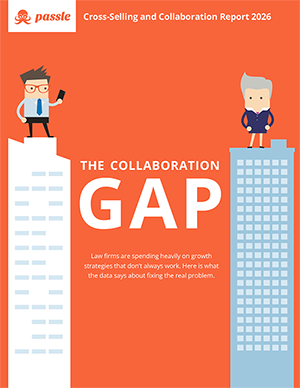



Cross-selling remains one of the biggest growth opportunities for professional services firms, yet cultural silos, lack of trust and missed client insights mean many struggle to get it right.
Join this panel of professional services marketing and BD leaders as they unpack the biggest challenges and opportunities in cross-selling today.
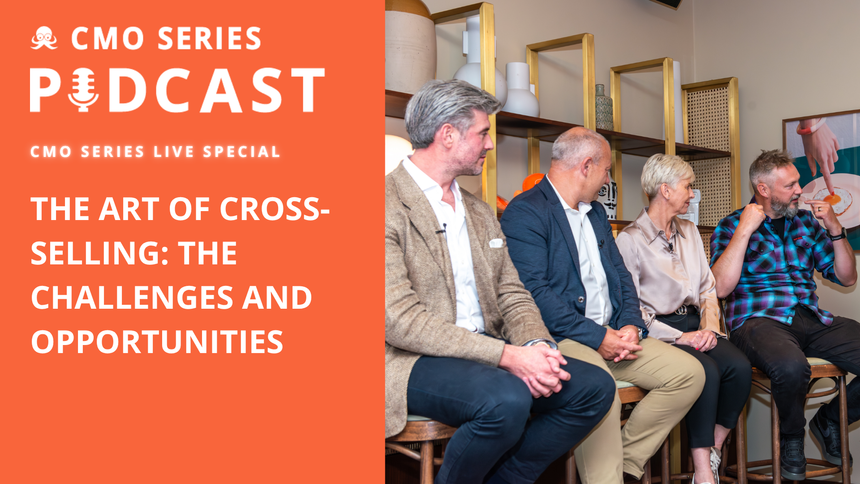
Recorded live in London, Will Eke hosts Sadie Baron (Interim CMO, TLT), Barney O’Kelly (Head of Solutions & Product Marketing, AlixPartners), Peter Skinner (BD & Marketing Director, Wedlake Bell) and James Davidge (Head of Origination, Taylor Wessing) as they dive into the pitfalls of cross-firm collaboration, the growth opportunities within reach, and the tools and techniques shaping a culture of cross-selling.
They discuss:
- Why culture change is essential for collaboration
- How trust keeps referrals moving
- Using data to spot opportunities and connections
- The role of leadership in modelling behaviour
- Tools that make cross-selling work in practice
- Why clients expect joined-up, integrated advice
Our CMO Series Cross-Selling event is hitting the road this November, and we'll be featuring two more stellar lineups of speakers in Chicago and New York. Sign up today!
Transcription:
Charlie: Hello and welcome to this special episode of the CMO Series podcast recorded live in London, where we explore the art of cross-selling. In this exclusive session, we bring together some of the leading voices in professional services, marketing, and business development. We have Sadie Baron, Interim CMO at TLT, Barney O'Kelly, Head of Solutions and Product Marketing at AlixPartners, Peter Skinner, Business Development and Marketing Director at Wedlake Bell, and James Davidge, Head of Origination at Taylor Wessing. Together they dive into the biggest challenges and opportunities in cross-selling today, from fostering collaboration and trust, to harnessing data, leadership support, and the practical tools firms need to unlock growth. So let's dive straight in.
Charlie: This episode is brought to you by Cross Pitch AI. The new cross-selling tool from Passle. Cross-selling should be the easiest way for law firms to grow, but most firms struggle. Why? Lack of awareness, lack of trust, and frankly, fear of selling. The result, missed revenue. Cross Pitch AI fixes that. It breaks down silos, helps professionals connect, and delivers timely, relevant insights to the right people, inside the firm and out. There's no heavy rollouts, just switch it on and try it today. Head to cross pitch.ai to book your demo and make cross-selling happen. Now back to the podcast.
Will: I was gonna start actually just by setting the scene 'cause I was doing a bit of research just on the subject of cross-selling, which is why everyone's here, why we've got this brilliant panel. But I was just having a look back, it's obviously something that is not just relevant in professional services, it's something that every industry struggles with, is trying to do. And I was just looking back at articles, i’ll just quickly read you a quote from one of them: ‘At the mention of cross-selling, partners everywhere nod enthusiastically, but cannot hide their blushes. More often than not, a firm's largest clients are those with its most under-exploited in terms of fee terms, clients with a range of legal needs and with money to spend, increasingly expect to deal with a number of different lawyers in each distinct area of need’. And that was an article from the Law Society Gazette back in 1994, so things haven't really changed too much, without sounding like Les Dennis, we did a recent survey and the survey said, we interviewed 150 senior BD and Marketing folk, US and UK. One of the big things that we found was that 84% believe that their firms are actually missing out on revenue, and that's normally, you know, as a result of cross-selling opportunities they're not doing. The big thing I think Connor's going to come onto it as well, and we'll probably mention it in some of the barriers, the biggest two things are trust and awareness. They're, they're the big problems in law firms, I'm sure some of the guys will talk about some of the other areas as well. But without further ado, I was gonna start with the first question, I don’t know who I'm gonna pick on first, and it's lucky I've got these questions 'cause these guys can't remember what the questions are apparently. I'm gonna start by, we'll start with you James. If you could share your sort of current situation, maybe tell us a bit at Taylor Wessing, what you guys are doing and you've got quite an interesting job title that, not many people probably have got at their firms as well, ‘Head of Origination’.
James: Yeah, and my wife calls it orienteering, so when we did a mortgage application, that's what she told the mortgage broker, which is not what the job is. But, I interviewed for the head of clients, I think it was about two or three years ago when Mike Beswick moved up to the CMO role. And I sort of said, well, really, I think the, the main core or challenge of our business, and all businesses really, is a case of we're not really originating enough work, and that's from the existing client base because we don't have that spread that is really important as you've just covered. But also going out and sort of hunting and sort of asking for work, and I've seen US firms and US lawyers in action where they go ‘Hey, I'm Steve and I'd love to work on your next series B funding’, and you wouldn't see that from a British lawyer, 'cause they're petrified of it. So, going through the interview, our managing partner said, so when you're Head of Origination, that's what you'll be focused on. So it's all basically just around shaking trees and sort of lots and lots of different nudges to try and get more out of our partners because I mean, one, it's called Business Development, so we are as a role supposed to be developing the business. Two, it's a partnership, so we need to actually sort of start working together and be a bit more switched onto it, so I'm sort of ‘Chief Botherer’ to a degree, but it sounds better when you just call it origination. But it's just asking a lot more difficult questions and saying, well, why haven't we asked that question? And, and just keep pushing it and keep pushing it, and our managing partner and the board have made-cross sell, really, really key to the strategy to say, well, we are better together, and there is a lot more to sort of be uncovered if we actually work more cohesively together because every client has, people, has IP, has property, so let's actually sort of really push on to why we are a full service firm, otherwise we'd just be a boutique. So those are sort of the core things that are really focused on really, so that's where the, the title came from, but also what my main focus is just to sort of annoy people until they finally introduce clients to any of their colleagues.
Will: And Barney, from your side, obviously switching from a 1200-person law firm, roughly over to AlixPartners, big consultancy, priority levels in terms of cross-selling. What does that look like at AlixPartners?
Barney: Well, I mean, in consulting even more so than in law, the BD and the sales side of things tends to sit with the client-facing teams. And I often say this, professional services remain committed to an amateur sales force, right? So, it is not a natural muscle that people tend to have. We are also problem solvers, AlixPartners are supreme problem solvers, absent a problem, we are really not that comfortable at knowing what to do. So the notion of cross-selling and expanding work is a muscle we're developing. And similarly so, we tend to react to what's going on in the market much more than trying to stimulate the market around what we can do. So we get a call, we solve a problem, we move on to the next problem. So you've got this combination of a sort of built in mindset and a transactional mentality that means this notion of focusing on an account, strategically expanding it and frankly investing the time and effort required to do it. And there are others in our field who are far better at it because they give people the time and space to build out an account, which then at least will bring in other people who wouldn't necessarily find a way to farm that particular organization. So it is a work in progress for us.
Will: But it is, yeah, quite different, isn't it?
Barney: Yeah, I mean, yes and no. I mean, psychologically we're very similar to lawyers in terms of mindset, professional services, people are of a type. I think there's a fragility there that precludes a degree of cross-selling, there's a nervousness around introducing colleagues to precious clients where they make me look bad 'cause they're worse than me or better than me, you know, all of these interpersonal dynamics are pretty critical. So we're not that much different, really. We're just probably a little less advanced than law firms when it comes to BD as a function.
Will: That's interesting. Sadie, you are about to go back into the world of law again.
Sadie: Yeah, I am.
Will: What's your sort of take on it and have you got, knowing that you're going into it, is it, is cross-selling something that is gonna be a priority for you?
Sadie: Look, I don't think there's a law firm out there that it's not a priority for, is there, um, it's a competitive market for all of us, we're all under pressure, there's too many law firms aren't there? Too many of us really I guess, a bit controversial I suppose. But is there enough work to go around? And the answer is probably no, not ultimately. Not to keep growing at the pace that law firms have been used to growing at, and then it puts pressure down, doesn't it, into the business, I don’t know how many of us have had that conversation there, ‘where's the growth gonna come from Sadie?’, like I'm gonna solve it all in one hit. But you know, I've just literally, I think this is working day nine at TLT and the firm is, is very impressive in terms of the growth that it's already achieved. But what I'm really interested in, is their approach to client engagement. They've got, for quite a small firm, they've got quite a big team wholly dedicated to this area of cross-selling. And I think key account management, client engagement, whatever you wanna call it, if you boil it down, it kind of roughly falls into growing the client and defending the client, maintaining and defending the client relationships. So, I do think that we will continue to invest in client engagement, I have one of the team sat here so she can take it back and report back what Sadie said. But you know, this, I only see more investment in, in that area because it, it's how I, I don't, Connor, where's my quote today? I'm really disappointed that my quote isn't up there. Is it coming later? Alright, just, but, you know, come on, it is the cheapest, easiest and fastest way to grow revenue, you are pushing at open doors, that's what I mean by that quote by the way. You know, there should be less barriers than going out and trying to win entirely new accounts, but how many of us struggle with the idea that we've gotta leap around for this fabulous potential opportunity, and when you dig in, it's 10,000 pounds worth of work, and yet they're not putting that effort into growing a 2 million pound client. So yeah, important, can't see it going away. I think it's only gonna increase in importance.
Will: And Peter, from your side, we're obviously speaking to many people in the market and we often, when, when we talk about cross-selling and how we can maybe help solve it with certain things that, again, we'll come onto, some of the smaller mid-size firms, they sort of say, well, yeah, we understand it if you are in multiple locations around the world and you've got over a thousand lawyers, at Wedlake Bell you haven't got that, you're in, you've got one site in London, you've got big aspirations as a firm. What, what's the big priority in cross-selling? Is it the same as big firms?
Peter: It has to be the same. I mean, it's, you say 83% or 84% of people said they think they're missing out on something, I think the other 16% don't know what they're missing out. Frankly, I think we're all missing out, you know, I think, I think everybody is missing out on opportunities and growing the business. So I've been at, at WedLake Bell for pushing three years now, and I've done 30 years of marketing and BD, hence the lack of hair and increased weight, and walking into Wedlake Bell from my previous firm, which was BCLP, so 12 years there, big firm, and walking into firm Wedlake Bell has been incredibly successful. It is a, as you say, it's a, it's a smaller firm, it's about 80 partners, only about 60, 70 million pound revenue, and the firm has been incredibly successful through just doing what it did, through surviving, surviving is probably a bit strong, but just being what it was. I was the firm's first, CMO, never had one of me before, there were four colouring-in people, in inverted commas, but other than that, to have proper marketing and BD, and the experience come in has been a complete change. So in three years, I've grown the team from four people to now eleven, which doesn't seem like a lot, but for a firm with that size to have 11 people in marketing, BD is a big shift. And the reason that I think is important is because the reason we've made that change is 'cause the firm has bought into it and has recognized it. I think if the leadership of a business doesn't recognize and buy into it, you're hiding to nothing. I think that actually a lot of what we will probably find ourselves talking about soon is about potentially behavior change. We talk about, we talk about trust, we talk about cross-selling and talk about account management. All of what we do day to day is about growing the business, but none of it is possible unless there's trust in the business and, and you work as one. And we will undoubtedly talk about the difference between my client and a firm client because I think that is the root cause of what doesn't succeed and the root cause of what does succeed.
Will: How does it work in practice? I'll come to all of you, but I mean, we all know it's hard, the theory's great, it should work. Your quotes bang on, you know, it should be the easiest, fastest way to grow revenue, it's just that it's very hard to do. So do you see it being in, in strategy? Should it be led from the top? Should it be sort of managing partners? Should it be marketing and BD that grab hold of it and, and, and push that strategy? Or is it a mixture of both? I come to you, Sadie, in your experience.
Sadie: I think the minute you put it as part of comp, then you have a behavioral change, 'cause basically partners, and sorry if there's any in the room, care about two things, how much they earn and what people say about them. End of. Maybe how many kids they've got and how many yachts and Ferraris as well, I don’t know. But largely, if you can get the mindset in and measure it in some way, and I actually don't think it has to be a percentage kind of formula type stuff, but it needs to be a conversation that happens around compensation to make partners understand that it is in the firm's interest to grow their client relationships and institutionalize them, and not enough attention is paid to that, and I think I say day nine at TLT, and I think I've mentioned it about four times already, but you know, it needs to be part of that conversation. So that's where I think it starts.
Peter: Can I just, just add to that? So I sit on the board, whether that's a good thing or a bad thing, discuss, another issue. We sit at board meetings and we have a standing agenda at the board meeting, which is lateral hires. What do we talk about in lateral hires, we want the lateral hire to come with a book of business, right. So we want them to walk in with a book of business, we then want them to arrive at the firm, we then want to share those clients with the rest of the firm. Therefore making that, what was once a portable book of business, less portable. So we talk about comp and we talk about structures, and we talk about what we're asking of lateral hires to come in. We're saying come in as a lateral hire, share your firm, and then by the way, when you want to go, we've made it really, really difficult for you to go. Because the touch points that we now have into this client have made it so that when you leave said client doesn't want to go anywhere else. So comp structures, how you, how you build relationships, how you build cross-selling and the whole remuneration and how people are rewarded and how you sell it is so key to whether this is gonna succeed or not. I haven't got the answer to what that's like yet. You know, you try and talk about comp and changing comp, whether you've had a go Sadie, it's, you know, you, you've had a go. It's so challenging because I'm sat in the board meetings talking about laterals and saying, yeah, let's get them in and let's get that spread, and I've got partner sat in that room going, you know, I don't wanna share my client because of where I want to go, then you know, I wanna keep my book of business. It's really, really challenging.
Will: It's interesting you mentioned the lateral hire. I was on a call yesterday with a American firm and, and I mentioned to you earlier, they actually, when they get lateral hires in, they put a spotlight on that lateral hire and they do exactly that, they say, ‘oh, this is the new lateral hire we've got over, they're brilliant, they've got this book of business and blah, blah’, but they don't do anything the other way. They don't do the awareness piece, which is actually tell that lateral hire what's available at the rest of the firm as well, we're full service, we can do this, we can do that 'cause they don't know that necessarily. What do you do at Taylor, Taylor Wessing on this side?
James: I think we've got a client investment program for hero clients, so there's sort of 10, 15 clients that have client relationship managers, uh, client team, they get extra budget, they get a slight deduction on chargeable hours. So that's for sort of the top 10 heroes. But all sector in practice BD people and partners are expected to sort of lead from the front, but also we do huge amounts of internal comms to sort of highlight and champion those that do it right, because also it's a partnership so you get it to work for you. So where there's a partner who's the head of a client that's about 10 million quid, but it started off as a 300,000 pound client back in 2005 and from consistently always saying, who can I introduce you to? Who can I do these things? So we keep telling his story and it probably gets more elaborate every single time, but the retainers over 12 or 15 million now I think it is. But it's just because he keeps doing it, but then other people start leaning into it as well. So you've got to just, it's a behavioral change that has taken for, for this client, as an example, 15 years, but you have to just keep chipping away and if you've got 15 different people at any given time saying, have you thought about introducing this person, that person, then eventually people either just succumb and the people that, so just out of just sheer desperation, but slowly but surely, the people that don't do it, sort of that group gets smaller, smaller, smaller. So, it's just consistent doing it all the time from multiple different channels, I think. It still takes forever and we've been working on trying to fix the comp, we're in our fourth phase of slowly changing it until people haven't realized that we've gone this far. And there's lots of other things that we are slowly changing, but I think it's just, you've got to just keep at it and you'll start to see the differences but it's not gonna be, oh, last year we've doubled our revenue because we started cross-selling well on everyone, 'cause unfortunately that isn't how it works.
Will: There's no one silver bullet, just keep chipping away. How, how do you see it Barney?
Barney: This is where consulting is a bit different because we can sell into lots of different parts of an organization, but that, you know, it's not the case that you've done a piece of risk work in a client and then they're gonna buy supply chain work off you, you can't, there's not the same, you're not entitled to that work. It's almost a new sale altogether into a whole different structure in the firm. So, I look after our consulting service lines, so a big part for us is how do our industry facing teams pull us through into their clients and there's inevitably tension there because clients have only got two or three really pressing things that they can deal with at any one time, and you might be involved in a service that could be fourth, fifth, sixth on their list. So, it's set up for frustration. I think where we've done it best as a firm is in the private equity space and actually we do a lot of work through referrals from law firms as well. So we have a pretty clear idea about the law firms we want to know us, and want to sort of bring us in on a restructuring work, piece of work or an insolvency piece of work. But these are very referral based relationships and they still perpetuate the transactional mindset. Like we use you for this over and over again, and to try and expand into getting to users for something else is really, really hard. So it, it is always a delicate balancing act, I think the number one thing that we never really talk about when it comes to cross-selling is if your colleagues don't like you, they won't cross-sell you, right. It doesn't matter what structures, what processes, what comp, if your colleague thinks you are a dick, they're not gonna introduce you to their client. It's, it's, and, and we don't address that enough, and it's a very difficult thing to say. You know, no one will go, I'm really good at what I do, yeah, but we don't wanna introduce you to the client. And that's, that's a problem and it, and sometimes on my less charitable days, I might say that in the organization because it becomes a real tension. So it's a very difficult cocktail to, to make work for us, we've made good grounds. As I say, PEs good, corporates for us is the next one, but that takes a lot of time and most cases, there's an incumbent in there who's bigger than us, been doing it longer. So you've not only got to invest the time and energy to build a relationship, you've gotta invest the right strategies to unseat somebody who's been sat in an office in that building for 15 years, and then expand from there
Sadie: Just to build on that as well, there's no consequences in the law firms as far as I've ever worked out. Literally nothing gets said, and I'm always really surprised at that, that there isn't even a conversation, perhaps a practice group lead or sector lead or whatever, just to say, why did you take that piece of work outside the firm? And they know it's happening, but it just doesn't get addressed because nothing happens if they make that choice because their client relationships are absolute king, and they own them and they won't do anything to compromise them, and that's their defense the whole time. And I actually think, again, if the firm would just sort of say, well, you know, no, we are gonna, that that's a, that's a little tiny gray mark against you because you know you're not actually using your colleagues. That might go a long way to just start to change behaviors.
Peter: I was gonna say, and sometimes that's also because you don't necessarily have the right person
James: If people aren't referring work to Steve or whoever, have you got the right person? Because we, we are very good at lateraling people in and new shiny stuff, same with clients, new shiny stuff. But are we very good at exiting the bad stuff out, which we are not, and that's hard conversations that nobody really wants to have, 'cause however many partners voted them in at any given time as well. So I think it's also pushing to have, on the consistent point I said about earlier, consistently hard conversations, not just the nice conversations as well, because otherwise you are not going to fix stuff, 'cause I think you were saying before we started, like, you like having bad, like difficult conversations and, and getting riled up, and I think sometimes in our function, people go, oh, well we're just gonna do exactly what the partnership say, but you need to sort of give that feedback and actually create paper trails of it. So when we try and target clients, we've got a great massive pharmaceutical client that makes millions and millions of pounds, and the patent instigator goes, oh they're not interested in knowing anyone else in the business. And everyone goes, oh, don't bother speaking to him because it's only patent litigation. But it's all been hearsay, but no one's gone. Why haven't we won more work and say, well, and we've got it in writing and we've basically put in our C-R-M, x C-R-P does not think it's got anywhere to go and has confirmed it's got nowhere to go, then stop bothering with it then. But if you don't have that paper trail, then you're gonna perpetuate this thing of he's a bad partner and he's not very good at cross-sell. So actually just start knocking them out because then the data shows he doesn't wanna play with others. And then it becomes, you can't avoid that because it's written in the data.
Will: You make it transparent, you make this whole thing very transparent.
Barney: This is where things like client feedback programs can be a really good unlock for that, particularly if you do it properly, which lots of organizations don't. It becomes a bit of a marking your own homework if done wrong. If you do a proper client feedback program, the unlock for, for further business potential is massive. You can address relationship issues, you know, some clients have the same client partner, but given the choice they'd have somebody else, anybody else, no one else, right? So I think getting that right, using it as a proper objective assessment of the relationship, are we leaving work on the table, why are we leaving work on the table? I think that level of quite mature analysis of the relationship is often found wanting in a lot of professional services firms.
Peter: But that lets you target where you put your resources as well. So if you start going, you know, playing, banging your head in the sand and trying to go after something that frankly isn't there, then, you know, you're never gonna make the headway. So actually the data has gotta be key, we've got so much data at our disposal nowadays, and I, I, you know, we were, we were talking recently about, you know, if you could have something in your team that you haven't got now, what would you have. I had somebody that understands, can interpret, do something with data because we got tons and tons of it, and we just don’t know what to do with it, don’t know how to use it effectively.
Barney: But I would disagree slightly 'cause I work in a management consulting firm, so we've got loads of people who are really good with data.
Peter: Can I have some?
Barney: Yeah, I can think of five or six people that I would give you right now. But the challenge there is, it's, it's overplaying your hand, right? So you spend too much time in the data, you end up with a different set of outcomes, so we have a revenue and growth practice, they're very, very good, they do some incredible work. And we have a propensity model in our organization where we've looked at the data, we understand where our best chances for expanding our work actually lie. But when you start putting in success percentages around where your work's gonna come from, you can discourage people from finding new clients. You know, it's easier to win work from an existing client, so you're not really building your world much broader. So everything has its opportunities and everything has its challenges, so too much data can be a bad thing as well. Some of the, some of it is purely relationships, you know, and, and actually in my role one of my biggest marketplaces is actually my own people. You know, I, I say to my colleagues, they're not gonna sell you into a client 'cause you haven't sold yourself to them, you've turned up with 25 slides of crap, bored them for half an hour, and you haven't told them why this makes their proposition richer, why this would matter to the client, why it would make a compelling conversation, you've just bored them for 30 minutes, so they think you're gonna go and bore their client for 30 minutes. So you have to think about your internal marketplace as well in some cases, and I think there is a very right space perspective that just because client A buys from this from you, they're gonna buy that and the other from you, and, and they're not.
Peter: For fear of being a, doing a bit of a rah rah, Cross Pitch AI champion. One of the, one of the issues that we had bear mind we're, like we were saying we're, we're a relatively small firm, one building, actually one floor. I had a partner who came to me and said, and my managing partner, which was delightful of him, said, I'm not happy with the marketing and the BD support that I'm getting from your team Peter, I want a meeting. Thankfully, my managing partner before I sort of jumped in and said, you might want to rephrase that, let's have a conversation about what you do need. Had the conversation, the partner's opening shot to me was Peter, what do I do. To which the managing partner, before I said everything said, I don't know what you do, and the people down the desks from you don't know what you do. There's so much of a massive assumption that everybody knows what everybody else does and they think the solution is, okay Peter, can you get your team to write me an email that tells the firm what we do because that'll answer it. And actually, the real problem that we found was that we are putting out so much content as a business, I mean, it was just going into the ether, we had no idea where it was going, whether it was getting to the right people. And actually, what we did is we paired it right back and Cross Pitch AI has helped us, we've started to target where our content is going. Not only is it going to the right people internally, but as a result, it's going to the right people externally. So rather than try and be everything to everybody, we've really focused down on what we're doing and tried to talk to the right people about the right things, it's making a massive difference.
Will: You are the only one that we paid to put on the panel today as well. It's great. Clearly you weren't paid. I must have missed that. That's how you brought in new shoes isn't you?
Peter: Before the age of AI. We had this challenge about, I don’t know how to sell myself and people don’t know how to sell one another. So about three or four years ago I just got one page for each and every practice called work you want to win, and it's like work types, value size, where the work comes from, who are our current sort of top 5, 10 clients and who are the top 5, 10 clients that we want. Did that for the entire for the 15 practices that we have and then for every new lateral partner, but also with everyone within BD put it, it was in part of the reading packs of a handful of different things. And it's enough to be dangerous because everyone else must have this as well, maybe it's just us, but some people go, oh, we thought Taylor West just did IP work or just did real estate, or just patents and I'm pretty certain if you asked a patent real estate or whoever else partner, they go, yeah, we're really good at real estate. And not, and then we do other stuff, because they just focus on their specialist subject and we don't, we just don’t know enough to be dangerous. So if you said name a patent client from the real estate partners, they go, oh, no idea. So it's those sorts of things that are just little nudges, which make somebody, again, timely, marginally better so in the lift they can say, oh, we're all so really good at X, Y, or Z, or some of the other clients because it's really important to be a student of your own firm as well as your client. And if you don't have that, you can't get AI to fix that for you, you just have to have a bit of get up and go about it, and I think a lot of our partners like, well, I'm really good at law, but they also need to sort of lean in a bit and think a little bit more.
Will: To Barney’s point, surely that is more about knowing the client because then you can, you know, if you know that the client then has a need for the other areas of the business, then that's where you sell them in.
Barney: Well, you will have, in any organization, you have your natural business developers, they’re usually pretty poor practitioners, so, which is why they've decided to become good business developers and mercifully so, because we don't need more good practitioners, we need more good business developers. But they have an innate ability to sit down with a client and give them a damn good listening to. They're usually the people that don't come to you wanting a pack of whatever, that could choke a donkey, to sit there and bore the client. They're like, I'm gonna use these two things and that one thing in the right proportion and I'm gonna come back with a very clear understanding of what's going on in this organization, what's going on with the individual. We talk a lot about selling to the individual, individuals have motivations of their own, and that can be the difference between work won, work lost, but if you understand that, by being a good business developer, you will have a pretty good understanding of your organization. I mean, Alix Partners, just three and a half thousand people, that's not that big in the grand scheme of things. And those people are really good at BD, they know enough people to pick up the phone and go, this client has a supply chain issue, this client has an AI challenge, this client's got a growth problem, they've usually got all banners of those things going on at the moment. So who are your best people? And this is what we go and we put together something compelling based on what they've told us, not based on what we want to tell them and it's very, very simple, and we, we, because professional services firms employ a lot of smart people, our innate tendencies to make everything so much more complicated than it needs to be and we build structures and processes that just make everything difficult and it's actually not that hard at the end of the day.
Will: That's interesting. One, one of the big things we always hear, and you guys can comment on it as well, is that lawyers don't do, or consultants don't do professional service, don't, don't wanna do the cross-selling piece because it's got selling in it, you know, it's got that salesy, transactional sort of ring to it. It sounds like, well you've just described people in your business that get that whole thing.
Barney: There's a great quote from one of my colleagues, it's people confused selling with selling. Right. Actually, if you focus on building relationships, developing an understanding of your own organization, an understanding of your clients, you treat people decently, you try and be helpful, you will sell. If you try and sell, you probably won't sell. And that's the bit that people have a natural aversion to because sales feels grubby, it's a bit vulgar. It's like how the fuck are you affording your Ferraris and your yachts? I mean, it's not coming because people are just good with charity. So I think that's, that's another tendency to overcomplicate things.
Will: Have you had that Sadie?
Sadie: Yeah, very much so and I think the other mistake we make in law firms is we think everybody can do everything. So you get somebody who is actually really good at business development and suddenly they end up on the leadership team. And they're bogged down in day-to-day people management. And actually what you want is to just accept and recognize they are your rainmakers, I hate that term, but they are your rainmakers, they are out there every day, they can sound snow to the Eskimos, they're brilliant what they do. You're right, they're rubbish practitioners, they're a PI claim. No, they're, they're, they are a claim waiting to happen often. And they get a dirty name in the business somehow and they're often at one end of the spectrum as well, just saying, the ones that I know anyhow. So they are a little bit more tricky to deal with, but you need them and then you need the people at the other end who are the brilliant practitioners, who actually break out in a cold sweat if they have to speak to a client face to face, but you still need them. And I just don't think enough law firms have really got to grips with the idea that it doesn't have to be everybody is equal and because they are compensated in a certain way. Again, I just think we need to get much more sophisticated in the way that we recognize the value people bring to the business. And that I think starts with profitability on clients because your really amazing practitioners who are solving that gnarly issue, they don't give a stuff about the price they're just gonna pay rate card maybe over and above 'cause they want it sorted. But you, you know, they didn't bring the work in, but the person who brought the work in is the one that gets all the kudos and I just think that's a little bit wrong still to this day. But I don't know who am I?
Will: You got the same.
Peter: Yeah, no I was just thinking about that because I totally agree with that and I think that, you know, it's really easy to come with lots of problems, right. We sit here and go, got all these problems, but then it's, well, what are some of the solutions potentially. And right at the beginning we, we, the word trust was banded around, we spoke about trust and in any form of life, trust is really, really difficult to gain and really, really easy to lose and we see that played out daily almost what we do. And we talk about our client and my client and clients of the firm and one of the issues, one of the things we've tried to do is in effect we've put in, we're putting in place an internal SLA. So what are the expectations of you as an individual if you have some work referred to you by one of your partners, and it bluntly is, you will treat that client as you would treat your own in effect, which is great on paper. Really, really, really difficult unless you deal with all of these other things to actually put into practice. So then how do you measure it? How do you make it better? How do you improve things? So I just think that, you know, you've got, you've gotta, you've gotta look at small wins, get the right people doing the right things. I call it right people, right jobs. And it's not just about having the right lawyers, being out there doing the BD and doing the marketing and doing the rainmaking and the other lot, sitting at their desk and transacting and doing that. It's about your own teams, having the right people in the right places as well because they've got to influence, they've gotta make change as well. And you've gotta pick the right people to make those changes with. We, we bang our heads against a brick wall and we try and we see some people who, to Sadie's point, they're brilliant and they've got some fantastic clients who we really should be able to open out, but they are not the right person to open that client out. And having a conversation with that individual and saying, in effect, from an account management perspective, you are not the right person to make this client go from a 10 million pound client to a 20 million pound client is really, really, really tough. But if you don't want, if you want the business to grow, they're the conversations you've gotta have, I think.
Will: Do you guys see any other sort of barriers? We've talked about remuneration, I've heard you mention it before, that horrible word rainmaker, but are they a barrier, of people seeing them as a barrier sometimes in terms of cross-selling in professional service firms?
Barney: I don't, I don't think they're a problem, I think they're actually a bit of a blessing right now, but they are quite generational, and I think in the next 10 years or so, most of them will have stopped working. And I'm not necessarily sure that the succession for those people who are built that way is necessarily there, I think the advent of technology, I think the changing face of the business landscape, the fact that we've started to over metricate certain things in professional services firms encourages people to stick to the stuff that's measured 'cause that's what drives their compensation. I just think the muscles are massively underdeveloped, so when these people go off and play golf full-time, you've gotta find a way to fill in the gaps. I mean, we've got people at Alix Partners who are bringing in a $100, $120 million worth of work a year. Right when they decide to retire, that's a problem because it's hard to know where that's gonna come from, which is why you need accounts, which is why you need to think about clients completely and across the board and how you are gonna start catering for that over the longer term. So I don't think they're a problem, I think they're a unique species.
Sadie: Yeah, I agree. I think they are a bit of a dying grip, dying breed because they hunt as a solo act often. I think I've only come across a couple of rainmakers who buddied up and used to go off and hunt together, but they tend to hunt alone and it's not in their interest for them to bring on a successor often, 'cause they want the kudos of being the biggest rainmaker in the firm. And again, I just think I, I agree it's gotta be a combination of things, you know, trying to hang on to a few rainmakers, thinking about who they are and, and trying to build out skills, key account programs that help institutionalize and widen client relationships. And we all have a big role to play in that, to support and help with the training, I mean, there's so much training out there, isn't there about how to become a rainmaker.
Barney: But I think that's part of the challenge. Sorry, sorry to interrupt you, but I think you are right in terms of like training people, I don't think some of these skills are trainable. I think some of these skills are innate. It's, it's a mindset, it's a proclivity, it's whatever you want to call it. And finding people who. You can make more like you is actually a very hard thing because for a lot of the people who are really, really good at it, it just comes naturally to them. They're much more sort of oriented towards people than better relationship builders. They tend to be able to just sort of juggle lots of different things, as you know, we talked about they're not necessarily deep technicians. Turning somebody who's a really deep technician in a particular topic into a really good relationship builder. It is hard, it's really, really hard and, and I, I don't have an answer for it, sorry It's just a problem. But I think it's something that we need to think about how we professionalize selling, stop being ashamed of it as an activity, recognizing that it is what, you know, oil's the commercial gears of an organization and maybe you know, more people, like the people in this room whose jobs it is to do this stuff, give them more access to clients, you know, give them more account management responsibilities. You don't have to be a practitioner to be an account manager and oftentimes we get those two roles confused.
Will: I was gonna say, yeah it touches upon the BD and marketing role to, to do the listening, do that piece where you understand the client better and then you can marry up the, the ends, right.
Peter: Right, there's a, there's a, there's, there's a bit that I think we often miss, particularly with lawyers, lawyers it's their job to get stuff right, to never get it wrong. We're fortunate in the world that we live in that we can try stuff, we can have a go, we can, you know, and actually there's no, there's no, sometimes there is no right answer. One of the things I try and I try and say to the partners who are who, who are a bit reluctant maybe, not necessarily where I am now but wherever I've been, is give it a go. You know, start with something that you feel quite comfortable with, that you think you can do that might make you feel better, that comes across as a win at the end, see how that feels and go from there. Because so often we think go from turning 10 million into a 20. Well, hang on a minute, let's turn, let's turn 100,000, so let's start with a 100 to 110. Let’s start with something small, something that will make us feel better, that we are gonna succeed with, and then all of a sudden it starts to get some momentum to grow. Because too often we think, actually what we're talking about with cross-selling is making a bigger client enormous, actually, if we move everything by 1%, then we've done a brilliant job.
Barney: I think there's a point in that, I think about this a lot. At Alix Partners, we, we undergo quite a deep psychological assessment when they're hiring us, some of us managed to sneak through, but on the whole it, it turns out a certain mentality for whom the act of selling is psychologically quite complicated. So therefore, the process of selling and the needs to be complicated as well, 'cause otherwise why is it so hard? And we do lots of exercises, we have courses that we run, I teach on one of them. We get people to send like five emails to, to a client they haven't spoken to in a while. Last one I was on, somebody got a $500,000 piece of work out of one email, right, and the simplicity of it just seems to just freak people out. It's like, this, surely this should be harder, surely I need to put together a 300 slide deck and then I- no, just say hi, and they're like, oh great, lovely to hear from you, by the way i've got a problem, right? And it, it’s just little simple things, I think you're absolutely right Peter, just many, many small things can make many, many big things happen but because it's psychologically difficult, people want it to be technically complicated and it just doesn't have to be.
James: We lent quite a lot into the Rainmaker Genome Study that the DCMi Insights team did. So alongside Rayner, we were sort of some of the anchor people that took the original survey. Some people might love it, some people might hate it, but one stat was that sort of 50 to 60% of professional services, people do not allocate time on a daily basis to do BD. So first and foremost, change that minute little behavior and then also knock out a couple of emails and you'll see what magic could happen, and they, the study then came out, there was like three core tenets of sort of commit to BD, connect with people and create opportunities, so there's so many little behaviors that can make actually a, a really big difference. And even if you are a bookish introverted tax partner, no offense to tax people, sort of, but even if you did two or three marginal little things, you could see like an uptick and if you sort of lent really super hard into it, you could see a, a massive uptick. And those partners who sort of just do it naturally, they were chatting to, one of the partners I'm thinking of exactly was sort of saying to some of the guys who'd just been made up that, oh, well I'm not sure who I should email, and he went, well knock it out to this person, this person, this person, but what if they don't reply? And he went, send it to some other people and he went, I've lost track of the amount of emails I've sent out trying to get work because I'm busy doing all the work that I have won, and he's like top equity, like Maseratis and all sorts, and these two lads are going, oh, what happens when I break out of the fixed equity membership pool. So just follow and do some of the little basic bits.
Will: It's, it is Peter's point isn’t it, it's about them worrying that they're gonna fail at something, you know, not, not get a response back. I mean, yeah, God, amount of emails I send, I tell you.
Barney: And I'm not responding to any of them, Will, as a matter of principle.
Peter: Goes into my archive, auto, auto archive.
Will: That's just to my wife and she doesn't respond. Okay, we’re probably short on time. So, last question really for you all, and this could be really good for you Sadie 'cause nine days in a new, a new gig, if you were to design a sort of cross-selling strategy, from scratch, what, what's the one sort of cornerstone that you might advise everyone here on?
Sadie: Well, maybe we can make this a bit of a build. I was just thinking about kind of a takeaway for you all and if I've learned something in my little time at TLT, we're about to launch a sales initiative, and the partner who's sponsoring it, so I think first and foremost, you do need top down sponsorship, it makes a big, a big difference. Don't just think that you can do it on your own, 'cause it goes into the ether and disappears and never happens anywhere, is make sure you are really fully engaged with learning and development or whoever does that side of the business, all right, I'm really sorry if there's some L & D professionals in the room, but I don't understand why you hate us all so much, 'cause it seems to me like you really do, I don't get it. Is it me? You sure? Do they like, do they like you as well? Oh, it's just me then, bugger. I don't understand it though. It's like, it's like there's some dark art to what the training the partners get, I'm like, what the hell? Sorry, no, it's not a dark art. You are sending a very expensive sales consultant in to teach them how to sell, it might work, might not. What bothers me about it, and I don't wanna make this negative, but it is, is, is that they, the self consultant goes home and they leave us trying to pick up the pieces and we've literally no idea what was said, what they were told to do, so, God bless the partner at TLT, he's gone ‘No, no, no, no, no, this has gotta be fully engaged’, and he's kind of got L & D and the BD team together and he said, no, I want a sales approach, a sales hub, a sales academy, and I think that's gonna make a big difference. So that would be my little takeaway to say, make sure you make L & D your friends, if you can.
Will: There we go, L & D your friends. Peter, you got a bit of advice?
Peter: I'd say don't underestimate the scale of the behavior change challenge. I think you've got, I think for me it's, you know, seek out the ones that you think can do it, that have got the right traits, the right behaviors, the right characteristics, concentrate on them. Don't worry about the ones that don't wanna do it 'cause they won't be changed and there's, you got, you've got better things to do with the day, certainly I feel like I've got that, I'd rather work with people that want to be worked with and want to be supported and helped. So, and then, but then don't, don't scrimp on that behavior change piece. Really work hard on it, get the behaviors right, get the people working right in the right way. Get the right characteristics, get collaborative people because ultimately, you know, cross-selling is about collaboration. So if you've got somebody who's not collaborative in that position, you're never gonna survive, you're never gonna make change. So that would be mine, I think is constructing the behavior change and get the right people in place.
Will: Yeah, the collaboration, again, doing my research, there's another article that I'll quote as well, it's talked about rivers and canals actually, and professional service firms. Lots of firms take that river approach where you just meander along, take the path of least resistance. Well, actually a canal can be really, really useful, like the Panama Canal, it gave the example, it took loads of, loads of effort and loads of millions of dollars to build but actually ships can go up it now in two weeks instead of five months. You know, the collaboration piece is all built around that iff that analogy makes any sense to anyone. James, what would be your bit of advice?
James: I think just get decent quality data, like we've got some analysts and we've invested heavily into our CRM system, but one of the things that we had before either of those two things was, again, friends with finance as well as L & D, is a spreadsheet of all of the clients, top to bottom, so you've got client name, CRP, total revenue to date, and then all of the different practices and we call it winning white space. But do you know what it actually is? When there's not a, like a monetary figure in that thing under employment, you say, well, have we thought about telling Google that we do employment work, that's all it is. It's just like speak, looking at where the data points are and where we aren't currently doing work for clients that exist already. But good data is, is massively helpful because once you work out what the, the, sorry, you get the tools and you get people trained up, you've gotta work out where to point them because I've seen in, I did 20 years in professional services last week, that was my milestone 'cause I started when I was 18. But I've seen so many business plans where people go, we're gonna go for Google, we're gonna go for Apple, like behave, like everyone just goes for great big, shiny companies. But actually, if you looked at JD Faucets and Rivets, or something like that who's already a million pound client and we could make like double that revenue. So we actually have to sort of look what's right in front of our face and just look at the proper data and work out where we're gonna point these people, 'cause so much of the revenue growth is already within the businesses that you're at. Sure, like throw some stuff at Google and see if something sticks as well, 'cause you need that mixed diet, but just look at stuff that's already in the four walls of your building.
Will: Building a good plan. Barney, what would you add to that?
Barney: I think they're all great points. I think the one thing we, as marketing and Business Development people really think about, about what our job actually is, and I think about this a lot. I think we at our worst have become publishing houses and just think that constantly churning content is gonna unlock magic. We are built differently to the lot of the people we work with, and I think our job is to be their coach, is to be their courage, it's to push them and nudge them, to help them think about things that just aren't apparent to them. You know, I'm very anomalous wherever I work, at Alix Partners in particular, but that gives me a certain degree of license to say things that other people don't say, and sometimes it's a really, really simple thing that smart people don't see, right? We talk about common sense. The most common thing about common sense is it ain't that common, right, and I think really we, we have, we have tried to make our jobs look proper because that puts parameters around them and convinces ourselves that we work very hard. But our job is to be the coach to a bunch of people who don't know how to do what we know how to do. I think if we focus on that, bring L & D with us, not you 'cause they don't like you, but where, where, where I work. And I think finding those obvious nudges and those obvious opportunities and just giving people a push, a nudge and sometimes a bloody great shove, I think that will start to build you the stories that will embolden other people to follow because they're competitive people and if, if Jeff's doing something, then Margaret will wanna follow inevitably. We've all had that call where I hear somebody's doing something brilliant, I want some of that, but those stories don't create themselves, so it's up to us to create them and then that starts to have a little bit of a flywheel effect, and then suddenly you've got cross-selling happening without even trying. I think if you try too hard, you're really gonna fail a lot of the time.
Sadie: Good advice.
Will: There we go. There we go people, done. Probably a wrap. Thank you very much to the panel.
Charlie: You can follow the Passle CMO Series Podcast on your preferred podcast platform. Thanks for listening, and we'll see you next time.
/Passle/53d0c8edb00e7e0540c9b34b/MediaLibrary/Images/2026-10-14-09-22-13-024-6acf49c5944aac193a981bb9.jpg)
/Passle/53d0c8edb00e7e0540c9b34b/MediaLibrary/Images/2026-10-13-16-00-13-704-6ace558d477453bcaa2eba35.jpg)
/Passle/53d0c8edb00e7e0540c9b34b/MediaLibrary/Images/2026-09-28-10-59-02-989-6aba4876c6484376446500cc.png)
/Passle/53d0c8edb00e7e0540c9b34b/MediaLibrary/Images/2026-10-08-10-14-29-755-6ac76d050b30ba925ae8bc36.jpeg)
/Passle/53d0c8edb00e7e0540c9b34b/MediaLibrary/Images/2026-10-08-07-04-41-374-6ac740898f60cb75fde15df0.jpg)