





Law firms are no longer operating in a period of stability; they require momentum. Marketing leaders are expected to evolve alongside the business, retrofitting strategy around lateral growth, proving value through data, and guiding attorneys who are neither new nor at the top.
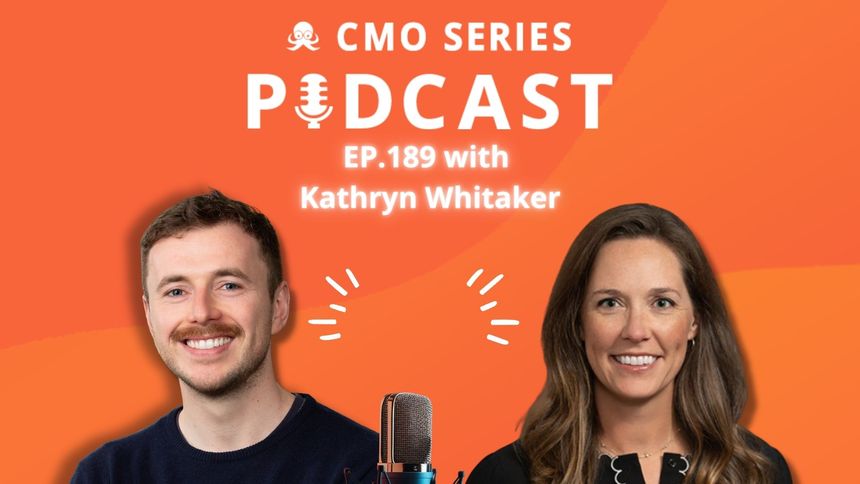
In this episode of the CMO Series Podcast, we’re joined by Kathryn Whitaker, Chief Marketing Officer at Burr & Forman, to explore how her leadership and strategic approach have adapted since her first appearance on the podcast back in 2022.
Kathryn shares insights into how marketing supports opportunistic expansion, the shift toward outcome-driven metrics, and why mid-career attorneys might be the biggest missed opportunity in law firm growth strategy today.
Kathryn and Eugene discuss:
- Law firm growth through strategic scaling
- Lateral integration to build long-term success
- The importance of data-driven storytelling to inform decisions
- AI’s practical impact on efficiency and visibility
- The underleveraged investment in mid-career attorneys
Transcript:
Eugene: Hello folks, and welcome to another edition of the CMO Series Podcast. Now, in a time when law firms are shifting from stability to momentum, marketing leaders are expected to evolve alongside the business, retrofitting strategy around lateral growth, proving values through data, and guiding attorneys who are neither new, nor at the top. In this episode of the CMO Series, we're joined by Kathryn Whitaker, Chief Marketing Officer at Burr & Forman, to explore how her leadership and strategic approach have adapted since her first appearance on the podcast back in 2022. I think our very first ever repeat guest, which I'm delighted about. Kathryn shares insights into how marketing supports opportunistic expansion, the shift towards outcome driven metrics, and why mid-career attorneys might be the biggest missed opportunity in law firm growth today.
Charlie: This episode is brought to you by CrossPitch AI, the new cross-selling tool from Passle. Cross-selling should be the easiest way for law firms to grow, but most firms struggle. Why? Lack of awareness, lack of trust, and frankly, fear of selling. The result? Missed revenue. CrossPitch AI fixes that. It breaks down silos, helps professionals connect, and delivers timely, relevant insights to the right people, inside the firm and out. There's no heavy rollouts, just switch it on and try it today. Head to crosspitch.ai to book your demo and make cross-selling happen. Now back to the podcast.
Eugene: Kathryn, welcome back to the CMO Series Podcast.
Kathryn: Thank you so much, I'm delighted to be here.
Eugene: Well we will see how it goes, we'll try and get you back a third time as well, but we'll see how today goes. Now, you've been with Burr & Forman through some major growth. Can you please tell us how has the firm's approach to expansion since your last visit three years ago? And indeed, what role has the marketing played in retrofitting strategy around new laterals, practice groups and all of that growth?
Kathryn: Yeah, absolutely. So one of the things, it's been a really interesting year, 2025 has been for Burr & Forman. We've always been both strategic in adding depth where we need to and targeted geographies and practices, but also opportunistic when opportunities present themselves. And you know, this year for us, we both added depth in some existing offices, but also added two offices in DC and Chicago, which were, you know, significant for us as well. And so it's been a really great year, we added over 50 lawyers to the firm in 2025. So our team has been very involved in that, both me personally and other members of our team in making sure that all of our new folks are integrated into the firm, right? So everything from leading up to the announcement of them joining the firm, making sure all that is in place and ready to go, but also, perhaps more importantly, you know, making sure they know when they get here, you know, who to go to to connect the dots. We're really the dot connectors across the firm generally, right? But especially for new attorneys and kind of just giving them that white glove service, making sure that they know they can call us, talk to us about anything, and that we are providing everything they need to hit the ground running and to be integrated into the firm very quickly. So that's one thing that we have been very involved in this year, and it's been a really fun year at the firm.
Eugene: That’s a load of new people integrating and bringing into the firm, but do it successfully. I read something the other day that 60% of lateral leave within five years because, you know, the integration isn’t up to scratch. And indeed, you are so central that marketing leaders are under a lot of pressure more than ever to prove that value. Can you talk about your role, and indeed what's changed folks, and how you define measuring to communicate that success inside the firm, because it seems like it's another string to your bow now with all of the lateral integration stuff.
Kathryn: Yes, and it's true, you know, there's that, there's that statistic about the percentage of laterals that are not successful. And I think one of the things that marketing leaders can help do is figure out solutions that are custom for their firm to make that not be the percentage, right, at the firm they are in. And one of the things that we have done, we know that our people really enjoy spending time with each other, and the primary way that our lawyers get to know each other and really kind of bond is through working a matter together. And so one of the things we've really prioritized with these lateral additions is making sure that they are connected on a matter, you know, whether it's a matter they brought in or whether it's an existing Burr matter that we bring the lateral attorney into. But making sure they're working on a matter with one of our, you know, legacy lawyers, existing lawyers, the lateral has a chance to really just kinda dig in and establish a relationship, a good working relationship early on. So we're really doing that, you know, making sure that that happens. The other piece of it for associates is really making sure that they have a consistent experience, and being able to work with people in different practices and different offices. Because everybody obviously works a little differently and so making sure that lawyers, no matter where they sit, especially associates, have an opportunity to work with a variety of different partners is something we've really emphasized, especially for our newer associates, in making sure they have that consistent experience at Burr and that, you know, because of where one person sits, they're not getting more opportunities than, you know, another person, another associate at the same level in a different office. So we've really been prioritizing that and our Marketing and Business Development teams have really been integral to that, making sure that that's happening. On the subject of, kind of, what's changed about how we kind of define, measure and communicate success, I think, you know, in addition to the lateral piece and the integration piece, there's just so much data that we have at our fingertips now. And figuring out how to help that data inform, kind of, what we need to do, but also, you know, what the results of our efforts have been, right? So, harnessing that data and communicating it through storytelling has been a big emphasis. That was one of our goals for our department this year, and a way that I think Marketing and Business Development can really provide value is harnessing that data and using it to tell a story to the rest of the firm in terms of internal communications. So that's been a priority for us and something I think really, really helps.
Eugene: I like that harness thing with data. Obviously working with attorneys it's so much more unprecedented in evidence and all that sort of stuff and I think it's probably quite a useful segue into that. The next thing I wanted to catch up with you on, which is there's an awful lot of hype over AI automation, and indeed data. I was sat beside someone talking about data warehouses and data lakes and there's lots of fantastic buzzwords going around. Where are you actually seeing technology deliver that meaningful impact in your team, how your team operates, and indeed how it drives that growth on the bottom line?
Kathryn: Yeah, it's definitely been a big point of conversation, right? You can't turn anywhere without having a conversation about AI and how it's gonna impact the industry. We had a great conversation, a group of CMOs just two weeks ago about, kind of, where things are headed with AI in the law, but in terms of our Marketing Business Development team, there's really been two impacts already. One is of course on the efficiencies around content. So I mean taking a piece of content, we've always said we need to, you know, take, and I know this is something that Passle has communicated as well, take one piece of content and use it in a bunch of different ways, right? So how are we gonna do that? I think AI has been really helpful to our team and figuring that out and drafting certain aspects of how to take one piece of content and use it in a bunch of different ways, and through a bunch of different channels. So that's been really helpful in terms of efficiency with getting our thought leadership out there in a bunch of different ways, and so that's been really helpful and something we're using on a daily basis now. And then secondly, I think it's around GEO, right? So we of course are monitoring and looking at kind of the user journey with our digital footprint and how things are happening there, and I think the increase of volume it's still not, you know, hugely significant in terms of traffic sources from AI search, but it is really jackknifed in terms of how much it's increased, right? In the last, I would say, you know, six months or so. And so we really do need to adapt, and we've been working on that, kind of, making sure that we're positioned well, not only for traditional SEO, but also now for AI search. And so what does that look like? How is that different from SEO? And some of the things that we've been doing for our SEO strategies thankfully are also working, you know, for AI search. But those are the two main things within the Marketing and Business Development team, I think the other piece of this is gonna be all about client communication, right? So, how the clients not only demanding whether we use it or not, in terms of AI in the practice of law, but a lot of what, you know, our team can bring to that table is in the communication, right? So how are we communicating what we're doing, and what we're using, and how we're using it, and how are we getting clients to opt in, right, to that with us. In terms of going forward, how are we using this together in a way that the client's happy with and we're happy with, and making sure that we're all on the same page about that. So, that's another big piece of what our team has been working on and we'll continue to and into Q1, is the client communication piece around using AI at the practice of law.
Eugene: Yeah, and bringing the clients along with it. I was at a fantastic LMA Mid-Atlantic panel last week where everyone was saying you can bring them along, co-opt them in and, and create those sort of moments to build trust along the way, and sort of create the value together, rather than it being a sort of a black box effect. So yeah, it's a great opportunity for the Marketing and BD team to keep adding value. I mentioned there about, sort of, moments, and I know in our previous conversations you've talked about tracking the moments that matter, only something which AI can help with as well. How do you and your team, Burr’s internal, but also the external intelligence you mentioned about data and there's so much at your fingertips. How do you turn that internal, external intelligence into those BD opportunities that attorneys can actually act on?
Kathryn: Yeah, there's a couple different ways that we do that and I continue to lean into that moments that matter, right? Because we're such experienced based people generally, right? And so much of what we do with that experience, you know, client experience or customer experience has traditionally been focused, of course, on kind of an in-person exchange or something that happens when you're together with other people. And I think you obviously have to expand that now to include a lot of the, kind of, digital experiences and what does that look like? So, we're really talking about a holistic kind of experience and trying to identify those moments that matter, those glimmers where there's an insight that you really wanna take advantage of, in terms of turning it into an opportunity for business. And a lot of ways that we do that are both traditional and kind of newer. So in the traditional space, you know, we've had an influx of events that we are hosting on a regular basis across the firm's footprint and really around the country, and so we are taking really a holistic approach at our event strategy. What are we doing to make those events special? And to make those events have those moments that matter that are memorable, the kinds of things that, you know, people are going to say a year from now, ‘oh, I remember when we did that, that Burr event and wasn't that fun’, or, ‘wow that really stood out’. And so thinking about that, you know, just kind of, that's a traditional approach, you know, but how can we elevate our event function when we are in the same room as people in a lot of cases, and making that be a memorable moment that then can lead to a next step for, you know, the business development pipeline. And it often does. So that's been an emphasis for us there on those moments that matter. But on the data side, you know, there's really a lot you can tell, right, from somebody's digital user journey, those kinds of things. And I know this is something you guys have talked about a lot as well, and I've really appreciated some of the education that you continue to do in our space up around this, this idea that, you know, sharing an insight at the right time, those kinds of things can lead to, not only just a qualified lead, but truly new business in an engagement letter pretty quickly if you do it right. And so, you know, figuring out how to track those, and how to bring those up to the lawyers, and really create those, frankly, you know, it really goes back to that storytelling, right? How it's worked for others in the past and how you could see it working for you, so that's part of it.
Eugene: I find it funny just listening to you. We talk about AI automation, technology, data, and it all just comes back to freeing people up to be as human and connect as much as possible. It's quite sort of reassuring as we move into this next phase of we don't know what with all of this technology at our fingertips. It sort of comes back to what people are, sort of, their strengths, and in this industry it's all about the human to human connection. Speaking of strengths, you are someone who long champions strength-based leadership. Can you talk a little bit about your approach to building and empowering your team, how that's evolved over the last year since we've spoken with you, and indeed how your role and responsibility have evolved as you've scaled as a firm because you've gone through some pretty rapid growth?
Kathryn: Yes, and it's been, you know, long been, as you mentioned, someone who, my philosophy for leadership and managing my team is around the strengths-based approach, rather than trying to focus, you know, in the traditional model on improving someone's weaknesses and focus on where they could do better and really need to improve. It's really around what are this person's key strengths, and how can we use those to build on those strengths for even better results. And so, a lot of what we do on our team, I have every team member take the Gallup Strengths assessment and Strengths finders. That's really helpful and we circle back to that usually twice a year, where we're just kind of updating our team strengths grid. So it's really interesting to see how our team of 14 works together based on our strengths and we always walk away with something we learned about someone else in terms of a better way of working together, or a better way to communicate, or just a better understanding of who that person is, how they receive information, what they can really bring to a project based on their individual strengths. So that's something I've long championed and will continue to do so because it works. I would say, in terms of how it's evolved, you know, as the team has grown along with the firm growing, we've also added a practice management function, which I'll be speaking about at the LMA conference in April, but that's been another aspect of what we're trying to do here at the firm to really, you know, empower our practice group leaders to be the leaders that, you know, we want and need them to be by giving them extra resources through, kind of, dedicated practice managers. So, that team has been created now as well, that also happened in 2025 at our firm. So there's been a lot going on and it's really fun to kind of scale our support, not necessarily in numbers, meaning head count, but scale our support in terms of the increased value that we're providing to our lawyer leaders so that they can do the things only they can do.
Eugene: I think it’s fair to say Kathryn that no one is going to accuse you of sitting on your hands for 2025, you’ve been a busy bee. It's, yeah, it's amazing. It's exactly as you say, it's sort of changing the way you do the business of law, like how you run and support the whole business. It's really modernizing in every sense from technology to support, to processes and everything else. Speaking of sort of modernizing and changing, something that you talked about beforehand and which I thought was very interesting, was how mid-career attorneys are almost like an underserved group in law firm BD, that their sort of a hidden gem almost. What does it look like to build with strategy and support that tier of lawyers, what does it look like in the Burr & Forman way?
Kathryn: Yeah. This has been something I'm also long time, kind of, passionate about, it's interesting to me, you know, there's so much emphasis on kind of your fundamental marketing training for, you know, junior associates, kind of what they need to be doing then, and then what's gonna, you know, happen over the, let's just call it one to five years, of the associate career path. Then there's a lot of emphasis on your big producers, right? In terms of making sure they have everything they need, obviously they drive a lot of the firm's revenue, and so there's a lot of time spent with the biggest producers that are typically more, you know, maybe later in career at least, kind of, they've hit the success, right? And so I think that missing middle in some respects, you know, a lot of the writing on the business of law and practice management has been around how hard it is to move the middle, kind of that mid-career attorney. But I just don't necessarily find that as beneficial as looking at it as an opportunity, right? So maybe that goes back to my strengths based leadership or just my glass is always half full. But there's a lot of, again, that they're human, they're people that need to have support in some cases, some additional education or training around business development because they've spent their career up to that time, you know, becoming a really great lawyer. And so they might need, you know, a push or some trial and error, or just some fundamental training on, kind of, where to go next with building a book of business. And so, you know, I really find a lot of joy, frankly, in the work that I do with that mid-career level attorney. We have a program at Burr that we have really evolved, It's the accelerator program, and it traditionally had kind of run the gamut on who could participate. And now it's very narrowly focused on, you know, our partners who are on equity track, but need or want to accelerate, right, their business development strategy and their book of business individually. And so that's really a fun 10 month program we do every year that is fairly exclusive, if you will, and we've got folks who are really interested in participating every year and they come in really eager to learn. The other benefit of that program is that they also then have a cohort, right? So not dissimilarly to when our first year associates start together and they have a cohort of people they started with. Now there's this kind of a second chance at that with the accelerator cohort to have your peer set that are really gonna create some glue at the firm for that level of lawyer going forward, right, who will, you know, hopefully all become our equity partners and see the future success of Burr & Forman. So that's a, I really enjoy working with them and I think it's really an underserved group, as you mentioned, and where a lot of opportunity exists for our growth strategy.
Eugene: You did get any external candidates, it sounds fantastic, I'd like to get involved in that as well as a mid career.
Kathryn: Absolutely. Come on in.
Eugene: Well, I hear the very informal ways, I'll take anyone. Kathryn, we've covered a crazy amount of ground from technology to BD programs and everything in between, and moments that matter. Sort of trying to tie this together, can you, sort of, sum up one piece of advice for other marketing leaders looking to build influence, and indeed I think what you really have is momentum in your firm. Any advice for someone in your position?
Kathryn: Yes, my advice is to execute ruthlessly. I've stole that from someone else. You know, I heard it years ago, but it really matters at a law firm if you are known reputationally as the person who gets stuff done. So, I would say focus on executing ruthlessly for your firm, and that really will add to that influence and momentum.
Eugene: I love that. A very power way to end the podcast, execute ruthlessly. I love that. Very, very helpful, gets stuff done. Can we keep you for two more minutes to do a little quick fire round?
Kathryn: Absolutely. I love the quickfire round.
Eugene: Let's do it. Let's do it, right straight in. What are you currently listening to? Music, podcast, audio book, or anything in between?
Kathryn: I love all the things, I'll say I just finished ‘Broken Country’, which is an Audio, It was an audio book by Claire Hall. Really great read, highly recommend, loved that. And I've been continuing to listen to the Taylor Swift album a lot as well, because I do truly love it.
Eugene: I had a suspicion that you were gonna be a Swifty, so I'm glad that my intuition was correct. What's the best piece of advice you've ever received?
Kathryn: Yeah, this is early in my career, thankfully 'cause it's a great piece of advice and one I've continued to come back to. Make sure you prioritize the project based on the importance of the project to the firm, and not based on the urgency of the person requesting your time. I think that's just something we have a lot of squirrels, as I'll call 'em, in our law firms, and it's really helpful as an orientation strategy for your priority list to focus on the importance of the task, rather than the urgency of the requester.
Eugene: Hmm. Very apt. What's a book or resource you would recommend to others in your field?
Kathryn: Oh, I have so many, but I'll just say probably most often I recommend, especially for maybe folks who are new into the CMO role and attending executive committee meetings and all of that, I always recommend ‘The Five Dysfunctions of a Team’. It's a great fable that has some really good practical lessons and it's been really helpful for me, I've read it several times.
Eugene: I thought you were gonna say the CMO Series Podcast. I'm gonna mark you down for not saying.
Kathryn: Of course, of course. Yes.
Eugene: No, no. It’s too late now Kathryn, It’s too late now. Favorite way to unwind after a busy day?
Kathryn: Dinner with my family, I think nothing beats it. We've prioritized that a lot and now that, you know, my daughter's in college, it's not as often that all four of us are at the dinner table, of course, but it's really nice when it does happen.
Eugene: Yeah. Very grand. Last question, favorite place to visit and why?
Kathryn: I'd say the mountains. The mountains are always calling. I love the mountains. There's something restorative about them. I just had a nice weekend with my husband in the mountains this last weekend, and it's just wonderful. I mean, I live near the beach, which you can't beat living near the beach, but it's so great to visit the mountains. So, get to the mountains, they're calling.
Eugene: Okay. I'll go do just that. Kathryn, thank you so much for your time. This has been really, really enjoyable. Really appreciate you. Thanks for jumping on the CMO Series Podcast.
Kathryn: Thank you for having me, it was great fun.
Charlie: You can follow the Passle CMO Series Podcast on your preferred podcast platform. Thanks for listening, and we'll see you next time.
/Passle/53d0c8edb00e7e0540c9b34b/MediaLibrary/Images/2026-10-14-09-22-13-024-6acf49c5944aac193a981bb9.jpg)
/Passle/53d0c8edb00e7e0540c9b34b/MediaLibrary/Images/2026-10-13-16-00-13-704-6ace558d477453bcaa2eba35.jpg)
/Passle/53d0c8edb00e7e0540c9b34b/MediaLibrary/Images/2026-09-28-10-59-02-989-6aba4876c6484376446500cc.png)
/Passle/53d0c8edb00e7e0540c9b34b/MediaLibrary/Images/2026-10-08-10-14-29-755-6ac76d050b30ba925ae8bc36.jpeg)
/Passle/53d0c8edb00e7e0540c9b34b/MediaLibrary/Images/2026-10-08-07-04-41-374-6ac740898f60cb75fde15df0.jpg)