





A consistent client experience doesn’t start with clients. It begins with strong internal alignment throughout the firm, built on trust, collaboration, and a proactive culture.
In this episode of the CMO Series Podcast, we’re diving into one firm’s bold growth journey.
Lowenstein Sandler has set its sights on expanding from 400 to 700 lawyers in just five years. But behind that ambition lies a bigger story, where marketing, business development, and firm leadership come together to deliver a consistent client experience.
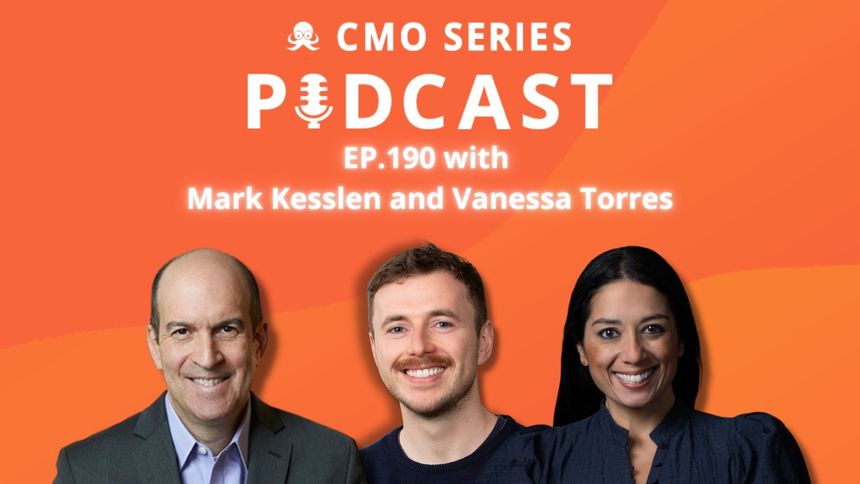
Vanessa Torres, Chief Marketing and Business Development Officer, and Mark Kesslen, Partner and Chair of the firm’s Intellectual Property Group, join Eugene McCormick to share how the “One Lowenstein Experience” is shaping culture and innovation, and what success will look like in the years ahead.
They explore:
- The concept behind the “One Lowenstein Experience”
- Using data and insights to anticipate client needs
- How internal collaboration drives trust and credibility
- Lowenstein’s ambitious targets for future success
- Practical advice for building a consistent, positive culture
Transcription:
Eugene: Hello folks, and welcome to another edition of the Passle CMO Series Podcast. Now today we are going to dive into one firm's bold growth journey, focusing on the wonderful Lowenstein Sandler who have set their sights on expanding from 400 to 700 lawyers in just the next five years. But behind that ambition lies a much bigger story. How does marketing, business development, and indeed firm leadership, come together to deliver a consistent client experience? Now, I'm buzzing today because joining this fabulous conversation are the wonderful Vanessa Torres, Chief Marketing and Business Development Officer, and Mark Kesslen, Partner and Chair of the firm's Intellectual Property Group. Together, they are so well placed to explain everything around the one Lowenstein experience, how that shapes culture, client relationships, and innovation, and everything else in between. And explain what success is gonna look like in the years ahead.
Charlie: This episode is brought to you by CrossPitch AI, the new cross-selling tool from Passle. Cross-selling should be the easiest way for law firms to grow, but most firms struggle. Why? Lack of awareness, lack of trust, and frankly, fear of selling. The result? Missed revenue. CrossPitch AI fixes that. It breaks down silos, helps professionals connect, and delivers timely, relevant insights to the right people inside the firm and out. There's no heavy rollouts, just switch it on and try it today. Head to crosspitch.ai to book your demo and make cross-selling happen. Now back to the podcast.
Eugene: Vanessa, Mark, very welcome to the Passle CMO Series Podcast.
Vanessa: And thank you for having us. We're so excited.
Mark: Thank you.
Eugene: Brilliant. We're gonna dive straight in. Mark, I'm gonna throw the first question to you. In our preparation calls, we talked about how ambitious you are as a firm and you have a really ambitious goal growing from 400 to 700 lawyers in the next five years. Why have you set that target? Why is it important? And indeed, I wanna come on to why do marketing and business development, and how do they fit into making that happen?
Mark: That's a great question. I think when you look at the firm, I think to be competitive today, the marketplace says bigger is better. I think we definitely believe size in the case of our law firm matters, but I think one of the underpinnings of all of it is our culture. So the question that we were asking ourselves over our strategic planning process that got kicked off more than two years ago, was how do we grow but maintain culture and make this a destination firm? And that was really the focus of our strategic plan and I think you've seen that in the number of partners that have joined us over the last 18 months or so.
Eugene: Amazing. Vanessa, I wanna turn that over to you. Obviously, it's so, so important. I know you just recently had your firm's partner retreat, one of your first ones in a couple of years, and I think you said there were gonna be so many people in the room for whom that would be the first partner retreat for Lowenstein. Can you expand a little bit on how does marketing and BD fit into this whole process?
Vanessa: So, ultimately we are involved in all aspects of our strategic plan at the firm, but I do wanna focus mainly today on our culture. And one of the things that we focused on leading into the partner retreat was launching a recommitment to our firm's core values. And then at the partner retreat, being able to really see that in action and to make sure that the partners were really bought into what we're trying to accomplish as a core, was really phenomenal to see. So, I think ultimately coming together at the partner retreat, coming off of the recommitment to our core values, and being able to show how culture comes from the top. And to get all of the partners marching to the same beat of the same drummer as it relates to our culture was really critical, and I think we did a really good job of accomplishing that at the retreat.
Eugene: I really love that point about culture comes from the top, and I think it's maybe a nice segue to talk about, sort of, this one Lowenstein experience. I think, Vanessa, when we first met, you described it as it encompasses every touch point, clients, alumni, vendors, even job candidates when they're walking down the corridor on the day of the interview. It all reflects that same culture. You touched a little bit about our recommitment to our core values. Can you talk about how this one Lowenstein experience actually comes to life in practice.
Vanessa: I love talking about the one Lowenstein experience because that's exactly what it is, and it is to say that from the minute anyone engages with any of us at Lowenstein, from our collaboration with you, and to our collaboration with vendors and with partners, and especially clients. From recruiting at all levels that we ultimately are ensuring that everyone has a consistently positive experience with our firm, and that really does mean that we're living those core values, being client first, having an entrepreneurial spirit, having the opportunity to be generous by nature with our time and our talent, all of those being purposefully connected. These are all the key tenets of our core values at Lowenstein, and I think what we can acknowledge is that every organization has core values. How they live them, how they operate their organizations, that varies. And that's why taking it back to, you know, the tie-in that you had, was to say that if the leadership of the firm is not living those core values, then no one will be living those core values. And here we are really striving for that and really making huge strides.
Eugene: I absolutely love that and it’s a quite nice segue to throw it back to Mark because you talked about living the core values. Mark, I remember you saying, you know, many moons ago you were seconded into Lowenstein and you worked directly with Gary Wiggins and Ed Zimmerman, people who are still there living those core values every single day. Mark, can you tell us from the partner's perspective, why is that consistency in the client experience so important?
Mark: So, thanks for bringing that up. So it's really interesting, I was, as you said, seconded into Lowenstein when I was a third and fourth year associate and spent about a year on and off here working on an IPO and litigation in the tech space. And during that period of time, I met a number of partners who, not only Gary Wiggins and Ed Zimmerman, but others that are still here to this day. And I always thought at that moment, led by, you know, Dick Sandler, Alan Lowenstein had already retired, there was something very special about this place. And the story goes, my wife knew from that point on that I would join the firm. She didn't realize that it was gonna be almost, I don't know, 15 years later, but she was ultimately right. And what I found that was very different about this place was that clients really were here because there was a consistency, a responsiveness, a showing of real care to them. Not just doing the work for work's sake, but really understanding the client's business, understanding what they needed, and trying not to solve the problem in front of them. Not to do legal work for legal work, but what was the problem? What did they need? And what was the best path forward, was that collaborative effort that ran through everything we did, and in between the period of which I was seconded in and joined the firm. I also became, I was in-house at JP Morgan and became a client of the firm and saw it firsthand working and helping them build out the IP group before I got here. And it was really nice to kind of see, you know, while I've only been here, Lowenstein, 20 years, over the course of my 30 plus year career, I've seen it from an associate, from a client, and now a partner. And I think that that secret sauce of our culture has run true, right? We've had highs and lows in it, but I think right now there's a real strength and connection, particularly with the next generation coming in and seeing how important culture, collaboration matters to each other as a place to work because we do spend a lot of time here. And I think that's another reason why we've had success in recruiting.
Eugene: I love that, and I really like that idea of sort of that consistency and understanding the client needs, not just trying to tick the box, so to speak, of the task in front of you. It links into some of the stuff, Vanessa, you have spoken to me about before, about a deeper understanding of your clients be that building stronger data literacy, deeper relationship mapping. Can we maybe turn to that slightly and can you talk a bit about what tools, approaches your team are using, and how does that help your team support the lawyers in, sort of, doing what Mark talked about there, you know, serving the clients more holistically?
Vanessa: Yeah, and I'm glad you say holistically because I think oftentimes we find ourselves operating in silos, or very piecemeal in how we're approaching clients. And so having a stronger data literacy and relationship mapping really helps track the client journey through every interaction, which results in that cohesive one Lowenstein approach from our client's perspectives. And that's a perfect segue into always putting the client's perspectives first, and so I think that, you know, client centricity has been a buzzword in the marketing space for a long time, but it's really meaningful and it's impactful because the clients need, not just want, they need to know that we understand their business and their needs and their business objectives. And so for us to be able to take all of these data points that are available to us and all of the content that we're putting out, and the thought leadership that we're putting out, and to tailor it to their needs and to make a more meaningful impact and how we're collaborating or approaching them, is really critical. So, I do talk about data literacy in the sense of, you know, we have analytics and metrics and matter details and financials, but we don't always know how to piece that information together to make strategic recommendations. So, I do think when it comes to data literacy, it's a matter of learning, A) What data is valuable to me as a marketing and BD professional? B) How can I leverage that data into an impactful or in an impactful way? And then C) How can I measure the results of those efforts? And so I used the example of a webinar series I hosted many years ago where we had a four part series, and after each webinar, the marketing team sends me a list of the attendees and I normally would just forward that to the partners involved and say, here you go you should follow up with these people. But what if I take it a step further? What if I look at the data of who attended the webinar? What if I see that of those four webinars, seven people attended every single one? And that to me means those are seven people that are really interested in this topic and what we're putting down, and they have a need. So then you tie it back to, what is this client or prospective client need? Let me use all of that data to identify a need and an opportunity, and then arm the lawyers with the tools to go forward and make those connections and grow those relationships.
Eugene: I love that. And actually there's a bit, the last thing you said about data driving action is something I wanna pick up on with you, Mark, in just a second, but one piece you had said in your last answer, Mark, sort of touches on what Vanessa was mentioning there, which is this idea of, how valuable it is that outside council show that, kind of, holistic understanding of your company and your relationships. And you have sort of a unique perspective on that, as you said, you've been the associate, you've been the client, you've been inside, you've been outside of the firm. It's pretty obvious how valuable it is, but inside the firm, from the lawyer's perspective, what needs to change so that that data's driven approach, which Vanessa just touched upon, is actually driving action and outcomes. What needs to change? Is it a better BD mindset? Is it client first so it's not just a report or an Excel document sitting in your inbox?
Mark: It's a really good question. I think one of the things in the relationship between attorneys and marketing or BD team, and I think is making sure that the BD team, in this case, really understands the business of law and the business of each practice. I think when we work collaboratively, and I've used that word a number of times today, right? But when we work collaboratively, when the folks on Vanessa's team understands what it is we're trying to build as a practice group, who are the clients we want to serve and why? And what is the value proposition of what we offer differently? I think the BD team can be much more of a proactive team, as opposed to a reactive team. I think historically with marketing and BD departments at law firms, it's very much a reactive. Somebody wants to write an article, they do it. Somebody wants to go to a conference. But the more that you can partner together, so that one informs the other, I think the team and the outcome of that effort is much better because the team is now proactive in finding those opportunities, looking at the data differently, and coming to them truly as a partner to help each individual partner or practice group grow their respective businesses.
Eugene: And it almost comes back, Mark, to the piece you were saying about the one Lowenstein experience, which is it's lived through every function, through every person that we're putting the client first, and so then it just comes naturally to think, oh, who's been to the last few events to use Vanessa's webinar example? What are they really interested in? How can we really help them?
Mark: That is the goal. It is a challenge, right? It's aspirational. But I think since Vanessa's joined the firm, I think it'll be a year next month, right. I think we've seen a real transformation in her leadership and making the team think differently that way, and I think it's a process. It's also getting the partners to believe and trust in marketing departments, right. So I think it remains a work in progress, but we've made great headway over the course of the last 12 months.
Eugene: I love that. Vanessa, I think it's a really interesting thing about, and obviously must be brilliant for you to hear such great feedback from Mark and the team.
Vanessa: It is.
Eugene: Obviously one Lowenstein experience, this is everyone's responsibility. For our listeners here who want to actually do a little bit of that themselves, could you maybe dive in a little bit on the steps you are taking internally to empower, to reinforce, to get that message within your team and all that cultural alignment, because as Mark said, historically it probably wasn't the case in most firms.
Vanessa: I appreciate that opportunity to talk about that because I do think, again, the direction starts from the top and there's, first, the need to understand what the firm's strategy is. And I don't know that we always do a terrific job as leaders of sharing that information down and throughout our teams, and so that's something that I've been really focused on since I joined the firm is to say, okay, hold on. There's a strategic plan. These are the three buckets of the strategic plan. What does that mean for the marketing and BD team? How can they contribute to the effort and the overall ultimate goal and impact? So, first there is a communication piece and a transparency piece. There is then motivation and an inspiration, and giving people the opportunities to shine and for the partners especially to get to know who's on the team and what do they bring to the table, right? We have our BD teams that are very embedded within the practice groups and those lawyers, you know, that work closely with them, know them and they're familiar with them. But you have the marketing side of the house where we have our marketing technology specialists and CRM specialists, we have our operations team, we have our brand, and creative, and PR, and communications. Oftentimes I find in firms there's a very big discrepancy between the lawyers only going to that one BD point person and not recognizing that there's a whole slew of people also, you know, in the background, that are helping to drive forward what we're trying to accomplish. And so something that I've also started doing at the firm is not just directing the team to be more proactive, to feel empowered, to use data as a tool to make recommendations, but ultimately, for the team to make relationships with their lawyers. I don't know if Mark will want me to say this, but he said in our team retreat, we had a retreat in July and he said, you know, this might sound weird, but partners are people too, and it's, you know, do you wanna expand upon that Mark?
Mark: I said partners are people too. The point was that in order to build a relationship, I think there is a hesitation among staff members at lots of different firms to build relationships with partners. But if you realize they have kids, they have families, they go on vacation, they have good days, and they have bad days just like you do. I think that goes a long way of saying, wait, they're just not a person sitting in a corner that I'm worried about going into the room, but I actually should go into the room, get to know them as people, and if we get build those kind of relationships, I think that one Lowenstein comes out and it's much more natural because then you're working with somebody who you know, you like, and can find common ground whether you like to hike or you like to see Broadway shows or something in between. I think that makes relationships stronger, and that then builds the trust between the two that goes far.
Vanessa: Yes. So all of that, what Mark says is exactly one of the many mantras that I live by in terms of building relationships. And I am here for a year, and I feel that, and I've met with over 130 of our partners one-on-one, I am trying to get to the end of the year with all of them. I have a few in early 26, but part of my goal with that was to get to know the partners and when I sit down with them, they say, so what's the agenda? And I said, well, I'd love to hear about your practice, but I also just wanna get to know you as a person, and would love to just learn a little bit about each other. And that has gone a long way in a short time in the way that I am modeling also those behaviors for the team and making them feel comfortable that they are also, you know, just as able to build those relationships themselves. And then to Mark's point, you ultimately find greater success in collaboration because you do have a gained understanding of one another and each other's goals and the bad day, and the snarky email maybe don't feel so bad when you know a little bit about the person, right? So I think all of that is in the direction of how I am leading my team. I will say also there is some communication that I've done with the partners and I think that to your question, if I remember the original question, Eugene, 'cause it's been a while, but ultimately there is a need for the partners to again, recognize that we're not just faceless names, that we're not just behind an email. And so I've been really open about that with the partners, and you know, we talk about proactivity and I hear feedback from the partners about being strategic and proactive, and I talk about capacity and you know, I kind of give it back to them a little bit in a way that says, let's get there together, but this isn't all on the marketing and BD team to build those relationships and to build that credibility. And I'll kind of conclude with that piece, and I do think ultimately there is a need for any staff team in a law firm to have built credibility with the partners because they're owners of this business. This is their firm, and they're putting a lot of weight into what we are expected to do to accomplish their goals, and we have a mutual obligation to one another to find that success.
Eugene: I was actually just looking through my notes from our last conversation, and I even just picked up on the fact that, you know, you call your, as you know, the non-lawyer population, your business solutions group, not just the business services group. All of these little things indicate that we're here to partner, work towards a client solution, not just as you say, just a services thing, an indiscriminate email to be emailed when I need something done, to go back to Mark's point about the reactive versus proactive thing. Your answer there was so comprehensive, It's almost stolen my thunder for the next one. I was gonna ask you though, client experience is everyone's responsibility and what you're doing internally to reinforce that, but I think you sort of answered it. It's if you're gonna treat your colleagues the way that you're treating them and be proactive, that can only percolate into your client relationships as well because your cultural alignment and the way that you build credibility and reach out and find common ground, if that's the internal vibe, then that can only be the external experience as well. I really love that. I want to sort of have a couple more questions just before we wrap up. Your plan is really impressive and I love how comprehensive it is. It isn't just a big strategy and we're gonna go and try and get there and we're gonna try and acquire two firms, that's not the Lowenstein approach at all. To both of you, maybe starting with you, Mark, when you look five years down the road, what does success look like for this one Lowenstein experience and indeed the firm in general?
Mark: Sure. I think Lowenstein you have to start with, I think when you look at the AM Law 200 it’s very much a unicorn in the marketplace today, right? Meaning, we're 400 lawyers but when you look at, you know, our revenue per lawyer, our profits per equity partner, our success in pro bono, that puts us all in the top 50 of the AM Law, 200 firms. At the same time, we're looking at the firms that are in this unicorn status, or were. One is out of business, two have merged with major European firms, and one is currently looking for a suitor, right? And then there's us. And I think our view right now is we want to go at it alone, right? And we think it's a mix of our culture, which we've spent a lot of time talking about today, AI adoption, I'll get to that in a moment, and a real focus on the work we do. We know what we do and we stick pretty tight to our knitting, meaning we really do work predominantly for funds, technology companies, and life science companies and we really focus on our clients, know what they do, and try to understand their business. I think the AI adoption issue is really a really interesting opportunity for us. I'm not sure if we're on the leading edge, but we're certainly on the leading edge of most other firms with our adoption, and that's another metric and data that we're really tracking for everybody in the firm, how they're using AI tools and what are they using them for. But I think when you look at the combination of our people power together with AI, I think that will enable us to grow as opposed to shrink. I think the larger firms are gonna use AI, take a 2000 person firm has the potential that AI is going to shrink them. So, I think there's an argument that looking five years out, there's gonna be a race to the middle. Those smaller firms who have used AI, those small and medium firms who have used AI to grow, and the bigger firms who are gonna use it to technically cut a little bit because you're not gonna need that, that leverage model's gonna change 'cause the leverage is gonna be impacted by the use of AI and I think that's gonna enable us looking out five years to hit the target that we want to do. And we do that by reinforcing all this stuff with our folks. We have tremendous communication and transparency throughout the firm, what we're doing, why we're doing it, we reveal our metrics to everybody at the firm, so everybody knows the goal and how we're seeking to attain it. And I think that makes people also feel part of something bigger if they know what's going on, and understand the data and what it means to us.
Eugene: I love that. Vanessa, same question to you. What does success look like for the one Lowenstein experience from your perspective?
Vanessa: Well, growing by revenue and by people, and my team being a really instrumental part of that growth, and I think ultimately there's so much opportunity and being able to really identify those opportunities to know, again, anticipate what our client's needs are because we really understand them. And then being able to, in my case and in my team's case, arm the lawyers with the tools to meet those clients, not just where they are, but where we believe the clients are going, right? There's this anticipation piece that I think we should and are pretty focused on.
Eugene: I love that. Folks, you've been absolutely wonderful and I want to keep you for one last question, which is maybe a little bit of a quick hit one. Mark, start with you. If you could give one piece of advice to law firm leaders about building a consistent client experience, what would it be?
Mark: I think in order to serve a client, you really need to understand the client's business, and as the lawyer, you need to understand the problem you're trying to solve. And those two things can only be accomplished if you're a good listener. Lawyers have a habit of talking and talking over their clients. I think the more we listen and the more we hear, the better we can deliver the solutions that the clients need and are looking for from us, and I think that is the value that we can deliver.
Eugene: I love that. Vanessa, same question. One piece of advice to law firm leaders about building that consistent client experience.
Vanessa: I think that actually this is an opportunity to turn the focus a little bit to the concept of our internal clients. So, we need internal alignment that matters just as much as the, you know, actual external client facing opportunities. So really focusing on building that trust and that credibility, understanding each other is not a one way street, so the lawyers understanding their business solutions teams, and the business solutions teams understanding their lawyers, and then also understanding the client needs externally, I think is really critical.
Eugene: Wonderful. Mark, Vanessa, I just want to say a big thank you for participating in the Passle CMO Series Podcast. Thanks so much for your time.
Mark: Thanks for having us.
Vanessa: Thank you so much.
Charlie: You can follow the Passle CMO Series Podcast on your preferred podcast platform. Thanks for listening, and we'll see you next time.
/Passle/53d0c8edb00e7e0540c9b34b/MediaLibrary/Images/2026-10-14-09-22-13-024-6acf49c5944aac193a981bb9.jpg)
/Passle/53d0c8edb00e7e0540c9b34b/MediaLibrary/Images/2026-10-22-11-14-29-774-6ad9f015ed262a90b1bf36f6.jpg)
/Passle/53d0c8edb00e7e0540c9b34b/MediaLibrary/Images/2026-10-19-13-24-47-415-6ad61a1fdc6374f637024697.jpg)
/Passle/53d0c8edb00e7e0540c9b34b/MediaLibrary/Images/2026-10-13-16-00-13-704-6ace558d477453bcaa2eba35.jpg)
/Passle/53d0c8edb00e7e0540c9b34b/MediaLibrary/Images/2026-09-28-10-59-02-989-6aba4876c6484376446500cc.png)