
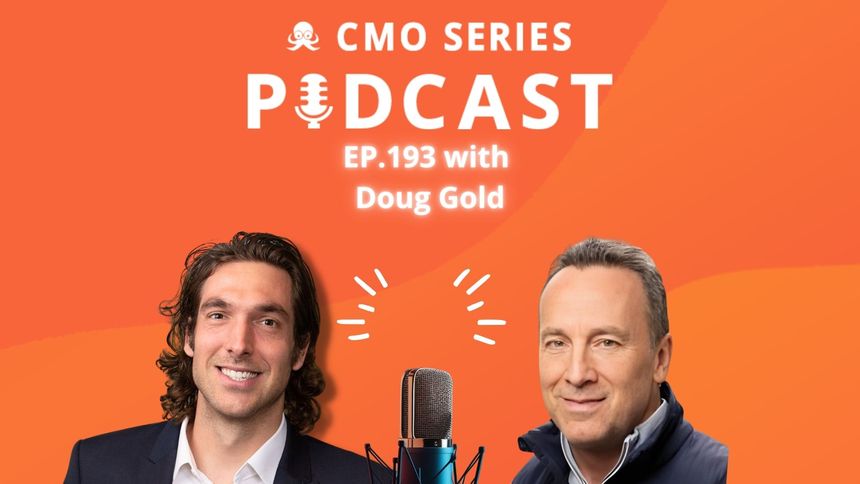


In this episode of the CMO Series podcast, we're joined by Doug Gold, Chief Operating Officer at Mitchell Silberberg and Knupp (MSK) to explore healthcare, wellbeing and the impact those have on the performance of the firm.
Doug shares his career journey and what first brought wellbeing into focus at MSK. He talks about how the wellness program got off the ground, the realities of building internal support around it and getting it going.
Charles and Doug discuss the impact of the program on individuals and firm culture. The results that have surprised him most, and his advice for leaders looking to invest in wellbeing in a way that delivers lasting value.
Transcript
Hello and welcome to the CMO Series Podcast where we talk all things legal, business development and marketing. Health and wellbeing in law firms is no longer a nice to have. It's a leadership issue with real cultural and financial impacts.
In this episode of the CMO Series podcast, we're joined by Doug Gold, Chief Operating Officer at Mitchell Silberberg and Knupp to explore what that means in practice.
Doug shares his career journey and what first bought wellbeing into focus at MSK, and he'll also talk about how the wellness program got off the ground, the realities of building internal support around it and getting it going.
We're going to discuss the impact of the program on individuals and firm culture. The results that have surprised him most. What's next? And his advice for leaders looking to invest in wellbeing in a way that delivers lasting value.
Welcome to the podcast, Doug. Thank you so much, Charles. I've enjoyed being here.
It's a brilliant topic to talk about. So we obviously have chat and done a bit of prep for this. So I already know some of the answers to the questions I'm gonna ask, but really to bring the audience up to speed, can you talk us through your career journey to date and what first opened your eyes to the value of a more personalized approach to health and wellbeing at your firm?
Sure. I don't know if my career journey's been all that interesting, but I've been in legal for about 18 years now and was in the software industry before that and always had some responsibility for the health and benefits programs at at any company. I've been at it, you know, it's been under my purview, I'd say over the last decade though, watching this trajectory of healthcare costs in the United States.
Both the cost of the insurance itself as well as the cost of the employee going to the doctors has just continued to accelerate beyond anything that anyone can really afford. In parallel my own health and wellness journey, it's something that, you know, my wife and entire family have been pretty passionate about.
It's what my wife does professionally. And so we've just been big health and wellness advocates and I'd call it a very progressive journey where you just, every time you think you've figured out how to be in shape, you've figured out there's some new things you can do to get in even better shape and work on longevity and, uh, just feeling better and focusing more on health span versus lifespan.
And a couple years ago, those two things intersected, and it's when I saw our cost trajectory as a firm to providing health insurance benefits to our employees was becoming just unreasonable in a variety of ways. Not just the cost itself, but despite the increasing cost of the organization, the benefit was decreasing in value to the employee themselves.
It was costing them more and getting them less. And that just didn't feel sustainable long term, and I was really concerned about what that would mean for us five years from now. When you also consider that, I'm a big believer that healthy people are happy people and happy people provide good service to the people that they support.
In our case, we're a professional services organization, so we're high performance athletes in an intellectual way, maybe not physical, but in an intellectual way. So having a healthy mind. Is definitely correlated with healthy body. And so I saw these things sort of converging and realized that we needed to take an entirely different approach to how to help our people become healthier.
And it needed to go much beyond a standard, here's a hundred bucks a month to go to a gym for a reimbursement or something small. We were looking to do something much more comprehensive. And actually one question I didn't ask you when we were prepping for this is, were you doing anything previously to this?
I know obviously law firms aren't maybe known for having the most healthy sort of work schedules, but were you doing anything to address wellbeing and health before this initiative? Nothing of nothing of substance. We introduced a little bit of programming 'cause it was a topic of interest that we were hearing from our folks.
But you know, beyond the occasional seminar or speaker that we would have come in, I would characterize it as very light. Touch. Okay, so you had this specific moment, and I guess in your role as the COO, seeing it from a, I guess initially a financial point of view is it was a big sort of red flag seeing this increased cost, which triggered you to think, well, actually, maybe we should really address this in a smart and creative way.
But when you made that decision, how did you get that plan off the ground? What was that process like of getting the wellness plan up and going? Did you encounter any barriers? What was it like trying to get buy-in from other people across the firm? Yeah, I had been personally using a program called Viome with a V, and it's a gut health supplement company.
There's a few of them out there. You do pretty extensive metabolic testing to determine what supplements you should or shouldn't be taking. They actually create precision supplements for you based off of your metabolic. The theory being that a lot of people over or under supplement, which has almost become a requirement given the nutrient light foods that we eat today just because of soil depletion and things.
So we're not getting the fine minerals that we need in a variety of stuff. You know, even if you try to eat relatively well, you're still theoretically missing out on some things if you buy into that metabolic theory. We were doing it as a family for a couple years, and so when I had this sort of revelation of when you talk about comprehensive, I thought, well, gosh, if we're gonna do something, let's make it meaningful and let's use a platform like that because it's got all the infrastructure it.
Does this, you know, really extensive testing has an actual product that you can ingest that helps you drive towards better outcomes. And then what else could we wrap around that? And so I was speaking to my person that runs the benefits program at the firm, and we started coming up with a nice framework of five or six key things that we thought would make the most sense for a program.
And then I took it to my governing board and gave them a pitch and said, we're on a really bad path. Our people are by and large, unhealthy. We know that from a data perspective because our health insurance premiums with the way they work in the US, it's completely based off loss ratios. So we could see that we had enormously high claims across chronic conditions, and that can't improve unless you actually go and address that problem.
And so what started as a financial equation of not. Thinking this was sustainable. As I started unpacking what was causing that, I said, our people are really unhealthy. We've got a, I felt this moral obligation to do something about that. At least try to give them a platform to engage with their healthy lifestyle differently.
And so we put together a pilot program that I proposed to the board and said, this is what I want to do. This is how I want to do it. Very unconventional. Do I have your support? Ultimately? They said absolutely. And so we did a six month pilot program with 25 people, and at the end of that had the results that I was very, very optimistic and had a strong feeling would occur if people stuck with the program.
They had to do the hard work. But that's how I did it. I put it together with one of my team members and presented it to the board, and then they approved it for real. And how did you recruit those 25 people in that initial cohort? We wanted to make sure that there was a stickiness to it so that people would get with the program and stay with the program.
Because without that, you don't get results. And our broker that we use for our health insurance benefits has someone on the team that is dedicated to helping companies put together wellness programs. And so I spoke to them about how we could make it sticky. And not only was our. Program entirely different than anything he had ever seen other clients of his do.
He said, you know, one, one way to make a wellness program or increase the likelihood of adoption and having someone engage in the program fully over the timeline you're looking to do is to create an application burden. Make them apply. And so we said, you've gotta apply, what are you hoping to achieve?
It wasn't a super complicated application, but if someone's not willing to at least raise their hand and say, here's what I'm hoping to accomplish, then they're probably not gonna stick with the program. So that in and of itself filters out folks that aren't gonna stick. We got about 35 to 40 applications as I recall, and had room for 25, and so the applications were reviewed by our outside brokers, so we weren't in possession of any specific information to sort of follow some HIPAA rules and all that.
We were shared aggregate. Stories but not, not attributed to it. So I knew someone had a particular issue they were dealing with that they wanted to accomplish. I didn't know that it was Charles specifically that had that thing. So that's how we did it. We made people apply and that really made it sticky people.
We also, when we had the kickoff, we said, listen, you've got a responsibility not just to yourself but to others that will hopefully follow. Because if this goes well and we accomplish what I hope we can accomplish, then we can expand and continue the program. If it doesn't go well, this is it. We won't, we won't get to do this again.
So you owe it to your colleagues, your future colleagues that can hopefully be beneficiaries of this wonderful program. Yeah. Fantastic. And then once that program launched, what will the outcomes and feedback that you got from that first cohort? Life changing. Wow. There were several things that we did at the beginning and then at the end, which was a six month time period, there was the metabolic testing and so we had, again, we only got the information in aggregate form, not to the individual, and so we had statistical data.
From a metabolic perspective, but we also had an interview, intake interview that was done at the beginning that goes through this health profile, asking a lot of questions of the participant, and then we did that same interview at the end to get a feel for some of the more qualitative things. So for example.
79% of the participants reported just feeling better six months in. That's more of a qualitative assessment, but some of the quantitative stuff we saw, gastrointestinal symptoms like bloating dropped from 90% to 53%. Hmm, 58% of the folks lost weight, an average of 10 pounds. One lost up to 42 pounds. Though weight is not, in my opinion, not a good metric to necessarily follow.
That can sometimes be misleading, but there was 50% of the cohort. Improved on their health metric scores from gut to brain to the heart to immune function. There's all these metabolic tests that ome runs and those scores showed improvement with 50% of the folks they measure something called biological age versus chronological age.
And our average biological age across the 25 people cohort fell by 1.3 years. So in six months, the average person in the program got younger. Mm. Over the course of the program. And so there, there were just a ton of things. We had a lot of lunches throughout the program and at the wrap up celebratory lunch that we had at the end where healthy food was served.
Of course, you know, we had people sharing things like I thought my joint achiness was just a sign that I was getting older. And now it's gone. And it was gone because they were suffering from chronic inflammation, which many people do, based off of their eating habits and things. And so the OME program, along with the food recommendations that OME provides, again, incredibly comprehensive program, uh, results in these outcomes.
But probably the biggest celebratory metric that I think we're most proud of is that we had someone that at the beginning of the program was clinically considered pre-diabetic. They were ushered closely by their doctor with the markers. At the end of six months, they were no longer pre-diabetic. Mm-hmm.
Um, any CFO or a VP of HR that runs health benefits plans and knows what a diabetic costs an insurance plan, that's one of those chronic conditions that's extraordinarily expensive at hundreds of thousands of dollars to a health insurance plan. So by spending a really small amount of money prospectively, we reversed course for this person.
And long term, it's not only do we have this wonderful, healthy, out. Come for this person who's gonna have a much better lifestyle, not being diabetic, but that's real dollars and cents savings, that over time we, you know, believe drives down the cost of healthcare for us. Yeah, that's, that's fantastic. And I think you are sort of two birds with one stone, aren't you?
You are. You're doing something that's great for your people, but actually if it is effective it, the business is gonna do well from this anyway. 'cause you're gonna be saving money on those, those healthcare costs. Brilliant. And were there any results that maybe surprised you or challenged your initial expectations?
Well, I think one of the nice byproducts was the culture component. We've always been a a really, I think there's a lot of strong connections in our organization. A lot of people choose to spend their entire careers at MSK, but what I found really heartwarming was the camaraderie and the we're in the trenches together mentality of the cohort.
Because the cohort represented. Attorney and staff across the organization. And so there were people interacting with each other that normally on a day-to-day basis wouldn't have a reason to be interacting much. And so new relationships were formed. Mm-hmm. And just seeing that, you know, I really believe that health and wellness is a team sport.
It's much harder to do something like that on your own. I mean, the reason I think it's been so possible in my household is 'cause my wife and I do it together. So, you know, seeing family members do that. And then also I think. The fan out factor from the employee to their families. We got reports back of other family members involved in participating going, Hmm, what are you doing?
Well, you know, we had a teenage daughter share with a mom that said, no more spicy Cheetos for me. I'm gonna start trying to eat healthier. 'cause she was watching her mom make significant life changes. And so just think about the power and impact that that has the ripple effects out into not just the employee themselves, but.
The connection they got with each other, and then the impact across all the families. I mean, I had a, at our attorney retreat a couple months ago, I had a wife of one of the partners participating come up to me and say, you saved my husband's life. He was on a path that many, you know, very high functioning, high intense lawyers take, which is unhealthy eating habits, unhealthy sleeping habits, unhealthy everything, habits, um, and was not on a good trajectory.
And so for her to. Observe that and share. That was just incredibly gratifying. Bri. Yeah. That's really nice, those, those success stories and it, it seems like the program can have a bigger impact than, than those just 25 that are involved. Like those stories that you'd be told about the daughter that saw her mum taking on healthy habits of how people around you.
So yeah, hopefully it has a much bigger impact than just the cohort that took place. But that leads me onto my next question. So obviously that was the first initial launch. What happened next? What's the next steps? Where do you go or where do you hope to take the program over the next few years? Yeah, so the cohort started in the fall of 2024.
We hit the six month mark and uh, I guess it would've been a march, april timeframe of 2025. And I took the results, a lot of which I just, uh, described to you, and many more I could go on for hours about the quotes and the statistics took it to the board and to the entire partnership, and the response was silence.
Uh, from a shock perspective, you could have heard a pin drop. Jaws just dropped. They could not believe that this really worked. And so I asked the board to do it again. I wanted to expand it to from 25 people to 50 people. And so now we have 50 people in the program. 'cause the firm continued supporting these ongoing supplements are a cost, right?
For the OME program. And so we've continued to pay and subsidized for the supplements for the first cohort. And then put the second cohort through the more comprehensive program that also involves a lot of the monthly programming and the like. So the group's up to 50 now, the second cohort, I think we're coming up on the six month mark next month, I believe.
And so we'll be testing again. And look, my long-term desire is that the entire firm do this. I, I doubt that. I'm not sure everyone wants to participate. We've got 250 people in the organization, so I don't have delusions of grandeur that all two 50 will will do it, but I have every intention of seeing this expand from 50 to another 25 and another 25 and just keep going until we've got, you know, the majority of the organization living healthier lifestyles.
Mm-hmm. Fantastic. Well. Now's a good time in the podcast where we ask a few quickfire questions, and this is for us to get a bit understanding about you, Doug, and what you are into. So the first question I've got for the quickfire round is, what are you currently listening to? This could be music, podcast, audio.
I regularly listen to the Andrew Huberman podcast. Probably won't come as a shock to many. He's just got such a wonderful cast of characters that he, that he gets on his podcast from across the board, from neurologists to exercise scientists to protein experts and the like. So that's probably my favorite podcast that I love to listen to.
Fantastic. What's the best piece of advice you've ever received? Uh, every story has a beginning, middle, and an end. And so, uh, when you are pitching a wellness program to a board, for example, make sure you're grabbing and all the necessary information and give people a well thought through concept of what you're trying to share for real.
Uh, what's your favorite way to unwind after a busy day? I like to just veg and watch a show on on Netflix. I find that that's the best way for me to escape from. The intensity of the day. So getting lost in a plot is a really effective way for my brain to turn off. I read a lot during the day, so reading for me in the off time is not quite as enjoyable.
Yeah. But I do read, I do enjoy reading books, so once in a while I'll grab a good book, but I tend to do reading books on airplane rides and things like that at nighttime. Probably the best way for me to escape reality is get lost in a show. And any recent shows that you've been into. Yeah, I watched, so I actually just finished Southland, which Okay.
Was an older show that I think's already been off the air for five or six years, but was on Netflix. It's about the LA Police Department. I was kind of entertaining. Fantastic. I was just recommended, uh, with my upcoming trip to Texas to check out Landman, which is all about the oil industry. So yeah, it, I finished, I'm praying that they make another season.
Uh, I plowed through that one pretty quickly. I pretty much like anything Taylor Sheridan does. I loved Yellowstone and 1883 in 1923, all the different series that he's had. Yeah. Um, yeah, Taylor Sheer makes some really great shows. Yeah. Yeah. Beautifully shot. What's your favorite place to visit and why? I like the mountains.
Doesn't really matter where. It could be Austria, it could be the Rocky Mountains. I just, something about escaping into the fastness and feeling so small. It really helps put things in perspective. And when you're surrounded by giant peaks and tall trees, it's very soothing. I, I grew up in Hawaii, so I think.
The beaches are nostalgic, but I think it's sort of old news to me, so Mm uh, where, whereas, although there's beautiful mountains in Hawaii too, so maybe that's part of it. But yeah, I just love being lost on a trail in a big mountain range somewhere. Yeah. Brilliant. Awesome. Well, we've got one final question to wrap up the episode, and it's the question that we ask all of our guests.
It's essentially what's one piece of advice you would give to law firm leaders considering a innovative wellness program of their own? What would be your one takeaway? Uh, I think anytime you put your people first, you're gonna come out ahead. Putting an actual wellness program together takes a lot of work.
I had the idea, I didn't actually construct the program. I only had the thoughts of the pieces of the parts that needed to happen, and I've got a great team that actually. Put everything together. And again, that great outside broker, that helped a lot and brought us some expert speakers. So having a really solid team around you to execute super critical or it will fall flat.
And then I think you gotta back to my storytelling, right? You gotta sell it the value to whomever is in your organization that helps make those decisions and approves those things, but also to the people themselves. Some people don't realize that they, I think conceptually a lot of people realize, oh, I could be a little healthier.
Oh, I could lose a little bit of weight. But if you sell them on a really great program and what it can do for them, they'll engage. And if they engage, then they get the outcome. And if they get the outcome, then the success starts to build on itself. Yeah. Brilliant. Well, I think that's a great way to, to wrap things up.
Thanks for coming on and talking about the wellness program. From that idea, its inception of 📍 being from a sort of a finance point of view, seeing this big ticket cost of your health insurance to actually thinking of a creative way to address that. And then it seems like everyone's benefited. You know, the individual people have benefited that are on the cohort, people around them have benefited and, and hopefully in the next few years you can see that benefit up to the bottom line of the firm, but also all the stuff that comes with it.
So you talked about the cultural improvement and just having a healthier workforce is gonna make people be able to do their jobs better. I imagine. I sure hope so. Brill. Well, wonderful. Thanks for your time today, Doug, and have a brilliant day. Thanks for having me, Charles.
/Passle/53d0c8edb00e7e0540c9b34b/MediaLibrary/Images/2026-10-14-09-22-13-024-6acf49c5944aac193a981bb9.jpg)
/Passle/53d0c8edb00e7e0540c9b34b/MediaLibrary/Images/2026-10-19-13-24-47-415-6ad61a1fdc6374f637024697.jpg)
/Passle/53d0c8edb00e7e0540c9b34b/MediaLibrary/Images/2026-10-13-16-00-13-704-6ace558d477453bcaa2eba35.jpg)
/Passle/53d0c8edb00e7e0540c9b34b/MediaLibrary/Images/2026-09-28-10-59-02-989-6aba4876c6484376446500cc.png)
/Passle/53d0c8edb00e7e0540c9b34b/MediaLibrary/Images/2026-10-08-10-14-29-755-6ac76d050b30ba925ae8bc36.jpeg)