




Firms cannot afford to fall at the final hurdle. BD must work alongside fee earners to equip them with greater confidence to win and grow client relationships themselves.
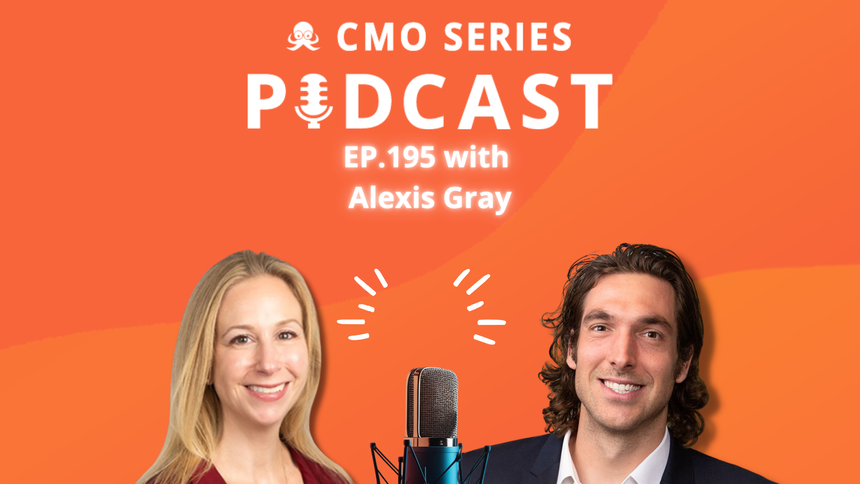
On this latest episode of the Passle CMO Series Podcast, Charles Cousins is joined by Alexis Gray, who has held senior marketing and BD leadership roles at PwC, Grant Thornton, Bond Dickinson and The Berkeley Partnership, as well as spending a decade running a successful marketing and BD consultancy. Now serving as the Chief Marketing Officer at Covalense Global, Alexis joins us to share her experiences on what real BD enablement for fee earners looks like and why so many firms still get it wrong.
Alexis discusses where firms assume skills instead of building them, what really helps fee earners have better client conversations, and how to make BD programs stick without relying on the same few rainmakers.
Alexis and Charles also dive into:
- Her critical realization that fee earner enablement drives growth
- Where firms wrongly assume BD capability
- Reframing BD from sales to client nurturing
- Why partner sponsorship makes initiatives stick
- Embedding BD through systems and incentives
- Practical advice for successful fee earner enablement
Transcription:
Charles: Hello and welcome to the Passle CMO Series Podcast where we talk about all things marketing and business development in professional services firms. Growth in professional services firms does not come from marketing simply doing more. It comes from professional services experts being better equipped to win work and grow client relationships themselves. On today's episode of the Passle CMO Series Podcast, I'm joined by Alexis Gray, who has held senior marketing and business development leadership roles at PWC, Grant Thornton and the Berkeley Partnership, as well as spending over a decade running a successful marketing and BD consultancy. We are going to explore what real BD enablement looks like for those client facing professionals and why so many professional services firms have got room for improvement. Alexis joins us to share where firms assume commercial skills instead of building them, what truly helps professionals have a better client conversation, how to make BD programs stick without relying on the same small group of rainmakers so spreading it out across the firm. So, it should be a brilliant discussion.
Charlie: This episode is brought to you by Cross Pitch AI, the new cross-selling tool from Passle. Cross-selling should be the easiest way for law firms to grow, but most firms struggle. Why? Lack of awareness, lack of trust, and frankly, fear of selling. The result? Missed revenue. Cross Pitch AI fixes that. It breaks down silos, helps professionals connect, and delivers timely, relevant insights to the right people inside the firm and out. There's no heavy rollouts, just switch it on and try it today. Head to crosspitch.ai to book your demo and make cross-selling happen. Now, back to the podcast.
Charles: Welcome to the podcast, Alexis.
Alexis: Thank you. No pressure.
Charles: No, none at all. Well, it's great to have you here and we've had several calls where we've talked about your journey to date, but for the benefit of the listener, are you alright to take a little look back across your career? I've already mentioned how you had roles at PWC, Grant Thornton, and the Berkeley Partnership, but was there a moment when you really saw how critical sort of enabling those individual professional services experts is to driving that growth, and did that change your approach to BD?
Alexis: Yeah, of course. So, early in my career I saw how important both pure BD and marketing are in creating visibility and bringing opportunities into the top of the funnel, and I often frame things as far as the sales funnel is concerned and moving opportunities through that funnel, and that work is essential because without it, firms don't get enough pipeline coming in at the top. But the real shift came for me when growth, I was bringing in opportunities and my team basically had brought them in and the business had failed to convert them, which was rather frustrating as I'm sure you can imagine. And it helped me realize, it crystallized for me that the moment of truth sits with the fee-earner. How they frame value, how they explore client needs, how they move a conversation forward, how they convert an opportunity to a new matter or engagement. So fee-earner is generally a trusted expert, they're fantastic technicians, but often, and by no means all the time, but often they're not always supported to confidently and expertly handle those broader and more commercial conversations. So, after that realization and a lot of frustration, my focus shifted from simply filling the pump, the funnel up at the top, to strengthening opportunities once they were in play. So, now I view it as fundamentally important that BD and marketing work together with fee-earners to generate, not just demand, but also enable fee-earners to win, grow, and retain clients. So, making sure that those opportunities are coming into the pipeline and working their way through them well and successfully.
Charles: Yeah, I can imagine that would be frustrating if you spent all that work getting these leads in and then getting some brilliant opportunities, and then it's sort of almost falling at the last hurdle.
Alexis: Yeah, exactly. We're not gonna win everything, but we should have been winning more.
Charles: Yeah. And I guess you mentioned it there, that many professional services experts are brilliant technical specialists, like that's their bread and butter, that's what they do. But often their business development skills, we just assume they've got them, that they're not always developed. So, where do you see professional services firms getting this wrong? Where, what should they be doing?
Alexis: I think firms often assume that confidence in BD comes from seniority, just having done it a lot, or gray hairs as it were, or personality. Some people are just intrinsically like that, or indeed permission, like cultural permission in the business for that to, you know, for BD activities to take place. But in reality, I think confidence comes from knowledge, skills and attitude, and you've gotta have all of them together. And I think fee-earners are the most confident when they genuinely understand their client's businesses, and their markets, and the pressures that clients are facing. And that confidence is generally rooted in curiosity, so a real interest in what's going on for the client beyond the immediate instructions.
If a fee-earner doesn't care and is just focused on that engagement on that matter and isn't curious about the bigger picture, and where that work fits in, and therefore optimizing that work and seeing what else is out there in the client's world, then you are not, as a fee-earner, being genuinely helpful enough. The point is not to sell, it's about being helpful. So, BD works best when fee-earners are focused on nurturing relationships and helping clients make better decisions, or moving closer to their goals. So there's practical skills required and there's also knowing what good looks like. So often fee-earners think they, or their firm, knows what good is, or they're good at this stuff, but in practice they're not quite as accomplished as they hope. I've been in lots of meetings where I've said, you know, they've shown me a proposal, and they'll say, this is a good proposal, and I'll say, why do you think it's a good proposal? And they can't answer the question. So, without context for where they are playing and without context and where their clients are playing, it's hard for a fee-earner, no matter their level of seniority, to tell what good looks like.
So, I think BD and marketing's function is to hold a mirror up and challenge. So, it's an important skill to build rapport for fee-earners, so feeling confident and natural in building rapport and to be authentic. So ask well-timed questions, uncover a bigger picture, a client's, you know, head office to be able to then suggest relevant, useful ways the firm can help. So it's not about forcing the agenda, conversations should be framed about nurturing relationships and being useful, rather than just selling, and that's what will lead to deeper trust. And so I think more work, well I don't think I know, more work follows as a happy, natural, serendipitous side effect. It's of course the goal, but the way you achieve that goal is through that confidence and I think firms get it wrong because they assume that those capabilities, kind of, developed by osmosis. Just like you are in a room and you are shadowing someone and you can see what they do, well, you are gonna be naturally good at it too, but actually there's a role to be played in practice, and signals from the leadership, and incentives, and reward, and recognition, and role modeling, all reinforcing what good looks like and enabling confidence to make that happen. So, I think, I mentioned knowledge and skills and attitude, and I think they're fundamental in helping fee-earners nurture relationships, otherwise it would just feel really false and inauthentic.
Charles: Yeah. And that kind of makes sense, you said it a few times, there was just reframing away from sales and reframing it as that, sort of, client nurturing that sort of approach seems to be the most effective. And how do you actually approach that? Why does language and positioning matter so much in how you are sort of encouraging your experts to do that?
Alexis: I think language shapes behavior. If you're talking about things in a certain way, then you are setting expectation. And so when BD is framed as sales, I think many professionals feel uncomfortable and sort of disengage, it doesn't align with who or what they consider themselves to be, it doesn't align with their identity on what they do. They're a professional, they're not a salesperson. And I think there's a really strong belief that it jeopardizes client trust. It feels very pushed, this is what we want to sell you as a firm, and actually, you know, people obviously and understandably shy away from selling services to clients who may not be interested. So, I think reframing BD as as client development, or client nurturing, or relationship nurturing, or commercial conversations, whatever phrase you want to use, but not sales means the focus shifts from pushing services to building rapport and being a really good listener and asking better questions and connecting expertise within the firm, whether it's it's your practice area, you know, your line of service or others, to be really aligned to client priorities when and as appropriate.
And also de-risking the relationships a bit so that you are not just dependent on one or two individuals within a client business, but actually you are knowing more people because you are having great conversations and you're being introduced, which means you are, you know, should someone leave, you are protecting that relationship. And although that's not the goal, again, it's a really happy serendipitous side effect. And by doing that, I think that's what makes BD from fee-earners feel very credible and very authentic, it feels very them and therefore safe. And by doing all of that and changing the language, it changes what firms should measure. So, it's not just about volume and activity, but it's more about quality of conversations, pipeline progression, and confidence to engage earlier, so getting in and having those conversations earlier in a lifecycle of a client. And so by changing the language, behavioral change will follow too. So that's, sort of, consulting parlance, you know, that's a transformative thing to focus on, but it's very powerful.
Charles: And in terms of actually enabling these individuals to be better at BD, what does good BD enablement actually look like and how do marketing and BD teams act as those strong enablers when they don't own the, sort of, client conversations themselves?
Alexis: So BD marketing, you know, we are not fee earners within professional services firms, so we're always going to be enablers. We should be providing material support with ideas, structures, tools, training, not extra process, although sometimes it is extra process because perhaps there wasn't any process to start with. And again, thinking of that sales funnel, I think at the front-end we provide great content and insights that fee-earners can use and obviously with them, so that fee-earners can credibly reference materials and conversation, or ping an email, or a LinkedIn message. All very light touch reasons to get in touch with clients, event invitations, that kind of stuff, short briefings on what changes are coming in a client's market, changes in legislation, or commercial imperatives, what questions are emerging. So reflecting back what we are picking up from speaking to other clients in the industry and saying what we are doing to help them too. So, really helpful conversations and conversation prompts so that they're having broader conversations without feeling salesy. And I think, in large events especially, this is really helpful because there's lots of different lines of service or practice areas and so cross-selling is always a challenge, you know, people are very protective of their relationship. And this is where BD and marketing can provide key account management support and account based marketing for really high value or potential clients.
And then, as we work through the pipeline when interest starts to form, there is something around creating simple frameworks that helps fee-earners move from sort of a nice chat, to a more meaningful commercial conversation, guidance on how to explore the bigger picture, so risks and priorities and trade-offs without forcing an agenda. Having said that, sometimes I provide agenda items, you know, like, here's what, you know, here are things to think about for a client conversation, because again, it's more junior fee-earners, having those things to hand to get them thinking, and taking on the language helps them and helps build their confidence. So again, everyone is working together to move those opportunities through the funnel. Things like case studies also help, you know, demonstrating how we've solved client problems, so we're not talking in lists of services or practice areas, but in real client issues. And then again, if we move to the next phase on the imaginary funnel as I look up into the air and I see it in front of me, it's about converting work. So, practical support in articulating value in client language, not professional services language. Examples of what good proposals I mentioned, you know, what a good proposal looks like earlier, pitches, pricing models, starter decks, all things that can be pre-populated and cut down on the repetitious bit of work, so that fee-earners are really adding value on the specific opportunities and tailoring to clients. And then coaching and challenge for those fee-earners who are involved in that client relationship process.
So not taking over the process, but again, supporting, whether that's looking at proposals and acting as the voice of the client, okay, you've got, this is a 20 page slide deck, does the client have time for that? And if we cut it to three slides, you've only framed it at all about us and nothing about the client issue. How can we change the language? And let's run through that presentation together, pretend I'm the client and I'm gonna ask you some questions that they might ask, just so you are gonna up your game and be as professional and well-equipped as possible for those conversations in order to help encourage conversion. And then once we've run the work, and once work is underway, light touch check-in tools to help fee-earners spot opportunities, to be helpful during delivery, prompts to encourage curiosity about what else is going on for the client, and support to connect the dots across the firm. So that cross selling piece, but without overwhelming the client.
So I think if we think of that pipeline again, marketing and BD don't own the relationship or the conversation, but we provide support, training, tools, role playing, structure planning, and we reduce friction. So we’re that enabler, and that's what you asked in your question, and that means the fee-earner stays front and center as they should. They are the ones who are in the relationship and so they can focus on, yes, they're technical work and on being helpful to the client, rather than spending loads of time on being a brilliant salesperson, and I put that word salesperson in very strong inverted commas and quotation marks, all because we're trying to make a better conversation clients, and those better conversations will lead to more work as a natural side effect.
Charles: Yeah. Yeah, I like that. And as you were talking through that, I was reflecting on my previous career as an athlete where my job was to sit in the rowing boat and get it going as quick as possible, but around me, I had a team that enabled me to do that. So, the physios were the expert in keeping me in one piece, the nutritionist, they helped with what I should be fueling with before races, and you've got the coaches that write the program. So it meant that my job was as easy as possible. I just had to turn up and sort of do what I was told, and we knew it was gonna lead to success. So it's kind of like you've got your athletes, your fee earners, and then you are the support around them so that they can just focus.
Alexis: We all play to our strengths.
Charles: That's it. Yeah. One of the things I did wanna ask about, we talked about this when we were prepping for this, you mentioned that nothing works without senior sponsorship. So when you are trying to create a change and implement a program. How do you get started with one of these initiatives? How can you create models and make sort of successful behavior visible across the firm?
Alexis: I'm glad you brought it up because I think it's fundamentally important. None of this works without the firm's leadership team behind it. The leadership team have to set the agenda and they have to connect, you know, through their comms, through the meetings that they're having with partners, they're the ones who are, you know, talking about the business strategy and talking about the key initiatives to help realize that strategy. And obviously BD and marketing are fundamentally important in realizing that, but it's not just them, it's the other partners as well, and partners are the ultimate role models. The way they talk about clients, the way they prepare for conversations and prioritize BD, sets the tone for everyone else. So if they're not visibly engaged, the rest of the firm won't be either. You know, they're kind of like the rock stars of the firm, and so if they're shining their light, you know, from their stage over here, and BD and marketing are over there, the BD and marketing will forever be in the shade.
So, when you are introducing something new, whether it's BD enablement, a new op model, or a shift in mindset, just as we were talking about changing behaviors through language and all sorts of things, I've learned, please learn from me, don't start with a whole partnership, start small and start with the willing. So, I look now for two or three partners who are open-minded, commercially curious, ambitious, and willing to experiment, and they're gonna become your early adopters. So you co-design the pilot with them so it feels relevant, you're doing it with them, not to them, and it's practical and grounded in their real world experience and the real client conversations they're having now, which makes it pointy, which makes it really effective. And your focus is gonna be creating early wins. So not necessarily big wins, but meaningful ones that will help set the framework for later when you move beyond a pilot. So, you know, what those wins could look like, might be a better client conversation, a new opportunity spotted that wouldn't have been uncovered before a smoother pitch process. It's those kinds of stories that travel through the firm and, and that's the key, you wanna make the good behavior visible, so you wanna share what's worked and what's changed and why it mattered. And that's not in a glossy corporate way, but in a really human, practical way that other fee-earners can see themselves in. And so over time, those early adopters do become the role models. Their confidence grows, their teams follow, there's a bit of pride that they're involved in the pilot too, so they want to big themselves up a little bit.
And so suddenly you've got a small pocket of the firm behaving differently and behaving in the way that you would hope that they behaved. And that starts to build momentum, so people copy what they see is working and they don't wanna be left behind, they don't wanna be, you know, miss out. And so leadership sponsorship gives you permission, shines the light in the right area, and the pilots with those who are willing, give you the proof of concept, and those visible role models then give you the pull, which is what ultimately shifts culture. So start small and then allow that to spread organically, but with a bit of a push with leading and marketing behind it.
Charles: Yeah. Brill. So you've got your leadership on board, you've got those early wins, you've got the willing involved. How do you go from that to really embedding these BD behaviors into business as usual within the firm? Can you talk us through the roles of rewards or recognition and training might play in that?
Alexis: Yeah. I think when it becomes business as usual. That's proof that cultural change has happened. So, it's not about running a program for its own sake, but it's about shaping the firm's environment so the right behaviors become the norm, so people repeat what's recognized. So if BD is only celebrated when it results in a win, you are gonna miss most of the value, so I was talking about that pilot and kind of showcasing behaviors and small wins. You want to recognize all the contributing behaviors that lead to growth. So, thoughtful preparation, great client conversations, early opportunity spotting, collaboration across teams, contribution to key accounts, you know, maybe being very organized in key account management because no one is, no one enjoys it. And so if one particular account team is really fantastic at it, shine the spotlight on them, acknowledge and reward that, because then others will do it. And then likewise, you wanna give people the tools so that they can exhibit those behaviors for recognition. So are those tools around training? Coaching? So that's about BD and marketing and senior people lending time, which is something that I do regularly and at different levels. So, you know, sitting alongside partners and thinking about specific opportunities, and then actually working with more junior fee-earners to give them that confidence and have small sessions in groups together.
So, safe spaces so that they can hear what good looks like and practice their skills accordingly. Practical things then like workshops and conversation frameworks, deal coaching, isn't about turning them into salespeople, as I reiterate throughout this conversation, but it's to help feel confident. So equipped, authentic, and commercial in the ways that feel right for the firm. So, that's for people who are already in the firm, but if you want a commercially minded culture, you've got to hire and promote for it. So that means assessing the right knowledge, skills, and attitude during the recruitment process and what that looks like. So what are the ones for you? Is it about curiosity? Is it about listening skills? Relationship building skills? How do you surface those during that interview process? How do you make them come alive during, you know, even in a job description so that you're getting the right people into your recruitment talent funnel?
And then, embedding expectations of client nurturing, not sales, but client nurturing into career pathways and making commercial confidence part of performance conversations. And so when people see that those behaviors matter for progression, they'll take them more seriously. And then, I think BD becomes business as usual when it's built into the rhythm of the firm. So, regular account reviews, pipeline conversations that focus on progression rather than just reporting, this is not about tick boxing, debriefs for pitches, which often get missed because everyone's moved on to the next thing, and ways to share insights about clients. And I think if those are built and hardwired into the firm, those become routine, then that's normalizing that kind of commercial thinking. So when all those things together, rewards, training, recruitment, and systems, routines, all point in the same direction and reinforce each other, that's when BD stops being an initiative and becomes business as usual and part of the way the firm does things around here, is part of the firm's identity.
Charles: Brilliant. We are gonna take a short pause from the main podcast to jump into the quickfire round, where it gives the listeners and me a chance to find out a bit more about Alexis Gray, what are your interests and passions. So, you don't have to overthink it too much. The first question I've got is, what are you currently listening to? This could be music, podcast, audiobook.
Alexis: I like loud, crashy, nineties grunge and rock music.
Charles: I was not expecting that.
Alexis: I am a secret rocker, so listening to that kind of music's my happy place. So, that's what I'll listen to really, really loudly in the car, singing very loudly in the car. And then when I'm at home, not singing so loudly for the benefit of my family because I don't have a great singing voice. Otherwise, I'm listening to history or current affairs podcast, so I quite like Dan Snow's History Hit.
Charles: Okay.
Alexis: It covers a huge range of topics. So when basically I'm not banging my head, I'm listening to sort of more esoteric things, I suppose.
Charles: What's the best piece of advice you've ever received?
Alexis: This is from my dad, and my brother obviously I'll make sure he listens to this afterwards he will recognize this. So, he and I were brought up from my dad always saying to us, there's no such word as can't. And it's really shaped how my brother and I are, how we approach everything. It sort of reminds us to stay curious, but it absolutely is a statement of intent to be determined and find a way forward or round, even when a path isn't obvious. When the chips are down, you just sort of keep going, there's no such word as can't. And that makes us definitely the people that we are today.
Charles: Love that. What's a book or resource that you recommend to anyone in professional services marketing?
Alexis: I'm not gonna be very original here, but I think the Trusted Advisor. It's timeless for anyone working in professional services. And then probably anything that you fancy that helps you understand a bit more about client psychology or decision making, I think that will make you better at BD and marketing.
Charles: Brill. What's your favorite way to unwind after a busy day?
Alexis: Well, either listening and belting out that loud crashy music that I mentioned earlier. Spending time with my family, I've got two wonderful daughters and a great husband, so hanging out with them. Or the other thing I do is exercise, so I do heavy weights, and that's quite satisfying. And counting as the weights go up in value takes me away from thinking about work, especially when there's a loud crashy soundtrack playing in the gym.
Charles: Oh, that sounds like my perfect way to unwind, getting in the weights gym, music on loud. Yeah, I totally see that. Where's your favorite place to visit and why?
Alexis: Mallorca. So my parents are having the most wicked retirement that you've ever had. I'm so envious of them. So they've spent a good proportion of their year in Mallorca, and when they bought their place there I was skeptical 'cause you always hear like Magaluf or whatever, but it's a fabulous island. I'm gonna sound like an ad now, but it's got mountains and sea and city and culture and sunshine, and I get to stay there at their home there, so it's home away from home and I relax the moment I step off the plane. Even the air feels softer and warmer when I get off the plane and I really enjoyed that.
Charles: Fantastic. Yeah, we could do a bit of sunshine in the UK at the moment to get us through the winter.
Alexis: Definitely.
Charles: So we're gonna wrap up the podcast with the question that we ask all of our guests. So we ask for your one key takeaway. So for you, if you had to give one piece of advice to a CMO or a marketing and BD leader trying to better support professional services experts in driving their BD, what would it be?
Alexis: Well, I suppose focus on confidence rather than compliance. I don't think fee-earners need any more process, or templates, or dashboards, although they're all a bit helpful. But they need to feel confident having commercial conversations. They need to be good at understanding client priorities and asking better questions, asking any questions really, and better questions, and articulating the firm's value clearly. So when you build confidence, I think everything else accelerates. I think it's a really good foundation.
Charles: Yep. As Gok Wan would say, it's all about the confidence.
Alexis: You did that very well. It was a very good Gok Wan impression.
Charles: Oh, thank you. Well, Alexis, thank you for coming on today and sharing some insight around how you believe you can enable your experts to be better at their BD. Hopefully some food for thought for those listening, and I'm sure if anyone's got any follow up questions they can find you on LinkedIn and continue the conversation there. But thanks for coming on and I wish you smiles and success for 2026.
Alexis: Thanks Charles, it was great to chat with you.
Charlie: You can follow the Passle CMO Series Podcast on your preferred podcast platform. Thanks for listening and we'll see you next time.
/Passle/53d0c8edb00e7e0540c9b34b/MediaLibrary/Images/2025-06-24-15-50-59-531-685ac963d81bf11b7522dd8e.png)
/Passle/53d0c8edb00e7e0540c9b34b/MediaLibrary/Images/2026-03-25-14-56-20-947-69c3f794d11ccf56ea7e162a.png)
/Passle/53d0c8edb00e7e0540c9b34b/MediaLibrary/Images/2026-03-18-10-49-01-796-69ba831db11ab600b40a2d5e.png)
/Passle/53d0c8edb00e7e0540c9b34b/MediaLibrary/Images/2026-03-11-12-21-53-970-69b15e61aa0cefc7145a247d.png)
/Passle/53d0c8edb00e7e0540c9b34b/SearchServiceImages/2026-03-06-17-25-08-513-69ab0df49855a8beba72b8b5.jpg)