




The most effective legal marketing today is designed to be useful, not just visible. Firms that are seeing real results are building targeted campaigns that connect insight directly to client need and, ultimately, to revenue.
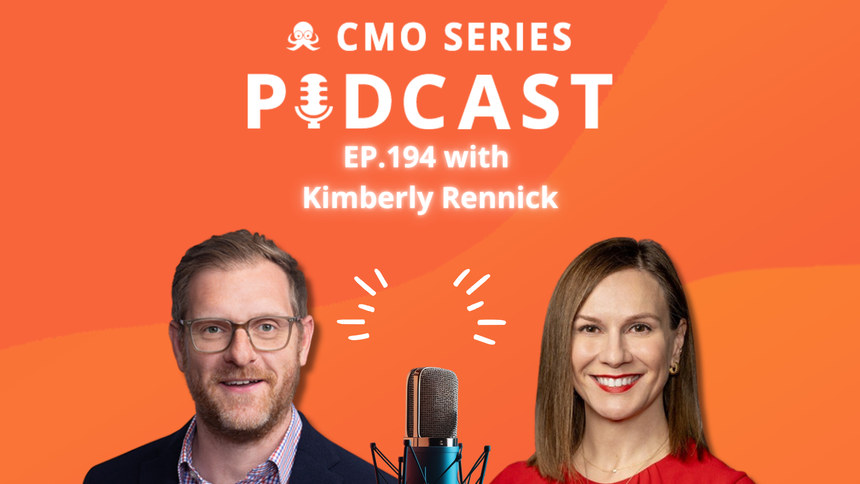
In today's episode of the CMO Series, Will Eke is joined by Kimberly Rennick, Chief Business Development and Marketing Officer at Thompson Coburn, to explore how bespoke, timely initiatives can become powerful business development engines.
Kim shares how Thompson Coburn turned a moment in the news cycle into a practical tariff analysis tool for clients, why linking top-of-funnel marketing to bottom-of-funnel BD is essential, and how authentic leadership plays a critical role in driving innovation at a time of rapid change in the legal profession.
They also delve into:
- The compelling nature of Thompson Coburn’s culture
- How targeted marketing campaigns can really move the dial
- How to break down often siloed areas of business
- The tangible impacts following the launch of the tariff analysis tool
- What authentic leadership really involves
Transcription:
Will: Welcome to the Passle CMO Series Podcast, where we talk about many things, marketing and business development related in professional services. Today's topic, really exciting, we're going to be talking about designing bespoke business development projects that actually drive tangible results at the end. The most effective legal marketing today is designed to be useful, not just visible. Firms that are seeing real results, are building targeted campaigns that actually connect insight directly to client needs, and ultimately, at the end of it, it's what every firm wants, it’s revenue. In this episode today of the CMO Series, we're joined by Kimberly Rennick, and she's the Chief Business Development and Marketing Officer at Thompson Coburn. Really excited to have Kimberly on. And today we're gonna explore how bespoke timely initiatives can become powerful business development engines.
Charlie: This episode is brought to you by CrossPitch AI, the new cross-selling tool from Passle. Cross-selling should be the easiest way for law firms to grow, but most firms struggle. Why? Lack of awareness, lack of trust, and frankly, fear of selling. The result? Missed revenue. CrossPitch AI fixes that. It breaks down silos, helps professionals connect, and delivers timely, relevant insights to the right people inside the firm and out. There's no heavy rollouts, just switch it on and try it today. Head to crosspitch.ai to book your demo and make cross-selling happen. Now, back to the podcast.
Will: Kim, welcome back. You've actually been on this podcast before, avid listeners will know.
Kim: I'm very happy to be here. Will, thank you for having me.
Will: So, really glad to have you. Kim, today we're gonna talk about how Thompson Coburn, sort of, turned a moment in the news cycle, if we'll call it that, into a practical tariff analysis tool for clients. And, we're also gonna delve into why linking top of the funnel marketing to bottom of the funnel business development, it’s really, really essential. We'll also cover how authentic leadership can play a critical role in helping drive innovation at a time of rapid change in the legal profession. So, we are gonna talk about how you can help design bespoke business development projects that really drive results, which is sometimes, I suppose when we dig into this, what can be missed in marketing? What's the actual aim of this? Well, it's actually, you know, to drive end results and revenue. The first question I wanted to go through, Kim, is really to talk a bit more about your career. You're now at Thompson Coburn, but to get there, you spent quite a bit of your career at big law firms, I mean DLA Piper, there's A & O, before it obviously merged and became A&O Shearman, there's Covington. You're now the CMBDO at Thompson Coburn. What was it about Thompson Coburn after working at those big old firms that really excited you, you know, from your business development and marketing perspective?
Kim: Yeah, thanks for asking. I wasn't looking to make a move at all. It needed to be compelling, and I know this is an amorphous statement, but I felt like I would know it when I saw it. And, Thompson Coburn was very compelling to me, is compelling to me, because it just felt like a breath of fresh air going someplace, and people who actually really cared about each other and cared about the institution. And so, it's been a real pleasure to join an organization where I feel like we have good work to do together and, you know, my team is very valued and our opinions and guidance matter and the firm leadership is very forward-looking, but also very pragmatic and kind, and it's just a pleasure.
Will: Yeah. It sounds like, from speaking to you, the culture's great there as well, which fits in with, you know, the fresh air and people being caring. I mean, at what point, and this sounds, not silly, but sometimes in marketing and business development, there seem to be campaigns that just go through the motions, I suppose. So, at what point did it become clear that going back to these really targeted, bespoke marketing and business development campaigns, weren't just a nice to have, you can actually move the dial in terms of measurable ROI?
Kim: Well, years ago at another firm, I was a key member of a team who put forward a predictive analytics project where we were working to predict client declines, in dollar value. And to make a very long story short, we called it moneyball internally, but there were a few things that we identified, and this was 12 years ago now. There were a few things that working with the consultants we worked with, we identified that would not only reverse a decline in client revenue, but also would enable you to grow revenue, and it was running a targeted marketing campaign. And put simply, that meant getting the right content in front of the right client at the right time, not spamming people or not hopefully sending it to people. And I, you know, I will say at the time, and for many years thereafter, and I would say probably even today, in many instances, there's no shortage of content, but the targeted part of it is, is really challenging for marketers in this space. Getting it to the right people at the right time, and then knowing what to do with it. So, I've known for a long time that it's a really impactful thing to do, that getting there could be challenging.
Will: Yeah, I suppose on that content front as well, COVID and that whole period didn't really help 'cause that was, there was a lot of noise, right? Everyone was communicating with everyone and it's still that behavioral change. We still need to move a lot of behavior back to the targeted way, you're absolutely right in terms of that. So, that's really interesting, It's taking it back to basics really. You recently launched, and I heard you talk about this actually at a recent event, which was super interesting and I was thinking, great, we're gonna get her on the podcast to also showcase this. But you recently launched a tariff analysis tool with your international trade partners, one of your partners in Thompson Coburn. Can you sort of explain to the listeners how the idea came about? How did you turn it into something that clients could actually use? And also then how could you measure the impact and see real value that it brought from a BD standpoint?
Kim: I would love to take credit for the idea of the tool, but it absolutely originated from our international trade team. They're very innovative in the way they see the world, and have been consulting clients for many years on duties and tariffs and how to optimize their business in that context. And of course, you know, the past year or so has been chaotic when it comes to tariffs, and so our lawyers work together with our IT team to create a tariff analysis tool that allows you to calculate duties or tariffs for particular goods coming into the country, by selecting what country it's coming from and what type of good it is. And so they worked diligently to put that together. And then IT came to me and our trade team came to me and said, what can we do together? And it was just so exciting because I thought, we have so much opportunity here to market this and do a targeted marketing campaign to get it to the right people at the right time. So, I guess the big picture is that this is a true partnership with our lawyers, our IT team, and the marketing team.
Will: So, it's breaking down those often siloed areas of the business, which coming together, it actually works.
Kim: Right.
Will: What impact, can you give us some of the tangible impacts that that launch had? I mean, it sounds like especially in tariffs, it's a bit of an evolving and movable feast. So, in the first few weeks there must have been immediate impact, but are there, sort of, lagging indicators as well that are coming off the back of this?
Kim: Well, yeah. So, we launched the tool on the day that the Supreme Court argument was made on tariffs. So, you know, we were able to capture a bit of the zeitgeist on that day, and it also captured to that end, a decent amount of earned media attention, you know, with interviews coming in for our trade team. We also paywalled the actual tool so that anyone accessing it has to give us their name and contact information. So there's that. And it allows us to run it against our CRM system to know if any of them are clients or contacts of the firm, and have qualified leads immediately.
We didn't do it as a one and done, we certainly launched with a targeted campaign internally and externally, but then we've followed it on for the last few months with additional pieces of written content and video content, and that each time has generated additional lists of individuals who have accessed the tool. And keep in mind, the tool is free. We don't charge anything for it. It is truly a value add for our clients and anyone out there in the market who might have a need, and you know, we decided we didn't wanna spam people, we didn't wanna reach out to everybody on the list because some of them, for a variety of reasons, might not be ideal clients of the firm. So, we vetted that list and mapped out a plan for our trade team in conjunction with any other relationship partners that could reach out in a, ‘I'm here to help you and make your life easier’ kind of way to maybe introduce additional conversations. And we know that those have taken place and it has generated some new work and matters for the firm.
Will: Brilliant. And it sounds like as a campaign goes, it's really 101 in terms of connecting top of the funnel marketing with your campaign, and then getting really targeted leads and hopefully sales, and as you've said there, some actual ROI at the back of it, at the bottom end. Was that always the intention? And also has that changed behavior internally? Could this be picked up and lifted into other areas of the business to do a similar thing?
Kim: I mean, that's a great question. I am obsessed with organization. I like the concept of things, you know, being very organized and tying together. It's always kind of troubled me that in law firm marketing in the past, we couldn't do a better job of tying together the top of the funnel and the general profile raising with the one-to-one client acquisition. So, this absolutely demonstrates a method by which we can do it. We would like to replicate it with other opportunities, and have plans to do so, we have replicated it in at least one other instance. And I would say that it has inspired the team, our marketing and business development team, for how we can do this further in our work. And, I think to that point, it's a gentle but important reminder that if you work in a marketing and business development team, every single person on that team has a hand in driving the revenue of the firm. Every single one of us does. And a project like this really illustrates that.
Will: Yeah. Also, I used to work at a publishing house years ago, and we, the gated piece, it is a good tool because it is self-serve, isn't it? It's not real, you have to do a bit of push marketing, but actually by the very nature of people putting their data in, it's free. But you are, you're gonna get decent quality as a result of that and if it's not, you just exclude those people. So, yeah, I can see how that really worked. We mentioned before when we've talked Kim, and I know you're a big advocate of this, is around authentic leadership. You know, being yourself at work is super important, especially at this time, and I'm talking where AI automation is really reshaping the world that we live in, and especially the professional service and legal industries. What to you does authentic leadership look like, especially when in the same breath you are asking your team and people around the business to, sort of, embrace this innovation and help drive results.
Kim: Yeah, I think that this is such an important point. We focus so much on technology and what it can do, but not necessarily on the impact of the people around us. And to directly answer your question about what does authentic leadership look like, I think that it comes down to honesty and taking responsibility for yourself and being okay saying ‘I don't know’. I try to tell my team and the folks I work with regularly, like I'm not an Oracle, I'm not Google, you know, I'm a human being. I have years of knowledge and experience on which to build and from which to draw. I can give good guidance, but sometimes, I might get it wrong, and I think authentic leadership means admitting you got it wrong. It's okay to get it wrong and to figure out a path forward.
I also think that it means admitting when you don't know, but committing that you will help find out or figure it out. And so, I don't think I can think of any way where more of us don't know is in the space of AI, but I'm absolutely committed to figuring it out and figuring out how we can utilize it to drive more business to Thompson Coburn, to raise the profile of the firm, and to make it an additive tool for my team's day-to-day work. And not something that creates more work, but streamlines their work and makes life a bit easier, and ideally it would deliver more actionable insights for us too, that we can act on a little bit faster. But, I think that it requires patience and also trial and error because some of the tools might not work the way we want it to or as optimally. And that's where I come back to again, it's important to be able to say, oh, we got that one wrong. And you know, to me, the function of a marketer, we have to have the courage to try new things. That's what marketing is. But we also have to have the fortitude to pivot and say, ‘oh, that didn't work, move on to the next thing’, and not feel a tremendous amount of guilt, shame, failure, or to layer that on the people who work for you, that that was somehow guilt, shame, or failure as well.
Will: That's a really important point, I think, especially in the industries that we all work in, where failure is seen as a bit of a problem, isn't it, in a partnership model. But this is the test bed where you can, you know, never more, has it been easy to try something and if it doesn't work, you're testing and you move on. You fail fast as they say.
Kim: Right, yeah. And failing is really, kind of, impossible in law firms. If you get out of the law firm context and look at any big organization, a tech company, any kind of company, if you look at someone in the C-suite and said, you know, they get it right 60% of the time. Oh my goodness, right? An executive who's making the right calls 60% of the time, that's a rockstar. That's someone who makes many millions of dollars a year, and they're sought after and they write books, and they have speaking engagements. Okay, but now let's look in the law firm context, we expect 90%, 100% correct.
Otherwise, there's always the fear of malpractice. And that always looms out there, so it makes it hard to fail, and I'm not here really advocating that we need to relax our standards in law firms. I also think that we need to be, again, pragmatic about this, that, you know, oftentimes when we have marketing and business development professionals, these are people who more often than not, do not have law degrees, do not feel held by the idea of malpractice and the need to get things 100% right, but more to the point, these are individuals who come from a creative background oftentimes, and are literally trained to try things different ways and explore, and gosh, I would hate to stifle that. I wanna bring that out in my teams as much as possible.
Will: Amazing stuff. We're gonna start actually just with a few easy, easy questions that aren't linked to the topic. So, we're gonna start with, and I'm really interested to hear your answers on this, 'cause we've talked about music before. You're probably gonna say, you're not gonna talk about music on this, but what are you currently, what are you currently listening to? Could it be music? Or you could go podcast or audio.
Kim: Well, both. On the music front, I will tell you, I've been really into a band called Geese and another band called Magdalena Bay. Those two have captured my interest lately. I am a big audio book listener as well, and I just started today a book, it's not a new book, it came out in 2022. It's called ‘American Midnight’, it's by Adam Hochschild. It was recommended to me by someone I work with at Thompson Coburn, and it explores the period in the US from 1917 to 1921, and that's a time period that's kind of skipped over in a lot of history books, but where democracy was really challenged. And as you can see, we came out on the other side, and I'll just say I could use some reassurance these days.
Will: It sounds like a read for many. I've also written down the bands, 'cause as I said, we have a few synergies in terms of music taste, so I've written them down 'cause I haven't listened to them. So, I imagine they're great listens. What's the best, and this is a tricky one 'cause it's quite hard to pin down for most people, what's the best piece of advice that you've ever received?
Kim: For me, it's actually, I know this one cold and it's always play the long game. Quick and easy wins are illusory usually. Sometimes we get lucky, but usually it's the longer term play with building relationships, it's the longer term play with building financial wealth, with building a team around you. And so, I really try to take the long view and not cut shortcuts and I really try to give that advice to my children as well.
Will: Good bit of advice. That's what I played with my wife actually, the long game, sort of an in-joke. What's a book or resource that you would recommend to others in the field? I mean, you've already given the 1917 to 1921 book at the start, but is there anything else that you'd recommend that's more business related?
Kim: Yeah, I read a decent amount of business books and I have to say there aren't many that float to the top of my mind. Though, I can say that there is one book that I refer to quite a bit that's not a business book at all. It's called Buddhist Bootcamp, and it's by an author called Timber Hawkeye. And it's a pretty slim book, it has a compilation of essays in it covering all kinds of different topics that impact your life, career, family. And for me as a business professional, I think sometimes it's important to zoom out and get a broader view of life because, you know, things can be really frustrating in the moment, but a lot of Buddhist principles tend to help me take a broader, maybe kinder view.
Will: Nice. And a brilliant surname as well, the author ‘Hawkeye’.
Kim: Yes.
Will: What's your favorite way to, I mean, you've mentioned the Buddhist side, what's your favorite way to unwind after a busy day?
Kim: Well, yoga. Yoga is my jam. I picked up yoga and knitting as a first year associate 25 years ago.
Will: Together, together at the same time?
Kim: Yeah, yeah, yeah. Both things were really interesting to me and I've stuck with them, and so my yoga practice is really important to me. I'm in the studio several days a week. I'm going to go at lunch today, and I just, it really helps to ground and I have found that, you know, the meditative aspect of it makes me a much calmer, more put together manager of people.
Will: I can't argue with that then. Have you ever tried the Bikram form?
Kim: I have. I'm not generally a big fan of hot yoga. I tend to be more of a vinyasa flow, but I also like yin and restorative yoga as well.
Will: I mean, I'm out of my depth now, I just knew about the Bikram form. Where's your favorite place to visit and why? And, I don't think this is aimed at the yoga studio. This is aimed at a place on holiday or, you know, just for relaxing.
Kim: South Bend, Indiana, 100%. That is the location of St. Mary's College and the University of Notre Dame, two institutions of which I am a graduate and I almost could cry even talking about it. They're very, very special places to me. I visit there frequently. To me, that is an association of home, and hopefulness, and spirituality, and my daughter is a sophomore in college there now, so it is a real treat to get to go visit her.
Will: Thank you for your answers there, Kim. Some really interesting ones there. Amazingly. We're onto the last question, Kim. Time flies, as they say, when you're having fun. So, it's a tough one, for everyone listening for CMOs, BD leaders, your peers that want to move beyond that generic content, what's the one thing that they should focus on if they want their campaigns to drive engagement and growth, such as you've seen with your tariff campaign?
Kim: Keep it snappy and be willing to pivot if it doesn't work.
Will: There we go. Straight to the point. Kim, really appreciate your time as always, it's been a fascinating conversation and thank you so much for your time.
Kim: Likewise. Thank you. Will.
Will: Brill.
Charlie: You can follow the Passle CMO Series Podcast on your preferred podcast platform. Thanks for listening, and we'll see you next time.
/Passle/53d0c8edb00e7e0540c9b34b/MediaLibrary/Images/2026-01-12-10-16-56-904-6964ca18ab784af100f11853.jpg)
/Passle/53d0c8edb00e7e0540c9b34b/MediaLibrary/Images/2026-10-08-10-14-29-755-6ac76d050b30ba925ae8bc36.jpeg)
/Passle/53d0c8edb00e7e0540c9b34b/MediaLibrary/Images/2026-10-08-07-04-41-374-6ac740898f60cb75fde15df0.jpg)
/Passle/53d0c8edb00e7e0540c9b34b/MediaLibrary/Images/2026-10-08-07-04-41-241-6ac74089ce624e48d6cc6df6.jpg)
/Passle/53d0c8edb00e7e0540c9b34b/MediaLibrary/Images/2026-10-08-07-04-41-183-6ac74089d24614eebffa86bf.jpg)