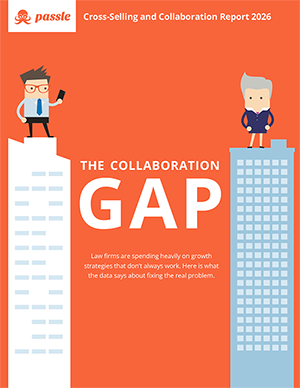





Every law firm claims to prioritise collaboration, yet very few have figured out how to turn it into real measurable revenue growth.
Today on the CMO Series: Laterals & Mergers, host Connor Kinnear, Chief Marketing and Business Development Officer at Passle, is joined by two of the world's leading experts on smarter collaboration in professional services, Heidi Gardner, Distinguished Fellow at Harvard Law School and bestselling author, and Ivan Matviak, Co-founder of Gardner & Co. and CEO of Smarter Collaboration International.
Together they unpack what the data really says about collaboration and lateral integration, and what CMOs and BD leaders can actually do to turn it into a genuine growth driver.
In this episode Heidi and Ivan discuss:
- The single most important research finding every law firm leader needs to hear about collaboration and growth
- What an outsider's view from banking, consulting and consumer businesses reveals about blind spots in legal BD
- Why top firms are shifting from hiring for books of business to hiring for talent, and what that means for recruiting
- Where firms typically get stuck turning anecdotal knowledge about growth opportunities into action
- How the data quantifies the link between collaboration and revenue, and where the biggest missed opportunities are
- The early warning signs that a lateral hire is failing to integrate, and how much of that comes down to culture versus individual fit
- Their closing advice for CMOs and BD leaders building the case for a smarter collaboration initiative
Transcription
Connor: Welcome to this week's episode. I'm your host, Conor Kinnear, this week. I'm the Chief Marketing and Business Development Officer at Passle. Today, we're diving into a topic that every law firm claims to prioritize, yet very few truly master, and that's collaboration. So everyone talks about it, but only a handful seem to figure out how to turn it into real measurable revenue growth.
So to unpack this, I am so excited to be joined by two of the world's leading experts on collaboration and professional services to help discuss this topic. So I'm delighted to welcome Heidi Gardner, who is a distinguished fellow at Harvard Law School, a best-selling author, and a leading researcher on how law firms grow through breaking down silos. And alongside her today is Ivan Matviak, Co-founder of Gardner and Co., and CEO of Smarter Collaboration International, who brings the operational lens of having worked inside multiple firms and industries across the globe. So together, today they're gonna share what the data really says about collaboration, lateral integration, and most importantly, what managing partners, CMOs, and business development leaders can actually do to turn this into a genuine growth driver.
Charlie:This episode is brought to you by CrossPitch AI, the new cross-selling tool from Passle. Cross-selling should be the easiest way for law firms to grow, but most firms struggle. Why? Lack of awareness, lack of trust, and frankly, fear of selling. The result? Missed revenue. CrossPitch AI fixes that. It breaks down silos, helps professionals connect, and delivers timely, relevant insights to the right people, inside the firm and out. There's no heavy rollouts, just switch it on and try it today. Head to crosspitch.ai to book your demo and make cross-selling happen. Now back to the podcast.
Connor: Heidi and Ivan, welcome to the podcast.
Heidi: Delighted to be here, thanks.
Ivan: Great to be here.
Connor: Great stuff. So listen, let's dive straight in. I have a number of questions I'm really keen to hear your thoughts on. Heidi, I'll start with you if that's okay. You've spent your career studying how professional service firms grow through collaborations. So for those people listening in today, managing partners, COOs, CMOs, business development leaders, what's the one key finding from your research that every law firm leader needs to hear right now?
Heidi: Collaboration drives growth and other strategic outcomes, but only if you measure it and manage it.
Connor: There you go. Nice and simple. So we've got to measure it. Ivan, you've worked across banking, consulting, I think you've even worked in some consumer businesses before landing into the crazy world of law firms and legal. What did you see from outside looking in that most lawyers and business development leaders simply can't see themselves?
Ivan: Yeah, you know, in all of those roles, I spent, over the last 20 years, I was really focused on data and analytics, as Heidi was alluding to in her comments there. So I guess two insights come to mind. One, is that cross silo collaboration, whether that's across practices or across offices, really drives performance for both individuals and for the firm. There's this, hero myth, Connor, about sort of the successful rainmaker and, you know, driving business as an individual.
But what we really see in the data is that the most successful partners are highly collaborative, and there's this direct correlation between the size and the maturity of their network, and the financial outcomes that they achieve. And you can analyze those collaboration patterns so that partners and leaders can see where investing their time is likely to lead to the biggest, the biggest payouts.
Heidi: Yeah, and when I talked about managing it, absolutely, you have to get that data. Everyone mistakenly says collaboration is a soft skill, as if it, you know, sort of is mushy and you can't measure it. It's nonsense. You know, we've figured out how to measure it. But taking it to that level of drawing out insights, like Ivan was talking about, it's not just the data per se, it's what does the data tell you and how do you prioritize actions if you're the partner who's choosing how much and where and with whom to collaborate and to what end? And when I said about managing it, I really mean the firm has to set some standards and hold people accountable for the way they engage in business development, the way they develop clients.
Ivan: Building on that for a second if I can, Conor.
Connor: Yeah.
Ivan: You know, Heidi mentioned it's not a soft skill. I think people often don't realize that collaboration is a learnable skill.
Connor: Yeah.
Ivan: It's not that people are born as great collaborators. At every stage in their career, there, the expectations for how you collaborate increase, and you can learn these skills. You can use the data, as Heidi alluded to, to figure out where you should collaborate, and you can build the skills to become a better collaborator at every stage in your career.
Connor: So when someone becomes a better collaborator, what are they doing? What, what, what are the actual day-to-day things they do? Do they phone everyone up and say, "Let's go for a cup of coffee." You know? How, how do they collaborate and what, what are the actual things that the best collaborators do?
Ivan: Yeah. That’s great. You know, we were literally talking about it this morning, uh, talking about that this morning, Heidi and I. They do a couple of things. They develop a mindset of curiosity, Conor.
Connor: Yeah.
Ivan: Where they are interested in getting input and understanding what is motivating and driving others, whether that's clients, right, and really understanding what's important to clients, not just, not just, you know, cross-selling and driving what's in the interest of themselves or in the firm, but really understanding the motivations and aspirations of their clients. But also their fellow partners, right? Really understanding what, what motivates the people around me, and how can I use that insight and that knowledge to engage and collaborate with them more effectively. So, that idea of sort of starting with a curiosity mindset is really sort of foundational to smarter collaboration.
Heidi: Absolutely. And they're, they're using that curiosity to unearth business opportunities that are mutually beneficial, right?
Connor: Yeah.
Heidi: So they're asking these questions, not coming in with, "I have a strong point of view and I'm gonna tell you everything you need to do." But asking more open-ended questions, coming in with a point of view about, "Here's what your competitors are doing," or, "Here's the, you know, the, the forecast for your, for your sector and what that means to you."
It, but sparking a dialogue and getting clients talking about what matters to them, what is, what makes them fearful, what makes them excited, where are the strategic opportunities. Are they more focused on growth or on protecting the business? Those kinds of conversations that unearth these more complex challenges and arenas to focus on, they create the opportunity to engage both more interactively with the client, but also-
Connor: Yeah
Heidi: To bring a broader team to bear. And ultimately, you know, to be able to address the most valuable opportunities at the client with a more fulsome team.
Connor: Great. And I suppose then if you're that person going out and collaborating and making those introductions, speaking to people, then eventually it comes back to you. So when that person has a client's needs, they go, "You know what? Jane was the person who always came to me. She's the one who reached out. She's the one who asked me to help solve her clients' problems. I'm gonna go to Jane now." Yeah. And so that work comes straight back then the next time something comes up.
Heidi: And, and kind of that, that reciprocity isn't just based on goodwill, right? I mean, there's tons of research. I mean, fish and dogs and birds engage in reciprocal behavior. It's pretty deeply rooted. But it's not just because I feel an obligation to reciprocate, it's also because we've worked together and I understand-
Connor: Yeah
Heidi: What you're brilliant at. We've developed trust in one another. Competence trust, I know how good you are. And character trust, I know that when we work together you don't undermine me, you don't steal credit for my ideas and so forth. And so the act of collaborating produces an environment where more productive, more effective collaboration can happen going forward.
Connor: Yeah, that makes sense. And, you know, the one thing, we hear two things all the time from our clients, our law firm clients, if they're trying to do a bit of- Cross-silo or cross-selling or what- whatever you want to call it, the two things that blocks it so often are, one, awareness. So who is actually the best person on the other side of the world to help my client here? And the second is trust. So even if I am aware of them, do I trust them to bring them in to my most important client? And that trust is very, very important then.
Ivan: You know, and that... Just coming back to trust, it's so important. And what I think a lot of professionals, you know, partners in law firms included fail to realize is that that trust goes both ways. Clearly they need to, uh, develop trust in others, and they need to, uh, believe that they can trust the other person that they want, that they might want to collaborate with. What they often don't reflect on is how they show trustworthiness, right? Because it goes both ways, right? They have to make the effort themselves to show to others that they are also trustworthy.
It's not just me being willing to bring you in, but it's also, does that person, is that person willing to work with me, right? Yeah. It goes, it goes both ways.
Connor: So shifting a little bit, um, the best firms, uh, have shifted from hiring lawyers just with books of businesses. So, you know, we used to hear, "Oh, we're gonna bring that lawyer in from that firm, and they're gonna bring a big book of business," to hire more for hiring for talent. And so Heidi, what's driving that change, and how does this reshape the current way that managing partners, the CMOs, the BD teams operate and, and, and recruit?
Heidi: Yeah, I think it's a vital shift. Finally, people have recognized the absurdity of hiring somebody who pretends that they're gonna bring this big book of business, and at the same time pretends that they're gonna open up all of those portable relationships to the rest of the firm.
Connor: Yeah.
Heidi: I mean, the reason those relationships are portable in the first place is generally speaking because the person who can walk out the door with them has protected them and put up sharp elbows and high walls, right? And so-
Connor: Probably weren't collaborating in the first place.
Heidi: Bingo, right? I mean, you know, either they're, you know, delusional and their clients aren't going to follow them, which happens a ton.
Connor: Yeah.
Heidi: Or they could be confident the clients will follow them because there's nothing creating stickiness with their prior firm, which means they're sort of anti-collaborative, and they're unlikely, you know, to change their stripes once they join a new firm. And so I think a lot of firms have recognized that the idea of simply buying a book through an individual is really risky, right? So they've shifted in one of two ways. Either they're doing lift outs and they're hiring the whole team. But that creates, you know, a range of challenges and things. Or like you said, Conor, they are hiring for talent, and they're saying, "We need a healthcare regulatory lawyer, somebody who's a brilliant expert.
And because we need them, we are almost by definition already anticipating which client opportunities we could plug them into." And our research now for well over a decade has demonstrated really clearly, and loads of other people have replicated this, that the single biggest predictor of whether a lateral hire is successful, i.e., they stick around and they become profitable, the single biggest predictor of that is whether that lateral hire gets properly integrated by having reciprocal relationships. If they bring clients along with them, they get other partners involved, or more likely, they get drawn into incumbent clients of the firm.
Connor: Great. And a lot of these law firms, I mean, they're sitting on a huge amount of anecdotal knowledge about where their growth opportunities are, but most of them seem to have no real way of, of how they act on it. So where do firms typically get stuck when trying to turn that knowledge into action? And then maybe, Ivan, you can tell us a bit about where do you see firms get stuck operationally in that as well.
Ivan: Yeah, I mean, just, maybe just starting on that. Yeah, I think, I think part of the challenge, Conor, that firms have is that they have the data. They have some-- they have lots of data in some cases. But they really lack the insights on what to do with the data. So they don't know how to remove some of the firm-level barriers that get in the way of collaboration, things like performance management systems or compensation systems. And they don't know how to build the individual skills to turn those collaborative activities into really repeatable habits. So it's not so... It's really, from our experience and from our analysis, it's not about a lack of data necessarily, it's about a lack of insight from that data, and the skills to actually turn that insight into the kinds of behaviors that are gonna deliver results.
Heidi: So can I give an example of that? Back to this idea of lateral hiring. Everybody says, "Yes, we understand now that a lateral hire who comes in as an island and stays as an island is unlikely to stick around or generate significant results." We get it. So we want people, when we hire a lateral, to take that lateral into client relationships, and they claim that they want this, and they should want this, and yet they fail to measure it. So one of the things that we look at through our analytics platform is not focused on the lateral per se, what is he or she doing, but rather what are the incumbent partners doing to get that person integrated. So how many partners are working with the newbie to take them into client relationships? How many of them are co-originating work together? How many of them have built out a team that involves that lateral hire in real client work? And once you start to measure that, it very quickly uncovers some, some gaps and some blind spots historic blind spots for firms. Like, you know, Partner X has continually banged on the table, "We need to fill this gap.
We need that regulatory healthcare lawyer," blah, blah, blah. But when the person comes in, the person who banged the table and made such a fuss to get them hired- takes three steps back and says, "Hey, good luck, Lateral. You're on your own." Yeah. "Prove yourself. We're paying you a ton, and until you demonstrate how good you are, you're not coming close to any of my clients." Right? And so that pattern of not actively engaging with the lateral and helping to create shared success is hugely problematic. And using data and analytics to uncover who's doing it brilliantly and who's failing to do it at all or minimally, that opens up that insight opens up a whole range of potential actions from discussions to, you know, financial rewards for people who do it well. But you have to start with the insights and the analytics.
Connor: And, and how do firms that do it well do it? How, how do they ... If I get this new regulatory healthcare attorney in, how do I promote her internally? What are firms doing well to help do that so that everyone knows we've got this person and they know they can, they can come and approach her and maybe bring her to those clients? How are people promoting who and how are people doing it well?
Heidi: I think it starts long before you make the lateral hire.I think it starts with developing the business case to say, "Here's the per- the kind of person, the kind of expert and expertise that we need." Yeah. And getting people to make commitments early on. "Okay, you say that we need that reg lawyer. Once we bring somebody in, which clients are you taking this person to?" Getting commitments ... upfront. And then following through and holding people accountable for delivering on those commitments.
Connor: Yeah. I was just gonna say, you know, I think I can see firms taking it more and more seriously all the time. You know, there's job titles popping up now which are heads of lateral integration. Whereas beforehand,I've spoken to many CMOs who seem to get that chucked at them. You know, "Who's in charge of lateral integration?" Like, "We are, and my team." And, and, and we found out on Wednesday that someone's starting the following Monday, and we knew nothing about it.
But I think firms are starting to get it a little bit better. They're starting to have dedicated roles who really help with that lateral integration.
Heidi: And it requires collaboration to do that well, right? Yeah. I mean, we're often talking about partner collaboration, but, you know, I spent all of yesterday with a client that was working on getting their business professionals to collaborate more effectively between BD and marketing, and lateral integration, and finance, and, and, and, right? So we shouldn't neglect that either.
Connor: Yeah, okay.
Ivan: No, I was just gonna say, you know, lots of firms, get the basics right. Almost the table stakes, right? They'll set up the intro tour for the lateral hire. They go around, they're meeting lots of partners. They're visiting the offices. They're having those initial conversations. But where they fall down, as Heidi described, is taking it to the next level of getting them engaged with real client work early, and holding the other partners around them accountable for their success. The, the, the most successful firms have as part of the performance discussion what did the partner, you know, they hold the partner who hired this person, who sponsored the lateral accountable for their success.
Connor: Yeah, okay. That makes sense. 'Cause again, I've heard plenty of times they hire them and, as you said, Heidi, they kind of back off and they're busy people, so they're, they're soft focusing on their own clients and they don't help that drive that integration.
Heidi: Or even worse, Connor, I mean, the number of times I've heard somebody say... The first time I heard it, I was quite confused and shocked. Somebody said, "Oh, you know, my firm just hired my competitor." I was like, "Hired? Like, what does that mean?" and he literally meant, you know, he's in the corporate practice, they hired another corporate lawyer who's gonna be out there, you know, beating down doors at clients trying to drum up business, and he saw this person as a competitor as opposed to, guess what, a partner.
Connor: Yeah.
Heidi: And if they, if they, if they co-develop business, maybe they'd be stronger together.
Connor: Yeah, that makes a lot of sense. And you guys have done lots of research and, and you've got research that quantifies the link between collaboration and revenue. So, you know, at the end of the day, we're doing all of this to drive that revenue number. Heidi, could you maybe walk us through what that looks like in practice? And then maybe, Ivan, you could-- it'd be great if you could tell from your experiences working inside these firms, where is the biggest revenue opportunity being missed?
Heidi: Yeah. Okay. So, you know, what, the, the seminal analysis that we have done now for a very long time, we've done this hundreds of times, is to quantify how much additional revenue is generated with each additional practice group that joins the client service mix. And what we find is that when a client, on average, when a client moves from being served by one practice group to two practice groups, the revenue should d- way more than double. It should triple, right? And, you know, each of those practice groups on their own would have generated a certain amount of revenue, but when you put those practice groups together, they should significantly outpace what either of them could have done on their own, right?
Connor: Okay.
Heidi: And when you add the third practice group to the mix, you should be generating much more than 3X what any practice group would have done on its own. And the reason for that, Connor, is that you're not in there engaging in some tax work, period, and then separately sending a team in and doing some employment work and separately doing some IP work, right? When you're, when you're serving a client in a more holistic way, you're able to do multi-practice matters that are addressing-
Connor: Yeah
Heidi: More complex issues. And even if you are working, you know, singularly on a tax matter, you should be informed by a lot of what your colleagues are learning in other parts of that client organization that allows you to tailor it to bring in sector and industry knowledge and to create more value than you could do if you were truly the solo operator.
Ivan: And what do partners do instead? And what do firms celebrate instead? They celebrate bringing, landing the new logo, right? Yeah. Everybody loves it when, "Oh, we brought this new client in," and then that client stays 10 years as a single partner or single practice client. Um, but there's this, there's this energy around bringing in a new logo. What they should be focused on, as Heidi described, is how do we take the existing clients, where we already have deep relationships, and expand out the number of practices that are penetrating them? And if I can bring that all the way back to the conversation we had a minute ago about curiosity, right?
Where does that start? It starts with going into the client with other partners and having those exploratory conversations, not because you wanna go sell in tax, right, and you've got a firm goal to get tax into this client. It's to really understand- What are the challenges that they're facing? What are the biggest opportunities they're facing? And then how can you bring together the right partners with the right expertise to really help the client achieve those ends? That's a very different mindset than going out and winning new logos.
Connor: Yes. It's understanding the problems and issues that your clients face, and you guys are the problem sol- You got a team of problem solvers to help them be more effective in their jobs.
Heidi: And Conor, you ask, you know, where are the biggest, um, revenue opportunities hiding. It really is this idea. We've quantified this, and in some firms they could get a 30% revenue uplift by broadening their existing client relationships in fairly limited ways. You know, by making very targeted efforts to do that in particular clients. There's, you know, sometimes tens or hundreds of millions on the table.
Connor: That's great. So lateral hiring then, I mean, it's a huge investment for law firms. We saw one recently I think broke the record where an attorney went from one firm to another for $80 million over three years. So it's big money, big investments that law firms make, yet the failure rate is striking. I think something like 45, 50% of them fail within the first five years. Ivan, you've been close to this operationally, and you've developed tools to track how effectively partners integrate with new lateral hires. So what are the early warning signs that a lateral hire is failing to integrate? And, and maybe, Heidi, you can touch on how much of this comes down to the culture inside the firm versus an individual fit problem.
Ivan: Yeah, and we touched on this a little bit earlier, Conor, but it's...The biggest factor is whether they are really getting stuck into client work. It's not about having those intro meetings. It's not about, you know, doing the, doing the world tour and meeting the other partners. That's important, that's sort of table stakes. But you really have to get stuck into the client work. So whether that partner is coming in, that lateral hire is coming in with some client, you know, bringing some clients with them, they need to open up that relationship to the existing partners and start what we call exporting work, right, out, out to those other partners to open up the relationship and start to build that trust with other partners in the firm. And then it's incumbent on the other part the legacy partners within the firm to open up their clients to the lateral and to start, you know, so that the lateral can start to import some work and start to execute and get stuck in. Because, A, that's how they get traction within the firm, that's how they build, knowledge of where their competence and expertise lies, and that's how they start to build trust with other partners to develop those reciprocal relationships that are really gonna accelerate their success in the firm.
Connor: So this needs support from the highest levels of the firm, I assume, because you cannot have that culture without your managing partner or your CEO or your senior partner helping to drive that ethos.
Ivan: It's, it's 100%. It's the expectations. It's the leaders making clear what the expectations are of the partners within the firm as well as to the lateral hire that's coming in. And then getting the data, right? Because you can measure this. You can look at the, of the existing partners in the firm, how many laterals are they working with? How many clients are they bringing them into, right? How much are they actually collaborating with these laterals?
Heidi: Oh, and let me jump on that because Ivan, you know, we've also seen quite subtle patterns that really contradicted common belief about how successful a lateral was. So Conor, we worked in a firm where there was, uh, we were told, "Hey, take a look at a person, you know, X. They're a pretty successful lateral. They work with a variety of people, and a huge portion of the work that they do is actually with other partners." And that was all true, but there is a big but coming. When we analyzed the data at a more nuanced level, what we uncovered is, number one, they had a high proportion of the work that was done in a team with other people, but that team was really small and incredibly insular.
Connor: Yeah.
Heidi: And secondly, they were wildly dependent on one single other partner whom they had lateralled in with for work opportunities, right? And so there was one partner, basically, one senior partner feeding this person work.
Connor: Yeah.
Heidi: And, you know, there was this small, you know, clique of partners who worked together, um, most of whom had joined together as a lift-out. My God, they were so ripe for being lifted out by yet another firm. Yeah. It was a huge risk factor.
Ivan: So, so when they... Well, 'cause they were looking, uh, just at the execution numbers, essentially. They were like, "Okay, this guy's, you know, he's, he's billing, he's billing reasonable hours." But they were all with a very small group of partners, all within just one practice. There was no cross-practice collaboration. And all with a very small number of clients, right? Really isolated and highly dependent.
Connor: Fascinating. It's just so interesting because if the firms get this right, the, the money is, and, and growth opportunities are just enormous.
Heidi: And Conor, can I, can I say something here? Like, we've been really focused on what's in it for these individual partners and what's in it for the firm, but, you know, at Gardner and Co., We work with well over 100 general counsel every single year. And we work quite-
Connor: Yeah
Heidi: Deeply with some, and we work, you know, in, in various capacities with different GCs and in-house legal teams, and by and large, they want this, too, right?
Connor: Yeah.
Heidi: They, you know, they suffer a lot when they have a key, you know, key man risk kind of thing, key person risk, where a whole relationship is dependent on one individual who refuses to open up the firm to others. They suffer a lot when they've got a complex problem and they have to act like not a general counsel, but a general contractor and source-
Connor: Yeah
Heidi: All these different bits of expertise and then, you know, knit them together. It's much more efficient and effective for them to find a cross-practice team who can really help them address these sophisticated issues.So, you know, this is not something that is done to the clients to generate revenue in spite of what's good for the clients. This is truly client-centric behavior, where you co-create these opportunities and deliver on them in the most cost-effective way that generates innovative, um, holistic outcomes that really make a difference. I wanna be careful that this is not, you know-
Connor: Yeah, no, that makes sense ... the will clients. You're trying to bring your client your, the kind of dream team for them. A united, collaborative team that can do not just your employment work, but we can help with your IP and your M&A work- in one kind of I suppose w- with one strategy to help you achieve your goals at the firm, then.
Ivan: Yeah. And not, and not just, and not doing that because it's in the firm's interest, not because, yeah, we can do your tax, we can do your whatever litigation. But because you understand, you're starting first with the curiosity of understanding what the client needs and why bringing those partners in helps the client. Not helps you or the firm. It helps the GC.
Connor: Yeah.
Ivan: Yeah
Connor: That makes a lot of sense.
Heidi: All the revenue growth and profitability, those are very important and luxurious byproducts of serving a client extraordinarily well.
Connor: Yeah, okay. That's great. So to close out today's episode for all those managing partners, the chief marketing officers, the business development leaders listening right now wanting to make the case for a smarter collaboration initiative at their firm, where should they begin, and what's the one piece of advice you'd leave with them? I think maybe Heidi, do you wanna go first and then Ivan?
Heidi: I'm happy to go first. Sure, I'll be happy to go first. I think where should they start? They should begin by, they should begin with the end in mind. What are we trying to achieve? What's our strategic objective? And how is it that by joining forces across practice groups, jurisdictions, between client-facing and business professionals, figuring out where the collaboration is going to have the greatest impact- Choosing deliberately to make concerted efforts, and then following through and making sure those get executed flawlessly or as close to it as possible by holding people accountable for the results. I think it is, you know, like any campaign, this has you know, a clear action plan is demanded and the accountability has to go forward with that. I think people need to understand the business case and the talent case for why to make these moves, and then set the goals where collaboration is a very, very clear path toward achieving it. It's not an end in itself.
Ivan: Now, let me pull that up a level from the individual partner. At the firm level, leaders need to understand where the barriers are that are holding people back from collaborating. And there are often, sort of institutional and structural barriers that are limiting collaboration that's happening, and those can be addressed. So you can analyze that. You can understand what those barriers are, and then you can take steps to remove those barriers. And then the firm needs to commit itself to building these skills within the partnership. As we talked about, these are learnable skills. People aren't necessarily born great collaborators. And it's important to invest the time and the effort to help partners understand, as Heidi talked about, the business case for it, but then to develop the skills so that they can do it well.
Connor: Ivan, you've got your Smarter Collaboration website. Do you wanna tell the listeners a little bit about that?
Ivan: Sure, yeah. So it's, uh, www.smartercollaboration.com. You know, on the site you can find information about all the, the, the, the services that we provide, the tools, the technology, and some of the research behind the ideas that we've talked about. So it's really, it's a wealth of resources on smarter collaboration and how to bring these ideas into the firm.
Connor: Brilliant stuff. So that's smartercollaboration.com. And Heidi, you've been busy again doing some writing. Is that correct? Have we got something exciting coming soon?
Heidi: Yeah. So you might hear it here first. We are delighted that Ivan and I are launching the research for our latest book. We expect to be writing, I guess it is going to be the third in the series, possibly Smartest Collaboration, having started with Smart and then Smarter Collaboration. And we are really focusing this one on incredibly practical how-tos for partners and other professionals in these kinds of firms to make collaboration much more of a habit, to take the cost out of doing it, to make it more routine, and to help people figure out the very specific actions that will lead to these benefits without having to continually decide and reinvest in them.
Ivan: It's really focused on the how. How do you collaborate well?
Connor: Listen, Ivan, Heidi, I've been hoping to get you two on this podcast for a long, long time. So thank you so much for your time. Thank you so much for the insights, uh, for your commentary. I know this will be incredibly valuable to me to many people, so many thanks indeed.
Ivan & Heidi: And thank you, Connor. Thanks, Connor.
Ivan: That was great.
Charlie: You can follow the Passle CMO Series podcast on your preferred podcast platform. Thanks for listening, and we'll see you next time.
/Passle/53d0c8edb00e7e0540c9b34b/MediaLibrary/Images/2026-10-14-09-22-13-024-6acf49c5944aac193a981bb9.jpg)
/Passle/53d0c8edb00e7e0540c9b34b/MediaLibrary/Images/2026-09-28-10-59-02-989-6aba4876c6484376446500cc.png)
/Passle/53d0c8edb00e7e0540c9b34b/MediaLibrary/Images/2026-10-08-10-14-29-755-6ac76d050b30ba925ae8bc36.jpeg)
/Passle/53d0c8edb00e7e0540c9b34b/MediaLibrary/Images/2026-10-08-07-04-41-374-6ac740898f60cb75fde15df0.jpg)
/Passle/53d0c8edb00e7e0540c9b34b/MediaLibrary/Images/2026-10-08-07-04-41-241-6ac74089ce624e48d6cc6df6.jpg)