



Boutique firms are continually finding new ways to stand out, tackle significant cases, and make a lasting impact.
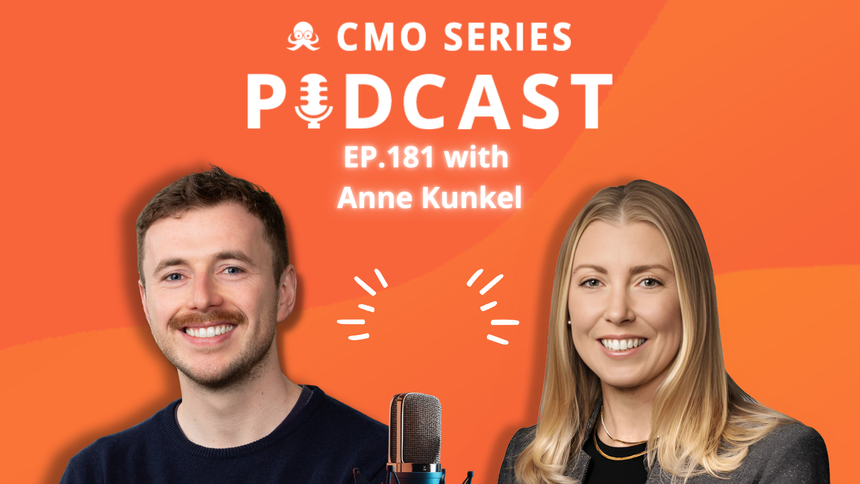
In today's episode of the CMO Series Podcast, Eugene McCormick welcomes Anne Kunkel, the Chief Marketing Officer at Redgrave. Anne joins Eugene to discuss how boutique firms consistently go above and beyond, sharing her insights on building an agile team, navigating new technologies, AI, and regulations, and successfully driving strategy through to action.
Anne and Eugene explore:
- Anne’s background and unique career journey to Redgrave
- The approach Redgrave takes to position their unique style in the legal market
- Anne’s practical tips for balancing her day-to-day responsibilities
- The key qualities and talents that Anne prioritizes when building her team
- Key elements that are reshaping Redgrave’s brand and growth development
- Top priorities for navigating changes that are reshaping legal marketing
- Advice for CMOs aiming to make an impact in boutique firms
Transcription
Eugene: Hello folks, and welcome to another edition of the CMO Series podcast. Now, in today's legal market, boutique firms face unique challenges and indeed some unique opportunities. Leading marketing in a smaller firm means wearing many hats, moving quickly, and of course, finding creative ways to stand out without the vast resources of larger players.
In this episode today, we sit down with the wonderful Anne Kunkel, CMO at Redgrave. A boutique firm that consistently punches above its weight by tackling big cases and driving impact. Today, hopefully Anne's gonna share her insight on balancing strategy with execution, building agile teams, and navigating the evolving landscape of AI regulations and new talent.
Charlie: This episode is brought to you by CrossPitch AI, the new cross-selling tool from Passle. Cross-selling should be the easiest way for law firms to grow, but most firms struggle. Why? Lack of awareness, lack of trust, and frankly, fear of selling. The result missed revenue. CrossPitch AI fixes that. It breaks down silos, helps professionals connect and delivers timely, relevant insights to the right people inside the firm and out. There's no heavy rollouts. Just switch it on and try it today. Head to crosspitch.ai to book your demo and make cross-selling happen. Now, back to the podcast.
Eugene: Anne, welcome to the CMO Series podcast.
Anne: Thanks so much for having me. I am very pleased to be here.
Eugene: Pleasure. Absolute pleasure. Now we're gonna dive straight in. You've had a unique career journey. Can you tell us a bit more about your background and indeed, how you came to be at Redgrave?
Anne: I think how I came to be at Redgrave started very, very early on. Shortly after college, I experienced somewhat the trajectory that many other legal marketers, especially those that have been in the field for a while, have just somewhat fallen into legal marketing. Shortly after college I was placed as an executive assistant for a Chief Operating Officer at a large plaintiff's firm in DC. And during that time, he taught me a lot about the different functions that he was responsible for and one of those was marketing. And somewhat coincidentally in the months to come, the marketing assistant who filled that role at that firm, left the firm and I started to take on more of the responsibility and that seemingly ended up with me taking on the role full-time.
And I spent about a close to a decade at that firm in DC and built and shaped the marketing program at that firm. And left after about 10 years, like I said, and moved to a boutique firm in DC as well, in Georgetown, and built their marketing program from the ground up. They had never had a marketing person on staff and so worked with those attorneys and the administrative function at that firm to really kind of create just basic marketing needs. The marketing stack there and left that firm after close to two years to go to Redgrave, which was kind of a coincidental opportunity. I was not actively looking at the time.
Eugene: Mm-hmm.
Anne: But I learned about a chance to work with a really unique and different firm, a small firm, which was comfortable for me, um, comfortable for my experience being at firms that were all under a hundred attorneys, and also the opportunity to work on some really cool cases; and to work with, you know, real experts in the field of the work that they do. Redgrave is known for primarily its e-discovery and information law work. And, this role was another kind of opportunity to build a marketing department. They had had some, some marketing staff in the past but hadn't had someone permanent for a while.
And to really help shape that with the professionals of the firm with people that have really shaped the field of eDiscovery. So that was incredibly appealing to me, and, you know, kind of said, “Hey, why not? Let's, let's do the change. Let's try something new.” and I think on a personal note, I mentioned this one a lot; the commute was much improved. So going from about three hours a day to now working virtually. So, you know, that's where I am now at Redgrave and you know, we have a fantastic marketing department that I'm really proud of.
Eugene: Yeah. Well, three Rs is not to be sniffed at any day. You mentioned obviously Redgrave is a boutique firm, but tackles big cases. You talked a little bit about the firm. Could you tell us a little bit more, anything really specific that you'd wanna share and, and also how do you position that unique blend within the legal market?
Anne: So, Redgrave to give a little background on the firm is a like, as we're talking about a boutique firm that focuses predominantly in the eDiscovery and what we call the information law space. And that space includes eDiscovery, information governance, AI governance, data privacy, and cybersecurity - really matters that revolve around really complex data issues. The firm was started over 15 years ago by Jonathan Redgrave and Victoria Redgrave. Jonathan was very dominant in leading the Sedona Conference Development and has been a big trailblazer in the field, along with many of the other professionals that we have at the firm who have really driven, both kind of the law and thought leadership in the space. But our work, you know, we're working alongside your AMLaw 10, AMLaw 50, AMLaw 100 firms in some of the largest litigation matters, MDLs, product liability matters, class actions, and really driving the discovery strategy in those cases. We do this work with very large corporations across the country and across the world.
We also help companies manage their data in regards to the regulations, data privacy laws, and keeping everything on top of that in addition to guidance on AI governance, and really helping kind of develop kind of the processes for how AI is handled in discovery. And then your second point on that, sorry that I got a little wordy there, but positioning the firm in the legal market, taking all of that from what we do. One of the things that I was told when I first joined the firm was that clients compared us to the Navy Seals of e-Discovery. So really being an elite team with deep expertise that can be deployed quickly and effectively on some of the toughest matters that are out there in terms of, of discovering in complex litigation.
So really how we position the firm is that you're getting this boutique firm of people that are incredibly dedicated to this space. These are practitioners who have been at some of the largest firms in the country, and have been at Kirkland and Jones Day and Gibson, and want to do discovery and want to do it with the best of the best. And companies that are dealing with incredibly high stakes matters, but the company litigation, incredibly complex data issues, they are putting their trust in us to do it right and to do it right the first time. And that's really how we position this in the market, is that we are a small but mighty firm of a team that can scale to the scope of any matter, can deal with the toughest issues and make sure that it's done right the first time. And that's really how we're seeing and how we market.
Eugene: Amazing. I think probably a nice follow on from that is obviously you talked about the bet the firm case is you in your own role, to sort of position the firm. You wear many hats from strategy to execution. Can you talk a little bit about balancing those day-to-day responsibilities in a boutique firm?
Anne: So in a small firm you're likely gonna have a small team, and that is true of our marketing department at Regrave. We are a lean team. The entire administrative function at the firm is lean. So there's a lot of need to collaborate and to be organized and to be efficient. So in order to kind of keep everything moving, I really prioritize three key things, on a day-to-day. First of all, it's being organized. I'm a list maker, whether it's hourly, daily, weekly, monthly. I still use a handwritten planner for my personal tasks to kind of keep an eye on what I need to do, what I need to get done. Both kind of the very minutiae of the day, but also, you know, the long-term planning of that, and that keeps me really intentional about what I'm doing and focused on my priorities. Second, I find it incredibly valuable to find a time of day where you can have the headspace to focus on some tasks that need a little bit more quiet time, where you're not being pulled into calls or you're being disrupted by emails.
I find that to be earlier in the morning. My sweet spot is about 7 to 8:39 in the morning, where I can actually focus and get some of that, you know, the writing, the reviewing, the kind of the more the strategic work done; so that I'm not losing traction on those in the middle of the day when, you know, buyers start at any point. And then the last third part in that is communication with both my team, with leadership, with our timekeepers. Making sure that I'm doing the best to keep them abreast of deadlines, of project demands, of changes that are happening, of developments with the clients, feedback on projects, so that we're really all aligned and I can keep track of what needs to be done next and who's doing what. And having kind of these three things in place, I found, makes it much easier to have to pivot, because pivoting happens quite frequently.You don't know when you're going to get an unexpected RFP. You get those pursuit emails and all hands on deck to figure out what has to happen, or proposals, or pitches to clients, or last minute projects that weren't on your to-do list.
It makes it having that other stuff organized and structured really makes it easier to be able to kind of address any other demand that comes into play.
Eugene: It's interesting you mentioned about, you know, the pivoting and the skill and just being organized and all that. When we spoke before this recording, we talked a little bit about things like your firm and that sort of integrated approach, and then also sort of siloed marketing rules, maybe a traditional marketing role in a larger firm. What qualities do you prioritize when you're building your team at Redgrave? Is it that sort of all rounder, or what are you looking for?
Anne: I think at Redgrave we're really looking for, you know, I'm not gonna say we're looking for generalists to all come in and do all the functions. I want people to have experience doing, you know, dedicated tasks. You know, right now we have a team of two individuals, soon to be three. And it's myself, we have a business development manager, and we're adding a marketing and communication specialist in the next week. And I like people that have a diversity of experience. I like people that, you know, want to try new things and wanna be challenged.
That they aren't just focused on, you know, I just do social media. I just do events. I need someone that can do things across the board because there are so many projects going on. There are so many things that come up that really need people to stretch. And I want people that want to stretch and wanna be challenged, and want to engage with our timekeepers and want to really be brought into things that are exciting and new, a little bit outside of the box of what they've normally done, kind of leaving their lane. And not being opposed to it and being very thoughtful and intentional -
Eugene: Mm-hmm.
Anne: - About it at the same time. so, you know, I think that there's fantastic talent at large firms, but being at a boutique firm really, really pushes you to have to be a little bit more open to doing things that are maybe not quite in your job description and to be engaged about it and to also engage across the firm.
Building relationships with the timekeepers is incredibly important. So a team that is open doing the calls, and doing the touch points, and making sure that they're being as communicative, and being a team member at Redgrave as I am being a CMO. And I think at the end of the day, that helps add value and that helps show your value and you become a really critical part of the overall team.
Eugene: Completely. Turning now to a little bit of the future. Redgrave is approaching the 15 year milestone. Can you talk a bit about how you and the team are shaping the firm's future brand and indeed like the future growth as well?
Anne: So we just celebrated our 15 year anniversary in August. So the firm's been around for 15 years and I think at the same time, you know, this is a wonderful, you know, kind of milestone for us, but also, an energizing one in that there is a lot of opportunities still ahead. I think in the grand scheme of things, we're a pretty young firm, and so a lot of the challenges, how do we replicate a lot of the success and how do we continue that success going forward?
You know, we are I think the longest ranked band one law firm for e-discovery information governance. We have the most practitioners. We have nine as of 2025 ranked in this space. So it's really kind of this effort to figure out how do we continue this momentum going forward? How do we continue to grow and grasp the opportunities out there that will help us grow? But at the same time, not just run after AI for the purpose of AI, but what is valuable in that? What is valuable to our clients? So it's a lot of listening to our clients. Understanding what their needs are, what their - what are their concerns with, you know, the evolving regulatory space with the evolving technology space. What are the pain points that they're experiencing and determining how our business strategy aligns with what we're hearing from clients and how we can best serve them. So, you know, in my role, I'm working alongside the executive committee. I am understanding where they wanna go in a strategic direction, and we're talking about how does that play out in terms of our marketing plans, and how we're doing business development, and how we are kind of structuring our practices; and our service offerings and what are things that clients want and what makes the most sense.
So it's really, you know, this long-term plan of, you know, wonderful things have happened in the past. We've been an incredibly successful firm, but at the end of the day, you know, it's gonna continue to be showing how we can be valuable to clients and kind of tackling those spaces and opportunities in order to move forward with the continued success.
Eugene: Amazing. I was just thinking actually as you said that, but you know, working with the executive committee and planning, and putting the clients first, there's a lot of stuff going on in the legal space right now. Some of it is very obvious in the news, and then some other more subtle changes with AI shifting regulations, changing talent. What's top of mind for you and the leadership team as you navigate those changes?
Anne: I think top of mind, you know, there are a lot of heated questions. There's a lot of questions out there about what's happening in the space and what this means for the future. And I think that at the core, you know, what's most important for us is being able to stay agile, being able to continue to provide the best client service that we can provide, but also being open to, you know, experimentation. Both from, you know, the larger firm perspective, but also from a marketing department perspective. You know, I think back to starting in the marketing field close to 20 years ago, and the evolution from then to now is massive and it's only going to increase and it's only gonna happen at a faster speed.
So for us as a marketing department, you know, what are we doing to make sure that we're staying on top of evolving technologies, the evolving regulatory space, involving, you know, business changes for our clients and kind of making sure that our fingers on the pulse of these things and not stepping back and saying, “Oh, you know this, well, let's see how this plays out. Let's, let's wait, let's, let's, you know, hold off on this for now”. It's kind of leaning in and starting to do kind of the initial, you know, raising the hand to be part of an AI pilot here at the firm. And not just leaving that to IT and some of our more focused like technology advisors here, saying, you know, “let's try these things.
Let's see what's available for us to use and learn, and kind of help stay, you know, the tip of the spear on a lot of these issues”. And I think that that's, you know, something for us, can be challenging at times. And because we're small, we don't have all the newest tools and technology that some larger firms have, and sometimes we really don't need it. It's really seeing what do we have? What can we leverage? What existing tools can we maybe use in a new way to get to where we need to go. But at the end of the day, it's just being able to be open-minded to what's coming in order to ultimately provide the best support to our attorneys and the timekeepers at the firm and ultimately our clients.
Eugene: I liked your turn of phrase there, leaning into it. I suppose maybe a useful way to close out this podcast is like, what was your top advice for CMOs aiming to make an impact in a boutique firm like yours.
Anne: I go back to the idea of becoming a trusted advisor for your attorneys and the professionals at your firm. I think it's so important to show and demonstrate the value that you provide so that they trust and they respect you, and by doing so, the opportunity that you have to really kind of do cool things increases. I think that, you know, you need that buy-in both from leadership, you know, but also from everyone else at the firm.
There at the end of the day, you know, if I want a thought leadership piece written, I've gotta, you know, have some sort of credit or credibility really with, with the attorneys at the firm in order to have the respect that they're gonna meet the deadlines, that they're gonna understand the importance of this, that we're gonna be able to work together.
And I think that's so important in building those relationships just the same way that I, you know, talk to attorneys at the firm about being a trusted advisor to our clients. We really need to be trusted advisors to our attorneys and our timekeepers and to firm leadership. It's really the only way that you're gonna provide a significant amount of value to the firm by having that level of respect. And I think that a huge part of the job is the relationships, not just the work. The relationships are incredibly important.
Eugene: Brilliant. Thank you. If we can keep you for a couple more minutes, I was gonna do a little quick fire round, just a little,learn a little bit more about you if you don't mind.
Anne: No problem.
Eugene: All right. Brace yourself. Strap yourself in.
Anne: Uh-oh.
Eugene: So quick fire round. What are you currently listening to? Can be music, podcast, audio book, anything.
Anne: So I'm currently listening to, but is my go-to Listen is the Daily Podcast by the New York Times. I try to catch that as often as I can, whether it's walking the dog or just going out for a walk for the sake of listening to it. I think it's a well done podcast and keeps me on top of a lot of the events that are happening in the world. So that's my recommendation. That's my go-to.
Eugene: Yeah, I love that one as well. What's the best piece of advice you've ever received?
Anne: So not exactly in these words, but the general theme is don't boil the ocean. So really, you know, not trying to overdo or go all out on undesirable tasks, or seemingly impossible tasks to really kind of take it and break it down. There was a Peloton instructor that I used to follow that would talk about, you know, lining up the bottles and knocking them down, and focusing on, you know, getting one thing knocked down and then moving to the next.
And I take that kind of every day as, you know, there's a lot of things that we do that maybe I don't always, you know, aren't my favorite thing to do. There's, there's tasks that I would much prefer, but we've gotta keep moving. And in order to do that, I've gotta, you know, line 'em up and knock 'em down.
Eugene: I love it. What's a book, a resource you recommend to anyone in your field?
Anne: So this is gonna be a shameless plug back to the Trusted Advisor, but there is a text out there, it's about 20 years old. I think it recently was republished, called ‘The Trusted Advisor’, and we made everyone at the firm read this, myself included, my team included.
It's not rocket science, but it has some really good and valuable tips and even checklists, to remind us of why we do what we do. And it's about, you know, providing service and really that, you know, by being a trusted advisor, by creating those relationships; that's how you build trust and build respect, and hopefully build business development and increase, you know, the bottom line. But that's a great text. And I recommend it as a quick read. You can just pick it up and look at a chapter and, and some good tidbits too, to share with your timekeepers at the firm as well.
Eugene: What is your favorite way to unwind? After a busy day, you know, pitches come in late or RFPs come in, what's your best way to unwind?
Anne: Well, if I'm not working late or if I have a break, I generally go to the gym after work and that kind of helps give me a good pause between the workday and kind of coming home and, well I work at home, but kind of having that separation between office and and family at the end of the day. But that's always been kind of the thing that I've done. When I lived in DC and worked in DC I would often walk home from work and I really valued that time, that head space between the office and home. And I think that's a good way to kind of reset, even if it's been the most challenging day, it kind of brings you back to normal.
Eugene: And finally, favorite place to visit and why?
Anne: This is gonna be a cheesy one, but, when I read this I thought this is something that happens more than once. It's not the favorite place I've been to, but a place I like to go a lot. And most of this is around wherever my friends or family are. We go to the beach every summer with my husband's family, up in Connecticut with my family. I have two of my favorite people in the world, my nieces that live nearby. So wherever they are, I love to hang out with them. So it's really wherever people are that mean the most to me, that makes the place special as well.
Eugene: Love it. And thanks a million for your time today and for joining us on the CMO Series podcast.
Anne: Thanks so much.
Charlie: You can follow the Passle CMO Series Podcast on your preferred podcast platform. Thanks for listening and we'll see you next time.
/Passle/53d0c8edb00e7e0540c9b34b/MediaLibrary/Images/2026-10-14-09-22-13-024-6acf49c5944aac193a981bb9.jpg)
/Passle/53d0c8edb00e7e0540c9b34b/MediaLibrary/Images/2026-10-22-11-14-29-774-6ad9f015ed262a90b1bf36f6.jpg)
/Passle/53d0c8edb00e7e0540c9b34b/MediaLibrary/Images/2026-10-19-13-24-47-415-6ad61a1fdc6374f637024697.jpg)
/Passle/53d0c8edb00e7e0540c9b34b/MediaLibrary/Images/2026-10-13-16-00-13-704-6ace558d477453bcaa2eba35.jpg)
/Passle/53d0c8edb00e7e0540c9b34b/MediaLibrary/Images/2026-09-28-10-59-02-989-6aba4876c6484376446500cc.png)