




Cross-selling in law firms isn’t a knowledge problem, it’s an execution problem. Most lawyers know it matters, but few do it consistently because the right infrastructure, support, and momentum aren’t in place.
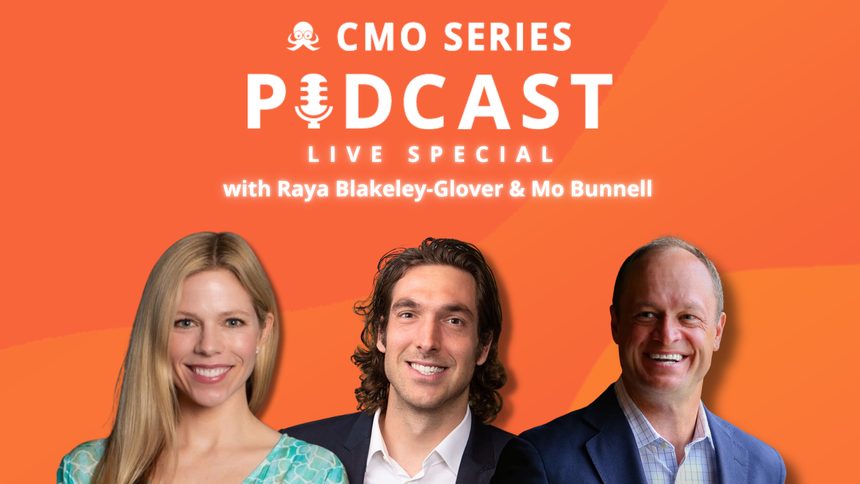
In this special episode of the CMO Series Podcast, recorded live, Charles Cousins explores the next era of cross-selling alongside Raya Blakeley-Glover, Director of BD, Sales & Clients at Bird & Bird, and Mo Bunnell, CEO & Founder of Bunnell Idea Group. The webinar reinforces the importance of making cross-selling client-led, measurable, and scalable, for communication to win relentlessly.
Raya provides practical advice on how real progress starts once firms stop treating cross-selling as a vague aspiration and build the client-focused systems that allow lawyers to act. She emphasizes replacing hesitation with confidence through structured support, such as the sales resource and training app that Bird & Bird developed in-house.
Mo broadens the perspective by framing cross-selling as a progression from simple presentations to structured programs that drive long-lasting change. He dives into his “Give to Get” concept to shift cross-selling from awkward referrals to meaningful, client-focused exchanges that build momentum.
Transcription:
Charles: Hello and welcome to the first CMO Series event of the year. In today's session, we're gonna be kicking things off with a topic that is front of mind for many marketing and business development leaders, and we are very excited to be joined by two fantastic guests, Raya Blakeley-Glover and Mo Bunnell. Cross-selling is the cheapest, fastest and easiest way to grow revenue. This is something that Sadie Baron told us last year in a conversation around cross-selling, and so we went out and we went to find out if this sentiment was shared with other marketing and BD leaders. It probably comes as no surprise, but this opinion was shared by many, and we conducted a piece of research with Hayhurst Consulting that focused specifically on law firms in this case, and 75% of managing partners and CMOs that we spoke to said cross-selling represents the biggest opportunity to grow revenue. And I was also on the recent PM forum, Meridian West Marketing Benchmark Study webinar a few weeks ago, and they were saying a similar thing. I think that they had around 70% of firms saying that this is a big area for growth. Many of you will also be familiar with Heidi Gardner and her work on smart collaboration, if you are not make sure you go and check it out. In her work, she talks about how collaboration and cross-selling is not just great for revenue, but also helps support client retention. So in summary, clients that use multiple practices within the same firm are significantly more profitable and are far less likely to leave you.
There's also some great research from O-Shaped, again go and check out their research. They highlight that many firms' current approach to cross-selling isn't that effective. Effective cross-selling comes from deep client understanding and trusted relationships, not from add-ons. They talk a lot about the, ‘would you like fries with that’ approach not being effective, but put simply, the best cross-selling happens when clients feel understood and helped and not sold to, and hopefully today Mo and Raya can dive a bit deeper into the best ways for firms to approach cross-selling in a way that resonates with clients.
Now the idea of cross-selling is by no means a new concept. Up on the screen is an article from the Law Gazette in 1995. The fact that we are still talking about this nearly 30 years on, and the fact that there's over 200 people registered for this webinar suggests that maybe no one's quite cracked this yet, but hopefully today we can share some effective approaches, some effective processes, and hopefully some technologies that can help in this space. A little bit from me, I'm Charles Cousins from Passle. We work with over a hundred different professional service firms, lots of law firms, consultancies, and day-to-day we are fortunate to work closely with the marketing and BD teams from many leading firms. So we get a good idea of what folks are up to, particularly in areas of thought leadership, digital and cross-selling. Professional service firms have been using our Thought Leadership Suite for many years to create best in-class thought leadership hubs, raise profiles, build credibility, ultimately staying front of mind with clients. More recently we've launched CrossPitch AI. This is a tool specifically built to help drive better collaboration and cross-selling using the power of AI. And after our discussion with Raya and Mo, I'm super excited to give you a quick two minute look at what our brilliant development team in Oxford has built, and show you how law firms are using it to drive better cross-selling and collaboration, but more on that later.
So without further ado, let's get things started. We do have a chat box, so do feel free to post any questions and we can answer them as we go. But it gives me great pleasure to welcome to the virtual stage, Mo Bunnell and Raya Blakeley-Glover. How are you folks doing?
Raya: Great thanks, Charles.
Mo: Yeah, excited Charles. I'm excited to share things today with Raya, she's got a great perspective. It's gonna be fun to really help people understand what to do to actually make this work.
Charles: Brilliant. And I was saying just before this, lots of people on this call will probably know who you folks are, so maybe we don't need to do a full intro, but maybe just a quick, brief overview of who you are, what you do, and maybe something that people who don't know you, or that something they wouldn't have been able to find out by googling who you are. Maybe you go first Raya.
Raya: Know you everywhere, Charles, thank you for saying that. So hi, Raya Blakeley-Glover. A little about me, I'm a happily reformed lawyer myself. I practiced commercial and white collar criminal litigation in New York in big law for about seven years before seeing the light, realizing that my true passion was in business development, and have never looked back. So, I moved over, I'm originally from New Jersey, I'm American, I moved over to London about 10 and a half years ago, which is also the time that I joined Bird & Bird. Today I lead the firm's business development, sales and client function. I'm very passionate about two things at our firm, one is helping our lawyers get great at selling and to love it, and the other is to help my team become client facing. Something you might not know about me, I was thinking about something, I was gonna say that I'm a big New York Mets fan, that may not resonate with the English contingent on the call today, but it wasn't as interesting as the other fact, which is that I once dated the winner of American Idol. And I'm not gonna say who, and this was obviously like 20 years ago, but that's my little hidden fact, you would not find that on the internet Charles.
Charles: That is a great, that is a great one. That is a hard one to follow, Mo, what have you got for us?
Mo: I know, I know. Raya, come on I should have gone first. Yeah, so professionally I was an actuary, not a lawyer. So now you can think of recovering lawyer to recovering actuary teaching cross-selling skills, I think that's funny. But almost exactly 20 years ago today, it's like within a few days, I started Bunnell Idea Group. And since then, we've trained over 60,000 professionals in everything around business development, relationship development, doing things where everybody wins at every turn. And I think that's really important, authenticity, being helpful, but doing it in a way that actually converts to business. And not only have we worked with a big chunk of the Am Law 100 Magic Circle firms, law is our biggest sector, but we also work with tier one consultancies, we work with Goldman Sachs, we work with Sotheby's, the hand art auctioneers that have to call billionaires to consign that next Rothko painting. Like it's really interesting the world of where people have one foot in an expertise and one foot in relationship development.
How do you do that? Well, that's where we play. The thing that nobody knows, Raya, I was trying to think of something interesting. I think this is a good one. When my wife got breast cancer and came out of the other side, her body still beat up. She decided that she wanted to run in the World Championship Pack Burro Race in Fairplay Colorado. So imagine starting at 10,000 feet and you run with a burro 15 miles to try to, the race is like to try to simulate what it would've been like in the 1800s having gold strike and having to run to town and stake your claim. That's what, how the, like the idea is. And to support her running that, when her body was obliterated, and she did it. And the funnest part about that was near the end as she's coming back, leading her donkey Piper, you know, I realized that when people were crossing the finish line, they're didn't know who the person was. There's about a thousand people that come to watch this event and sit at bars and things like that. So, I ran around and told people Becky's story and when she came across the finish line, a thousand people were chanting her name and a whole bunch of burly guys with beards started running along with her to finish with her. And it was one of the most magical moments of my life. So there you go, there's something nobody would know that I, that's probably one of the most proudest things that I've been part of.
Charles: Ah, that's a really nice story. That’s brilliant. And I guess people on the webinar, you're probably in no better hands than Raya and Mo. We've got Raya's point of view from being the boots on the ground in a big international law firm, and then Mo's oversight over all those different professional services he's worked with. But maybe to kick things off, I'd love to dig into your journey Raya, and when did cross-selling become such a critical part of the equation for you?
Raya: Sure. So I think the stats that you showed at the beginning are so interesting and sadly not surprising. I think law firms innately understand that we're not very good at this and that we leave a lot of opportunity on the table. And there's a, there's a lot of reasons why that is, which I think we're gonna dig into a little bit later. For us at Bird & Bird, I think cross-selling has been a natural evolution to the journey that we started, where we want our BD team to be strategic and client facing. So a really great way to do that is by being the people that really look into these relationships, dig into the data, bring those opportunities to partners, and then help them think about tactical actions they can take to clients. So, it's something that we've been trying to chip away at for a while, but we had the opportunity about two and a half years ago, our firm launched its first ever five year strategy. So we had a strategy before, but we had our first new CEO after 26 years with the same CEO. So part of the new CEO coming in was saying, let's have a strategy for the whole firm. And as part of that, we had a very ambitious growth target and this is publicly available information that we, and part of it was deliberate to publicly hold ourselves accountable to say we wanted to try to double the revenue of the firm over five years. That's a big target. That's gonna require a whole lot of things done differently. So I think as part of that, understanding the potential that we had within existing client relationships and how we unlock that was very important. It coincided with, for us, I think there was a feeling of the partnership of going, if we're gonna do this, we need to have tools to do it. And this was around the same time that the activator data and research was going on. So Bird & Bird was part of this research set, which was done by a consultancy called DCM Insights. The first bit of research that they did was into decreasing loyalty in professional services in sort of our client's buying behavior.
The increase of professionalization, I mean really just it's harder out there, which again is something we all feel, but really being able to show the partners the data behind that was very powerful. And at the same time, the second piece of research, which many of you will be familiar with, was how do some people stay on top of that given those very difficult conditions? What do they do that's different? It's a mindset, it's habits, and it's called activator. So, because we were part of the original research, and my team had already brought in-house a lot of our business development training, so we were very familiar with a lot of the different training provisions out there. We felt that the data backed approach to activator was just what the firm needed and with those big ambitious goals. So we decided to bring that program in, um, but to do it a little bit differently, to do it at scale. So we decided to give the opportunity to our entire partnership to take part in the program and to make that doable we got trained as activator facilitators to be able to deliver that to the business. I think that was really in the last year and a half when we got really serious about cross-selling, because activator has unlocked that mindset for us of, our partners just tend to not want to bother their clients, and it's not coming from a place of ill will at all. But actually, they need to be more confident, they need to hear the voice of the client that clients are saying to us, you're not meeting our needs, you're not reaching out proactively, there's things that I need help with, and at the same time that last bit of research, right, showing us this is a great way to increase client loyalty when we know that as an industry client loyalty is declining. So that's where we are on our journey. And the past six months or so, we've been on a huge project to create a culture and infrastructure to support cross-selling, which I'm gonna talk about in a little bit.
Charles: Yeah, and it sounds like with the programs you've launched, you've given, you've had the desire to do it and it's been set out in your strategy, and now you've got a bit of a toolkit to help the lawyers actually go out and do that. And Mo from your point of view, I'm keen to hear about what you think the industry landscape looks like. So based on your experience, how have you seen cross-selling maybe evolve over the years and your sort of take on where the industry stands at the moment?
Mo: Yeah, no, I can definitely help with that. It's clearly a priority and I think from our perspective, we not only get to see law, but we get to see consulting, we get to see financial advisory, we get to see investment bankers, we get to see expert witness firms, all these firms that we work with. And what's interesting is a lot of the other industries are a little bit farther along than law. What I love about Raya just talked about is being able to take a system, you know, we have a similar system to DCMI, but to take a system and roll it out at scale. Having frameworks, having science, having stepwise processes saying this is exactly how you do the thing, can really help move a firm forward, practice area, client, team, firm or whatever. And the trends I'm seeing Charles to get real precise to your question is, 10 years ago in law I felt like people were doing presentations. There’s sort of like three levels you can do this at and I think of these as the three Ps. The first P is presentation. There was a presentation at a partner retreat for 45 minutes. Hey, cross-selling is important. Let's do it, yay. You know, like that was like level one. It's like 30 minutes. Level two is like a project. Well, now things get a little bit interesting, still in law a bit cutting edge to even do this as a project, but there you might extend the timeframe in your mind out to three to five months. Not a half an hour, but, hey, maybe we're gonna use training and embed coaching in that, have internal external resources. Really think about how we move the needle for a specific group of people. Maybe it's a cohort of 20 people at a time, whatever it is. But we're gonna take three, five, maybe six months, and we're really gonna move things for that group. That's great. But here's the next p, the last one, and this is what few are doing. Raya is doing it, which is just total kudos to you Raya, is to think of this as a program. And that's where you're thinking and hey, this is culture change. This isn't just a couple tools and tactics or say it this way, not that way. Those things help for sure. But we need to think about three to five years, 'cause that's what it's really gonna take to get this done. So, the trends I'm seeing Charles go from, you know, the old days was, hey, let's give a presentation. Some firms are still just at that level of presentation of talking. Projects better than that. Program's the way to go. And that's where it's, we're still a little bit on the cutting edge of that, but I'm like, anybody wants to talk about that, I'll have a call with you and talk all day long, 'cause there's ways to do it, right, there's ways to do it the way Raya is doing it and have that impact.
Charles: Yeah. Well that, that sort of making it into a program and changing the culture, that leads nicely onto what I wanted to cover next was, how do you get that sort of culture and that right framing of it. So in our prep Raya we talked about how you had to reframe it. And for many, cross-selling does have a bit of a stigma. I mean, I've chatted with folks that say we don't like using the word selling. But how do you move past those initial objections to build a culture that actually supports and encourages this sort of behavior that you want?
Raya: So it's so interesting that there's still so much of that innate dislike of the term selling in law firms. I deliberately added it to my title because I wanted it to be so clear that we love it and embrace it because good sales, when done right, is finding out what somebody needs and helping to give it to them. And it's really trying to get away from that mindset of that good sales is or being salesy is pushy and aggressive and not listening and pushing your own needs, so the, ‘do you want fries with that’, right? Pushing on more and instead reframing it as, a client has a need and I wanna understand what that need is. And I think beyond the objections to the word selling, and this was one of the funny things of starting the project here. It was an office space moment of having a two hour meeting where we debated calling it cross-serving, cross-selling, cross-pollination, and what would be most palatable to the partners. And, and what I just kept telling them is, it doesn't matter what you call it. You just need to do it. So let's focus our time in this program on how we're going to do this here. And I think some of the things you need to do first is identify there are specific barriers that partners and lawyers can have in their mind to cross-selling. So this is the, I don't have time, I don't know what to say, I don't know the right people in the organization, so if I only deal with the HR director or with the IP team, you know, they can't cross-sell into the wider business, and my contact won't be interested. Or I'm gonna do this, and is it gonna be recognized and rewarded.
So I think from a culture perspective, acknowledging that all of those things can be barriers and all of those things can be overcome, right? So not, you have to address them. From our perspective, we tried to tackle that in a couple of ways. And the first was to have management really, really strongly behind this. So we have not only an ex-executive committee sponsor who is co-leading the project with me, but we talk about cross-selling in all of our strategy broadcasts. We are trying to make it very clear and known that this is coming down from management that we want to recognize and encourage it. And in the broadcast, we actually took each of those objections in turn and broke them down very specific to our firm. So for example, saying, I don't know what to say, how do you learn about the firm and what people do? Let's talk about that here at Bird & Bird. How do we learn about it? And once we know about it, how do we talk about it? Could we reframe it, so it's not us talking about something we're great at, but let's think about why is this valuable to the client. Then we looked at the other sort of management structure of the firm, so people like heads of country practice and sectors, and we've been running interactive workshops with them on cross-selling. We do hear some challenges and complaints, but the whole point of those workshops is to always be solutions focused, what do you need in your management role to help you do this effectively? So we do use data, and I'll come back to data in the infrastructure point. The data on the culture piece is about showing when we get this right, this is the effect that it has on the client relationship and the client loyalty. Internal comms, any change program, internal comms, absolutely massively important so that people feel that that's very top of mind and it's a great way to celebrate those successes and, and recognize it. But underpinning all of this has to be the voice of the client. And I think when people understand that this is coming from our clients saying we have needs, and they never say we hear from you too much. They never say that. Ever. They say, we need help with this. Other firms are talking to us more, they're reaching out more, you know, where are you? And this is not unique to our firm. So I think we tried really, really hard to give the voice of the client that voice out into the firm so people could hear that this is what our clients want and need from us. In terms of infrastructure, this is embedded in the BD team that it's our job to be the cross-selling champions and pipe up with, oh, have we thought about, and constantly thinking about introductions that we could make.
Bringing that client intel into conversation, so have we asked the client about, and trying to be the people who bring this up on every occasion. We obviously have our BD training program, which is not just activator, we also created an in-house, always on Bird & Bird sales app, which has lots of training around this as well. And a full associate program, one-to-one coaching. We try to facilitate small groups of partners coming together who don't necessarily always work together because that's just, sort of cross-selling magic, getting them in the same room. Of course, we're looking at things like, how can we use tech so that it's easier for them to know the things that we're great at, because it's a common refrain in law firms that there's just so much that they, it's hard to really separate that. And another thing we've done is create an insights library. I really would say it's actually a sales script library, but we don't call it that, so they'll use it. And that is to reframe some of the things we wanna talk to clients about in the client's voice and speaking about it from a client lens. And I would say as well making sure that all of the amazing tools and thought leadership we have is at their fingertips because those are great prompts to get in touch and start the conversation that can lead to cross-selling opportunities. And Passle for us, is a key part of how we do that, again, at scale. And the last piece on infrastructure, is just, I think, support for lateral partners. So we're really excited about a program that we're doing jointly with partner HR to make sure that we're mapping all of those opportunities before the lateral even joins. We're priming people in the business to be ready to support them, and then we facilitate those meetings so it's not just up to the goodwill of people, we are sat in those meetings saying, you know this client, when are you gonna introduce them? Let's get the meeting in the diary before we leave today. And I think just really, really having those specific action points is incredibly helpful.
Charles: Yeah. No, that's, that's fantastic. And it segues quite nicely onto what I wanted to speak to Mo about your approach and how can you support, something you said Raya about often folks are saying they dunno what to do or they dunno how to do it. And we talked about, Mo, the process that you use, the give to get concept. So I thought maybe this is probably a good time to walk us through that. And whilst you're answering that, I'm gonna look at these questions that are flying in and then I can ask them back to Raya.
Mo: Yeah, yeah, yeah. That's great. And I think Sam or Natasha's gonna pop a slide up. I think one thing that Raya said that's super interesting, in fact two things, Raya, it's so brilliant and I wanna like pull this to the front so that everybody hears it loud and clear. Number one, starting with what the client needs. Raya, I think you used the word voice of the client. It's so easy for us to start with our solutions. Oh they need to do litigation with us, we've never done litigation, they need to do something else. And that's the wrong way to look at it, Raya, you just nailed it, you wanna start with what the client needs. The other thing, Raya, that was so interesting about we said it 'cause it was rippled through a bunch of times, is you're making things easy for your lawyers. Just making it rock, here's the script. Maybe we won't call it that. Here's the insight. Here's the thought piece. Here's the thing. So what we've got on the screen now is one of the ways that you can start with a client and make it easy. Those are your two critical things to success, and because what a lot of people do is they'll say, oh my gosh, we need to cross-sell, we need an introductory meeting. Hey, I've got an expert, I think you need to meet them. The problem with that though is the bar is really high for whatever lawyer leads the relationship. That client relationship attorney, whatever the title is, what they're really thinking about underneath is, I'm afraid somebody's gonna mess this good thing I've got, up. So if I do transactional work, like I don't know if I wanna bring the antitrust people, 'cause I, you know, the merger control, 'cause I'm afraid they're gonna mess it up. Or I'm afraid to bring the IP people and I'm afraid they're gonna mess up. I got a good thing going. So there's a trust issue. There's also a barrier in like, figuring out what to talk about. Like if I do transactional work and I'm in the US and healthcare is a regulated industry and that's what I focus on, that's enough to keep on top of myself, like it's hard for me to know what somebody else's expertise is and bring it in a way that's meaningful to the client. So what we can do to A, start with a client, and B, make it easy, is not focus on a big win. What most people try to do with this framework we have up on the screen is leave it up to the lawyers to figure out what is the introductory meeting that could lead to us bringing in work. That's like skipping from step one to four. An easier way that lowers the barrier for the lawyer is to educate them on, what would our internal expert do on their dime. It's gratis, what's a 30 minute coffee chat on the seven trends we're seeing in antitrust and merger control in the US given the new administration. That's interesting. What's a three hour workshop that we can lead around the seven things you need to do to get ready, to take your tech company to have an IPO. Maybe it's an IPO readiness checklist kind of framework.
Well, that's interesting. So if we can package up the 30 minute to three hour thing we would do on our dime, let's call that a give to get, and then we can educate from one practice area to another. Say I'm the IPO readiness lawyer, I love taking companies to IPO and doing that kind of transaction work. If I can say, hey, I've got this seven step framework for an IPO readiness checklist, hey, litigator to organization that was, you're working on their IP litigation, they're thinking about going big time to have an IPO, maybe getting on the nasdaq, would it be helpful if I walked the CEO through this IPO readiness checklist framework? Happy to do this on our dime, it takes about an hour to do. Well now I've offered a give to get to that lawyer. It's really clear when you offer specifics, you get a yes or a no right away. It's not vague and things just happen faster, so there we're packaging up these give to gets from one practice area. We're educating other practice areas on what they are. We're using specific phrasing, again, making it easy. Hey, just say, call them up and say, would it be helpful if we ‘blank’, then you offer the offer, the give to get, and then those typically lead to small wins. Maybe it's a small matter, a kick the tires kind of matter, something smaller, and then those lead to big wins. So if we can boil these things down into simple steps, educate all of our people that we're cross helping, not cross-selling, we can lower the barriers down and just get more throughput. So that's this idea, I think we've got one more slide after that, which is sort of like a masterclass on give to gets, and I'll just cover this super quickly. This is from some research by Robert Chaldini. All of our stuff is steeped in research. He's the worldwide expert on influence and he found six things that influence the human mind. What's important about what's on the slide now is these are the give to get, the offer of helpfulness at no charge is the only thing I've ever seen, ever seen that can get every one of these six in our favor. Every one of them. So I'll go through 'em super fast. Likability, we do more business with those they like. You're effectively buying time with the decision maker. You introduce that other expert, that other lawyer, now they're getting to spend time with them. They're gonna stumble into commonality. Commonality correlates to likability. Reciprocity. We tend to wanna repay those who give to, so just the offer of doing something on our dime will trigger reciprocity, whether they accept it or not.
The research shows they already wanna repay to us, even if they don't accept the offer. Scarcity. Most people shoot themselves in the foot and say, it's no big deal if we offer this at no charge. You actually don't want to do that. If your lawyers are really busy, they probably are. You tell the client they're busy and then you say, hey, Jane would still like to do this for you even though she's slammed, she's our global expert in this area, you're really important to us. So we actually wanna lean into scarcity if it's true. Authority. They're gonna see our best. Choosing a new lawyer is very stressful. We tend to trust authority. This is switching from talking about what we do to them, seeing what we do. We're seeing the movie instead of the trailer, we're tasting the wine instead of hearing the vintage, hearing about how great is totally different to experience something than hear about it. They're hearing their authority. They want to hire us. Social proof. This lets us get all the decision makers in the room. We're offering tons of value. So maybe we know one person, this lets us know 5, 6, 7, whatever. And then commitment. We tend to want to go down paths we start down, so the very, the very, action of accepting an offer and starting to listen to and get value from a lawyer, even if it's no charge, is actually a significant step towards hiring much more than we generally think about because of the, we tend to keep going down paths that we start down. So Charles, that was like, super fast. We usually cover that in an hour. I think I got it in like four minutes. I don't know if that's helpful. Is that where you wanted to go?
Charles: Yeah. I think it's brilliant and it's that, one thing I love about working with you, Mo, it's taking that science-informed approach to BD. So I think it resonates with a lot of folks.
Mo: Yeah. Can I add one more thing, Raya, I'd love your thoughts. Well, one of our clients did, and this was outside law, this is one of the big three brokerage and human capital consulting firms, three big ones in the world. One of them we worked with a lot and they packaged up all of their give to gets in one major practice area globally. It turns out there're like 90 of them, just in one practice area. But by putting them in one internal database and they actually stratified to them, like 70 or so of them, anybody could offer at any time without even asking for approval. And then like, 20 of them were a bit heavier, so you needed to ask like a global, like a local practice leader or somebody like that, or something like that. But basically what that let them do is structure training around, hey, these 70 or so give to gets, you can offer it to any of your people at any time. So you didn't have to be the expert in it, but each would have like a one pager that would say, this is what it is, this is the value, this is exactly the paragraph that you say, would it be helpful if we ‘blank’. And then what would happen is somebody could be going to a lunch, they could just memorize like three of these, have the lunch, not be the expert at the area, make the offer and then pull the right experts in. If there was a, if there was interest, and it just streamlined everything when they sort of cataloged their give to gets. Raya, your thoughts on that because I think you've done something similar?
Raya: Yeah, so I think we were experimenting, so it's funny 'cause again, law, we're always like running to catch up with some of this stuff. And I think even where, where we've tried to push the lawyers is on having some of our content be behind a wall, right? So you have to ask for it. And It's been amazing, and I think Nancy has said in the chat, it helps because you can track it. And this was what we were able to say with, so our tech predictions report, which is one of our biggest pieces of content, they just wanted to immediately sort of put it up on the website, blast it out in the newsletter. I said, let's just hold on. You know, we actually used this one as well. We did client interviews during our tech law day, so it was really informed by the topics they wanted to talk about, so let's just hold off and let's see who comes to us. Low and behold, lots of them did. And what an amazing data set that we can then use for real follow up, as opposed to an email blast that really, of course we have that data, but who's dealing with it when it, you get into the data at the thousands, whereas a list of a few hundred well-qualified leads is absolute gold. I would love to get to the point where we actually even think about some of those things being chargeable. So we have one e-learning module that we have just started to think about this with, but I would love that idea as well. I think to your point, it goes into that scarcity and says, this is worth something and it's special, and even if you don't actually sell it to anybody, saying to a client, we normally charge for this, but for you, we're gonna do it for free. It's a great, I think you call it, give to get. I love that.
Mo: Yeah. Yep. Yeah, a hundred percent.
Charles: Great energy on the chat. Yeah, keep the comments coming in. There was a question that popped up earlier, Raya, it was about you mentioned an app you were using for, as a resource for your sales training?
Raya: Yes. So it's not something we're using. It's something I created.
Charles: Oh, fantastic.
Raya: It's a Bird & Bird sales app.
Charles: Oh, okay.
Raya: Yeah. I created it and am very happy to follow up with Kinga who asked the question on what we did. But roughly what is in it is, it's on demand Bird & Bird sales training. So we have little micro videos, so you might watch a quick video before you go do a pitch. There's BD planning templates. There's some of the great stuff Mo was just talking about some of the behavioral science behind BD, articles, all kinds of stuff. We're working on making it interactive so the lawyers could actually use it as an interactive BD planning tool. But yes, that's a Bird & Bird in-house creation.
Charles: Oh, fantastic. Well, you mentioned just then about that sort of outreach and giving the lawyers the tools they need to do that. When we did our prep for this, you talked about client listening and using marketing insights as part of that outreach. How does that work in practice?
Raya: So it was really important to me that everything we did in cross-selling was responding to client demand. At the end of the day, client-led cross-selling is pushing on an open door, and I thought we had an opportunity to reframe our client listening function. So, I'm really excited about this because this is brand new and so far it's, it's working really well. So we wanted to move from a person who runs a survey and does some interviews, to someone who can teach everyone in the business how to get client feedback and then how to act on it. And also to combine that with market intelligence, so access to the various market intelligence tools we have, to prime lawyers to think about opportunities that they may have and to give them reasons to talk to clients. So those would be anything from mergers and acquisitions to just, you know, in your industry, we know this is affecting clients who are like you. So we found someone from outside of law, she has joined it is really exciting.
We have two partner sponsors for the program as well, which was important because they both opened up their client relationships to her on sort of day one. And again, getting that buy-in to say, two very amazing partners in the firm believe in this and can see the value in what this can bring to us. Again, only a few weeks in, and there's so much insight there, so we were able to do a post pitch debrief and really get to the heart of why a particular practice, we kept getting opportunities to pitch, but we weren't winning any of them and understanding that you know, is it price, is it, you know, what is sort of the mechanism for that? And I think the really, really key thing for me is what do we do with the intelligence that we get? And you can give it to a client relationship partner and hope that they spread that out far and wide, but I just don't think that's enough to really facilitate client-led cross-selling. So, what we really want to do is make sure that there are specific points and that she'll be client facing, so some of this will be that she may need to jump on with the client and deal with some of this, and make sure everybody at Bird & Bird working in that client team knows this is what the client told us, and this is what we need to do to action that. So that's obviously, yes, that's cross-selling, but it's also client service and making sure that that experience of working with us is great. I mean, there's nothing worse than a client feeling like they've given you time and given you great feedback, and then it doesn't go anywhere. So making sure we do something with the intelligence that we get is really at the heart of that program.
Charles: Yeah. And I'm just conscious of time a little bit, so I'll probably just move on to another question about the strategy and execution. And maybe this touches a little bit on culture as well, Mo, but handling the sort of detractors. So, Mo, you are famously a very positive person, but every firm will have their skeptics and every firm will have partners that maybe refuse to engage or maybe go as far to actively try and derail initiatives. What's the best way for sort of dealing with resistance?
Mo: Yeah. I'm so compelled to say something positive right now. Charles, you ask the best questions, Raya, you're the best co-collaborator I've ever worked with. I just love how positive you both are. Sorry, I couldn't help it Charles. No, I think handling detractors, there's actually a counterintuitive method that works unbelievably well and most people don't know about it, and that is don't engage with them. So, but seriously, one of the mantras we use in our overall change management effort, so we're thinking, hey, over three to five years, again, we're thinking programs, not projects, you know, programs over projects and presentations. Over three to five years, we're gonna change the culture of an entire firm to be more cross helping, cross-selling, more business development centric, if you will. Whatever you wanna say, but you, gosh, you're not gonna get there right away. So we're gonna think big, but we're gonna start small and we're gonna scale up. Think big, start small, scale up. So the way you actually change the culture of an entire firm, exactly how Raya is doing it, is you have a destination, you have a very specific goal you want to get to, but you start with like 20 people. And one of the ways that we do that, we call it the red velvet rope approach, and this works incredibly well. If you want 20 people to be in a cohort, your very first cohort, you wanna optimize for the willing, you wanna optimize for excitement for people that really, really want to be there. So the way that you can do that, you don't have to, but this is a great way, is if you want 20 people in a group, go through what we call a nomination application process.
So nomination, you go out and you work with practice leaders and others, 'cause obviously you're gonna want cross discipline 'cause the whole point is cross-selling, so you go find 40 people about double the people you want in the cohort, go out and nominate them and ask them to apply. This is a five minute, 10 minute phone call for somebody saying, hey, we're nominating you. We're only nominating about 40 people. You don't have to attend. Let them off the hook. Really easy, easy off ramps. Let 'em off. They, if they're busy, if they're headed for trial, if they can't make one of the dates, whatever, you're like, hey, no big deal, you know, you don't have to apply. We've got more than, we're gonna have more interest than we can handle for this. Scarcity. People want more of what their less is. We typically find if you nominate about 40 people, about 35 will apply. You're gonna have a few people that were busy, they're on holiday the day of the second session, whatever, headed for trial. And then of those 35 that apply, you accept the best 20. And we've got four specific questions that I can share with you if you want on like, what are open-ended questions that are great application questions. Well, once you get to those 20, this is the hard part, you actually have to go into it knowing this, you're gonna disappoint 15. And that's actually really important. When you slightly disappoint those 15, the 20 that get behind the red velvet rope are excited to be there. They don't miss a meeting. They don't have client things that pop up. They're a part of every step of the journey. And then the 15 people that didn't quite get in, they're knocking at the door. When's the next one? What's the next one? When's the next one? And then you just go out in concentric rings from there.
Charles: Just on that Raya, you, you just gave me a high five on the chat. Did you have something to add?
Mo: Yeah, yeah, yeah.
Raya: Well, so I'm gonna do two things, Mo, which is one to say, 90% of what you just said, I need to absolutely echo. And one of the things we really tried to do in rolling out activator, for example, is make sure it was never remedial and that we built hype around it so that people felt that joining that program and investing in their BD was something special. The only, the very first thing you said about not engaging the skeptics, I'm gonna throw you a slight challenge because I love skeptics because the skeptics are thinking what others are thinking, but they're gonna be the ones to voice it. So I want the vocal skeptics. I want them to tell me what the issues are because I think I have a good answer to everything that they're thinking.
Mo: Yep.
Raya: But if they don't voice it, especially with lawyers, they're usually thinking about it anyway. So I like the skeptics. I like to get that out. Address that, you know, hit that issue right then and there. I do think there's gonna always be a subset of the non-vocal skeptics who are never gonna be convinced, and I would say, yeah, forget about them. We have enough people who need and want what we do. That that little minority's usually not gonna hurt you very much. And when I say vocal skeptics, I also would think the people that will come and complain to you, they're great, but the ones you know are complaining to everyone else. You want to go and somehow get them on side and go and have that tough conversation. Like, tell me what the problem is with all of this, because they're very influential. And even if you can get half of them, that really helps in terms of that overall culture and infrastructure.
Mo: Yeah. Yeah. And to tidy it all up by not engage, I didn't mean we weren't gonna talk to them at all, bit strong with that, I meant more like they don't have to be in the first group. A lot of times people are optimizing for who would have the biggest lift. We're gonna get to them later on. But yeah, for sure engage them, ask, give them a draft plan, see what they say, tweak things, get their input 'cause they have lots of pull. Whether or not they're a practice leader, they're usually the kind of people that have influence. But that said, not everybody has to be in the first cohort, and then you grow out from there.
Charles: Yeah. Well, that leads nicely onto my next question all around that scale and achieving that. So you've got your first cohort, you've got, you've landed. How do you then expand, how do you scale at the size of Bird & Bird where you've got 1600 lawyers? What does that look like? What are the best practices?
Raya: You nearly kill yourself. I mean, I think, you just really have to think of it as a team sport. So you know, bringing in BD and RBD team is, we spend as much time in year one training partners as we did training the rest of the team. So that live in the moment, you can have the best training of your life for a day or two, and then you go back to the desk and you're busy and you fall into the way you used to do it. So the BD team can be that catalyst of, oh, I have a pitch. Okay, well, what should we do about that? Is this work you wanna win? Have you offered a pre-call? Can we provide some research into what's going on with this client? Can we think about our work winning strategy for this? We want BD to always be that prompt in those moments. So if they're attending an event, you know, really pushing them on that. And so I think having it be a team sport, also thinking about associates. So a lot of the BD conversation is focused on partners and I really try to encourage them to bring their associates along with them to sort of see how they do it and encourage them to do it. Increasingly in client organizations, there's a lot of lawyers who are also the same sort of age as the associates, and they can start really building those relationships and having a different line in to some of the partners anyway.
So I think bringing in BD, definitely leveraging the associates. I absolutely agree with Mo though, that you have to start some with some coalitions of the willing and have your champions and advocates. I don't think it's a bad thing to occasionally call in a favor and say to somebody influential, go tell everyone how great this is because that word of mouth is really important. Honestly, data. Data, data, data. So we tracked everything that we were doing with the launch of this program and we just keep showing everybody that it's working. And I can see the level of skepticism has just plummeted and that people are actually saying, can you please help us with this? And that is a fundamental shift in the last year and it is really exciting. But they just needed to see that it works and they needed to see that in cold hard figures. Listening to the challenges as they arise and not being afraid to have those difficult conversations and as Mo put in the beginning, really thinking about this as an investment and a program.
I was thinking about, we are on, sort of, our financial year ends at the end of April and I was thinking of saying to my CEO, I'm not gonna redo my objectives for next year because my main objective was cross-selling and I don't think we should be done on that. So bold move, no new, no new things because we need to crack this and we need to get it right. So it's an investment in more than a short amount of time. And I think firms that really get that and invest in it will rise above. I wanted to sort of shout out firm and, a person who I think is on the webinar, who's done something amazing in this space. So one of our industry icons, Darryl Cross at Norton Rose, he's just been promoted to, I think, the legal world's first ever Chief Collaboration Officer. I mean, how cool is that? But this is that institutional investment of saying this is not a nice to have, this isn't a side of the desk project, this is fundamental to what we do and how we do it and to how we meet our clients' needs, and we're gonna put that weight behind it. So, absolutely awesome for Daryll, and I can't wait to see what he does. And I really hope this is another moment that sparks change within the industry about firm's investment in this. Yeah.
Charles: And we had a fantastic comment from Darryl in the chat about skeptics and if you can get one skeptic on side, then you know, they're a great advocate. A little bit like what you said, Raya about calling in favors. If you get the right people talking up your program, then it can go a long way. Well, I'm conscious of time so maybe we'll start to try and wrap things up and lots of our sessions we like to ask our guests if there was one key takeaway that you can tell folks that they should go and do when they're back at their office either tomorrow or next week, what would that one thing be? Maybe we'll start with yours, Mo.
Mo: Yeah. Let me give you three. I'll give you three.
Charles: Okay, Go for it.
Mo: Well one is, and I'll say this out loud, and I'm happy because of our relationship with Passle to share this with anybody, but we've actually documented every single bit of our change management process, all the stuff we talked about into a little document called Winning More. It's about the size of two chapters in a business book. I can send that to anybody if you want 'em. So these three pro tips are in there. There's no charge for it, and I'll pop my email in the chat if you want to just email me. Three pro tips. One is cultural stewards. Those skeptics that Raya talked about. One of the ways you can incorporate them in the program is actually convert them from participants to co-teachers. So, sometimes some of your best as you start to get the input, put them in the room, but tee them up as helping facilitate how to do this really well. It isn't for everybody, but it's one of your pro moves you can do. The second thing I'll share out of the three is scarcity.
One of the death nails of a program is to go to everybody at first. The trainings and this kind of thing is anytime anything's mandatory, the initial knee jerk reaction is, I don't want it, but red velvet rope. If you think big, start small, scale up. If you create some scarcity about that first group, second group, third group, and grow out from there. You can actually get to everybody as fast as you would've anyway, but by flipping it and making it a nomination application or only a few get the cool thing, everybody wants the cool thing and you grow out from there. So that's the second pro tip. The last one, Raya mentioned, measure. I think in marketing and BD roles, we feel like there's a lot of things that are measured, I don't think we communicate the successes enough. So once we measure it, just communicate over and over and over again. Don't forget, that's the result we got. That's what so-and-so said that doesn't like anything and she really liked it or he really liked it. These are the financial results. These are the process. These are what's new in the pipeline, like just over and over in different ways, communicating and measuring incredibly. So cultural steward, scarcity and measurement communication.
Charles: Brill. And then from you, Raya?
Raya: So obviously I can't just do one, going to stick with our overachiever Mo here. I think the first thing, and this is actually for a comment that Adam put in the chat, which is go try this yourself, because the lawyers are more willing to take your lead when you say, look, I can do it. So you can do it. And it helps you be empathetic to why this can be challenging for lawyers, so that when you're helping them say, you know, I get it, I'm coming from a place of empathy that I'm not judging you for not being great at this. So, take an opportunity to try this for yourself. So our ways in as legal MBD professionals could be through legal ops. It could be through client relationship and account management. It could be through client listening. It could be at events, or we can go out and bring in some of our own leads and clients so that we can demonstrate to the lawyers that this isn't that hard. Which leads me to the second point, which is that we just have to follow the Nike approach and just do it, right? We have to get the lawyers to stop thinking of this as a huge mountain to climb and that it is just better to go out and talk to your client about it today. We can help them by giving them great questions to ask so that they're not just going to the client, what's keeping you up at night, but much more insightful, informed questions. BD can give them that script. So, I think doing those two things can help make a real difference.
Charles: Wonderful. Well, I think that's a brilliant point to end this part of the session. Raya, Mo, thanks for coming on. If anyone's not following Raya and Mo on LinkedIn, do give them a follow because they're always posting what they're up to and some brilliant stuff there. I'm gonna give you a quick look at CrossPitch, so a technology that can help with cross-selling. But, big thanks to Mo and Raya for coming on and hopefully see you guys soon.
Raya: Sounds good. Thanks for having us.
Charles: Wonderful. Okay folks, now this is only gonna take three or four minutes, but Raya and Mo have covered some of the sort of techniques of how the approaches and the processes, and I was keen to give a quick look at a piece of technology that can help with this. We've covered those brilliant processes that the folks on, and hopefully this links nicely with that. In the research I mentioned earlier, there were two key things that came up as stopping cross-selling, and they were awareness and trust. So awareness of a firm's capabilities. And we talked about this earlier about it's really hard to know what's going on across the firm, firms often have multiple offices, hundreds of experts working across different practices, different sectors. So it's really hard for an individual lawyer or consultant to keep track of what their colleagues are up to in other practices or other departments. And the idea of trust is, if an expert doesn't have strong relationship and trust with a colleague, it's really hard for them to confidently bring them into a client conversation or recommend and refer them to work.
As Mo mentioned, it's a big risk. So that's what we're trying to do with CrossPitch, is really trying to overcome this. And the first part of CrossPitch is called Send. This is all about building internal awareness of expertise across the firm, so making sure that people know the full caliber and every firm will have a content hub where they share their latest expertise, whether they're using Passle or not. Every firm's got an insights hub or a latest news, and this is a brilliant source of information. However, it's really hard to get this information to the people across the firm that it's relevant to. And what happens often is firms don't share all this brilliant stuff, or they bombard everyone and everyone gets sent everything because they don't want people to feel left out and you end up with an inbox like this. Now, what CrossPitch is gonna do is gonna take an individual tailored approach that aims to get the right insights in front of the right people. So whenever your firm publishes a piece of expertise, the tool is automatically searching across the firm to identify any individuals that should be aware of this 'cause you don't build awareness by sending everything to everyone. You build it by notifying the right people and things that are relevant to them. And what this means is you end up with something more like this, one email. Less noise, less emails and notifications that are tailored to individuals receiving them. And because you are sharing these hundred percent tailored, relevant notifications, and you're only doing this a couple times a month, you get fantastic open rates, you get fantastic action rates, and rather than noise that erodes trust, you are building it. But most importantly, every time one of these notifications is open and engaged with, you're starting to build hundreds, if not thousands, of connections across the firm. We then use this data from what we see, where the connections are to see where that collaboration is happening in the form of the Cross-Selling Intelligence Map. Through the network map, you can see where insights are being engaged with. You can see who's reading what, and you can really start to see where strong connections are happening, which individuals or groups or offices are connected well. And of course, it's gonna highlight places where there aren't connections. And the feedback we are getting from the law firms that are using this is, it's really, really good for marketing and business development teams to have this visibility, but also really useful for senior leadership and managing partners who can use this information to inform decisions, shape actions.
And a good example would be if you are bringing in a lateral hire, then maybe you want to see how well that lateral hire is integrating after six months or a year, you can start to look at their connections. The map can also be used by individual experts, so they can use this to really build their internal networks. So by using the search and follow functions, they can identify colleagues in areas of the business where they have overlap or where there's opportunities to collaborate. And by following colleagues, they can stay in the loop and up to date with those that they're working with, or those that they might want to collaborate with. We've had some brilliant feedback from the firms who have already launched this. One of the things we often hear is how easy it is to get started. You don't have to be using Passle, it works with whatever systems you're currently using on your website. There's no big project, no complex implementation. We're simply using the information that's already available, website content and lawyer bios or consultant bios, and the experts themselves love it because they receive less noise and they stay in the loop with what's going on. Well, I hope that was helpful. We will be sending a summary of the session with the recording of Raya and Mo, along with some key takeaways shortly. So if any of this is of interest, feel free to drop us a note and we can give you a more detailed look at how firms are really using CrossPitch AI to drive their cross-selling and collaboration. But if you can't wait until those emails hit you, feel free to scan the QR code and you can book a 10 minute demo at a time that suits you. That's all from me. Have a fantastic Thursday, and I wish you smiles and success for 2026.
/Passle/53d0c8edb00e7e0540c9b34b/MediaLibrary/Images/2026-10-14-09-22-13-024-6acf49c5944aac193a981bb9.jpg)
/Passle/53d0c8edb00e7e0540c9b34b/MediaLibrary/Images/2026-10-19-13-24-47-415-6ad61a1fdc6374f637024697.jpg)
/Passle/53d0c8edb00e7e0540c9b34b/MediaLibrary/Images/2026-10-13-16-00-13-704-6ace558d477453bcaa2eba35.jpg)
/Passle/53d0c8edb00e7e0540c9b34b/MediaLibrary/Images/2026-09-28-10-59-02-989-6aba4876c6484376446500cc.png)
/Passle/53d0c8edb00e7e0540c9b34b/MediaLibrary/Images/2026-10-08-10-14-29-755-6ac76d050b30ba925ae8bc36.jpeg)