

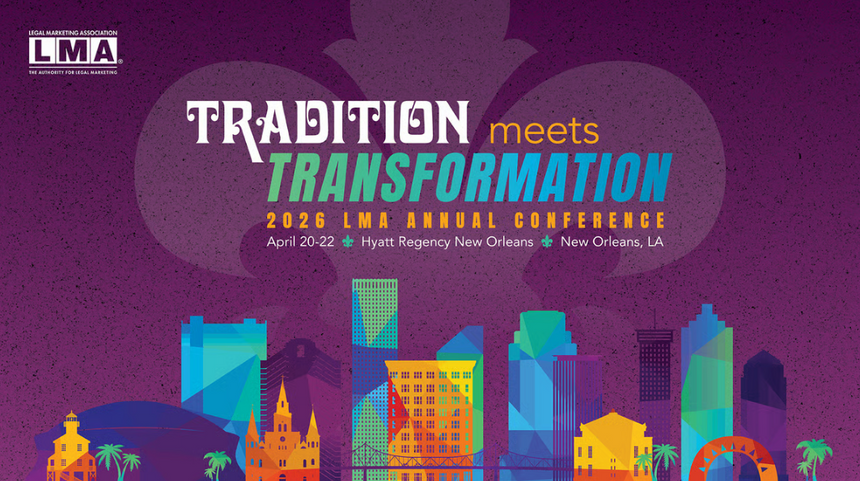


The LMA Annual Conference kicked off in New Orleans with the keynote "Applied Curiosity: The Hidden Power Behind Breakthrough Ideas" that set the tone for the conference theme of Tradition & Transformation. Through a mix of personal storytelling and sharp case studies, Carla Johnson, Innovation Architect and bestselling author, challenged attendees to embrace curiosity by sitting with the problem, going down the rabbit hole, and swapping hats.
The Problem No One Wants to Name
Carla opened with a stat that landed in the room: 88% of executives expect the pace of change to keep accelerating, but 80% of those same executives do not believe their own people can keep up. That gap between the future leadership sees and the teams they are depending on is exactly where legal marketing sits right now.
Rewriting the Rules
Carla set up the central tension of the keynote with a simple observation: in any game, or any market, there are the rules as written and the rules as actually played. Monopoly is a useful illustration. After surveying over 1,600 customers, Hasbro found that more than 50% of games end in a fight, and over 60% of players admit to cheating. The obvious response would have been to tighten the rules and reduce friction. Instead, they asked a different question: what if we leaned into it?
They launched a dispute-resolution hotline for in-game arguments, and then went further, releasing the Cheaters Edition, where cheating is the whole point. Draw a card, skip paying rent, steal a property. Get caught, and you are handcuffed to the board. Instead of discarding 120 years of tradition, they transformed the experience to stay relevant in a market that had moved on.
The Curiosity Compass
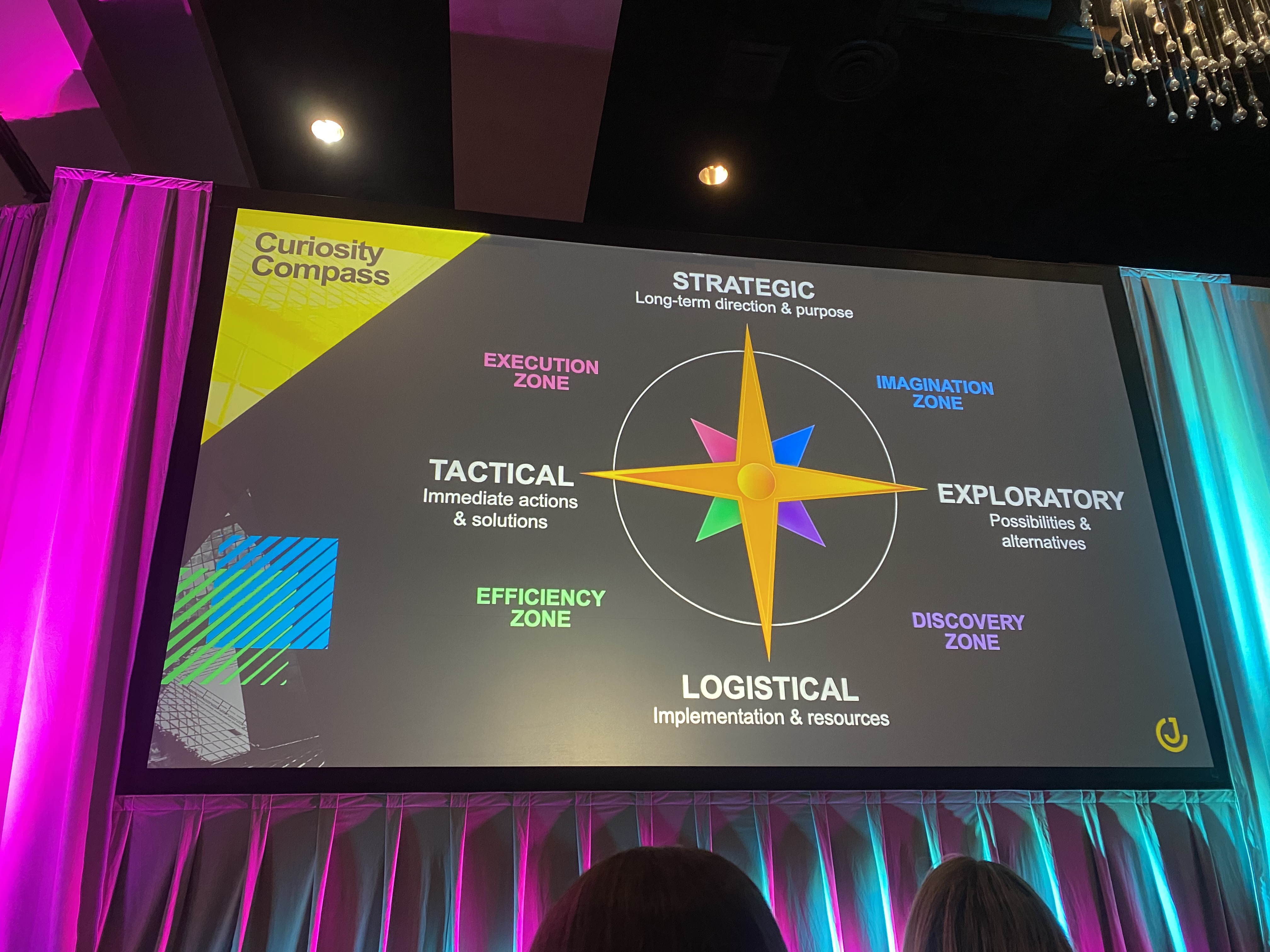
Before the case studies, Carla introduced a framework for understanding where our thinking actually goes: the Curiosity Compass.
- North — Strategic: long-term direction and purpose
- East — Exploratory: possibilities and alternatives
- South — Logistical: implementation and resources
- West — Tactical: immediate actions and solutions
Most marketing teams live almost entirely on the left side, in the efficiency zone (tactical and logistical) and the execution zone (strategic and tactical). That is where AI thrives, and it should. But the zones that differentiate, Discovery and Imagination, require human curiosity, and most teams rarely carve out time there.
Applied Curiosity: Three Steps, Three Case Studies
1. Sit with the problem – Hans Brinker Hotel
Hans Brinker is a budget hotel in Amsterdam that accumulated genuinely terrible online reviews. For example: "Do not go, it is a prison with a big neon H." The instinct for most marketers would be to get out in front of it with a reputation management campaign, a response strategy, something to neutralize the damage.
GM Rob Penriss instead decided to spend his time in the lobby watching who actually stayed there. In doing so, he realized his core customer group was backpackers who wanted a story to tell, not a Ritz-Carlton experience. Because he understood these backpackers stopping over in Amsterdam for a few days would be intruiged by staying in the city's ‘worst rated hotel,' he doubled down on every bad review and built a counter-intuitive poster campaign. Taglines such as: “Sorry for being excellent at losing your luggage,” “Sorry for being wonderful at not welcoming you," “Hans Brinker Hotel. It cannot get any worse. But we will do our best” turned empty rooms turned into a six-month waiting list. Instead of jumping to make changes at the hotel to fix their reputation, sitting with the problem gave him a whole new perspective and allowed him to focus on his main market.

2. Go down the rabbit hole – Diamond Shreddies
Shreddies cereal launched in 1939 with about 50 competitors. By the early 2000s, that number had grown to over 4,500 and the brand relegated to the top shelf of the cereal aisle where it was off the radar. In a marketing meeting with no good answers on the table, a 26-year-old intern named Hunter Somerville picked up a piece of Shreddies, rotated it 45 degrees, and said: "What if we call these diamonds?" His boss said: go down the rabbit hole.
Hunter ran a focus group where participants swore the diamond shape tasted crunchier and nuttier. He launched a national vote across Canada where over 500,000 people participated, and diamonds won by 50,000. They relaunched: "Same 100% whole grain wheat. In a delicious diamond shape." Then came the combo pack, and then the Double Diamond Instagram campaign, where manufacturing defects became collectibles, turning a forgotten cereal into a lottery ticket with user-generated content from across the country.
None of that was in the original brief. It came from continuously asking "and then what?" and refusing to stop at the first idea that felt good enough.

3. Swap hats – Pediatric Surgery & Formula One
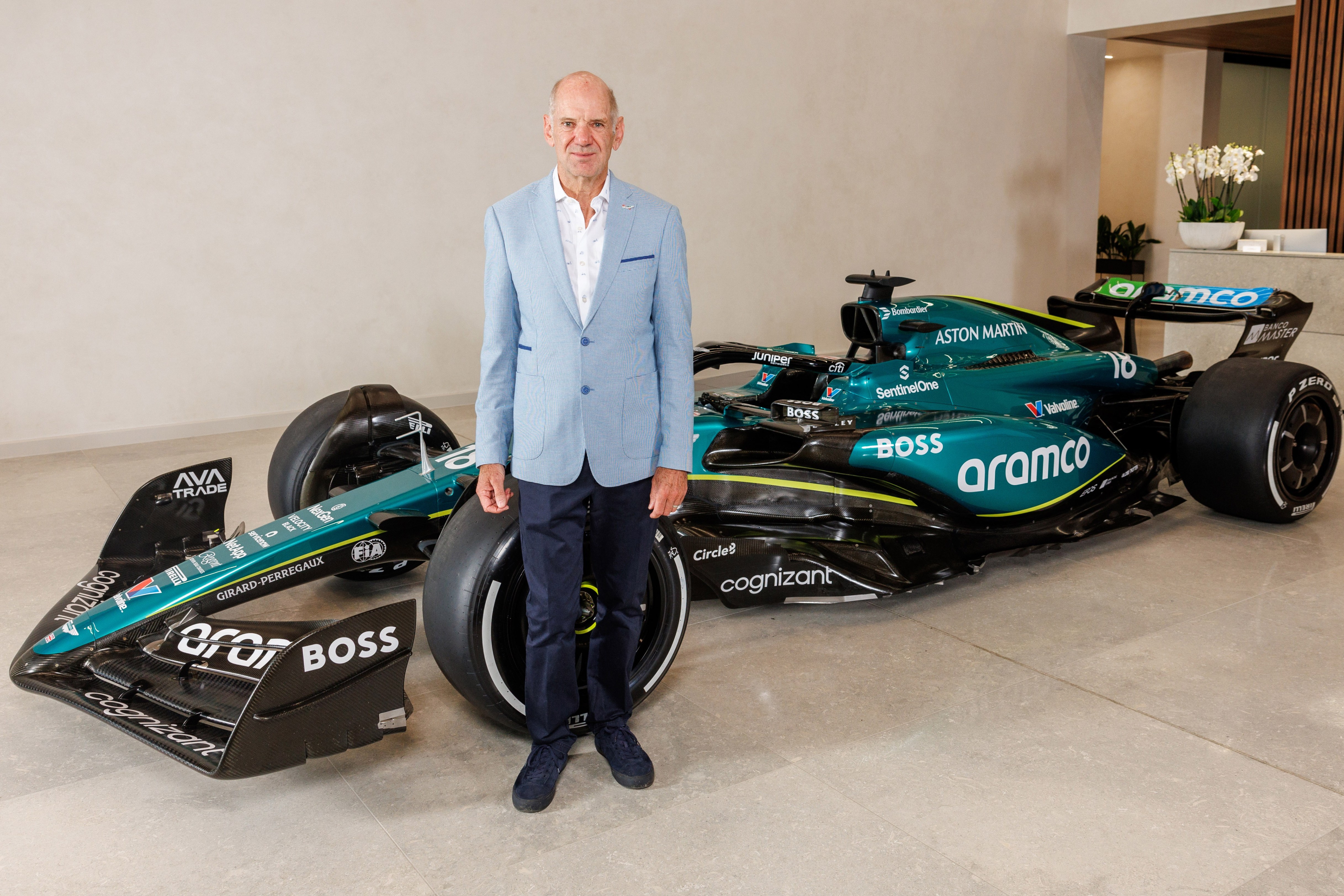
Dr. Martin Elliott, a pediatric heart surgeon at Great Ormond Street Hospital, spent five years trying to reduce a 30% error rate in the 15-minute handoff between surgery and the ICU. Cutting edge consultants, lean teams, process mapping: nothing moved the needle. One morning, exhausted after two surgeries, he looked up at a lounge TV and watched a Ferrari Formula One car complete a pit stop in 2.5 seconds and he called Ferrari's pit crew.
After shadowing the surgeons during the handoff, the F1 pit crew made suggestions based on their experience with efficient turnarounds. First, F1 pit stops have a single person in charge, the lollipop, who calls every shot. The surgery handoff had no such structure. Second, junior F1 team members were actively encouraged to ask questions. In the hospital, junior surgeons did not question the surgeon. Armed with this new perspectice, Dr. Elliott also brought in a professional choreographer to study how the team moved and turn what he described as a scrum into an orchestrated ballet.
Within six months, the error rate dropped by 20%. Willingness to step outside his own discipline and look at the problem through a completely different lens drove tangible progress.
What This Means for Legal Marketing
Carla closed with a line worth sitting with: “We are all born inherently curious and creative. But somewhere along the line, we trade our rabbit holes for roadblocks, and we're told: 'you’ve got to grow up, you've got to get realistic, that'll never work, you've got to think like we think, and so we do; we get logical and tactical."
The LMA theme of Tradition Meets Transformation is easy to nod along to in theory, but difficult to implement practically. Firms with strong legacy practices sometimes struggle to shift perception as they grow into new services. The instinct is to distance from the old identity, when leaning into it as the platform to introduce what is new could be the more effective play.
Firms navigating a rebrand, a merger, or a leadership transition might stop at the first repositioning idea that feels safe, when the more interesting and more defensible work starts just past that point. Most firms are still largely looking inward for answers, even as clients, competitive pressures, and business models are changing fast.
The creativity to reimagine a board game experience based on player feedback, encourage an intern rotating a cereal square, or borrow a framework from an F1 pit crew and a choreographer, is a reminder to legal marketers that sometimes the best strategy comes from keeping an open mind long enough to see the problem differently.
/Passle/53d0c8edb00e7e0540c9b34b/MediaLibrary/Images/2026-01-12-10-16-56-904-6964ca18ab784af100f11853.jpg)
/Passle/53d0c8edb00e7e0540c9b34b/MediaLibrary/Images/2026-10-07-08-46-06-090-6ac606ceca13bbdc45585981.png)
/Passle/53d0c8edb00e7e0540c9b34b/MediaLibrary/Images/2026-09-24-16-11-56-185-6ab54bcc4e2b53dc04f61fda.png)
/Passle/53d0c8edb00e7e0540c9b34b/MediaLibrary/Images/2026-09-28-10-00-52-513-6aba3ad4266cd4c9ede6869c.png)
/Passle/53d0c8edb00e7e0540c9b34b/MediaLibrary/Images/2026-09-30-08-24-37-262-6abcc7451f10327d5d828e21.jpg)