





Law firms talk a lot about client relationships. But turning that into something consistent, scalable and truly integrated across a firm is a very different challenge.
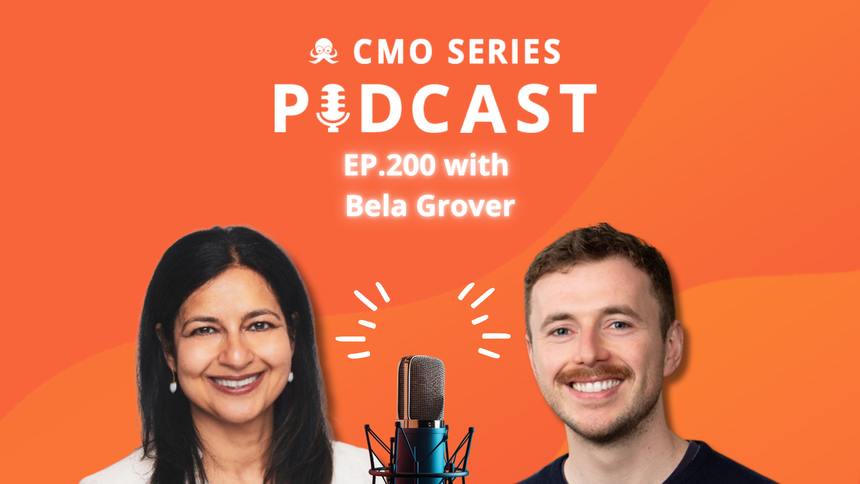
In this episode of the CMO Series Podcast, Eugene McCormick is joined by Bela Grover, former Chief Client Relationship Officer at Goodwin Procter LLP, to explore what it truly takes to formalise client development in a way that strengthens collaboration, improves client experience and helps firms grow more strategically.
Following 25 years at Deloitte in revenue-generating and leadership roles, Bela provides a unique perspective to Big Law as she shares what law firms can learn from consulting firms about client strategy, how to build more purposeful client relationships, and why the systems behind client development matter just as much as the relationships themselves.
Bela also dives into:
- Ways that client approaches differ between the Big Four and law firms
- How to introduce more structure without losing that entrepreneurial edge
- The importance of treating clients as clients of the firm, not individuals
- What strengthening client relationships looks like in practice
- Practical advice for building purposeful client relationships
Transcription:
Dionne: Law firms talk a lot about client relationships, but building a client development model that is truly integrated across a firm is a much harder challenge. Too often, growth still depends on individual rainmakers rather than on approaches that help firms collaborate more consistently around client needs. In this episode of the CMO Series Podcast, we explore what it takes to build more purposeful client relationships and why the future of growth in professional services will depend as much on leadership, collaboration, and operating discipline as it does on individual relationships.
Today, Eugene McCormick is joined by Bela Grover, who most recently served as Chief Client Relationship Officer at Goodwin Procter after more than twenty-five years at Deloitte. Across both consulting and legal services, Bela has spent her career helping organizations grow by strengthening client relationships, aligning strategy with execution, and building teams and systems that scale. In the conversation, Bela shares perspectives on how different professional services industries approach growth and client strategy, why the fundamentals of client relationships are often similar across sectors, and how firms can build more intentional and differentiated client experiences while adapting to realities of their own business models and cultures.
Charlie: This episode is brought to you by CrossPitch AI, the new cross-selling tool from Passle. Cross-selling should be the easiest way for law firms to grow, but most firms struggle. Why? Lack of awareness, lack of trust, and frankly, fear of selling. The result? Missed revenue. CrossPitch AI fixes that. It breaks down silos, helps professionals connect, and delivers timely, relevant insights to the right people inside the firm and out. There's no heavy rollouts, just switch it on and try it today. Head to crosspitch.ai to book your demo and make cross-selling happen. Now, back to the podcast.
Eugene: Bela, welcome to The CMO Series Podcast. Thank you for joining us.
Bela: Thanks, Eugene. It's an absolute pleasure to be here.
Eugene: We're gonna dive straight in. I would love for you, I've obviously had the pleasure of meeting you, I would love for you to introduce yourself and maybe tell us a little bit about you?
Bela: You know, I've been really fortunate to have senior client executive roles at two organizations that are genuinely world-class at what they do, Deloitte and Goodwin. And they're both anchored in the core construct of driving client value for their clients and for the teams. And my career trajectory there has two distinct phases. In the first, I was out in the market working directly with senior executives on their growth and transformation initiatives, and I learned very quickly what moves the needle for our clients and how to get focused on that. So then in the second phase, I've taken those learnings and really built out capabilities that allow the firms and everyone in the organization to bring their best value for the clients, and that means deep sector immersion programs, client management programs. Honestly, it's all just about helping and enabling everyone to do their best client work consistently.
Eugene: Well, that's really, as you said, there's so many different elements to it, and there's obviously so many, it's a bit of a well-trodden truism that there's a lot of differences between consulting Big Four and law. When you made that move, what did you perceive as the biggest differences in consulting law firms' approach, but specifically as it related to client development?
Bela: You know, both Goodwin and Deloitte are built on the same foundation. You know, exceptionally smart people focused on relationships and expertise and really showing up when it matters. The differences really are in how deliberately that gets organized across the firm, and I'll kinda give you a few examples on those areas. You know, the first one is client ownership and stewardship. So consulting made the shift from, this is my client to this is the client of the firm, a long time ago. Law firms are now moving in that direction, and those that are doing it well are winning work that others don't even know that they're lost, and that's fantastic. That's exactly where you wanna be as a law firm. The second area is around talent development, and in consulting, commercial instincts get built early and as a parallel path to building expertise, and it's a progressive experiential science.
So when I think about when I joined consulting, I mean, I was part of client conversations, working on pitches, rolling up my sleeves and thinking about thought leadership with partners from day one. In law, there's a real respect to sort of building the craft first and then building that commercial acumen and relationship building tends to come later. And so law firms have to be much more intentional in investing in those capabilities at the later part of their talent trajectories. And the third one, I would say, is in how the business is run. Consulting is extremely deliberate about where it plays. There are constant reviews of client portfolios. They're clear-eyed on where the client demand is moving, and they're tracking it, and they're very intentionally organizing and allocating resources to the priority areas which will benefit a full practice or a full firm. Many law firms today are still operating partner by partner, which is fantastic and works great when things are going well, but it does create a bit of a strain when you're trying to grow or adapt quickly, and law firms do need to do that now in this environment, much more so than ever before. So I'd say, in short, you know, consulting has figured out how to grow as a firm instead of a collection of individuals, and law firms are building that muscle, and AI is going to force the pace considerably.
Eugene: I think that piece around structure and talent development is very interesting. I was actually just hosting a roundtable last week in Boston, and one of the key points that a CMO from a big firm said, we had such an amazing entrepreneurial edge, but it was havoc because then you've got a thousand entrepreneurs going off in their own fun direction. How do you not lose that competitive edge, Bela, but also introduce more structure? Because it sounded quite chaotic, to say the least.
Bela: Yes. You know, it's probably less chaotic than it feels in the market. But at the same time, it's a really important point because you have to really do that carefully and in a very balanced manner so that you're really not killing that entrepreneurial spirit, but actually channeling it, right? And, you know, the organizations that get that balance right are going to do really well in this next iteration of law firm evolution. And Goodwin has actually done it brilliantly already, so it's possible. Goodwin defined the North Star around its core industries, aligned the organization to build real depth there so that there were parameters against which we were building for growth. And the lawyers get aligned to those industries early in their career, and they really know their clients' business issues and serve as, not just legal advisors, but as business advisors. And that creates a competitive advantage for the lawyer and also creates win for the clients. They really are growing together and building their brands together, and I think that's powerful. So it's doable. It's all about finding that right balance.
Eugene: And then sharing that success story as well.
Bela: And that's a really important point. You do want that leadership visibility to share the success stories on when you really work along the strategic client areas that you're focused on, that needs to come out. It needs to be recognized by the senior leaders. It needs to be showcased because that really builds the change and the culture change momentum.
Eugene: Completely. And that really feeds into what I was gonna speak about, which was the first thing you said there, and there's three key elements, was client ownership. And it's something I know you're a huge champion of, is moving from maybe the individual partner owning it to the institutionalization, you might call it. How critical is that mindset shift? And then maybe a practical bit of advice for listeners, what's the first step to get there? You talked about how you have to share the wins, but how do you get to the wins?
Bela: How do you get to the wins? Right. I would say that shift is what everything else will depend on, and it's super critical because when a client belongs to one partner, in their mind, in the culture, and how the compensation works, it's very hard to do something consistently for that client across the firm. You may have brilliant people across different practice groups who can add real value to the client, but if nobody is connecting those dots, the client is only going to see good work in silos. And to be clear, I just wanna be very emphatic about this point, that this is not about taking relationships away from partners because those are very real and they matter. It's really about making organizing around their relationships much more intentionally. And so when I think about what allowed consulting to make this shift, like I mentioned earlier, it really started with formalizing the role of a lead client service partner.
And these individuals were accountable for staying close to client priorities, proactively introducing the right teams and insights. They also really built an internal community around that client and a cadence of internal knowledge sharing and a rhythm around it, so that you can bring the best of the firm to the clients. And so, the other big thing that happened with that was that the compensation and the incentive structure for these individuals was much more about driving firm-wide growth and focused on feedback around client experience, and not about just their book of business. And that single role change is the dynamic completely because there's someone who's accountable for the whole relationship, not just a piece of it. And, you know, we've tested that approach at Goodwin, and it works on a very small group of clients, and that works in a law firm just like it works in consulting. It's not that different. What's been amazing is that the partners who were involved in that pilot are now taking those learnings to their entire portfolio of clients, and so it's getting cascaded visibly. And we had very senior leaders sponsoring it, to your point earlier, around telling the stories, showcasing, talking about it, celebrating the wins, and that has really started to shift the culture. So my suggestion to the group would be to start with a handful of clients and see what happens.
Eugene: And, to your earlier point, the clients get more value out of you, and you get more value out of them, so they're probably pretty happy to get started.
Bela: Absolutely. You want to start with clients who want to partner with you, who have the needs that align with your strategy of the firm, and they want to grow together, build the brand together. And that's really important in how you pick your clients.
Eugene: I think this is a quite nice transition to the next piece, which something I know you're pretty passionate about, and I had written down this quotation from our last conversation, which is you talked about people in your role and to drive this bigger change of structure and client development, they have to evolve from a growth enabler to a growth architect. Can you tell us a little bit more about that and also how your own role has evolved since you joined Goodwin? What does that mean for you in the context of Goodwin?
Bela: Happy to share that. I think if you look at the biggest opportunity for law firms at this point is in looking at their clients in a much more strategic and connected way. And most law firms have a wide range of clients. I'll probably speak to Goodwin because Goodwin serves several clients across different sizes, scale, and complexity in their chosen sectors. And while every client expects that strong sector expertise, responsiveness, legal expertise, we need to be much more purposeful and customized in how we serve them, the service mix we offer to them, and how we build relationships. And that is at the heart of what marketing and client development teams do. And if I speak to a couple of examples for what the requirements of that would look like, and that gets embedded in almost every aspect of our client development work. You know, an early-stage tech company is looking to move fast, and it's watching the dollars, right?
And so they want someone, a firm that keeps up without overcomplicating things, whether that be formations, financing, and they also need access. They need introductions to the right people at the right time. When you think about a mid-market private equity firm, that needs people who are thinking like an investor, faster diligence, clear framing, and a team that understands the needs of their portfolios. And the client development team sits at the heart of this. They understand which partners serve which types of clients, what capabilities would bring the most value. And they can look at it in an aggregate in a way that no one else in the entire firm can look at. And now with data and AI and tech capabilities, they can actually do much more forward-looking insights and tailoring around that. And so to me, they have a chance at defining and having a real seat at the table with the leaders in shaping which clients to pursue, how to pursue them, and then being able to bring those insights on what will drive value for the client much faster, in a way that would be relevant to the client and to the partners. And so that's what I mean by moving away from being a growth enabler to being a growth architect.
Eugene: That was beautifully explained. I suppose my annoying follow-up question has to be, that's born out of twenty-five years of experience. I'm not Bela Grover. If I'm in a law firm right now, how do I, or any firm, how do I do that to start moving in that direction today because having a seat at the table sounds great. How do I shuffle in that direction?
Bela: You know, I think that is gonna be so tailored to the individual that we speak to and the cultural context in this way, and what are the priorities of their firm. So my suggestion would be to start with and pick one or two areas that can really move the needle. So let's talk about things like, you know, a good, strong client listening program. If you were to start with piloting that, that in itself would basically give you a seat at the table because you're talking directly with the clients along with the leaders. And it'll also give you a very real sense of what it is that's moving the needle with the clients. And so I would do, I was personally part of, like, over fifty client conversations with our senior client leaders, and these were not check-in conversations. They were real conversations about the business priorities and where you can do better, and we were very disciplined about, you know, acting on what we heard and using it to shape the firm's priorities. And when you're part of those conversations, and you can work with the leaders of the organization to start to put the right teams, define the right coverage model for partners, and then enable those partners to build that internal rhythm and cadence, you naturally start to have a seat at the table, right? And for some of your listeners, they already have a seat at the table but this allows them to scale it and develop it. So I would say it has to start with the clients.
Eugene: I love that. I wanna ask a question, you've been very generous with your advice. What is the question that law firm leaders are not asking themselves about client relationships which they should be?
Bela: I think legal services is moving so fast at this point, if you think about it. You know, the world of the clients is getting way more complex, right, whether that be due to technology, the regulatory environment, the market shifts, or their own seat at the business table. And at the same time, while technology is creating all these alternate ways that they can unbundle their legal needs and try these different models, they're really seeking partnership with their law firms to help them see around the corner at this point. And so the question we need to ask, or the law firms need to ask is, where are we truly indispensable to our clients today and what will be structurally different in how they buy legal services in the future? And this answer's gonna evolve, so it's important that they're asking that question of themselves regularly and answering it honestly. And frankly, the law firms that do that, will be able to be much more agile in knowing where to invest in talent and how to navigate the future effectively.
Eugene: I love that. And that is such a fantastic note to sort of wrap up that conversation on. I want to not finish there because I've had the pleasure of meeting you a couple of times, but I don't know if our listeners have, and I wanted to do a little quick fire round about you, the individual, rather than with your professional hat on, if you will, if you will indulge me.
Bela: Sure. Let's do it.
Eugene: Okay. What are you currently listening to? Can be music, book, podcast, anything like that.
Bela: It's a history podcast called ‘The Empire’ by William Dalrymple and Anita Anand, and it's brilliant storytelling. Brilliant.
Eugene: Okay. Smashing. What's the best piece of advice you have ever received?
Bela: Always have a plan. Write it in pencil.
Eugene: Write it in pencil. Yeah. I agree with you.
Bela: It changes.
Eugene: I was once told planning is everything, but plans are useless, so I've always kept that. The pencil definitely applies. What's a book or resource that you would recommend to anyone in your profession, in your role right now?
Bela: I'd say ‘The Activator Advantage’, it really reframes how top trade makers make, think and act, and it's really backed by deep research.
Eugene: Perfect. Favorite way to unwind after a busy day?
Bela: It's Iyengar yoga and long hikes on the California coast.
Eugene: Sounds quite nice, to be fair. Last but not least, favorite place to visit, and why?
Bela: That's a hard one for someone who's a gypsy at heart, but I'd have to go with Amalfi Coast. It's got the sun, it's got the water, it's got the food, it's got the people, and so that just has everything I need.
Eugene: Amazing. Bela Grover, thank you very much for your time, for being on the CMO Series Podcast.
Bela: Thank you so much for the opportunity, Eugene.
Eugene: Cool. Thanks a million.
Charlie: You can follow the Passle CMO Series Podcast on your preferred podcast platform. Thanks for listening, and we'll see you next time
/Passle/53d0c8edb00e7e0540c9b34b/MediaLibrary/Images/2026-10-14-09-22-13-024-6acf49c5944aac193a981bb9.jpg)
/Passle/53d0c8edb00e7e0540c9b34b/MediaLibrary/Images/2026-10-22-11-14-29-774-6ad9f015ed262a90b1bf36f6.jpg)
/Passle/53d0c8edb00e7e0540c9b34b/MediaLibrary/Images/2026-10-19-13-24-47-415-6ad61a1fdc6374f637024697.jpg)
/Passle/53d0c8edb00e7e0540c9b34b/MediaLibrary/Images/2026-10-13-16-00-13-704-6ace558d477453bcaa2eba35.jpg)
/Passle/53d0c8edb00e7e0540c9b34b/MediaLibrary/Images/2026-09-28-10-59-02-989-6aba4876c6484376446500cc.png)