





Getting the right MarTech stack in place has never been more critical, yet many firms still struggle with getting the high-stake investment projects off the ground.
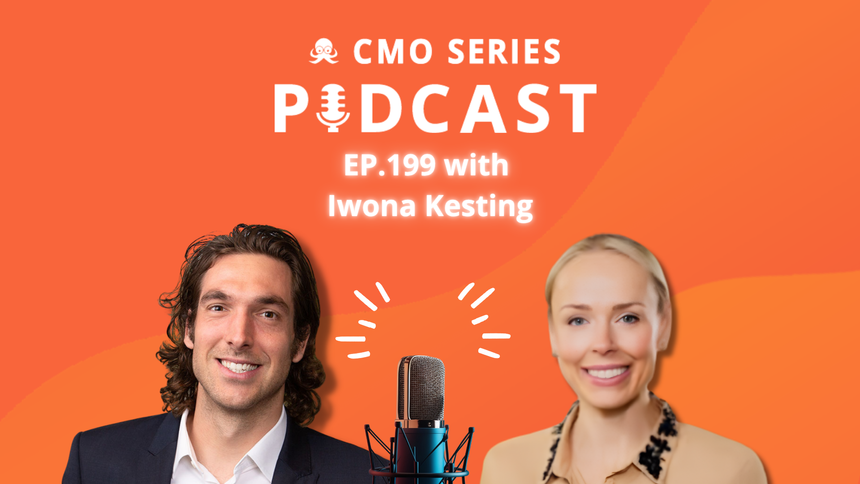
Today on the CMO Series Podcast, Charles Cousins sits down with Iwona Kesting, Director of Business Development and Communications at Jones Day, to unpack what it really takes to secure firm-wide backing and how to make tech deliver real impact. With Iwona right in the middle of a major CRM and ERM transformation, she reinforces the importance of shaping the right strategy early with strong alignment across the firm.
She also explores the risks of choosing the wrong tools, the pace of change, and the challenge of getting internal buy-in, as well as knowing where to start.
Iwona and Charles discuss:
- How her approach to MarTech has evolved
- The biggest barriers that cause firms to go wrong
- The steps involved in a CRM and ERM transition
- How to get projects signed off using firm alignment
- How to measure the impact on client relationships and growth
- Practical advice for other firms looking to invest in new tech tools
Transcription:
Charles: Hello and welcome to the CMO Series Podcast where we unpack what's happening in professional services, marketing and business development. Today we are diving into an often tricky challenge that firms face, MarTech projects, because while getting the right tech stack in place can transform a firm, it's also where firms can become stuck. These are high stakes, high investment decisions, and marketing and BD leaders are really under serious pressure to get them right. And if you add into that the pace of change, the risk of backing the wrong tools and the challenge of getting internal buy-in, all of a sudden it's no obvious challenge and there's no easy place to start and it's quite tricky to succeed. So in this episode, we're gonna try and focus on what actually works in practice, and I'm thrilled to be joined by Iwona Kesting, the Global Director of Business Development and Communications at Jones Day, who's right in the middle of a major CRM and ERM transformation. So we'll explore where firms go wrong, how to get these projects off the ground, and what it really takes to win firm wide support and make the tech deliver real impact. Iwona, great to have you with us, how are you doing today?
Iwona: Doing wonderful, thanks Charles. Thanks for having me and hopefully we tell more of the story of where firms have gone right, than where they've gone wrong as part of this project. But yes, there's so many considerations and I'm happy to share what I've learned and anything that could be useful.
Charles: Wonderful. So you've been at Jones Day almost five years now.
Iwona: Correct.
Charles: How has your approach to BD, comms, and marketing technology evolved in that time and was there a certain point where you had to evaluate the tech stack and realize that it needed a bit of a rethink?
Iwona: Two part answer to that. So being here five years, you really start to better learn and understand the pulse of the organization. The client needs are obviously always first and foremost, but really letting the partner needs and practices drive what technology we needed to support those or need to support those, and setting up the BD department, the people to best serve those needs is the most important part. Setting up the department to have the processes and technology to then serve the lawyers came next and sort of evaluating what tools we already have available, which ones are going away, which is the case with Inter-Action on-Prem which we have, it's going to be sunset. So that was a key driver and very helpful in helping me explain to firm leadership that we need a new tool, this one's going away. So it sort of made that part black and white. But then came the challenge of making the recommendation that was as risk free as possible on which technology we were going to recommend, and I was, you know, working through how I was gonna present that information to the firm and I decided we needed to decide on a product that was going to take some of the risk out of it in terms of acquisitions, movement in the market, et cetera, and that would best support the needs of the lawyers.
Charles: Yeah. So, actually before we jump into the current project, so maybe we take a step back and just look holistically at law firms and where you see firms often go wrong with marketing technology or what the main risks to watch out for are?
Iwona: I think there's a lot of, especially with the evolution of AI now, right, I think there's a lot of these point technologies that sort of address certain needs, but maybe not needs of the partnership as a whole, or aren't as future proof to evolve with shifts in technology or they sort of address, like I said, a more narrow piece, but they aren't something you can build on or plug into. And if they are more point solution or more legal focused, ideally, I think a CRM should be a CRM for any type of organization. Obviously, there's efficiencies gained for having it customized to legal, which you should be working very specifically to do, but I do think some of the risk comes out of the project if a CRM is a CRM, you do a listening tour and understand what the partner's needs are, and then you sort of customize to meet those needs for legal and for your partners. I think there's a certain level of risk for some of the more pointed solutions, more legal solutions, that those are going to be acquired and it just adds risk to the project. And as you're communicating your needs and sort of the financial spend and all of this to the firm, they're going to be thinking, well, what are the risks that we need to keep in mind? Are we going to get halfway through this project and one of these products is going to be acquired and be something entirely different and how does that impact the project as a whole? So those are some things that I'm keeping in mind and maybe where some firms maybe didn't go wrong, but perhaps hit a roadblock.
Charles: Mm-hmm. Yeah. Yeah, I can see how that can happen. And I get your point as well about, what you said right at the start was, with so much technology out there, I've heard it before where a lawyer has maybe collared their marketing and BD person and said, I found this brilliant tool. So they've got this tool and the marketing team are like, where does it go? So they're looking at a tool and then finding where it goes rather than the other way around of having a problem, and then getting the tool to solve that problem. So, yeah, I can understand how you want to get the right solution to the problem, rather than getting a core solution and then finding the problem.
Iwona: Yes.
Charles: So bringing it back to what you are working on at the moment, you are in the middle of the CRM and ERM transition, what were the first steps in scoping that out? How did the conversations that you had shape the thinking and the first steps you took?
Iwona: One of the first steps I took before even working with our partners or working with the BD department, right, what are the current tools that are most useful to you that are part of our CRM offering. We previously didn't have any partners interacting with our interaction system, so really assessing what the department's needs were to make sure that as we transition systems, we had a good understanding of how the BD department was using our current CRM. Then I stood up a steering committee of partners because one of the biggest challenges that we did have was that the partners weren't using CRM, so even the best tool we could get, one of the core parts of the change is now going to be that partners have access to CRM. So the steering committee was going to be critical to get their input on how they could use a system if they did have access, what they would want to see, and to gut check certain decisions on data visibility, access tiers, et cetera, along the way. So, interviewing the BD department, core members across various functions, standing up a steering committee, really getting a goals and wishlists, and sort of core capabilities list together, was very important. Then we looked at the state of the market, what were some of the legal specific solutions? What were some of the non-legal specific solutions? And charting out the pros and cons across a series of categories of each of the currently available tools.
From there, I spoke to about 30 firms in the AM Law 100, to assess what they were doing. Whether they were happy with the path they were taking for CRM? Were they waiting, were they not waiting till the market shook out a little bit? There was one tool that I had identified as my front runner before I went on maternity leave in October. And by the time I came back in March, that tool had entirely gone away, and had been acquired. So, maybe the whole risk part of my spiel earlier becomes a little bit more relatable because it was just such whiplash it felt like. And so that was when I narrowed that entire chart of possibilities and said, I really want a tool that's non-legal specific that is a big name in the market, and that is going to continue to evolve and be future proof and won't go away. And so we landed on two, and then ultimately decided on one with an ERM layer over the top of it. Because lawyers were now going to have access, I really wanted something that would show them value, but would still not rely on manual data entry for them. So, I don't think any technology is going to be successful at a major law firm if the lawyers have to do a lot of work to get them there and to show them value. So, we took those two, we RFPd them, we put together that wishlist from the partners, the BD team, wrote a massive RFP, involved our technology team to get the security and diligence parts of that RFP right, really closely evaluated responses and made a recommendation to firm leadership. From there, we also had to decide critical things like licensing models, do all partners get it? Do we start with a smaller batch? Why would this work? how are you going to identify your power users? and how are we going to do this, are we going to do ERM for everyone? Are we going to do ERM and CRM for everyone? There were just critical decision points along the way that we really had to weigh a whole list of options, and again, always compare it back to value. What is going to give us the most value, and who should have access to get us there.
Charles: Well it sounds like you had a really robust process in how you went through all of that. One of the things that stood out that you said there is those peer conversations with other law firms, and that's something we try and facilitate. We are lucky enough to work with over a hundred different law firms, so whenever we are chatting to new folks that wanna test out our tool, they often ask us oh, who else is using your tool? So I think it's probably the best way to get an honest review of how the tool's performing, is to speak to someone that's using it. So, I can see how that could be a big value.
Iwona: It's so true and Passle has been so helpful in doing that, in terms of professional networking and just connections and people are always so willing to share, you know, what's going well, what to look out for, how to better learn about this part of the technology. Just things to keep in mind. Ultimately, you do what's best for your firm because there are such cultural nuances that will drive these projects and you need to deliver the project in a way that will work best for your firm. So I don't think there's any manual that would work, but understanding the possibilities is what I think was most helpful in terms of these peer conversations, and Passle was such a great connector on that. Even when implementing the Passle technology here, it was important to understand how different firms were using it. Is it most helpful for one practice? Is it most helpful for the entire firm to be on Passle? Is it most helpful to have practice leadership help drive this change? What are you finding to work best and how can you then apply that to your own firm?
Charles: And this is probably a good time to shamelessly plug the CMO Series Live event where we try and get all of the CMOs from law firms to one place so we can share ideas and talk about what's happening in the industry. So that's June the fourth. So if you're listening to this and wanna come along to that and you're not signed up, reach out to us and find out more. So, bringing it back to the point you said about, you set up your steering committee, and I'm guessing that involved senior leadership. That leads nicely onto my next question, which was, how do you get leadership involved and aligned behind investing in this, what worked to build that momentum and get everything signed off? Can you share what that process was like?
Iwona: Of course. I mean, I think it's a lot of fact-driven storytelling to catch their interest and to make a case that will resonate with partners. So, firm leadership is always making a decision that is going to keep the firm safe, but provide value and uncover opportunities to help drive revenue and build relationships with clients, right? So, telling a story to say, this client is involved and we're able to see X level of detail that we didn't have access to before. We can then empower the BD team, empower the partners, to make recommendations that are fact-based to show that we are doing work here and here, but not yet here. This person has the strongest current relationship with the firm, with this senior decision maker at the organization. And here's a timely issue because, oh, we've also integrated external news sources to the tool, and we should reach out to this decision maker to offer training on this topic.
Being able to tell that story to firm leadership to say, this is something we haven't been able to do before, but it can directly lead to new revenue and a stronger relationship with this client. That resonates. So now you've got them hooked, and now you say, here's what I need from you. Leadership is not going to care how much you know, they're going to be looking for what you need from them. So, I think having your story and your facts straight to back you up, catch their interest, and then very clearly have it outlined, what are the four decisions you need from this call? Down the line, here's the key milestones that I'm going to need to come to you again, but today, here's the four. Prepare a slide deck. I've done this two times on ERM rollout already. In terms of key decisions to pull passively information into the ERM, right? That's a new shift for the firm in terms of what we are able to extrapolate in terms of data and being able to see a full picture of a client relationship. So, key decisions required from leadership at that step, then another set of key decisions in terms of visibility, access tiers to information. Again, the partners haven't had this before, so I needed to be able to clearly say, here's what I propose we do, and here's what I need from you. I need to know who and I need to know what they see. Here's what I propose. Here's what other peer firms are doing. Where do we want to fall on that? And so I think storytelling facts and then a very clear list of what you need from them.
Charles: Yeah. Make it as easy as possible for them to do what you need from them.
Iwona: Yes.
Charles: And so once this goes live, what does success look like in practice? How will you measure the impact on things such as client relationship and growth?
Iwona: I think it's a few things. I think we will really need to repurpose a lot of the BD team's time and spend significant time training the BD team to use this tool in a way that also helps the lawyers use the tool. If the BD team doesn't understand the value or how to make recommendations on BD opportunities, the partners certainly won't. So we need to make sure that the department knows that to also help the partners better understand and use the tool themselves, or pull the information from partners. Just because they have access doesn't mean that they're still not going to come to BD, that's our value, that's what we want to be here for, but we also want to empower them to go in and pull the data themselves. I think in terms of impact and in terms of where we can see direct revenue growth, access to information, like a white space report where you can see where we are doing work, where we aren't yet, either by simply showing yes or no, or a revenue trend, or for the relationship lawyer the exact type and value of revenue for a specific type of work and a specific practice for a specific client. That is going to be something that that relationship lawyer can open on their phone, on their way to a meeting and say, okay, great we're doing a lot of work in cyber, we're not yet doing work in investigations, and we're not yet doing work in regulatory, so I would like to talk to them about this. I'm gonna have these few points ready for that meeting, and immediately you can offer a training, a briefing for their C-suite. And then start, get the wheels in motion to develop new work in an area that we hadn't been doing work for that client before.
Charles: Brill. And just picking up on something you said there about repurposing your BD team, is there a point in that process where your BD folks get upskilled on this platform before the lawyers? Or how does that work?
Iwona: So we're planning to go live for the BD department in July and there will be about a five month window where BD are the first users to train up, start that culture change in BD, and then by the time partners go live in December of this year, the BD team will be well-trained. Obviously, training is an ongoing process, this is going to go on for years and sort of into perpetuity because the tool will evolve and our skills will need to as well. But the idea is to get some of the kinks out, have the BD team really understand the value, the different views, the types of reports that can be pulled, and then the partners come in five to six months later.
Charles: Brill. And what are the next milestones in the CRM and ERM projects? What would you advise other firms to do or avoid if they're starting a similar journey?
Iwona: So I would recommend an ERM and CRM implementation together. That's the only way that you will really have a triangulated view of all of your client relationship information. Simply having an ERM to show contacts and relationships and who knows who, isn't going to also show the matters that are happening with that client, the revenue, even if it's just by range, the types of work that you're doing, it really won't be enough to show the full picture of the client relationship and the possible opportunities. So CRM and ERM in parallel. But I do think, and this is the way we're doing it, it's the ERM implementation should happen first. That's an easier, imagine like a switch is turned on and that data starts collecting and it starts cleaning up information and contacts, and updating and creating new contacts in the background passively. I would recommend a pilot with some of your steering committee or a core group of partners to get your ERM optimized because there will be some data that comes in that isn't the data you want. Everyone has sort of personal exchanges in their email, every firm's gonna understand that it's okay, but that's not what needs to be coming into your database. So, as you're optimizing ERM in your first step, you're working with that first group to make sure that we're really looking at what data comes in, what doesn't, what's most useful, how is it categorized, and how will that move then into salesforce. In the background, I recommend working with an implementation partner that does this in a very robust way.
The CRM is being optimized and set up to meet those partner requirements and BD team requirements that we learned about in one of those early phases. Then, all of your existing CRM data or whatever you decide gets moved into the new CRM, that probably shouldn't be all of your contacts because not all of them will be useful. I also recommend that because the ERM isn't going to be cleaning all of those existing contacts since they won't all be part of current communications, that's the basis of ERM. You will need to do a data cleanse step on your existing CRM data that you plan to move into your new CRM, then take your ERM data, move it into your CRM and then continue the pilot. Right now, the phase we're on is the ERM pilot for a small group. That pilot will expand on May 1st for ERM and by July 1st, CRM and ERM will go live for the BD department to start using.
Charles: Yeah, and then that's where they have that sort of five month run to sort of play and get themselves familiar before the partners come in.
Iwona: That's right.
Charles: So we'll take a slight pause from the main podcast just to jump into the quick fire round, which is what we like to do with all of our guests, just to find out a bit more about our guests. So, we'll find out a bit more about Iwona Kesting and what you're into. So my first question is, what are you currently listening to? This could be music, podcast, audiobook.
Iwona: Ooh, I'm listening to the book, Strangers. I can't tell you the author offhand, but it's sort of a memoir about marriage, family, divorce. Not that I'm going through that myself, I love my husband, I love my kids, but it was just sort of an interesting take. I'll be honest, I didn't quite love it. I keep waiting for something to happen or for some sort of explanation on why this woman ended up where she did, and it's just not quite getting there. So, okay I can highly recommend it, but I didn't particularly love it myself.
Charles: Yeah, anything on your podcast, music-wise?
Iwona: So, podcasts, I listen to the AI Daily Brief, which sounds super nerdy, but there's just so much AI noise and these are all about 20 to 25 minute segments and they just make me feel a little bit more confident on understanding the state of AI. Things that, you know, are being considered now where I need to be thinking for sort of considerations that others way smarter and more integrated in AI are than I am, to sort of say, okay, this is what people are talking about now, but in two years this is what's really gonna matter. So it's really helpful. I totally recommend it. The AI Daily Brief.
Charles: AI Daily Brief. What's the best piece of advice you've ever received?
Iwona: Hmm. Expect a lot and care a lot. And I think that it really applies to my leadership style, my parenting style standards I hold myself to. It just applies to a lot of parts of life if you really think about it. So you can have high expectations, but also take care of others and yourself.
Charles: Expect a lot and care a lot. I like that. What's a book or resource you recommend to anyone in the legal BD space, BD and marketing space?
Iwona: I love David Ackert, The Shortlist. It's fantastic. David Ackert is with Pipeline Plus, he's the founder and they do a lot of BD trainings, et cetera, but this book on its own can serve as the basis of a BD training. It talks about having a shortlist of targets, 9 to 13 usually work best, and it's something that I use when I talk to partners at the firm, associates at the firm. And I just think it's fantastic. It's not a super long read and it's really digestible.
Charles: Hmm. What's your favorite way to unwind after a busy day?
Iwona: I like to just have a sit and a tea, and I hate to say it, scroll on my phone. I would love to tell you I cook or I do my running in the morning, so it's not after a busy day. I think after a busy day, I like to put my kids to bed, get them out of my hair and just have a sit with a cup of tea, that it's just kind of like doom scrolling and just I don't even know what I'm looking at, but it's silent and it's lovely.
Charles: Yeah. I probably could have framed that better. It's probably like how do you get your day firing and you could have answered, I go for a run, a 10 mile run before work.
Iwona: I do. I like to, I got the Peloton tread recently, and that's helped with getting my run in before my kids get up because it was really dark and I was bringing like Mace with me before and now I have a treadmill downstairs and I've been really having fun with getting faster on that and that really helps set me up for starting my day on offense. I feel like nothing can get in the way of me having a great day 'cause I've already done this, and so that's really fun. I also love the bike.
Charles: Brill. Where is your favorite place to visit and why?
Iwona: I went to Sydney in October and that was the best. I think Sydney is the perfect mix. I mean, it's kind of the beach because it's Australia and you're right on the water, but it's also fast-paced. It's professional. It's posh. People love fashion. People are on the move. People have places to be. It just felt very vibrant and alive, but also clearly a business hub, which I love. It drives me. And then you're right on the water, like you take a ferry to the zoo. It's just great.
Charles: Yeah. It's the best of both worlds. You can get some serious work done and some serious fun time down on the beach. Brill. So, jumping back to our topic about MarTech implementation of the projects there, to finish off the podcast we finish all of our episodes in the same way, and that's asking our guests, what would be your one piece of advice or takeaway to a marketing or BD leader who's looking to bring a new tool into their tech stack?
Iwona: I would say, make decisions carefully, but not too slowly. You can't have analysis paralysis. You'll never get anything done. You have to chart out what's important to you, to your team, to your firm. Assess which options, meet those goals, narrow it to two, present those options to firm leadership and you go. And along the way you check in core decisions, right? What do you need from them at various points to make this successful? So no analysis paralysis, move, but check along the way. And that's, I think, the keys to success.
Charles: That's all you can do. Yeah. Well, Iwona, thanks for coming on and talking about the MarTech projects you've been involved in. Hopefully it's been a good listen for those that have tuned in and I'm sure if people have got follow up questions they can find you on LinkedIn and maybe reach out in person.
Iwona: Yes, definitely Thank you. Or I will see you at CMO Series Live, this will be my third year going and it's a fantastic event, so I would love to meet others there.
Charles: Brilliant. Awesome. Yeah, it should be a, it should be a great day. Our full speaker lineup is gonna be live on the website next week I think, but most of the speakers are on there now. So go on, check it out and do sign up if you wanna come or reach out to the team and they get you signed up. Iwona, thanks for coming on. Have a great rest of your week and I will see you probably in a few weeks.
Iwona: I would love that. Thanks for having me.
Charles: Bye-bye.
Charlie: You can follow the Passle CMO Series Podcast on your preferred podcast platform. Thanks for listening, and we'll see you next time.
/Passle/53d0c8edb00e7e0540c9b34b/MediaLibrary/Images/2026-01-12-10-16-56-904-6964ca18ab784af100f11853.jpg)
/Passle/53d0c8edb00e7e0540c9b34b/MediaLibrary/Images/2026-10-07-08-46-06-090-6ac606ceca13bbdc45585981.png)
/Passle/53d0c8edb00e7e0540c9b34b/MediaLibrary/Images/2026-09-24-16-11-56-185-6ab54bcc4e2b53dc04f61fda.png)
/Passle/53d0c8edb00e7e0540c9b34b/MediaLibrary/Images/2026-09-28-10-00-52-513-6aba3ad4266cd4c9ede6869c.png)
/Passle/53d0c8edb00e7e0540c9b34b/MediaLibrary/Images/2026-09-30-08-24-37-262-6abcc7451f10327d5d828e21.jpg)