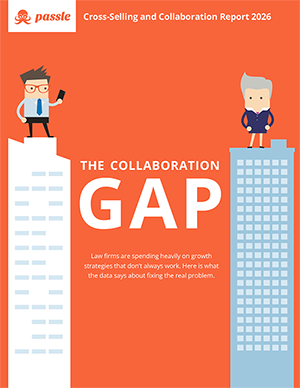




55% of law firms say cross-selling is one of their most important levers for revenue growth, yet only 19% strongly agree they're effective at it. That gap between ambition and execution is at the heart of our latest research and it's costing firms real revenue and opportunities.
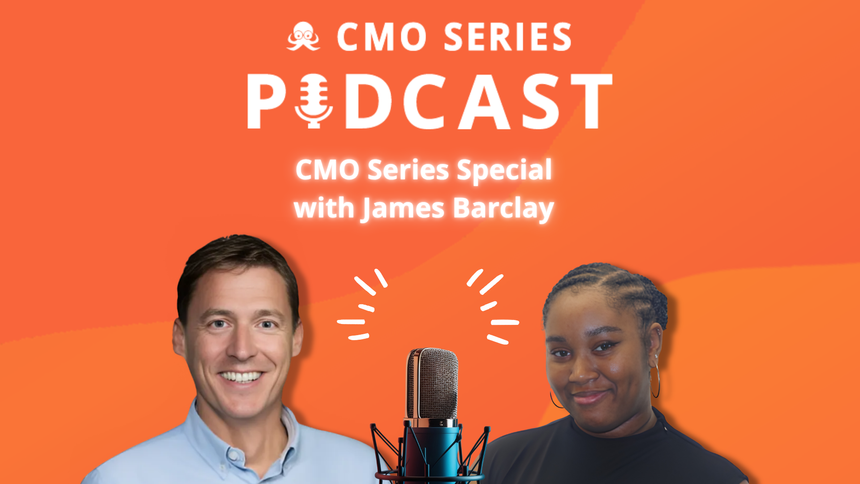
Today on the CMO Series Podcast, Dionne Cole is joined by James Barclay, CEO of Passle Inc, to discuss the findings from our 2026 Cross-Selling & Collaboration Report, produced in partnership with Hayhurst Consultancy. With responses from 100 managing partners and lawyers across the top 200 US and top 100 UK law firms, the report reveals a significant collaboration gap and a clear roadmap for firms looking to close it.
James explores what the data really means, from the paradox of rate increases driving both growth and client churn, to the visibility challenges that prevent lawyers from cross-selling effectively, and what the firms getting it right are doing differently.
Dionne and James discuss:
- The real business pressures that are pushing firms to rethink how they generate work across practices.
- Why firms talk about cross‑selling far more than they successfully deliver it.
- Why firms need to rethink relying on rate price increases as their primary growth strategy.
- How to fix the visibility gap and get lawyers connected.
- Why so many laterals leave within five years and what firms can do to better integrate them.
- What firm leaders should be doing differently to cultivate a culture of real collaboration.
Click here to download the full 2026 Cross-Selling & Collaboration Report.
And don't miss us at CMO Series Live in New York on June 4th. Get your tickets here.
Transcription
Dionne: Hello, and welcome to the Passle CMO Series podcast. I'm Dionne Cole, and in today's special episode, we're diving deep into our latest research, our 2026 Cross-selling and Collaboration Report. Earlier this year, in partnership with Hayhurst Consultancy, we surveyed 100 managing partners and lawyers across the top 200 US and top 100 UK law firms to uncover the challenges and opportunities that firms are facing when it comes to cross-selling.
The research highlights a significant collaboration gap, with 55% saying cross-selling is one of their most important levers for growth, while just 19% strongly agree their firm is effective at it. Today, we're lucky to have James Barclay, our very own CEO of Passle Inc., join us to unpack what the data really means and what law firm leaders should be doing about it right now.
Welcome on, James.
James: Hi, Dionne.
Dionne: How are you today?
James: Yeah. Good. Yeah. It's warming up in Washington, DC.
Dionne: Wonderful. Great. So for setting the scene, what prompted this research, and why does cross-selling and collaboration feel like such a pressing issue for law firms right now?
James: I think cross-selling's always been a pressing issue for law firms. I think what makes it even more important now is really competitive pressure. So you're seeing a kind of an Am Law “Super-Elite”, probably 25 or so firms, who are widening the revenue divide. They're really growing very fast. The rest need to do something to catch up, so there's huge pressure to grow firms and a sharper competitive environment. Adding to that, AI technology needs the amount of money that needs to be spent right now, and you've got an interesting space right now for law. And what we're hearing even more than normal is that cross-collaboration, cross-selling, joining firms together. You're also seeing huge lateral influxes.
You're seeing big mergers happening. So we're seeing cross-selling come to the top of everyone's agenda. It's certainly the thing that's always talked about every year on a partner retreat. So what we did is we surveyed 100 managing partners, and lawyers across the US and the UK, all responsible in some way for growth, BD, or marketing. And the core question was, why do firms recognize cross-selling as a major opportunity, but still struggle to execute it? And that's really the point is, you know, this isn't... Cross-selling's nothing new for anyone who's listening to this podcast. It's really, well, how do we do it better? And, and a lot of that comes down to the barriers to cross-selling, in our opinion.
And the barriers are awareness, i.e., getting lawyers to know what the other lawyers in the firm know, and trust. A little harder to admit to this one, but ultimately it's about one lawyer trusting another lawyer with their book of business, with their core client. Many of the people we talk to, the lawyers we talk to, their revenue in any one year is probably down to 15 to 20 people, 15 to 20 individuals. There's trust that's been built up over years and years. So to introduce a colleague, especially one who you're not quite sure, you don't know, may be brand new to the firm is difficult. It's a challenge. And so, and that's really what our report found. The headline is this collaboration gap. 55% of those we surveyed said cross-selling or account collaboration is a key revenue driver and a key revenue lever, but only 19% strongly agree that their firm's effective at it.
And that matters because it looks like there well may be an over-reliance at the moment of driving growth through price increases. And so, you know, some of you listening to this will be like, "Well, we're growing pretty fast." And, and there is a lot of growth, but there seems to be a bit of an over-reliance on just putting the price up. So in our survey, 58% cited price increase as a primary revenue strategy, but 54% said pricing's also the main reason that they're losing clients. So the very thing that's driving growth is also driving churn, and I can't see price increases going down any better than they are right now with clients. And bear in mind, we're a client of law firms, so we've seen that too.
So there's an opportunity, and the opportunity's to make growth less dependent on rate rises and more dependent on deeper, better connected client relationships and cross-selling, cross-collaboration, however you like to talk about it.
Dionne: So we mentioned that collaboration gap earlier with just 19% of firms believing that they're effective at cross-selling, yet over half say that cross-selling is their biggest revenue, as you said. So why do you think a large gap remains between the ambition of cross-selling and the ability to execute it effectively?
James: I guess this is literally the $64 probably billion question now, and one that law firms have struggled with forever. And it comes down to two things, cultural and operational.
Culturally, law firms are very different to every other firm in the world, and very similar to each other. The partnership model, distributed leadership model, and a specific type of folk who end up as lawyers and who are the product, the marketing, the BD, and also the, the owners of the firm. And that cultural dimension of a law firm means that they don't like the idea of selling. They don't like the idea of cross-selling. It feels a little tacky to lawyers, and it's a challenge that they face. They don't mind growth, but they're not quite sure that they like selling. And to some degree they're absolutely right, because law's all about building trusted relationships, solving technical problems.
So sales doesn't feel quite right in that environment. However, you know, they, the law firms like the growth and certainly the lawyers like the revenue. So how do you sort that out? How do you make it so that this discomfort is resolved? And how do you make it so that lawyers feel comfortable introducing and working with their colleagues? And I think a better framing is client collaboration, connecting the firm's real issues with the clients. And thinking of it from a lawyer perspective as problem-solving. I suppose the thing is, activity's not the same as effectiveness. 61% of the firms that we talk to, or the people we talk to, hold regular cross-selling discussions, but only 19% feel that it's effective.
So there's got to be something there culturally to sort out. And I think that probably comes down to lack of awareness. If you can increase the awareness of what your coworkers, your other lawyers know, then you're more likely to bring them into a conversation. It feels to me culturally that what happens at a law firm is that, you know, maybe Bob has Google as a big client, I'm pulling that out of thin air, and Jenny thinks, "Well, I wouldn't mind working with Google." And so the BD folk introduce Bob to Jenny. Jenny goes up to Bob and says, "Hey, I wouldn't mind working with Google." And Bob says, "I don't know you. I don't know anything about you. I'm unlikely to introduce you to Google." Now I'm being facetious, but that's, you know, it's, it's a little random. And, and so culturally that doesn't work. So what you then need is some, some operational factors. You need to be able to build in ways for the lawyers to get to know each other, get to know what each other knows, and slowly build that trust. And so what we found was that the biggest practical barrier is that lawyers at firms simply don't know their colleagues, the other, what the other lawyers know.
So 55% cited lack of knowledge of colleagues' expertise or practice as a barrier. Other major blockers we found were weak incentives, cited by 50%, and lack of adequate BD coaching. Now, all of those can be, can be sorted out. BD coaching, I mean, we talked to partners like Burnell Idea Group, David Ackert of PipelinePlus, Deborah Ferone, Karen Kahn, Wendy Bernero of Yate Collaborative, the DCMI guys, and Jason Levin. Just a few of those people who can work on the BD side. The weak incentives, you know, I know that law firms are, are working on that and have been working on that. But the thing that I think we can really help with is this infrastructure problem, is this point that the lawyers don't know what their colleagues know.
Dionne: My next question for you, James, is the study reveals a paradox. 58% of firms are leaning on rate increases to drive growth, yet 54% say price hikes are the reason they're losing clients. So with cross-selling and collaboration emerging as the smarter alternative, what can firm leaders actually do to shift that focus?
James: Yeah, I mean you hit it on the head. Rate rises are immediate and controllable. It's why firms lean on them. But the data shows that it's clearly risky. Firms cannot price their way out of essentially a relationship problem. And so obviously cross-selling is a smarter alternative because it deepens client relationships, it solves for the client where the client is, and collaboration obviously makes a firm far stickier. If you've got multiple threads into a firm, then you're more likely to be able to keep that firm. Heidi Gardner's research shows that when a client relationship spans five practice groups, it can generate almost 18 times the revenue of a single practice relationship. But, and this is the big but, firms have to avoid the transactional, "Would you like fries with this? Would you like to be upsold?" And that's kind of what I was saying earlier about them feeling the ick about cross-selling.
So leaders need to reframe it as something lawyers do for clients and not to them. The practical starting point then, as we were talking about, is visibility. Lawyers need to know the right expertise, sector insights, and client relevant nature of what their colleagues do so they can provide it. And that's, for me and for kind of our outcome, I suppose, of this research, is that the systems matter, the infrastructure matters, how you're helping your colleagues know what you know, and that's where, you know, for Passle that's why we invented CrossPitch. CrossPitch AI, which is an artificial intelligence tool that helps drive collaboration and measure collaboration within the firm. It matches the right lawyers with the right lawyers through thought leadership. So instead of relying on chance conversations or the kind of $2 million spent at the Ritz Carlton once a year, you can use a tool like CrossPitch 365 days a year at scale.
You'll know if you're doing this right if you're reducing the number of PTIs, pardon the interruption emails that go around, and this is something that the CMOs and CMBDOs that I talk to, they just pull their hair out over. Which is, you know, a lawyer sends an email to everyone and says, "Who externally can help us with X, Y or Z?" And of course, the firm itself has 15 or 20 people that exactly sort out X, Y or Z, they just, the lawyer didn't know that. So if we can reduce the pardon interruption emails in any way through CrossPitch AI then we've won.
Dionne: Following on from that, the data highlights a visibility gap at the heart of cross-selling. 55% of lawyers say they don't know enough about their colleagues' expertise, as you said, and fewer than half feel like they truly understand their firm. Why is this such a persistent challenge, and what can firms do about it?
James: Yeah. So I mean, you just said it, but only 41% of lawyers believe their colleagues across the firm have good visibility of them, especially difficult in large multi-office, multi-practice, multi-national firms and, of course, those firms that are growing through large lateral hires or mergers. And the problem's not a lack of thought leadership, 'cause thought leadership is an excellent way of showing what you know on an individual basis to everyone at the firm. And there's plenty of content. 84% of lawyers receive internal thought leadership at least monthly. The problem, it seems, is relevance, and the folk we talk to quite often, they have a one or a zero approach. So either all the thought leadership goes to everybody, which means most of it is spam, or they don't send any of it to anyone because they were spamming everyone, everyone got annoyed.
So firms need to stop kind of broadcasting everything to everyone, but actually just getting the right thought leadership to the right people and driving collaboration that way, in our opinion. And that's, that's basically what CrossPitch AI does. It reduces noise, it surfaces relevant expertise, and it helps lawyers see who in the firm could help them with a client issue.
Dionne: Further on in the report, it shows that 52% of firms still see lateral recruitment as a key growth strategy, yet research suggests only 30 to 38% of lateral hires leave the firm within five years at real significant costs. Why do you think firms keep doubling down on this, and what practical steps can they take to change this?
James: Yeah, I mean, lateral hires work extremely well as a growth engine as long as the lateral sticks around. It's a huge bet. I was talking to a CMBDO about a month ago, and they were saying that it's anywhere between a million and three million, and, you know, for some of these big lateral hires, it's far more than that. But say it's a million bucks each time you hire a lateral. You bring them in, you guarantee them income. That's a lot of money that's been laid down, and we're often seeing 50 laterals being hired in a year. So millions and millions of dollars are at risk, and presently, according to external research in our report, between 30 and 38% of those laterals are leaving within five years.
Now, I was talking to a few people the other day about this, and they were like, "You're right. It's way more than that. It's about 50%." So whatever. Say a minimum of a third of them are leaving. You know, that's a lot of money walking out the door and a lot of effort and time spent. So with laterals, again, the thing comes down to trust and awareness more than anyone else. If they can build the trust that their colleagues have in them, the awareness that's what's known about them quickly at a firm, then that's gonna be really effective. But you need to do that or your... if, if your plan is simply to bring a lateral in, have a 30, 60, 90-day plan where you're introducing to a few people around the firm and then hoping for the best. Then you might have an infrastructure problem.
We had again, had a colleague at a law firm, CMBDO, I can't name them, but a very, very big one. They brought a lateral over in Germany. They flew them around the world for the best part of five months, introducing them to heaps of different people. They're in IP in Germany, and after six months, a partner interruption email went round the whole firm from an equity partner of all things saying, "Who externally could help us in Germany with an IP problem?" So you can see, this doesn't necessarily work if you just leave it to chance.
Dionne: Mm.
James: And, and that's, and the, the laterals I think are... it's a great plan as long as it's executed effectively, and that's really where infrastructure plans come in. Now, every single firm has a plan. I'm just saying that they can be, they can be improved
Dionne: My final question for you today, James, for anyone listening, what's your one key takeaway from this research and for law firm leaders, and what should they be doing starting today?
James: It all really comes down to driving collaboration, measuring collaboration, and then reporting back that collaboration to the leaders. So the managing partner, the leaders of various offices geographically, and sector co-chairs as well. And then also and importantly, to the lawyers themselves, particularly to those laterals and to the folk who you've invested a great deal of money in. I suppose laterals, newly minted partners, associates on partnership track, all those guys. If you can report back the increase in collaboration that they're causing through effective thought leadership sharing within the firm, then that can be extremely meaningful and helpful within the firm. I think the most important thing is to be deliberate rather than hopeful, to be strategic rather than just hoping for the best if you put a few people together, and you can do that through infrastructure.
So you can center cross-selling on client value, you can reduce the noise, and you can make that collaboration meaningful and measurable. And rather than hoping that you're gonna go from zero in trust and awareness to 100 by putting two lawyers together and saying they should have a coffee, what you need to do is build the foundation, so that going back to my example of, of Bob and Jenny-
Dionne: Mm
James: You know that Bob gets to know what Jenny knows. Bob gets to understand what Jenny knows, and actually Bob wants to invite Jenny into that big client. I can't remember if it was Bob or Jenny going the other way around, but you get my point, is that you've gotta build the foundation of trust and awareness. And on the back of that you can then drive cross-selling, and what you need is, and what we believe, is you need infrastructure and tools to be able to help that happen and then measure it and then show it to, to the lawyers themselves, and that's what we've built with CrossPitch AI.
Dionne: Amazing. James, for everyone tuning in today, how can they connect with us to hear more about CrossPitch AI or how CrossPitch AI closes the collaboration gap?
James: Yeah, very easily. Go to our website crosspitch.ai. But also obviously contact us through, through LinkedIn, myself, James Barclay, or do an inbound at sales@passle.net. It's what we're focusing all our efforts on. We've got an entire team of developers. We're a technical house, so our developers are working every day and all day on extraordinary AI technology that's now, you know, every week it's getting better and better. I think the important takeaway is this. Our AI does a couple things. It reads all the thought leadership that you create as a law firm, and then it reads all the bios of all your lawyers, and it understands who would, who would be relevant to that piece of thought leadership that's been created, and it sends a smart notification. Now, I tell you that because essentially it's taking your thought leadership and it's using it to educate the right people at the firm about who knows what and, and connecting it.
What's neat about that is we do not need any of your client data. Our AI does not go into your systems. We don't need to talk to your chief innovation officer or your chief technology officer, and we can launch this in a couple of weeks, which is what we've done with over 40 law firms now globally. So yeah, give us a call. If you want, if you want an AI solution that you can implement today that's already proven for a whole bunch of other law firms and that obviously is only gonna get better and better as we develop more and more upon it, then give us a call. We'd love to chat to you about what you're doing right now and if we can help you.
Dionne: Wonderful. Thank you, James, for joining me today. It has been a pleasure.
James: Good stuff. Thanks very much. Great report.
Dionne: That's all today on The CMO Series Podcast. Be sure to catch us in New York on the 4th of June for CMO Series Live, the best legal marketing event of the year. Thank you for tuning in.
Charlie: You can follow The Passle CMO Series Podcast on your preferred podcast platform. Thanks for listening, and we'll see you next time.
/Passle/53d0c8edb00e7e0540c9b34b/MediaLibrary/Images/2026-01-12-10-16-56-904-6964ca18ab784af100f11853.jpg)
/Passle/53d0c8edb00e7e0540c9b34b/MediaLibrary/Images/2026-10-08-10-14-29-755-6ac76d050b30ba925ae8bc36.jpeg)
/Passle/53d0c8edb00e7e0540c9b34b/MediaLibrary/Images/2026-10-08-07-04-41-374-6ac740898f60cb75fde15df0.jpg)
/Passle/53d0c8edb00e7e0540c9b34b/MediaLibrary/Images/2026-10-08-07-04-41-241-6ac74089ce624e48d6cc6df6.jpg)
/Passle/53d0c8edb00e7e0540c9b34b/MediaLibrary/Images/2026-10-08-07-04-41-183-6ac74089d24614eebffa86bf.jpg)