

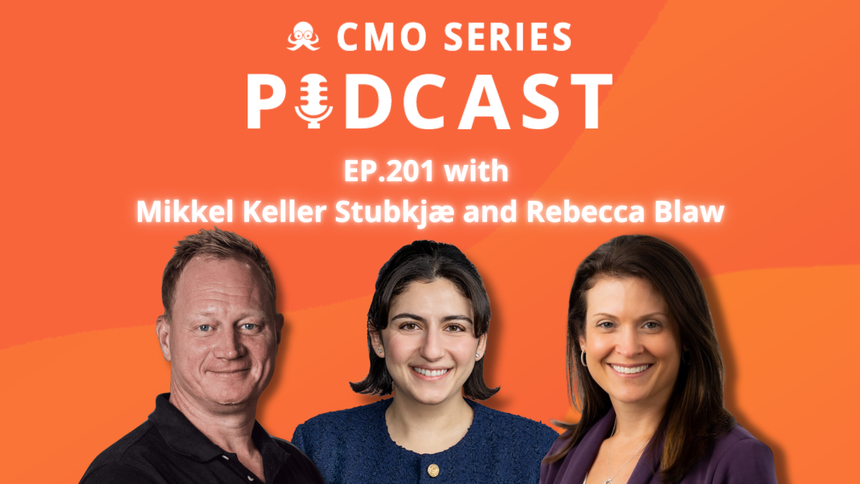



Every law firm is trying to solve the same challenge of making their firm's expertise easier to find, easier to share, and work harder commercially. Reed Smith tackled this with a complete rebuild of its digital platform around a “newsroom model”, treating content and expertise with the same discipline and agility as a publisher.
In the latest CMO Series Podcast episode, Yasmin Zand sits down with Rebecca Blaw, Digital Marketing Senior Manager at Reed Smith, and Mikkel Keller Stubkjær, CTO at Novicell, the technical partner who brought the vision to life. Since launching in December 2025, Reed Smith’s new composable platform has unified more than 10 separate blogs into a single experience and reduced load times from 15 seconds to just over one second.
Rebecca and Mikkel share how the project came together, what they learned along the way, and why this kind of transformation matters now more than ever for firms looking to compete in an increasingly digital and AI-driven landscape.
They also cover:
- What the “newsroom model” looks like in practice
- The challenges of navigating a large-scale platform transformation
- How one unified taxonomy-driven experience drives client engagement
- The role of AI readiness in shaping the platform
- What’s next for Reed Smith’s new platform
- Practical advice for other firms considering this investment
Great news for those attending CMO Series Live in New York on June 4th, Mikkel and Rebecca will be available to continue the conversation in person!
Transcription
Yasmin: Welcome to the CMO Series Podcast. Today, we're tackling something every CMO and BD leader in a law firm has wrestled with. How do you make your firm's expertise easier to find, easier to share, and work harder commercially? Our guests today have done exactly that. Reed Smith made the decision to fundamentally rethink their digital platform, not just a redesign, but a complete rebuild.
At the heart of it is what the team calls the newsroom model, running content and expertise like a publisher would, making sure the right insights reach the right people at the right time. Since going live in December 2025, Reed Smith's new composable platform has consolidated 10 separate blogs into one unified experience and cut load times from nearly 15 seconds to just over one second.
I'm delighted to welcome Rebecca Blaw, Digital Marketing Senior Manager at Reed Smith, and Mikel, CTO at Novisel, the technical partner who brought this vision to life, to the podcast to share how they did it.
Charlie: This episode is brought to you by CrossPitch AI, the new cross-selling tool from Passle. Cross-selling should be the easiest way for law firms to grow, but most firms struggle. Why? Lack of awareness, lack of trust, and frankly, fear of selling. The result? Missed revenue. CrossPitch AI fixes that. It breaks down silos, helps professionals connect, and delivers timely, relevant insights to the right people, inside the firm and out. There's no heavy roll-outs. Just switch it on and try it today. Head to crosspitch.ai to book your demo and make cross-selling happen. Now, back to the podcast.
Yasmin: So Rebecca and Mikel, welcome.
Mikkel: Thank you. Thank you. Thanks for having us.
Rebecca: Yes, thank you, Yasmine.
Yasmin: Of course. I guess I'll just start with our questions.
So I'll start with you, Rebecca. We've been working together for a few years now, but can you take us back to the beginning, and at what point did you and the team at Reed Smith realize the existing platform was holding you back, and maybe some of the commercial imperatives that made this redesign/rebuild a priority?
Rebecca: Sure. Thanks again for having me. We wanted to rebuild our website since we launched the old site, you know? We're always looking to change and evolve, right? Technology, it's always changing. Websites are never done. You click launch, you don't walk away. You're always wanting to do something more. So that's kind of what we were thinking even way back, way back when. But on our previous site, it was difficult to find information. We had publishing delays. So that's sort of really where we were at and why we needed to change.
Yasmin: That's great. And for our listeners who haven't come across it before, what did you mean by the newsroom model, and why was that the right vision for a firm like Reed Smith? And I guess, Rebecca, maybe I'll have you answer that first, and Mikkel, would love for you to go second.
Rebecca: So we were talking about having a site leading with thought leadership, but, you know, as a firm, law firms, we're selling a commodity, and what is that commodity? Your commodity is your people, their capabilities.But when you think about it, a great way to highlight, you have to look beyond traditional case studies, you know, this is what we're doing. Here are our representative matters. When you think about it, that's their thought leadership. It's their events. It's their speaking engagements. It's what they're writing about. So actually, what we're trying to do is bring people, bring our visitors to the people, and how are we doing that? We're doing that in a lot of different ways on our website.
We're doing that by getting our people front and center, whether that's through the speaker cards on the agenda or on their bios, just, you know, bringing their bios front and center. Their author cards. There are just ways to get our visitors to our people a lot faster. We have this new publishing platform. You're able to publish content a lot faster, but at the end of the day, it's getting our visitors to our people, and that's really at the crux of it. We want our visitors to contact our people, to get to our commodity, to sell our commodity. That's our people. That's our lawyers. That's what we're really trying to do here.
Yasmin: That's brilliant. For those of you who aren't on camera with us, I was just mouthing that to Rebecca. That's brilliant. People are a commodity, especially in legal services, any professional services. Mikkel, what's your perspective on all of that? How did you kind of come across this newsroom model?
Mikkel: Yeah. So that aligns perfectly well with my and our perspective. So I guess at the core of this, the newsroom model is really a cross-functional content strategy that treats the company's website like a modern news media. But before we go into the details of that, I would like to add some context to it. So the best law firm websites do not just describe the firm, they help clients recognize themselves, understand how the firm can help, and how to take the next step. And that means designing the website around client intent. Client intent is something that I speak a lot about these days. So a lot of law firm websites still mirror the firm, how the firm is organized, again, in departments, practices, services, sectors, industries and whatnot. But also from a more technical perspective into the different blocks, CMS structures, content types, and internal ownership of that content.
And that might make sense internally, but it often creates friction for the visitor because the visitor doesn't know if they're looking for a podcast or a blog post or a long engagement or a long-form article. They're basically, they arrive with intent. They arrive looking for a specific challenge, a question. There's a risk in their environment or an opportunity, and they're trying to understand if the firm has the right expertise and understand their situation, and then connect with the right people. So there's the people angle again. And this is where the news model becomes very powerful because it borrows from modern news media, where content is organized around topics, trends, events, issues and interests, not around who produced the content, which department was responsible for it.
And this kinda allows the firm to organize expertise around those client interests rather than legacy categorization. And that means the content can, or the insights can be connected to the relevant people and practices and industries, and then surface them across the site in the right context. But in reality, it creates a more seamless flow of information you can tap into with your intent and then travel to the people pages. So it's not about being more efficient at publishing content. It's not about creating more content either. It's about having the internal structure, the governance, and speed to publish like a modern media organization. And so that's our perspective on that.
Yasmin: That's fantastic. And Mikkel, I guess you guys have been utilizing Sitecore-based solutions for a while now. And just given your work around legacy stacks, this must be something you see all the time. So when Reed Smith came to you and said, "Hey, we need to redo this website," how quickly were you able to recognize the problem, and why was a composable architecture the fix?
Mikkel: Yeah, what stood out immediately was this was not just a redesign on an existing structure. The previous site mentioned was from 2017, and as Rebecca said, she made that clear to me as well, we've wanted to redo the website ever since that was launched. The existing website was built on the Sitecore platform, and actually the challenges that we searched for were facing are challenges that we see over and over again in the legal sector, especially with legacy Sitecore platforms. And some of the challenges are restricted or complex editor experience, slow publishing workflows, fragmented content structures, and high maintenance cost and so on. And that is interestingly not only with legacy Sitecore platform, that's something we'd see even with new platforms recently built. And I guess the core foundation of that is because of the complexity of a platform like that.
So composable is more about selecting maybe smaller or more nimble or more agile tools and then composing them together into one unified experience. So my take was that composable the right answer because we had the ambition to create one unified and seamless digital experience. The content itself was coming from several places, among them the CRS, multiple legacy Workbox blocks, and then all the passive blocks that have been migrated over from a previous blocking platform. So the challenge was not just to build a new website, it was to bring all of that concept together in a way that feels coherent for the end user, and at the same time is manageable for Rebecca and her team.
So composable architecture allows us to do exactly that. Even though I speak about this a lot, and even though I come from a very technical perspective, it's not a technical preference of mine, it's more a modernization strategy that allows a lot more flexible future. So it gives you the ability to connect the right systems that are the right ones for you. It gives you the ability to structure content properly, and then most importantly of all, keep evolving the platform, as Rebecca also hinted at in the beginning. The website is never done, and new trends and things emerge over time, and the more adaptable the platform is to those changes, the longer the lifespan of the platform will be. So those are some of the main points.
Yasmin: That's brilliant. It's very helpful to hear you add that context for some of our listeners who are potentially thinking about redesigning their website and going through that experience. So hopefully those are gonna be some leading indicators maybe for some folks who are thinking about redoing their websites.
Mikkel, sometimes projects like this, you do, you do run into a couple of roadblocks, as we like to call them. So I would love to hear from the both of you, and maybe Mikkel, you can kick us off, and then Rebecca, I'd love for you to tell us your experience. What challenges you ran into, and how did you work together to navigate them?
Mikkel: Yeah. One of the very first things I usually highlight in a new client relationship is that there will be blood, sweat, and tears. Or a little less dramatic, any project will have some small challenges, and likely a few big ones. And on a project of this scale, the challenges are exactly what you expect. It's stakeholder approval, it's timelines, it's getting time with busy partners, it's aligning different teams, and then it's making sure that decisions keep on moving. But one of the more interesting challenges was breaking away from old habits. Old habits die hard, as you know. So this was not just a lift and shift. We had to rethink the content structure, the taxonomy, and the search capabilities from the ground up. And Rebecca, you might remember this, but taxonomy particularly was discussed on multiple occasions. And this is partly because it can very quickly become quite abstract, because taxonomy is not just the same as the main navigation or page structure.
The navigation is what the user sees, but the taxonomy is what binds the relationship between the content items together in the, in the background. And it's a key driver for search and for discoverability as well. So what is required here is a large degree of flexibility. The taxonomy needs to speak from an outside-in perspective. It cannot be organized in terms of internal structures. And we had a lot of conversations about that, thinking how a client would perceive the tags and the categorization. And it's simple things like don't use acronyms, spell out the acronyms. Nobody wants to ask what an acronym stands for because they'll make them feel stupid in front of everybody else.
So simple things like that. And that taxonomy should be able to evolve over time, just like the platform, so that Rebecca and her team can come up with a new categorization or campaign or strategy for how to present content, expand on that taxonomy, and then bring it all together. And we had a lot of discussion about that because it's a very flexible free content categorization tool. Yeah. I have more things to say, so maybe we should give Rebecca a little bit of talking time, and then I can bring in additional points needed.
Rebecca: Yeah, and to anyone who is looking to do something like this, I would suggest starting on the taxonomy well in advance because you don't want to be doing that three days before launch. Lesson learned there. But I think the lessons, the challenges that you have, you absolutely need to find the right partner to work with. You need to avoid things like scope creep. You have to make sure you have a set path. You know, Mikkel, you said this, you need to obtain leadership buy-in. You need to keep them informed throughout the entire process. I think that was incredibly key for us in this particular project. I've been involved in a number of different website redesigns and I think in this particular project, one of our core strengths was keeping our leadership team involved and having regular communication with our leadership. I think that has helped our project succeed.
But also not being afraid to ask questions and really dig into the details, calling things out when things weren't working as expected, and being able to adjust accordingly. Because, you know, you may have one set path in mind or one set of ideas and your partner may have another, and you need to work together to make sure that you are properly aligned so that at the end, you know, when launch day comes, you're launching what you, what you're expecting. And when things aren't aligning, you need to make sure that early on you get them back into alignment because that's the only way your project's going to succeed, and I think we've done that. This was a massive project and it could have gone off the rails many times, and I don't think at any point it really did because we had such great communication and we had a really strong partnership throughout this project. And I'm not just saying that just because we're looking at each other.
Mikkel: Thank you very much, Rebecca. That's really kind of you to say, but I agree. We really had a one team mindset, and that's what I like to bring to the table in projects like this because you need transparency in order to remove those roadblocks that comes around, inevitably. And so that one team mindset was really important for me
Yasmin: Absolutely. I can say also, to Rebecca's credit, she's one of the most brilliant people to work with. So flexible, understanding. Whenever you see there's something that might be an issue, you always, you're the first person to, like, jump on it, and you're like, "Hey, I noticed this thing." So to all of our listeners out there who are hearing all of this, it is definitely a full circle of being able to facilitate those relationships well, be honest, and communicate. And so yeah, major credit to you, Rebecca, because -
Mikkel: I agree. I agree wholeheartedly. Rebecca, you did a brilliant job. And again, the transparency and just the fact that you see a problem, you say it, that allows us to sort it rather than keep it in the background and not taking care of it. So it's all about getting rid of those roadblocks as early as possible. And actually, I had another example, Rebecca, here.
The content population was another big one. And we talked about that throughout the entire project, that when the times come around to create the new content and new platform, you will be busy. And you had a huge amount of content to prepare and recreate, but honestly, I've never seen a team produce that much content in such a short amount of time. I was really impressed by that.
Rebecca: Yeah. Don't wait until two weeks before you're going to go live to insert your content. You will be working a lot.
Yasmin: Yeah. I understand that piece. This is super helpful context. So for our listeners, hopefully you have a good understanding of what happens when you're trying to implement some large scale projects, and maybe some challenges you might encounter along the way. A couple of keys to success. I have another question that I also wanted to turn to, and this is more for you, Mikkel.
So obviously the taxonomy and how you were able to structure the website with the Reed Smith team is fascinating. With more than 10 blogs getting consolidated into one structured experience where expertise is supposed to surface automatically for that end user, right. They're getting delivered the right insights at the right time. For our listeners, why does that actually matter commercially, and what does it change for how clients find and engage with lawyers?
Mikkel: The short answer is the commercial value of a taxonomy is that it turns content into a relationship and cross-selling engine. And again, any piece of insight is not attributed necessarily to a specific industry or a specific practice group.
It can flow between them and allow that to be discovered by people arriving, clients arriving on the website with intent. So it's really, again, about being able to surface the right content at the right time and the right place. And Reed Smith had a huge amount of valuable insight, but again, it was spread across multiple systems and formats, podcasts, videos.
So the real task here was really to bring all of that into one place. So we introduced, again, this was something that took a little bit of time to get under the skin, but we introduced a taxonomy that was basically able to map any given source system's categorization into a unified common taxonomy that then surfaced on the website. And this is quite a g- great thing because, again, it unifies things. So you can introduce tags and apply them automatically to things, and then at the end of the day, it's just more seamless and a unified experience for the end user. So again, it's a matter of surfacing the right content at the right place, and that gives it commercial value, of course.
Yasmin: So you're saying the right content leads to business?
Mikkel: The right content at the right place leads to business.
Yasmin: That is fair. That is fair. That is very helpful. And this is a question for the both of you, so maybe Rebecca, I'll have you kick us off with your answer. A lot of firms are now thinking beyond traditional website search towards AI-driven discovery and machine-readable content. How much did future AI readiness influence the way you approached the platform transformation?
Rebecca: Sure. You know, it all goes back to the, as you were saying, the way digital is evolving, and I've said this before, the way everything changes so quickly, right? And to Mikkel's point about composable architecture, we wanted to build a platform that was adjustable, that didn't need to be completely broken down if something new and better came along, or we didn't want the site to be completely inefficient six months from now. You know, this project started two years ago, right? We didn't wanna be obsolete even before we launched. So that was why we went down the path that we went down. We wanted to build this composable structure. We wanted to focus on things that we wanted the best of the best right now, and be able to plug and play.
If something new and better came along that would help us with whatever needs we had at the time, we could unplug that, plug this back in. And again, with taxonomy and everything, and learning from the past, not building for, you know, this is how our practice areas are, this is how we have to structure, building for the future and, like you're saying, this AI readiness, this AI-driven mindset, this is how we need to structure. Having this taxonomy, using this tagging structure, that's how we need it to be focused and this is how we want to be.
Yasmin: Mikael, what do you think of that?
Mikkel: Yeah. Again, this is a great example of how a composable platform is actually able to evolve. As Rebecca said, we initiated this project more than two years ago, and in the meantime, the AI discussion has gone only like this. So it's, it's really been accelerated a lot. There are so many constraints on content today. It needs to work for people, it needs to work for intent, it also needs to work for traditional search engines, and it needs to work for AI agents and generative search engines, ChatGP’s and whatnot. But one of the… And again, at the time, we spoke about these things, but they were not as front and center as they are today. So again, a great example of how things can evolve.
But one of the advantages of creating a single composable place for all of your content, which we call a content hub, is that it allows you to apply AI consistently across all the content, regardless of where that content originates from and what the capabilities of the systems producing that content is. So imagine you have multiple different publishing platforms, they all push their content into one place, and now you have a unified body of content, and you can actually apply AI consistently at that single location. So when content is created, when it's well-structured, you can trigger AI-driven outcomes based on content events.
This is something that we are exploring with Rebecca and her team, but hasn't really materialized yet. For example, whenever they publish a long-form article or there's a new client alert going out, we can trigger an AI-generated outcome. This could be a summary or a translation. It could be key takeaways, and what's hugely popular right now topic is FAQs because they basically support how an AI chat would respond to a question. So the more your content is structured around questions and answers, the more likely it is that AI will bring that front and center. So all of this is automation. But again, in a legal environment, it's very important that nothing gets published without approval, so the human in the loop is critical.
AI can assist and scale and automate, but it cannot replace the authority of a lawyer who is accountable for the advice they're giving. So accountability is a big thing, and correctness is also important. That kind of automation had to support editorial workflows where you can govern, approve, redo, and teach the AI how to come up with a proper output. And then once the output is generated and approved, it can then flow automatically into the website. So that's one aspect, but again, that comes as a side effect of having a unified content and a good structure to that content. And now we're talking a lot more about AI discoverability as well. So that means how does AI surfaces your content inside chat, and that has become a lot more important than it was two years ago.
But again, with structured content, if you have these FAQs, if you have these key takeaways, then those can be automatically translated into a supporting metadata on that page that will then be much easier for the AI to extract and utilize in its answer. So to be perfectly honest, it was not a lot of attention into AI readiness when we initiated two years ago, but there were a lot of thoughts going into creating a clean future-ready content structure. And it just so happens that that's one of the things that is really, really good for unforeseen things like this, and then the ability to actually evolve with those changes. So something we've only scratched the surface of, but the platform is more than capable of supporting going forward.
Yasmin: That's brilliant. And now that you've got your beautiful new baby, I guess, Rebecca, you've been living with your new website for a little bit now in your new environment. What does the day-to-day experience look like for you internally, and are you guys seeing any palatable results?
Rebecca: So, let's say, and Mikkel will laugh, but I'm eating my words a bit on using Umbraco. I was not really sold on this. Mikkel really had to push me to switch to use this platform. I was not... I think he could see it on my face when they pitched it to us. He's nodding his head. I was not sold on this platform, but I am totally sold on it now. What used to take us so long to do in terms of publishing content, creating content, now takes us half the time, if not less.
You know, integrations with blogs are seamless. The flexibility to create new content. Look, we're using... We have templates, right? We're not just creating random pages that look different. All of our content typically looks the same. Our client alerts look one way, our press releases look one way, our practice area pages look one way. But even with a templated structure, we can create different types of pages, and that's amazing for us. So not all of our thought leadership looks exactly the same. So just from an administrative perspective, it is amazing. From a user perspective or from a visitor perspective, don't use the technical term, finding content on the site is quick, it's easy, it's relevant content.
You know, we can just start typing something in and immediately relevant information is visible, and that is fantastic. That was one of our core priorities in terms of redesigning the site. So as an administrator, we are more than pleased. As a visitor for the site, we are more than pleased. We just launched a campaign today, and we did it ourselves.
It was fantastic. We are very, very happy. So in terms of seeing results, yes, and I am absolutely eating my words on Umbraco. So there you have it
Mikkel: I'm smiling a lot right now, of course. Very, very happy to hear that. And but again, success in my eyes is when technology stops being a blocker and you can do your job, you can concentrate on executing the content strategy, and that's really what matters the most. So this makes me very happy. That goes without saying. But yeah, again, this was only possible because of that great collaboration along the way that we managed to make the tool in ways that supports the way you think about content, and that collaboration was very, very, very valuable, in my opinion.
Yasmin: Agreed. So Mikkel, what is the next thing for Reed Smith's platform? And Rebecca, what would you say to a CMO or a managing partner who is still sitting on the fence about making this kind of investment in their website? Mikkel, you can start.
Mikkel: Okay. Thank you. So what comes next is of course, continuous optimization and evolution. So there's the AI aspect that we're looking into. The real value of this kind of platform is that it's a foundation that can keep adapting. And whether that's through stronger analytics, more structured content, AI discovery, whatnot, what you can think of, new integrations, that's where we are looking into the future.
And I guess this platform is still quite new, but the whole purpose of this is business development. So we don't know a lot of the commercial impacts yet, but we've seen the commercial impact of this approach in other projects. A year back, we launched alixpartners.com, which moved to a similar composable platform, and they actually attributable to website visitors, generating 14 million in website revenue within the first 12 months. So it does really matter, the ability to surface the right content at the right time. And this kind of changes the conversation into what does a new website cost versus how much are we leaving on the table. So again, what's next? Just continue to evolve and optimize. A website is never done when it's done. There's always things that can be improved and optimized.
Rebecca: Yeah. So I think we've talked about this a lot throughout this short session here. You need to find the right team to partner with. You have to build a strong relationship with a lot of trust. This partnership doesn't end with your site launch.
So it's a significant investment. There's no doubt about that, right? That's kind of not even part of the question at this point. So when you're making such a significant investment, you have to have the right partner. We launched in December. We have conversations all the time, right? We might have moved to, what, a monthly retainer call, but we talk all the time. We're -
Mikkel: Mm...
Rebecca: You know, Novacil does not get away from Reed Smith, right? Reed Smith does not get away from Novacil. We are, we're in it for the long haul, and that's a good thing, right? You've built that partnership, and you've built that trust. But, you know, with that investment, it's worth it. We've got significant flexibility. The opportunities that we have to integrate, we've already built a lot of integrations, but we're still looking to build further integrations. And the opportunities that we have to integrate with those other systems within our digital network, within the larger firm, to streamline our processes, it's going to be so worth it in the long run.
That's a good thing. You know, when you're thinking about the future, you're not thinking about today. You can't think about today. I mean, sure, that's part of it, but you really need to think about your longer term goals, your overall strategy, even beyond just your digital strategy. You're thinking about, just like what Mikel said, you know, what are the business implications? What are the financial implications? Yes, you have an investment to make, but what about the money that you could be bringing in? How are you growing the firm? What are the business development opportunities here? It's all worth it in the long run.
Yasmin: I love that. That's a beautiful way to end our questions. I have one last question, which is actually a bit of a wrap-up one. Mikkel, for anybody listening who wants to learn more about the composable approach or is thinking about where to start with a project like this, what's the best way for them to get in touch with you and your team?
Mikkel: Oh, so they can always get in direct contact with me or anyone in the team through LinkedIn, through the website, through email, whatever. Happy to engage with anybody really. And also, actually, we will be at the Passle CMO Series live event in New York in a few weeks time. So I am more than happy to pick up discussions and conversations there as well. Looking very much forward to joining you there.
Yasmin: And thank you. And I guess, Rebecca, what if some folks wanna reach out to you and ask you some questions? How can people get in touch with you, if you'd be so happy to share that information?
Rebecca: Absolutely. I'm on LinkedIn as well, email. I'll also be at the Passle CMO event, so happy to have a conversation, but always willing to share stories.
Yasmin: Brilliant. Thank you so much. Well, thank you both for coming on and joining us for this podcast episode. And to our listeners, thank you very much for taking the time out of your busy days to listen to this wonderful episode with Rebecca and Mikkel. As both of them mentioned, they'll be at our CMO Series live event in New York City on June 4th, so come one, come all. If you're gonna be around, it'd be great to speak to you, and we'll look forward to seeing you there.
But otherwise, thank you guys so much, and see you on June 4th.
Mikkel: Thank you so much.
Rebecca: Thank you, Yasmin. See you then.
Yasmin: Thank you.
Mikkel: See you then.
Charlie: You can follow The Passle CMO Series Podcast on your preferred podcast platform. Thanks for listening, and we'll see you next time
/Passle/53d0c8edb00e7e0540c9b34b/MediaLibrary/Images/2026-05-01-10-22-49-895-69f47ef9cb2c8884e0253d08.jpg)
/Passle/53d0c8edb00e7e0540c9b34b/SearchServiceImages/2026-05-22-10-50-28-500-6a1034f49c1e789ba60c0875.jpg)
/Passle/53d0c8edb00e7e0540c9b34b/MediaLibrary/Images/2026-05-20-11-44-10-701-6a0d9e8ac43bb1b7aa9b4186.png)
/Passle/53d0c8edb00e7e0540c9b34b/MediaLibrary/Images/2026-05-14-16-22-59-710-6a05f6e381728ec534e1905d.jpg)
/Passle/53d0c8edb00e7e0540c9b34b/MediaLibrary/Images/2026-05-13-12-51-08-593-6a0473bc9637b8c501b52291.png)