




High-performing teams are the difference between steady progress and real growth in professional services marketing and BD. Performance doesn’t happen by accident, it’s built, shaped and led.
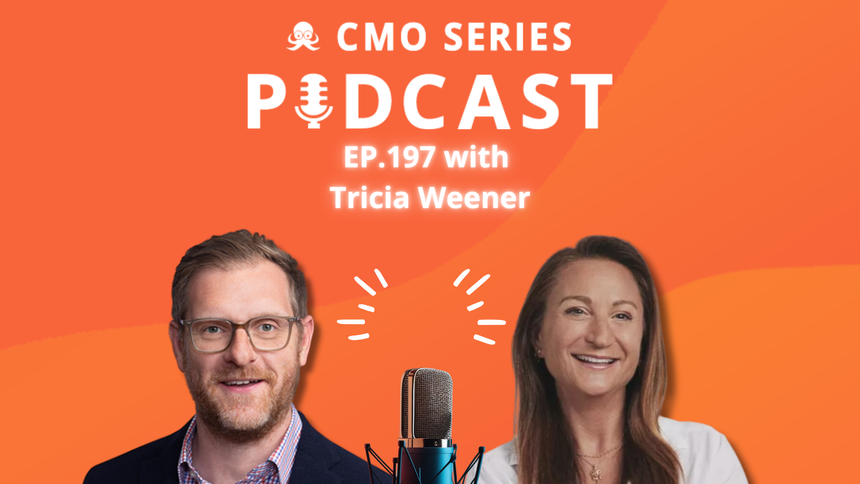
In the latest CMO Series Podcast, Will Eke is joined by Tricia Weener, Global Chief Marketing and Business Development Officer at Linklaters, who has built a career spanning entrepreneurial ventures, scale-ups and global organisations. That breadth gives her a sharp perspective on what “high performance” actually means, and how differently it shows up depending on the environment.
In this episode, we unpack what it really takes to build a high-performing team inside a global law firm and the lessons Tricia brings from outside the industry.
Tricia also shares:
- The perspectives she’s gained during her industry-agnostic career journey
- How high performance shows up in different contexts
- The importance of building high-performing teams on strong foundations
- Using the power of the “three Cs” to shape team culture
- Practical advice for others to build sustainable high-performing teams
Transcription:
Will: Welcome to the Passle CMO Series Podcast, where we talk about all things marketing and business development in professional services. Today, we're gonna be talking about a brilliant topic, creating high-performing teams, which hopefully is relevant to all of our listeners today. High-performing teams are the real difference between steady progress and exponential growth in professional services business development and marketing. Performance doesn't happen by accident, it's built, shaped, and led. Really honoured today to have our guest on the CMO Series Podcast and Tricia Weener, the cat's out the bag who we've got on, she understands it better than most. Tricia’s the Global Chief Business Development and Marketing Officer at Linklaters, and she's built a career spanning entrepreneurial ventures, scale ups, and global organization. So, a pretty impressive CV we will cover off. That breadth gives her a sharp perspective on what high performance means and how you can create an environment that not just supports, but actually enables this. We are gonna go through a number of questions and topics in this episode, and we're gonna unpack what it really does take to build a high-performing team inside a global law firm.
Charlie: This episode is brought to you by Cross Pitch AI, the new cross-selling tool from Passle. Cross-selling should be the easiest way for law firms to grow, but most firms struggle. Why? Lack of awareness, lack of trust, and frankly, fear of selling. The result? Missed revenue. Cross Pitch AI fixes that. It breaks down silos, helps professionals connect, and delivers timely, relevant insights to the right people inside the firm and out. There's no heavy rollouts, just switch it on and try it today. Head to crosspitch.ai to book your demo and make cross-selling happen. Now, back to the podcast.
Will: Tricia, it's an absolute honour and really hard to get you on this. You're such a busy lady.
Tricia: Hi Will, it's lovely to be here and looking forward to the discussion today.
Will: Brilliant. We're gonna actually come on to now the crux of our conversation, which is how to create high-performing teams, which again, surely is the holy grail of every CMO and BD leader's dream in professional services. So, we're gonna start, if that's okay, by finding a bit more about you and your career. So you've described it to me previously as being industry agnostic, which is I think a great term. Can you share maybe for our listeners, your journey across all the way through, you know, your entrepreneurial businesses, startups, scale ups, and now the journey to a global law firm that everyone knows globally, Linklaters, and what high performing has meant in each of those environments?
Tricia: Yeah, I’m very happy to do that. I will summarize my career because it spans many, many years now, but I actually started out in the defense sector working at British Aerospace Defense. I was a sponsored undergrad and then moved through into a grad role. I then spent a significant number of years in the agency world, so creative services, marketing consultancies, and worked cross-sector on both business to consumer and business to business. And I think that's where I really discovered my love of the complexities of business to business marketing and subsequently spent time in retail, financial services with HSBC. So I was there for 11 years, initially in a role in Europe, then in a global role based in London and that is what took me to Hong Kong. I spent seven and a half years where initially I ran Asia on the B2B marketing, and then ultimately as the Global CMO for commercial banking and global banking markets, so the investment banking side. And then I did a short stint actually in a private capital markets tech scale up. And then most recently, as you mentioned, moved to Linklaters. Ah, I did forget three years in an industrial company, so did some time working in elevators and escalators as well. So it truly is agnostic. I think probably one of the benefits of the variety is that I'm a very adaptive leader.
So, I think if you can operate successfully in those very varied environments, both, as you were mentioning before, sort of the startup world right the way through to, you know, one of the most complex organisations in the world, if we take HSBC, it means that you are able to adapt your style to those varying environments. But I think creating a high-performing environment remains pretty consistent. The bit that's varied is the speed of change. So you know, in a startup business that's growing very quickly, there are nuances, but equally in a highly complex cross jurisdiction regulated business, there are also variations and you need to make sure that you are adapting to those internal environments and internal differences, but also the external environment. So, whether that's the sort of geopolitical environment or as we're seeing today with the tech-related change as a result of AI, the important thing is creating an environment where there's trust, there's consistency around direction of travel, you're bringing people on the journey, and really importantly creating the sort of clear benefits for the team that's working in that environment in terms of ensuring that they understand what they'll get out of being a part of an environment that is gonna grow and develop them, but ultimately will lead to more exceptional results for the business.
Will: You mentioned being able to adapt a few times there. In terms of the other areas, you know, manufacturing, the scale ups, the financial side, how does Linklaters, and specifically law firms, sort of compare when building those high-performance teams? And what are the main sort of differences that you found at Linklaters?
Tricia: I mean, I think law firms are high performing in their very nature and at Linklaters, we have many of the highest-performing practices and lawyers in their field. It was great to see that demonstrated with the recent global rankings where we actually achieved some record results, which was fantastic. I think partnerships are also highly entrepreneurial in nature and as a global firm with a focus on the most complex cross practice, cross jurisdiction work, as well as wanting to align that very clearly to our firm-wide strategy and our clients and sector strategy. One of the really important things is creating clarity in relation to priorities, and as critically, having alignment around that. So where, by its very nature, a partnership is highly entrepreneurial, if you have that clarity around the audience focus, then it's really critical that that is understood, well articulated, and that everybody is aligned around it. And from a BDM perspective, that then enables us to align our resources and focus accordingly.
Will: You mentioned it there, you're absolutely right. I mean, the partnership is very high-performing from a marketing and business services standpoint. How do you foster that in your own team, just to align and make sure that, you know, it must be high expectations from those partners within the business?
Tricia: Yeah. I mean, I think it is difficult to challenge the benefits of working in a high-performing environment, but it's not for everyone. That's true. And I think having a shared purpose, focusing very much on strong trust-based relationships, collaborating, creating a culture of accountability and continuous improvement, they're things that are really difficult to argue with. And I think what's important is that those things are demonstrated and lived. And when you are operating in an environment that is naturally high-performing, ensuring that the team feels the benefit of that alignment, and feels the benefit of the trusted relationships that they're forming, and then gets a personal benefit from that, I think it's probably the thing that stands out most for me. And I guess, as I said before, I don't think there's that much difference between a law firm and any other industry that you are operating in. I think it's just making sure that from a partnership perspective that is well understood and supported, and that's clearly aligned around that firm-wide strategy. ‘Cause I think it's this balance between sort of individual agendas and firm-wide strategy and making sure that those team members very, very clearly understand what is expected of them, they have that clarity around their objectives, and that they can see the benefits of the work that they're doing and how that aligns both to the firm wide strategy, but also specifically to their performance and how they are being assessed as part of their performance annually.
Will: Yeah, it's fascinating. I think when you came into the role as well, which we've discussed and probably is common knowledge, there's been quite a lot of change, transformation at Linklater. None more so than the recent office move, which, you know, that's another discussion, I imagine that was a lot of logistics for many people involved. But I mean, you've done some major projects in terms of websites and CRM and all sorts. How do you, you've got that high performance, but how do you keep that going as you sort of evolve as a firm?
Tricia: Well, first of all, I’d like to say our move to Ropemaker has been fantastic. It's really nice to be in the new office environment, and I think everybody is feeling a real boost. It was sad to leave Silk Street. Obviously I haven't been at Links that long, but there are many of my colleagues who've been there for many, many years. So it was sad to leave, but everybody's really enjoying the new environment and I think the more open working space as well, and the fantastic views of London. So I'll finish on that there, but yes, it was a big project and I really enjoyed being a part of that. In terms of our transformation, you are right, it has been focused on creating greater global alignment and that again, to just go back, it's highly aligned to the execution of our firm-wide strategy. And for BDM, this has involved a highly complex change program and it's still underway. We are making really good progress, I have to say, but change is difficult in any organization, and I'd probably say, well, it's more so in traditional sectors like Law. Whereby other organizations that I've worked in have transformed pretty consistently every 18 months, and that can be for a number of different reasons, but transformation was pretty much just the norm.
What I discovered when I arrived at Linklaters is that it wasn't the norm and that actually change, therefore, it's more difficult because I think if you're used to just operating in that environment of uncertainty and you are able to cope with that constant change and continuous improvement, that makes a transformation of this scale perhaps a little easier, because it was such a significant transformation, particularly for our function. I think it's been important that we've communicated really openly, that we've been transparent around the reasons for the changes, and that ultimately, going back to the point that I made earlier, we are really connecting that to the benefits for the team. So, ultimately what we want to be able to do is to deliver to the firm and to support with the highly profitable growth that we have, you know, strong ambitions around and have been delivering in the recent past, and obviously we want to make sure that we continue to do that. So, making sure that you connecting that with team members, being able to see the benefits for them. It's also hard because you're introducing new technologies, AI is impacting what we do on a day-to-day basis. And so in addition to the sort of complex change, there's a lot of challenge for people in their day-to-day roles because they're having to use new systems or look at and understand how we use data in a different way. So, it perhaps makes the day-to-day more difficult and creates a bit of friction in the short term. But so long as you can hold true to the long-term benefits that will come, I think that that's where you get that alignment and you get the overall support, and genuine excitement and motivation around the direction that we are moving in.
Will: Brilliant stuff and I've had the pleasure of hearing you speak before on a panel and various other bits, but for our audience, you've talked about in the past your three Cs, and I wondered if you could explain what they mean to the audience, but also how those sort of behaviours with those three Cs can really help shape that culture and high performing environment that you are looking to create?
Tricia: Yeah, for sure. I love the power of three because I think it helps create clarity when you're communicating. And so for me, the three Cs that I talk about regularly, and they're not specific to business development and marketing, but they're highly aligned to the sorts of behaviors that we would be looking to demonstrate as a team. So the three Cs are creativity, curiosity, and commerciality. And just breaking those down, creativity for me, I think often if you think about it in the context of marketing, you may consider it in its most, I guess, natural way, which is creative in how you go to market, creating distinction externally. But for me, creativity is about how we think and how we solve problems and how we approach challenges within the workplace. So, actually thinking creatively about how you can approach your work. That often enables you to find quicker ways to solve issues or to create value, so that's the first. The second around curiosity is really looking up and out more, and I think this is something that I have reflected on quite a lot, the legal services industry is quite insular and I found the same, if I'm honest, when I worked in financial services, you become very deeply involved in the sort of sector that you operate in.
Actually, one of the things that I think is really important is that you are constantly curious about what is going on in the world more broadly, but also then within your area of specialisation, making sure that you're future fit, that you are adapting to, whether it's new technologies, new uses of data, understanding what is out there and what good looks like, and that you don't sit still. So I think the only way you can do that is to be highly curious as an individual and that aligns as much to personal development as well. It’s making sure you are focused and you're creating enough time for personal development so that you are staying ahead of the market and bringing new ideas and new approaches to the team that you're working with, or to the firm more broadly. Then, finally it's around commerciality, and again, this spans the sort of understanding how the firm makes money, understanding what good looks like in terms of actually how we can be more commercial as a function, understand how we are driving return on investment through some of the external investments that we are making, but fundamentally, just being commercial in the way that we think, so that we are spending our time in the areas where we will drive the greatest impact and create the most value for the firm.
Will: Thank you so much for sharing those with the audience. Amazingly, the time is nearly up, so we are going to start, if that's all right, just with a few tongue waggers, some easy quickfire questions. So I'm gonna start with, what are you currently listening to?
Tricia: Ooh, giving away some of my secrets. My current go-to actually is Olivia Dean. I discovered her music recently and I'm very excited she's actually touring this year, so hopefully I'm going to go and see her live as well. But if I'm in the gym, then it's slightly more hardcore than that, so it keeps me motivated with my running or cycling.
Will: My eldest daughter will be very happy with that answer, she discovered, well I discovered, Olivia Dean back on the Graham Norton show ages ago, a couple of years ago maybe before she made it big.
Tricia: I'm behind the times clearly.
Will: Yeah. Well now she's really made it, hasn't she? So, yeah, she's brilliant. The second question, what's the best piece of advice that you've ever received?
Tricia: There's a few of these that are quite hard questions. I think it has to be a Maya Angelou quote, and it's probably quite familiar to most of your listeners, but people will forget what you said, people will forget what you did, but people will never forget how you made them feel. I think it's also particularly pertinent to the topic today.
Will: Yeah, it's a really good one. What's a book or resource that you would recommend, I suppose more on the business side, to anyone in professional services?
Tricia: There's two here actually that I would recommend. The first is the ‘How Brands Grow’ series by Byron Sharp. This is, I guess, an individual who I discovered many years ago now, but I love the book because it is wedded in theory and science, in terms of how you grow brands. And the second one is actually very specifically focused on B2B. First one is more B2C related. And the second book would have to be ‘The Activator Advantage: What Today's Rainmakers Do Differently’. And this is a book that was introduced to me since joining Linklaters. And I have to say, the theory in it is not surprising, but I think it acts as a really good tool to understand all of the different facets that you have to have in place to really drive business development successfully in professional services.
Will: Brilliant. Good shout out there. We've actually had Matt Dixon on the podcast before, the author of that book. Yeah, it's really interesting. What's your favorite way to unwind after a busy day at work?
Tricia: So I was thinking about this and I have to say it's reading. I do find it quite hard to switch off and it's a very helpful way for me, often with nice fiction rather than more hard going books, just to switch off in the evening and unwind.
Will: Lovely, and this is also a tough one I always find. Where's your favorite place to visit and why?
Tricia: So this is really difficult 'cause there are so many different places in the world that I've been very fortunate to go, both in the UK and overseas, but I think I would have to say Hong Kong. I lived there for seven and a half years, so it very much feels like home when I go back. And I think having, you know, a number of friends who are based there and just knowing it so well. Yeah, it's a lovely place to go back and visit.
Will: No, I would actually agree. We haven't had that conversation. It's for another time. But I did live there as well for three years, so I have a big soft spot. I haven't taken my kids there yet, but there's so much to do. And I was Discovery Bay, actually, I lived.
Tricia: Oh nice, really?
Will: Yeah. Great place to go. Thank you for those brilliant answers. I'm gonna, again, ask you a difficult question at the end here, Tricia. What would your, if you could whittle it down, what would your golden piece, one piece of advice be for any CMO looking to build a truly high-performing team within their professional service firm?
Tricia: So, I could talk on this for hours, but I think probably, I really like Bruce Tuckman's four stages of team development and I think it's worth going and taking a look at that. I'm sure many of the listeners are familiar with it, but essentially there's the four stages of team development, forming, storming, norming, and performing. And really understanding and assessing where your team is at on that spectrum, and then putting in place the specific, I guess, things that you would need to move them through from whatever stage they're at to getting to that high-performing stage. So, you know, I would say at the moment, we are probably in the storming stage, so there is a bit of tension, there's some conflict, there's role definition, but we are very much moving to norming where there's more alignment, cooperation, and you're starting to get that rhythm in the team. And this doesn't remain static.
Obviously, as you evolve as a team, you need to continue to come back to these things to look at, is a new technology that you are implementing, you know, moving you back towards that storming place, or actually is something that you've then actually managed to get in place, that might be around your ways of working, moving you more into that high performing environment. So, I would probably use that as a basis, but probably the most critical piece of advice is have absolute clarity around your vision, direction of travel, ensure that that is communicated articulately, that that is well understood. And that there is alignment then between that vision, and what you're asking of the team to do on a day-to-day basis. And that there's open lines of communication. And that there's this really clear alignment around where you are going and what is required of each individual to get there.
Will: Amazing. I've never heard of that four stages of team development. I'll have to check that out. That sounds, yeah. Great advice.
Tricia: Yes indeed.
Will: Tricia, thank you so much. I know you're so, so busy. Thank you for giving us your time. Thank you for giving us a brilliant episode and some amazing advice there. Thank you so much for jumping on.
Tricia: It's an absolute pleasure Will, great to be here and have a lovely rest of the day.
Will: You too. Thank you.
Charlie: You can follow the Passle CMO Series Podcast on your preferred podcast platform. Thanks for listening and we'll see you next time.
/Passle/53d0c8edb00e7e0540c9b34b/MediaLibrary/Images/2026-01-12-10-16-56-904-6964ca18ab784af100f11853.jpg)
/Passle/53d0c8edb00e7e0540c9b34b/MediaLibrary/Images/2026-10-08-10-14-29-755-6ac76d050b30ba925ae8bc36.jpeg)
/Passle/53d0c8edb00e7e0540c9b34b/MediaLibrary/Images/2026-10-08-07-04-41-374-6ac740898f60cb75fde15df0.jpg)
/Passle/53d0c8edb00e7e0540c9b34b/MediaLibrary/Images/2026-10-08-07-04-41-241-6ac74089ce624e48d6cc6df6.jpg)
/Passle/53d0c8edb00e7e0540c9b34b/MediaLibrary/Images/2026-10-08-07-04-41-183-6ac74089d24614eebffa86bf.jpg)